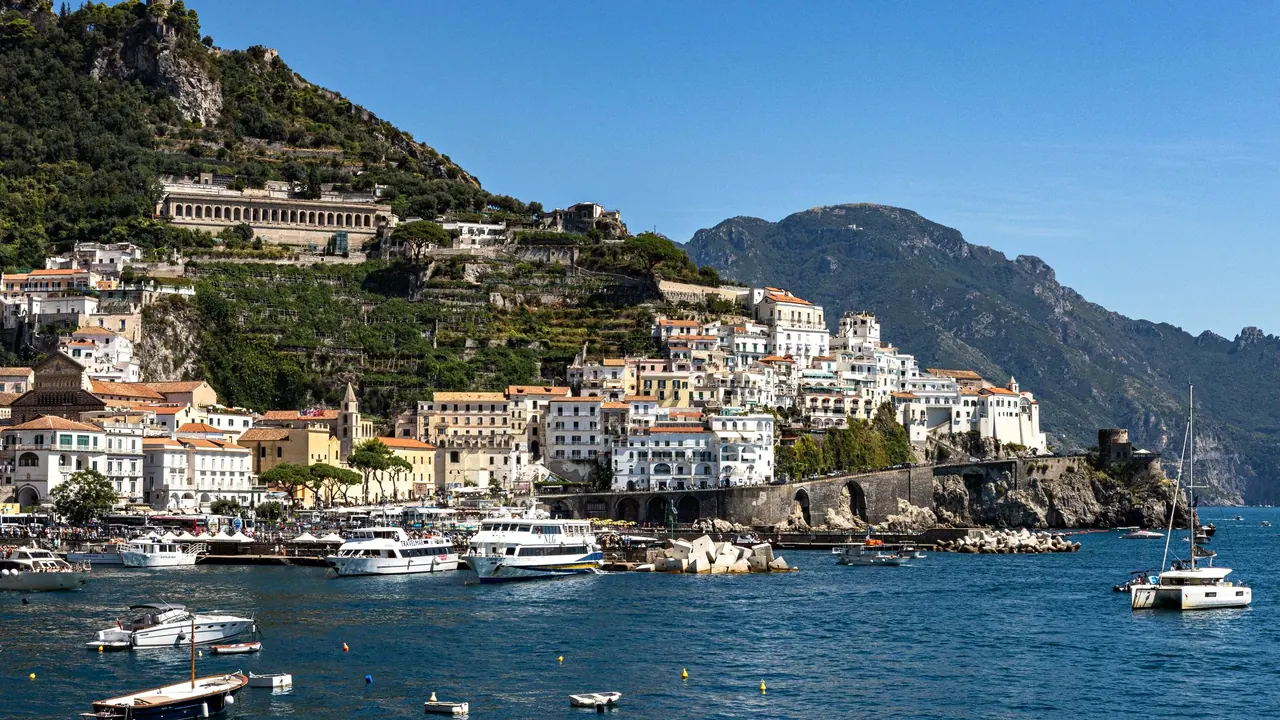
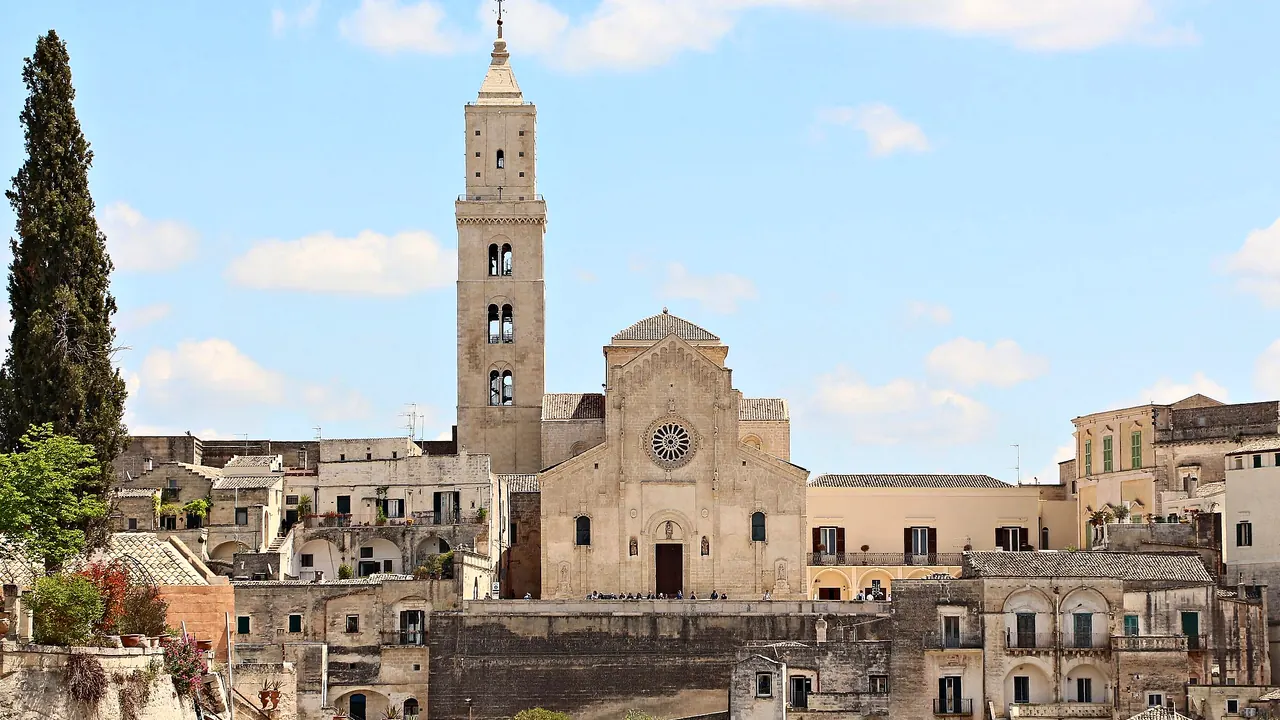
Photos: Amalfi by Oleksandra Zelena, Pexels License; Matera by Bernard Gagnon, CC BY 4.0, cropped.
Amalfi or Matera?
Our verdict in twelve categories, each scored against the same fixed benchmark cities, and the climate month by month, so you can choose for your trip.
Choose Amalfi for
- beaches
- nature and the outdoors
- day trips
Amalfi is the choice if the coast itself is the trip. Mountains fall straight into a clear, warm sea, the Path of the Gods and the lemon terraces sit above town, and boats and buses put Ravello, Positano and Capri within easy reach. It suits travellers who want to swim, walk and hop along the shore, and who can live with steep stairs, summer crowds and some of the highest costs in Italy.
Choose Matera for
- prices
- culture and sights
- nightlife
Matera rewards the traveller who comes to look and think. The cave districts of the Sassi, the frescoed rock churches and the gorge below make a place unlike anywhere else in Europe, and staying, eating and sightseeing there cost far less than on the Amalfi Coast. It suits a culture-led trip with a hire car, taking in Puglia's trulli and white towns, more than a vacation built around the sea.
Scoreboard
Twelve categories on one fixed scale from 0 to 100. The shaded stretch is the gap between the two.
Your match
Pick a travel style or drag the sliders, and both match scores follow your weighting.
Too close to call, 1 point apart
Wins on beaches and nature and the outdoors with your weighting.
Wins on prices and culture and sights with your weighting.
What matters to you?
Category by category
What the scores mean for a trip.
Beaches & swimming
Amalfi has the sea on its doorstep. Marina Grande is a pebble strip under the Duomo, crowded with beach-club loungers in summer, but Atrani's beach, the coves at Santa Croce and Duoglio and a day on a hired boat give you clear water and rocks to swim from whenever you like.
Matera is inland, so swimming takes a deliberate day out by car to Metaponto or Policoro. What waits there is the opposite of Amalfi: long, wide sand backed by pine woods and shallow water that small children can paddle in. It is a better beach in itself, but too far away to be part of daily life.
Food & drink
The two eat about equally well, but from different larders. Amalfi cooks from the sea and its terraces: anchovies, Cetara's colatura, scialatielli with clams, and lemons in everything from cakes to limoncello. Matera serves the inland peasant food of Basilicata, with its horn-shaped bread, bean and pulse soups, cavatelli, roast lamb and crackling peperoni cruschi, washed down with a strong Aglianico.
In both towns the obvious tables cost more than they are worth, Amalfi's on the piazza and seafront, Matera's in the Sassi cave rooms. The better meals are up the alleys in Amalfi and in the upper town in Matera.
Culture & sights
Matera has far more to see. The two Sassi districts, lived in since prehistoric times, climb the gorge in layers of cave houses and carved churches with Byzantine frescoes. Add the walk-through cistern under the main piazza, Carlo Levi's panorama at Palazzo Lanfranchi and sculpture displayed in rock rooms, and the sights fill a couple of days.
Amalfi's heritage comes from its days as a maritime republic: the striped Duomo with its Constantinople bronze doors, the Chiostro del Paradiso, the old Arsenale and the paper mill museum. It is handsome, but you will have seen it in a morning before heading back to the water.
Nightlife
Neither town is for a night out, but Matera has a little more going on after dark. Its evening passeggiata along Via del Corso, a few late cave bars and a small student crowd keep the upper town lively in summer.
Amalfi empties once the last buses and ferries take the day visitors away, and an evening means dinner and a drink or gelato on Piazza Duomo. For anything more you would have to go to Salerno or Naples.
Nature & outdoors
Amalfi's setting is the stronger draw for anyone who walks. The Sentiero degli Dei above Positano is one of Europe's great coastal paths, the Valle delle Ferriere starts behind town with its waterfalls and ferns, and old mule stairways climb to Pontone and Ravello. On the water there are kayaks and sea caves such as the Emerald Grotto.
Matera's outdoors is drier and starker. You can cross the Gravina gorge to the Murgia plateau, past abandoned rock churches and Neolithic sites, with kestrels on the cliffs. For mountains you need a car to reach the Lucanian Dolomites or Pollino.
Day trips
Both make excellent bases, but Amalfi puts more famous places within easy reach without a car. Ravello's villa gardens are a short bus ride up the hill, Positano and Capri are a ferry away, and Paestum, Pompeii and Herculaneum fit into a long day. The catch is the slow summer coast road and ferries that mostly run from spring to autumn.
From Matera, Puglia opens up: Altamura, Alberobello's trulli, Ostuni and the Valle d'Itria, Castel del Monte and Polignano a Mare are all within about an hour. Nearly every one of them needs a hire car.
Good for families
Both towns are hard going with small children, and for the same reason: steep stone stairways where a pushchair is useless, and nothing built with children in mind. Amalfi adds packed, winding buses on the cliff road that can make children carsick, and its beach is a crowded strip of pebbles. Older children who swim confidently get the best of it, with boat trips, sea caves and walks up the valley.
Matera's summer afternoons are hot, with little shade in the Sassi, and the sea is a drive away rather than at the foot of the town. In return, older children enjoy the cave houses, the underground cistern and scrambling down into the gorge. With a car and a baby carrier, a short stay works, and the sandy Ionian shore makes an easier day for toddlers than anything on Amalfi's front.
Getting around
Both are towns you walk, and both punish the legs with steps. The difference is in reaching anywhere else. Amalfi is the coast's transport hub, with blue buses and seasonal ferries from the harbour, although in summer the buses fill and the cliff road clogs, and a car is more trouble than it is worth.
Matera works the other way round. It lies off the national rail network, buses are sparse and the narrow-gauge line to Bari is slow, so a hire car is close to essential for exploring.
Shopping & style
Amalfi has a little more worth buying. Its handmade cotton paper from the valley mills, painted majolica, linen and sandals made to measure stand out among the rows of limoncello and lemon soap on the main street.
Matera's offering is smaller: cuccù whistles, tufa carvings of the Sassi and ordinary high-street shops on Via del Corso. Its best souvenirs are edible, dried peppers, pasta and a bottle of Aglianico.
Affordability
Matera is much the better deal. Its upper-town guesthouses and trattorias cost well below big-city levels, most sights are inexpensive, and walking the Sassi and the Murgia is free. Only the cave hotels in the Sassi and the peak summer weeks push prices up.
Amalfi is among the dearest places to stay in Italy, with short supply tilted towards luxury, and seafront meals, loungers and boat hire all add up. Sleeping in the hill villages and coming in spring or autumn help, and the local buses are a bargain, but it never feels cheap.
Live music & performing arts
Neither has a theatre scene, so evenings out depend on summer. Amalfi's highlight is next door: the Ravello Festival's orchestral and chamber concerts on the Villa Rufolo terrace above the sea, plus processions and band music for Sant'Andrea.
Matera offers conservatory concerts, a summer jazz festival against the Sassi and the Festa della Bruna, when the papier-mâché float is torn apart at the end of the procession.
Wellness & relaxation
Amalfi's calm comes from the sea: swims from the rocks, long lunches on a shaded terrace and quiet mornings in the hill hamlets before the day visitors arrive. Its spas belong to the luxury hotels built into the cliffs and are mostly kept for their own guests. In July and August the centre turns crowded and noisy, so May and October are the restful months.\n\nMatera unwinds in stone instead. You get early walks through the Sassi before the tour groups, evenings watching the light fade over the gorge, and hotel spas set in candlelit cave rooms with pools cut into the rock. Neither town has a thermal bathing tradition, and Matera is at its most peaceful from autumn to spring.
When should you go?
Pick your month. The climate figures are measured averages, not a forecast.
Amalfi in July
Matera in July
Daytime high, °C
Rainfall in the month, mm
Where the figures come from
Amalfi's temperatures are measured 65 km from the centre, at Grazzanise.
Amalfi has no rain gauge within 25 km of the centre, so its rainfall comes from a gridded climate dataset read at the city rather than from a gauge further away.
Matera has no rain gauge within 25 km of the centre, so its rainfall comes from a gridded climate dataset read at the city rather than from a gauge further away.
Temperature and rainfall are climate normals, averaged over the years shown. Amalfi: 1991-2020 normals, Grazzanise (64.7 km from centre). Matera: 2005-2025, 10 years observed (rainfall 1991-2020) normals, Matera / Martella (4.8 km from centre).
Amalfi is a summer and shoulder-season place. The sea is pleasant for swimming from June to September, peaking around 26°C in August, and May and October are fine for a bracing dip. July and August are dry and sunny but reach 31°C, which makes the town's endless stairs and the exposed trails hard going, so May, June and September are the sweet spot for combining walking with swimming. The rain arrives in earnest in October and peaks in November at around 143mm, and winter is mild but wet and grey.
Matera has colder winters, with January highs of about 10°C on its plateau, but noticeably less rain through the year. Its summer heat matches Amalfi's, close to 32°C in July with little shade in the Sassi, so it is best for exploring in May and from late September into October. The Ionian sea within driving distance warms up on the same schedule as the Tyrrhenian, so a beach day works from June to September.
Which traveller are you?
On a beach and sun trip, Amalfi wins easily. You can swim straight from town, walk ten minutes to Atrani or take a shuttle boat to a cove. From Matera the sea means a 45-minute drive to the Ionian shore, and most visitors never go.
For a culture and arts trip, Matera is the clear pick. The Sassi, the frescoed rock churches, the Palombaro Lungo cistern and museums such as MUSMA fill several days. In Amalfi the Duomo, the cloister and the paper museum take about half a day.
On a trip on a tight budget, Matera is far kinder. Upper-town guesthouses and trattorias cost much less, and walking the Sassi and the Murgia is free. Amalfi's rooms, seafront meals and boat hire are priced like Europe's dearest capitals.
Before you go
| Measure | Amalfi | Matera |
|---|---|---|
| Official language | Italian | Italian |
| Currency | Euro (EUR) | Euro (EUR) |
| Sockets | CFL230 V, 50 Hz | CFL230 V, 50 Hz |
| Driving side | Right | Right |
| Time zone | UTC+1, UTC+2 in summer | UTC+1, UTC+2 in summer |
| Emergency number | 112 | 112 |
| Elevation | 6 m | 401 m |
| Main airport | Naples International Airport (NAP)38 km from centre131 non-stop destinations | Bari Karol Wojtyła International Airport (BRI)54 km from centre104 non-stop destinations |
| Public holidays this year | 13 days | 13 days |
By the numbers
| Measure | Amalfi | Matera |
|---|---|---|
| City population | 4,729 | 59,685 |
| People per km² | 830 | 152 |
| Museums within 10 km | 8 | 8 |
| UNESCO World Heritage sites within 50 km | 5 | 1 |
| Swim season, months above 21 °C | 5 months | 5 months |
Where else could you go?
Every comparison below shares a destination with this one, so you can follow Amalfi or Matera somewhere new.