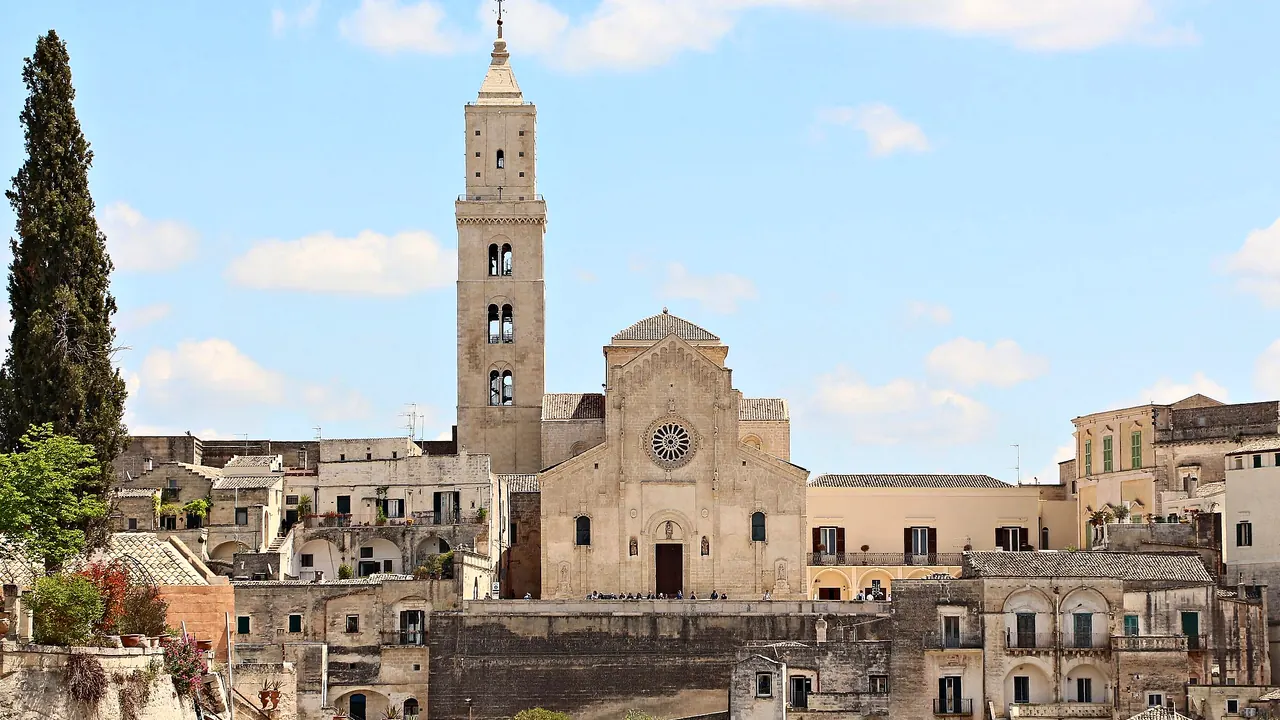
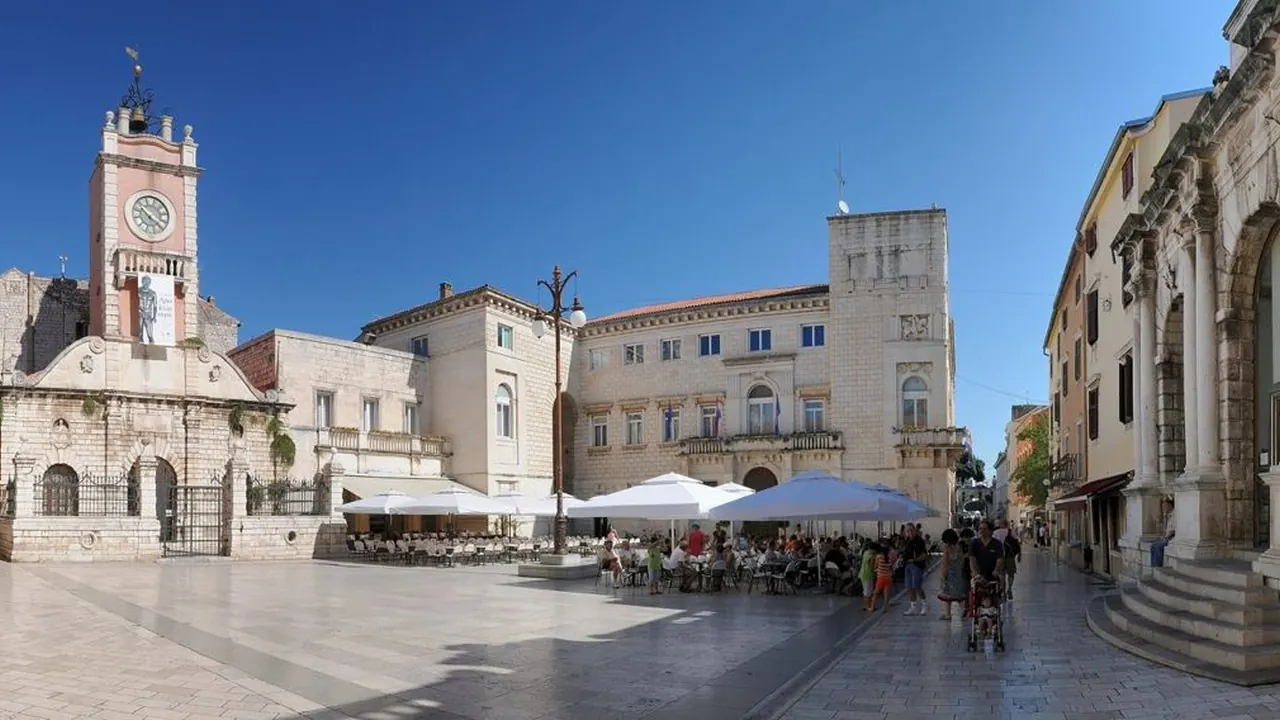
Photos: Matera by Bernard Gagnon, CC BY 4.0, cropped; Zadar by Böhringer Friedrich, CC BY-SA 2.5, cropped.
Matera or Zadar?
Our verdict in twelve categories, each scored against the same fixed benchmark cities, and the climate month by month, so you can choose for your trip.
Choose Matera for
- culture and sights
- day trips
- food and drink
Matera is the one for travellers who want a single extraordinary place and are happy to make it the whole point of the trip. The cave districts of the Sassi, the frescoed rock churches and the gorge below them are unlike anything else in Europe, and with a hire car the town also makes a fine base for the trulli, white towns and castles of Puglia. It suits couples and curious adults on a slow, inland trip who don't mind steep steps or quiet evenings.
Choose Zadar for
- beaches
- families
- nature and the outdoors
Zadar suits people who want the sea to be part of every day. You can swim off the stone promenade, ferries leave for the islands from the edge of the old town, and Paklenica, the Kornati and the Krka waterfalls are all within reach for hiking, sailing and kayaking. The flat, car-free peninsula and the summer evenings by the Sea Organ also make it the easier and livelier choice for families.
Scoreboard
Twelve categories on one fixed scale from 0 to 100. The shaded stretch is the gap between the two.
Your match
Pick a travel style or drag the sliders, and both match scores follow your weighting.
Wins on culture and sights and day trips with your weighting.
Wins on beaches and families with your weighting.
What matters to you?
Category by category
What the scores mean for a trip.
Beaches & swimming
Zadar has the much stronger beach life. In summer people swim every day straight off the promenade or at Kolovare and Borik, though these are pebble and concrete rather than sand. Nin's long sandy shallows and the ferries to Ugljan, Pašman and Sakarun on Dugi Otok widen the choice.
In Matera the beach takes a day out by car. The reward is the wide, pine-backed sand of the Ionian coast at Metaponto and Policoro, softer underfoot than anything in Zadar itself and calm enough for small children. Without a car, though, you won't swim.
Food & drink
There is little to choose between them. Both offer honest regional cooking with a narrow range, and the real difference is land against sea. Matera serves the peasant food of Basilicata: crusty durum bread, crapiata, cavatelli, roast lamb and crackling peperoni cruschi, with Aglianico to drink.
Zadar cooks from the Adriatic, with grilled fish, black risotto and octopus under the peka, followed by a glass of the local Maraschino. Zadar has the market by the walls, which Matera lacks, while Matera's upper town tends to give fairer value than Zadar's tourist streets.
Culture & sights
Matera has the more remarkable sights. The Sassi of Caveoso and Barisano are a whole townscape of cave homes and carved churches, people have lived in them since prehistory, and they are best seen at dusk. Add the Palombaro Lungo cistern, Levi's panorama at Palazzo Lanfranchi and the sculpture in MUSMA's rock rooms, and it is a set you won't find anywhere else.
Zadar's history is spread across more ages but feels more ordinary. It has the open Roman forum, round St Donatus, the Venetian walls and gates, and good small museums of glass and church silver. The Sea Organ adds a modern touch, but Matera's setting is the one that stays with you.
Nightlife
Neither is a party town, but Zadar has more going on after dark. Summer evenings move from sunset at the Sea Organ to café-bars on Kalelarga and terrace bars on the walls, and clubbers can go to Zrće on Pag, about an hour away.
Matera's evenings are a passeggiata, a long dinner and a glass of wine above the lit Sassi, with a few cave bars open late in summer. It is a romantic setting, but there's nowhere to dance.
Nature & outdoors
Zadar is the better base for active days outdoors. Paklenica's gorges offer serious hiking and climbing, the Kornati and Telašćica can be reached by boat, the Krka and Plitvice waterfalls are within a day, and sea kayaking and cycling along the islands are easy to arrange.
Matera's nature is closer to hand and more austere. You can walk straight down from the Sassi into the Gravina gorge and up onto the Murgia plateau, past abandoned rock churches and Neolithic sites. The Lucanian Dolomites and Pollino are a drive away, but on the whole Matera offers less variety and nothing on the sea.
Day trips
Both have good outings, but Matera has more first-rate ones close together, because it sits on the border with Puglia. Altamura and Gravina are minutes away, and within about an hour you reach Alberobello's trulli, Ostuni and the Valle d'Itria towns, Castel del Monte and Polignano a Mare. Ghostly Craco and the peak villages of Castelmezzano and Pietrapertosa add a wilder side.
Zadar's best trips are Šibenik's cathedral and medieval Nin, with Split and Trogir making a long day. Its real advantage is boats: ferries to car-free Silba and the other islands give it a kind of outing that Matera, inland, can't match.
Good for families
Zadar is much easier with children. The flat, car-free peninsula and the broad promenade suit pushchairs and scooters, the singing Sea Organ and the glowing Greeting to the Sun keep children entertained, and Nin's shallow sand is ideal for toddlers.
Older children will love Matera's caves, the cistern and scrambling into the gorge. But the Sassi are a maze of steep stone steps with little summer shade, so a baby carrier and a car are close to essential.
Getting around
Zadar is the easier of the two, both on foot and once you want to go further. In Matera, the comfortable upper town gives way to the Sassi, and every visit to the cave districts means going down long flights of stone steps and climbing back up again.
Leaving town is harder still: there is no mainline railway, only a slow narrow-gauge train to Bari and few buses, so almost every outing depends on a hire car.\n\nZadar's old town is level and free of traffic, so walking from the walls to the waterfront takes little effort, and you can reach Kolovare beach on foot. The harbour gives it the real advantage, because island ferries leave a few minutes from the centre and a day on Ugljan or Silba needs no car at all. You only need to drive or join a tour for the national parks and the towns along the coast.
Shopping & style
Neither city is somewhere to go shopping. In both, the best things to take home are edible. From Matera that means dried peppers, local pasta and Aglianico, plus the painted cuccù whistles and miniature tufa carvings sold in the Sassi.
Zadar gives you Maraschino, Pag cheese and figs, along with Pag lace. Its marble Kalelarga and the open-air market are pleasanter places to browse than Matera's ordinary Via del Corso.
Affordability
Costs are broadly similar, and in both the bill depends mostly on where you sleep. In Matera the cave hotels of the Sassi are the expensive part, while guesthouses in the newer town and simple trattorias keep a trip cheap, and walking the Sassi and the Murgia costs nothing.
In Zadar the rooms on the peninsula in July and August cost the most, and private apartments outside those months are the good deal. National park entry and boat trips add up in a way Matera's free gorge walks don't.
Live music & performing arts
Matera's one great night is the Festa della Bruna, when the papier-mâché float is torn apart after the procession. Beyond that there are concerts at the conservatory and a summer jazz festival, some of it staged against the Sassi.
Zadar has more to go to. Its fixture is the Musical Evenings in St Donatus, a long-running summer series of early and chamber music inside the round ninth-century church. July and August add concerts in other churches and squares, and with luck you will hear some klapa singing.
Wellness & relaxation
Neither has a bathing tradition, and in both the calm comes from the pace of the place rather than from spas. Matera's distinctive touch is the hotel spas in candlelit caves with pools cut into the rock, plus the hush of the Sassi early in the morning.
Zadar relaxes by the water instead: café mornings, the mineral mud of Nin's lagoon and sunsets over the islands from the steps of the Sea Organ.
When should you go?
Pick your month. The climate figures are measured averages, not a forecast.
Matera in July
Zadar in July
Daytime high, °C
Rainfall in the month, mm
Where the figures come from
Matera has no rain gauge within 25 km of the centre, so its rainfall comes from a gridded climate dataset read at the city rather than from a gauge further away.
Zadar has no rain gauge within 25 km of the centre, so its rainfall comes from a gridded climate dataset read at the city rather than from a gauge further away.
Temperature and rainfall are climate normals, averaged over the years shown. Matera: 2005-2025, 10 years observed (rainfall 1991-2020) normals, Matera / Martella (4.8 km from centre). Zadar: 1999-2020 (rainfall 1991-2020) normals, Zadar / Zemunik (9.9 km from centre).
Matera and Zadar share the Mediterranean pattern of mild, wet winters and hot, dry summers, with July and August reaching around 31°C to 32°C in both. That is beach weather but hard going on foot, and more so in Matera, where the Sassi are stone steps with little shade and the bare plateau holds the heat. The sea is warm enough for swimming from June to September in both places, reaching about 25°C in August off the Ionian shore near Matera and along Zadar's coast.
Autumn is where they part. In Matera the rain builds through the season, and October is the wettest month after November, so May and late September are the times for the Sassi and the Murgia. Zadar's wet season starts sooner and falls harder, with about 100mm in September and more in October and November. Its best weeks are in June and early September, when the sea is still warm and the heaviest rain has yet to come.
Which traveller are you?
On a beach and sun trip, Zadar is the clear pick. Swimming is part of the daily routine on the promenade and at Borik, Nin's sandy shallows are twenty minutes away, and ferries reach island coves. From Matera the sea is a drive of nearly an hour.
For a culture and arts trip, Matera is more rewarding. Its cave districts, frescoed rock churches and underground cistern are unique. Zadar's Roman forum, St Donatus and its glass museum are fine, but they take about two days, and Zadar's summer concerts don't make up the difference.
On a family trip with children, Zadar is far easier. The old town is flat and car-free, the waterfront suits pushchairs, and the Greeting to the Sun lights up at night. Matera's steep, uneven steps make a pushchair useless, and its beaches need a car.
Before you go
| Measure | Matera | Zadar |
|---|---|---|
| Official language | Italian | Croatian |
| Currency | Euro (EUR) | Euro (EUR) |
| Sockets | CFL230 V, 50 Hz | CF230 V, 50 Hz |
| Driving side | Right | Right |
| Time zone | UTC+1, UTC+2 in summer | UTC+1, UTC+2 in summer |
| Emergency number | 112 | 112 |
| Elevation | 401 m | 5 m |
| Main airport | Bari Karol Wojtyła International Airport (BRI)54 km from centre104 non-stop destinations | Zadar Airport (ZAD)10 km from centre66 non-stop destinations |
| Public holidays this year | 13 days | 14 days |
By the numbers
| Measure | Matera | Zadar |
|---|---|---|
| City population | 59,685 | 70,779 |
| People per km² | 152 | - |
| Museums within 10 km | 8 | 1 |
| UNESCO World Heritage sites within 50 km | 1 | 2 |
| Swim season, months above 21 °C | 5 months | 4 months |
Where else could you go?
Every comparison below shares a destination with this one, so you can follow Matera or Zadar somewhere new.