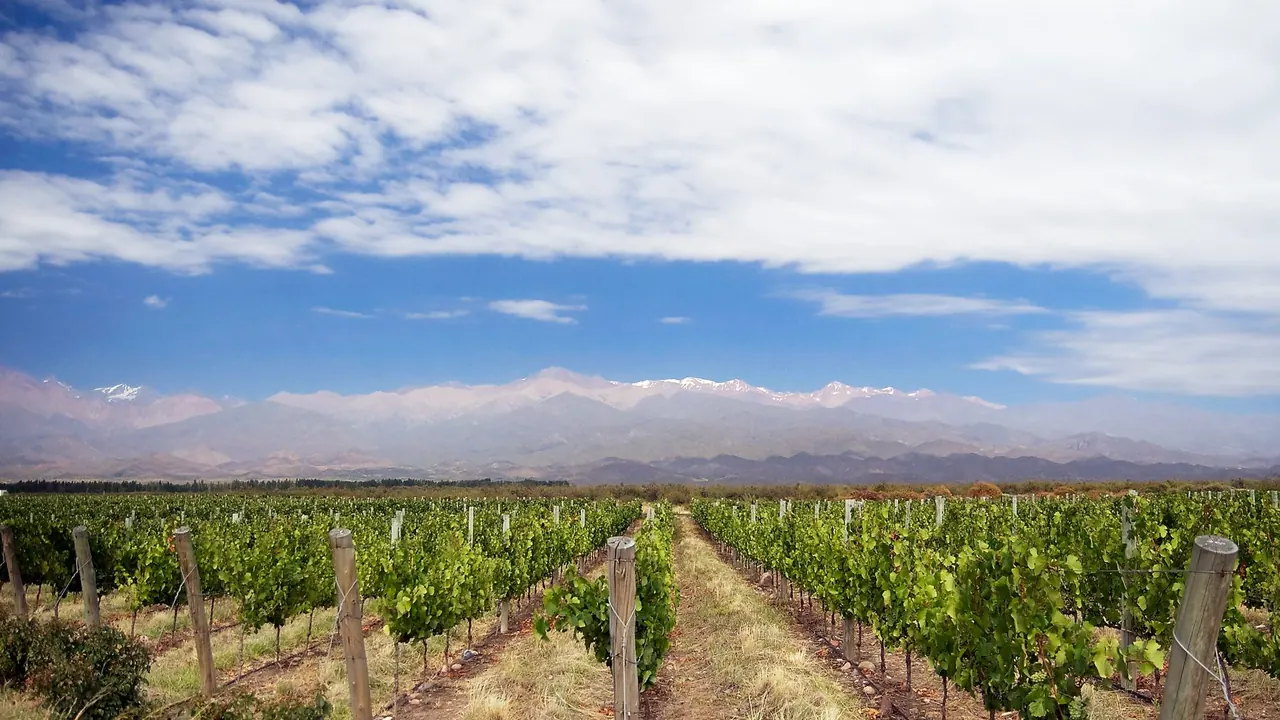
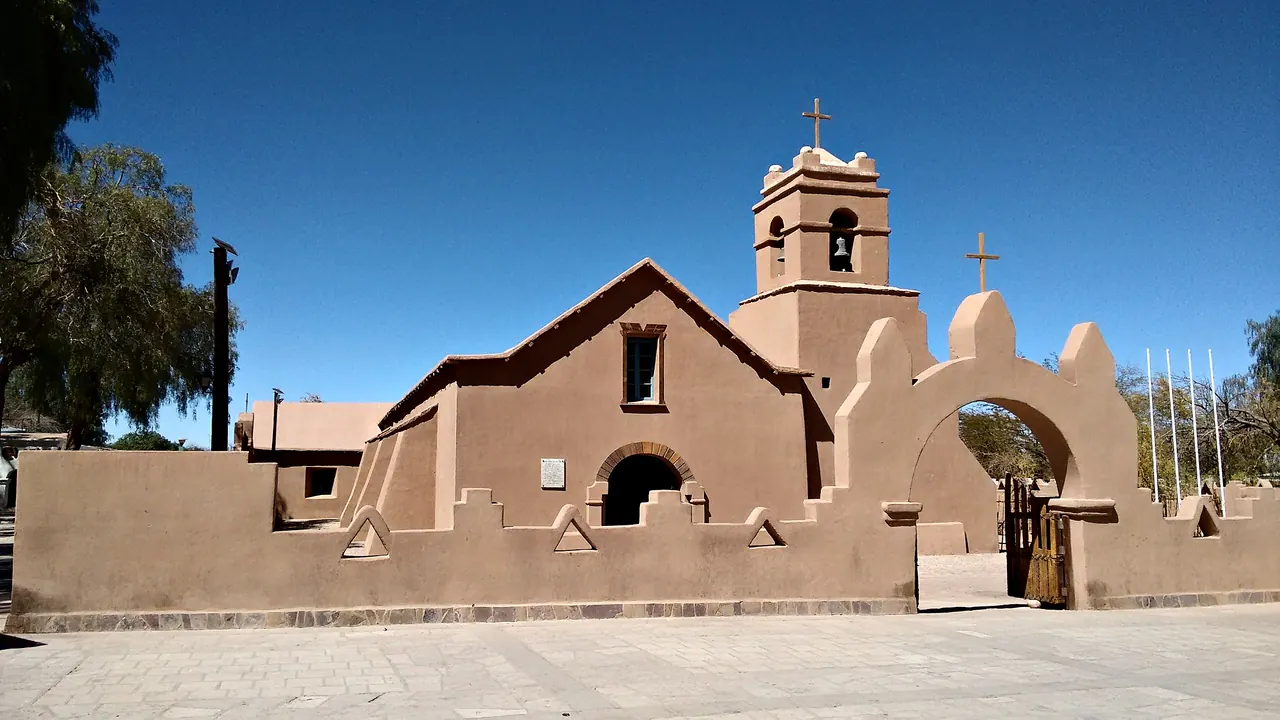
Photos: Mendoza by David, CC BY 2.0, cropped; San Pedro de Atacama by MarcosEscalier, CC BY-SA 4.0, cropped.
Mendoza or San Pedro de Atacama?
Our verdict in twelve categories, each scored against the same fixed benchmark cities, and the climate month by month, so you can choose for your trip.
Choose Mendoza for
- food and drink
- day trips
- nightlife
Mendoza is the better choice for a trip built around wine and good meals. It offers long winery lunches in Luján de Cuyo and the Uco Valley, late dinners under the plane trees and a shaded city grid with enough evening life to fill a week. It is also easier with children and lighter on the budget, and the Andes are still within an hour for rafting, riding and hiking.
Choose San Pedro de Atacama for
- nature and the outdoors
- beaches
Pick San Pedro de Atacama when the landscape is the whole point. Its geysers, salt flats, high lagoons and night skies are stranger and grander than anything near Mendoza. The village around them is small, quiet and expensive, though, with plain food, early nights and a tour for almost every outing. It suits fit adults and older teenagers who are happy to get up before dawn.
Scoreboard
Twelve categories on one fixed scale from 0 to 100. The shaded stretch is the gap between the two.
Your match
Pick a travel style or drag the sliders, and both match scores follow your weighting.
Wins on food and drink and day trips with your weighting.
Wins on nature and the outdoors and beaches with your weighting.
What matters to you?
Category by category
What the scores mean for a trip.
Beaches & swimming
Neither city is a beach destination, because both sit far inland on either side of the Andes. What differs is the water you get instead. In Mendoza it means a hotel or club pool on a hot afternoon, or a drive to the Potrerillos reservoir for the view. In San Pedro de Atacama it is an hour floating in the dense salt water of Laguna Cejar or Baltinache, a curiosity under a fierce sun rather than a lazy swim.
Food & drink
Food is one of the clearest gaps between the two. Mendoza is the home of Argentine Malbec, and its long paired lunches at wineries in Maipú, Luján de Cuyo and the Uco Valley are a reason to travel in themselves. In town there are wood-fired parrillas, empanadas mendocinas and wine bars pouring by the glass. Beyond beef and wine the range is narrow, but the quality is high.
San Pedro de Atacama is a village that feeds tour groups along Caracoles. Its better kitchens do interesting things with quinoa, llama and rica-rica, and the set lunches are honest, but after a few nights the menus blur together.
Culture & sights
Neither is a sightseeing destination, but Mendoza gives you a little more to do. The planned, tree-lined grid built after the 1861 earthquake, Plaza Independencia, the tiled Plaza España, the museum at the original foundation site and the Cerro de la Gloria monument fill a day or two.
San Pedro de Atacama's heritage is older but smaller. There is the cactus-wood ceiling of its adobe church, the hillside Pukará de Quitor fortress and the ancient farming village of Tulor, and a bike covers all of it in half a day.
Nightlife
Mendoza has a real evening life by Argentine rules. Dinner starts around ten, students fill the bars of Arístides Villanueva past midnight, Chacras de Coria has quieter wine bars, and a few clubs run until dawn at weekends. It is sociable rather than wild.
San Pedro de Atacama hardly has a nightlife at all. A few fire-pit bars on Caracoles go quiet early, since the geyser tours leave before dawn, and the night out most visitors remember is an astronomy tour under the desert sky.
Nature & outdoors
Both are superb bases for the outdoors, but San Pedro de Atacama's landscape is the more extraordinary. A short drive away are the dunes of the Valle de la Luna, flamingos on the Salar de Atacama, El Tatio steaming at sunrise and deep blue lagoons under volcanoes, and the stargazing is among the finest anywhere. The cost is altitude, so you need a few gentle days before going high.
Mendoza's outdoors is more about sport: rafting and kayaking at Potrerillos, hiking in the Cordón del Plata, paragliding from Cerro Arco, cycling between vineyards and winter skiing at Vallecitos. Aconcagua, the highest summit in the Americas, is a long day trip up the mountain road.
Day trips
Mendoza has more places to go for the day, though nearly all of them are in wine country. You can cycle between bodegas on the flat roads of Maipú, visit the big Malbec estates of Luján de Cuyo and leafy Chacras de Coria, or head for the high vineyards of the Uco Valley. If wine does not interest you, the list shrinks fast.
From San Pedro de Atacama, outings are tours of the landscape rather than visits to other places. The exceptions are the white-stone village of Toconao, the old church at Chiu Chiu and the Chuquicamata copper mine. Uyuni takes several days, not one.
Good for families
Mendoza is the easier place with children. Kids stay out on the plazas late with everyone else, and Parque San Martín has a lake, paddle boats and playgrounds. The Cacheuta hot pools and gentle rafting at Potrerillos make good days out, though the winery circuit and the summer heat are a poor fit.
San Pedro de Atacama works for older children and teenagers, who will love sandboarding, floating in salt lagoons and looking at Saturn through a telescope. For small children, the pre-dawn starts, long minibus rides and heights over 4,000m make it hard going.
Getting around
Mendoza has a walkable, shaded centre, a light-rail line south towards Maipú and city buses. You still need a car, a driver or a tour for the wineries and mountains, and you should watch for the open irrigation channels along the kerbs at night.
San Pedro de Atacama takes ten minutes to cross on foot, and beyond that no public transport reaches the sights. You rely on minibus tours or a high-clearance hire car, with rented bikes for the Valle de la Luna. Most visitors arrive from Calama airport, about an hour and a half away.
Shopping & style
Neither city is somewhere to shop for its own sake, but you will come home from Mendoza with a heavier bag. Wine is the real purchase there, and buying at a cellar door after a tasting is part of the winery day rather than a separate errand. The city also covers the ordinary needs of a trip, with a pedestrian street and malls for clothes and a weekend craft fair on the main square, though anyone looking for design boutiques will be disappointed.
San Pedro de Atacama sells souvenirs and very little else, and its Andean wool and stonework are the same as you will see elsewhere on a route through the region. The one purchase that really pays off is a practical one: a thick alpaca layer, bought early in the stay, for the freezing dawn starts at the geysers.
Affordability
Mendoza is the cheaper stay. Simple hotels, buses and steak dinners are moderately priced, and the bills only climb in wine country with tasting fees, winery lunches and drivers. Argentina's currency swings, so the same trip can feel cheap one year and dear the next.
San Pedro de Atacama is expensive for a village and pricier than most of Chile, because everything is trucked across the desert. Nearly every sight also needs a tour or a car, plus park entry fees. Set lunches, self-catering and cycling help, but there is little room to save.
Live music & performing arts
Mendoza has a modest stage life, but a real one. The provincial philharmonic and touring productions play at the Teatro Independencia, there are folk nights of cueca and Cuyo guitar, and above all there is the Vendimia harvest festival with its huge night-time show in the Parque San Martín amphitheatre. San Pedro de Atacama has little beyond Andean musicians playing in restaurants and costumed dancers in the streets during its religious feasts and Carnival.
Wellness & relaxation
Both cities slow you down and both have hot springs, so the difference is in how you rest. Mendoza has the Cacheuta springs, about 40km up the river canyon, with a public thermal park and a quieter spa. Its vineyard lodges in Luján de Cuyo and the Uco Valley offer grape-based treatments for anyone booking a retreat, and the city's long afternoon pause adds to the calm.
San Pedro de Atacama has the more dramatic setting at the Termas de Puritama, natural pools stepping down a reed-filled canyon, along with lodge spas and yoga sessions in the village. The catch is the pace of a stay there: pre-dawn alarms and thin air can leave you more tired than rested unless you plan some empty days.
When should you go?
Pick your month. The climate figures are measured averages, not a forecast.
Mendoza in July
San Pedro de Atacama in July
Daytime high, °C
Rainfall in the month, mm
Where the figures come from
San Pedro de Atacama has no weather station within reach, so its figures come from a gridded climate model rather than a measured record, and read a broad area rather than the city itself.
Temperature and rainfall are climate normals, averaged over the years shown. Mendoza: 1991-2020 normals, Mendoza Aerodrome (8.5 km from centre). San Pedro de Atacama: 1991-2020 normals, TerraClimate 4 km grid at the town, no weather station within 90 km.
Mendoza has proper seasons. January peaks at around 33°C, too hot for comfortable afternoons in the streets, so summer days are spent at the pool or in the mountains. What little rain the city gets falls mostly in summer. The best times for walking and winery visits are spring and autumn, roughly October and November or March and April. Winter highs of about 15°C bring cool, very sunny days, and that is the season for the small ski area.
San Pedro de Atacama is far steadier, with daytime highs between 19°C and 26°C all year and almost no rain outside January and February, when the occasional altiplano storm can roll in. Any month works, but nights are cold all year round, and the dawn geyser trips are bitterly cold, especially in the winter months from June to August.
Which traveller are you?
On a food and nightlife trip, Mendoza wins easily. It has Malbec lunches paired course by course, wood-fired parrillas and wine bars, then late tables on Arístides Villanueva until well after midnight. San Pedro has a few fire-pit bars and menus that repeat within days.
For an outdoors trip, San Pedro de Atacama is the stronger pick. You can ride a bike through the Valle de la Luna, see flamingos on the Salar, watch El Tatio steam at sunrise and look up at some of the clearest skies on earth. Mendoza's rafting and Aconcagua are excellent but less otherworldly.
On a family trip with young children, choose Mendoza. Children are part of evening life there, and parks and easy outings are close at hand. San Pedro de Atacama's early starts, altitude and cold are better saved until they are teenagers.
Before you go
| Measure | Mendoza | San Pedro de Atacama |
|---|---|---|
| Official language | Spanish | Spanish |
| Currency | Argentine Peso (ARS) | Chilean Peso (CLP) |
| Sockets | CI220 V, 50 Hz | CL220 V, 50 Hz |
| Driving side | Left | Right |
| Time zone | UTC-3 | UTC-4, UTC-3 in summer |
| Emergency number | 117 or 911 | Police 133/134, ambulance 131, fire 132 |
| Elevation | 769 m | 2,407 m |
| Main airport | Governor Francisco Gabrielli International Airport (MDZ)8 km from centre9 non-stop destinations | El Loa Airport (CJC)86 km from centre3 non-stop destinations |
| Public holidays this year | 16 days | 16 days |
By the numbers
| Measure | Mendoza | San Pedro de Atacama |
|---|---|---|
| City population | 127,160 | 5,347 |
| People per km² | 2,355 | 2,325 |
| Museums within 10 km | 1 | 1 |
| UNESCO World Heritage sites within 50 km | 0 | 1 |
Where else could you go?
Every comparison below shares a destination with this one, so you can follow Mendoza or San Pedro de Atacama somewhere new.
- Santiagovs Mendoza
- Vina del Marvs Mendoza
- Valparaisovs Mendoza
- Saltavs San Pedro de Atacama
- La Pazvs San Pedro de Atacama
- Barilochevs Mendoza