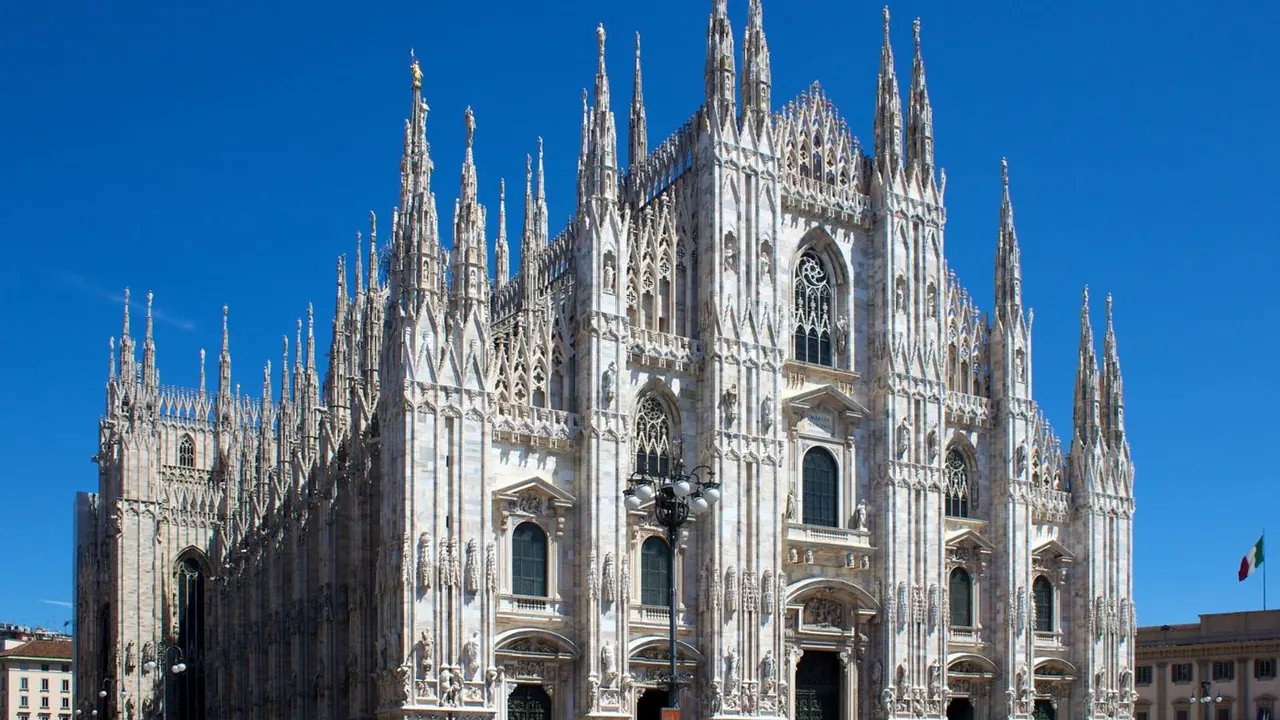
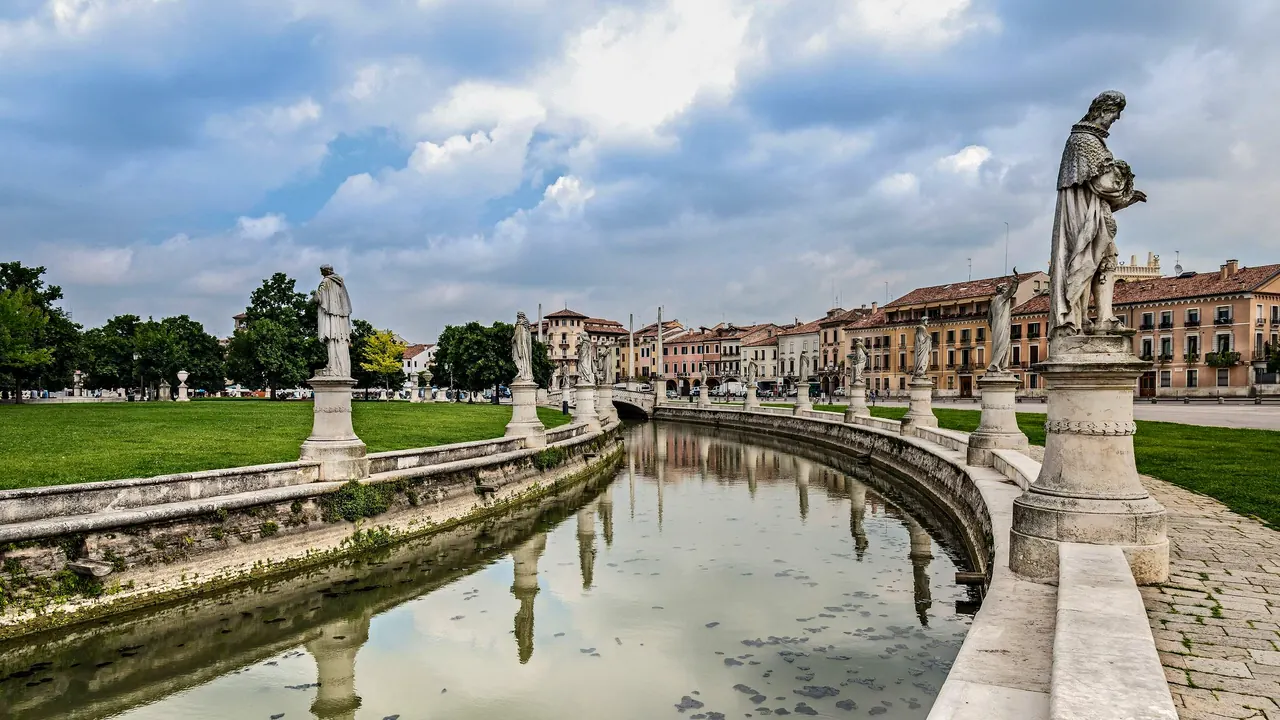
Photos: Milan by Jiuguang Wang, CC BY-SA 3.0, cropped; Padua by Didier Descouens, CC BY-SA 4.0, cropped.
Milan or Padua?
Our verdict in twelve categories, each scored against the same fixed benchmark cities, and the climate month by month, so you can choose for your trip.
Choose Milan for
- shopping
- live music and the arts
- nightlife
Milan suits travellers who want a large, polished city and are willing to pay for it. It wins clearly on shopping, with the fashion houses of the Quadrilatero and a whole design trade, and on the stage, with La Scala and the Piccolo Teatro. Evenings are fuller, the restaurants cover all of Italy, and the lakes and the Prealps are an easy train ride away for walking. It is the better choice for a stylish city trip with opera, boutiques and a late aperitivo on the Navigli.
Choose Padua for
- wellness
- prices
- beaches
Padua is the quieter, cheaper base, and it rewards people who plan to spend their days elsewhere. Venice, Vicenza and the Brenta villas are all close, and in the evening you come back to a small arcaded centre with Giotto's frescoes, market squares and a standing spritz. The thermal pools of Abano and Montegrotto are just outside town, which makes it the stronger pick for a slower, restful trip around the Veneto.
Scoreboard
Twelve categories on one fixed scale from 0 to 100. The shaded stretch is the gap between the two.
Your match
Pick a travel style or drag the sliders, and both match scores follow your weighting.
Wins on shopping and live music and the arts with your weighting.
Wins on wellness and prices with your weighting.
What matters to you?
Category by category
What the scores mean for a trip.
Beaches & swimming
Neither city is chosen for the beach. Milan is landlocked, so swimming there means fresh water: the Idroscalo basin near Linate, the open-air pools, or the pebbly lidos of Lake Como and Lake Maggiore, about an hour away by train with mountain views. The Ligurian coast is around two hours away, which is possible but makes for a long day out rather than an afternoon.
Padua gets you to the sea more easily. Sottomarina and the Lido of Venice are about an hour away, and their shallow, calm Adriatic water suits small children. The beaches themselves are flat rows of umbrellas with little to look at.
Food & drink
Milan offers the wider and more ambitious table. Saffron risotto, ossobuco and cotoletta come with a serious fine-dining scene, and because so many Italians have moved to the city, you can also eat well from Naples to Sicily without leaving it. Aperitivo around the Navigli, Brera and Isola is generous enough to replace supper.
Padua's cooking is narrower and homelier: bigoli with duck sauce, baccalà, boiled meats with green sauce. Its strength is the morning markets in Piazza delle Erbe and Piazza della Frutta, along with Euganean wines and coffee at Caffè Pedrocchi. Visitors who want variety or a special dinner will find more in Milan.
Culture & sights
The two are broadly level, but their sights work in different ways. Milan has a handful of headline sights spread through a largely modern city: the Duomo and its roof, the Last Supper, the paintings of the Brera and the Rondanini Pietà in the Castello Sforzesco.
Padua's heritage is packed into a small medieval core. You get Giotto's Scrovegni Chapel and the UNESCO-listed fresco cycles around it, the domed Basilica of Saint Anthony with Donatello's bronzes, and the university's anatomical theatre and botanical garden, all within a short walk. It takes less time to see and is more intimate, while Milan is better for great collections of art.
Nightlife
Milan gives you more choice and a later night. After aperitivo there are the canal-side bars of the Navigli, the gay scene around Porta Venezia, dressy clubs near Corso Como with strict doors, and warehouse nights on the edge of the city.
Padua's evening is mostly the spritz hour. Students and locals stand in Piazza delle Erbe and Piazza dei Signori, then move on to wine bars in the old ghetto. It is sociable and easy, but there are few clubs, and the town goes quiet when the university is on its summer break.
Nature & outdoors
Both cities sit on a flat plain, but Milan's mountains and lakes give it the stronger outdoors. An hour north are the steep wooded shores of Como and Maggiore, with ferries, sailing and windsurfing, and the Grigne ridges above Lecco offer real hiking and via ferrata.
Padua's green escape is gentler and nearer. The volcanic Euganean Hills rise about 15km away, with vineyard trails, chestnut woods and quiet roads loved by cyclists. The Brenta towpaths and the lagoon add level rides and birdwatching, but proper mountains at Monte Grappa or Asiago mean a longer drive.
Day trips
Both are outstanding bases with fast trains, and they share Verona and Bologna. What differs is the direction. From Milan you head to Bergamo's upper town, the villages of Lake Como, Turin, the Borromean Islands and Lugano over the Swiss border.
Padua's trump card is Venice, under half an hour away and close enough to visit again and again. Vicenza's Palladian buildings are a quarter of an hour away, and the Brenta villas, Arquà Petrarca and the walled towns around the Euganean Hills are closer still.
Good for families
Milan has more to keep children busy. The science and technology museum, with its submarine and hands-on labs, is a reliable rainy-day option, there is an aquarium and playgrounds by Parco Sempione, and Leolandia is under an hour away.
Padua is easy with children, with a flat, safe and largely car-free centre and Prato della Valle for running about, but frescoes and churches hold little for them. Both cities rely on Gardaland for a big day out, and from Padua the shallow Adriatic is a good alternative.
Getting around
Milan runs on rails. Five colour-coded metro lines take a contactless card at the gates, and a dense tram network fills the gaps, including the old orange cars that still run through the centre. The core from the Duomo to Brera and the Castello is walkable as well, and driving in the centre is restricted, so a car is no help. The drawbacks are the summer heat underground and the long transfer from Malpensa.
In Padua you mostly walk. Most sights are within about 20 minutes of each other, under arcades that keep off rain and sun, and much of the core is closed to traffic. One tram runs from the station through the centre to Prato della Valle, and plenty of people get about by bike. Neither city is hard to get around. The difference is that in Milan you use the metro and trams to cover the distances, while Padua is small enough to do on foot.
Shopping & style
This is where the two differ most. Milan is a world fashion capital. The great Italian houses have their flagships in the Quadrilatero, the Galleria has some of the city's oldest shops, and Corso Buenos Aires, the vintage shops of Porta Ticinese and the furniture and lighting showrooms cover everything from everyday shopping to design.
Padua's arcades have shoe shops, a few independent boutiques and university bookshops. It is better for edible souvenirs from the delicatessens under the Palazzo della Ragione, or a browse at the monthly antiques market in Prato della Valle.
Affordability
Padua is clearly easier on the wallet. Hotels are moderately priced, so it works as a sensible base for the region, trattorias are fair, and the centre is walkable, so you spend little on transport.
Milan is Italy's most expensive city. Rooms in particular cost a lot, and they become very hard to find at a sensible rate during fashion weeks and trade fairs. Office-worker lunch menus, aperitivo snacks and staying near a metro stop outside the centre help, but the gap remains.
Live music & performing arts
Milan is the city for a night at the opera. La Scala's season of opera, ballet and concerts is among the most famous in the world, and the Piccolo Teatro, the symphony orchestra at the Auditorium and summer stadium concerts at San Siro add depth.
Padua's programme is modest: prose and some opera at Teatro Verdi, and chamber concerts in the frescoed Sala dei Giganti and the Basilica of Saint Anthony. In summer, when Milan's opera slows down, Padua is well placed for the open-air opera at the Arena in Verona.
Wellness & relaxation
Padua is far stronger for unwinding, thanks to Abano Terme and Montegrotto Terme. This thermal district, one of Europe's largest, has hot mineral springs and mud treatments used since Roman times, and it is close enough to soak in after a morning of sightseeing.
Milan has one well-known thermal spa complex, some hotel spas and the 1930s pools of the Bagni Misteriosi in summer. Still, the city's pace is that of work, and most people looking for real calm take the train to the lakes.
When should you go?
Pick your month. The climate figures are measured averages, not a forecast.
Milan in July
Padua in July
Daytime high, °C
Rainfall in the month, mm
Where the figures come from
Milan's sunshine is measured 41 km from the centre, at Novara / Cameri.
Padua's temperatures are measured 35 km from the centre, at Treviso / Istrana.
Padua has no rain gauge within 25 km of the centre, so its rainfall comes from a gridded climate dataset read at the city rather than from a gauge further away.
Padua's sunshine is measured 36 km from the centre, at Treviso / S. Angelo.
Temperature and rainfall are climate normals, averaged over the years shown. Milan: 1991-2020 (rainfall 1971-2000) normals, Milano / Linate (8 km from centre). Padua: 1991-2020 normals, Treviso / Istrana (35.4 km from centre).
The two cities keep almost the same calendar. Both are cold and often grey in winter. Both are best for walking in April, May, September and October, and in July and August both are hot and humid, so long afternoons on foot are hard work. Milan's rain is heaviest in May and October, at around 118mm, so late spring can be showery. In Padua the wettest month comes later, in November.
Milan is noticeably darker in winter, with only about 66 hours of sunshine in December, while Padua keeps more light from November to January. Only Padua has the sea within reach. The Adriatic is around 23°C in June and September and 26°C in August, so the swimming season runs from about mid-June to mid-September. Milan has no sea of its own, and swimming in the lakes and open-air pools follows the summer heat.
Which traveller are you?
For a shopping trip, choose Milan. Few cities anywhere match it for fashion and design, and a few days of browsing can be the whole point of the journey. In Padua the shops are something you pass on your way to the sights.
On a relaxing and wellness trip, Padua is the clear pick. You can spend the morning with the frescoes and the afternoon soaking in hot springs without changing hotels. In Milan the pace is set by work, and real rest means leaving the city.
On a trip with a tight budget, Padua makes more sense as a base. A bed and a meal both cost less, and with Venice so close you can see the region's priciest city while sleeping in a cheaper one. Milan quickly empties a thin wallet.
Before you go
| Measure | Milan | Padua |
|---|---|---|
| Official language | Italian | Italian |
| Currency | Euro (EUR) | Euro (EUR) |
| Sockets | CFL230 V, 50 Hz | CFL230 V, 50 Hz |
| Driving side | Right | Right |
| Time zone | UTC+1, UTC+2 in summer | UTC+1, UTC+2 in summer |
| Emergency number | 112 | 112 |
| Elevation | 138 m | 12 m |
| Main airport | Milan Malpensa International Airport (MXP)40 km from centre208 non-stop destinations | Venice Marco Polo Airport (VCE)39 km from centre103 non-stop destinations |
| Public holidays this year | 13 days | 13 days |
By the numbers
| Measure | Milan | Padua |
|---|---|---|
| City population | 1,354,196 | 206,496 |
| People per km² | 7,453 | 2,220 |
| Museums within 10 km | 88 | 29 |
| UNESCO World Heritage sites within 50 km | 4 | 5 |
| Swim season, months above 21 °C | - | 4 months |
Where else could you go?
Every comparison below shares a destination with this one, so you can follow Milan or Padua somewhere new.