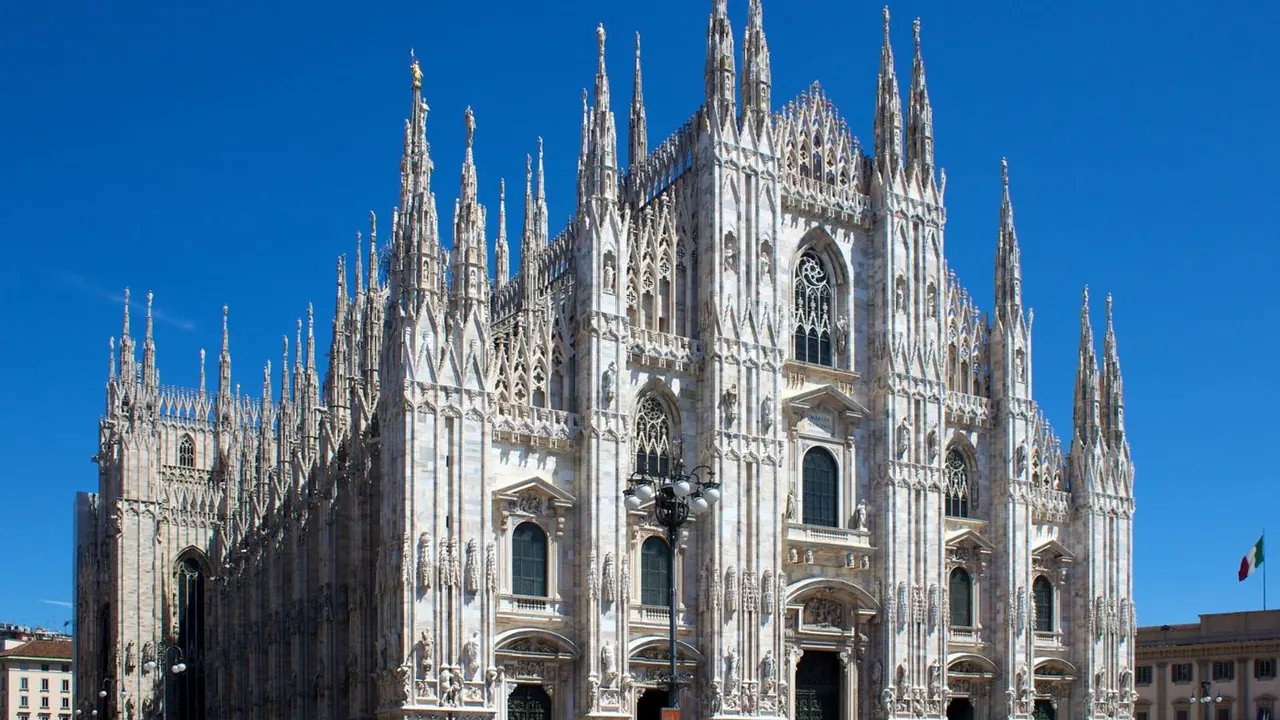
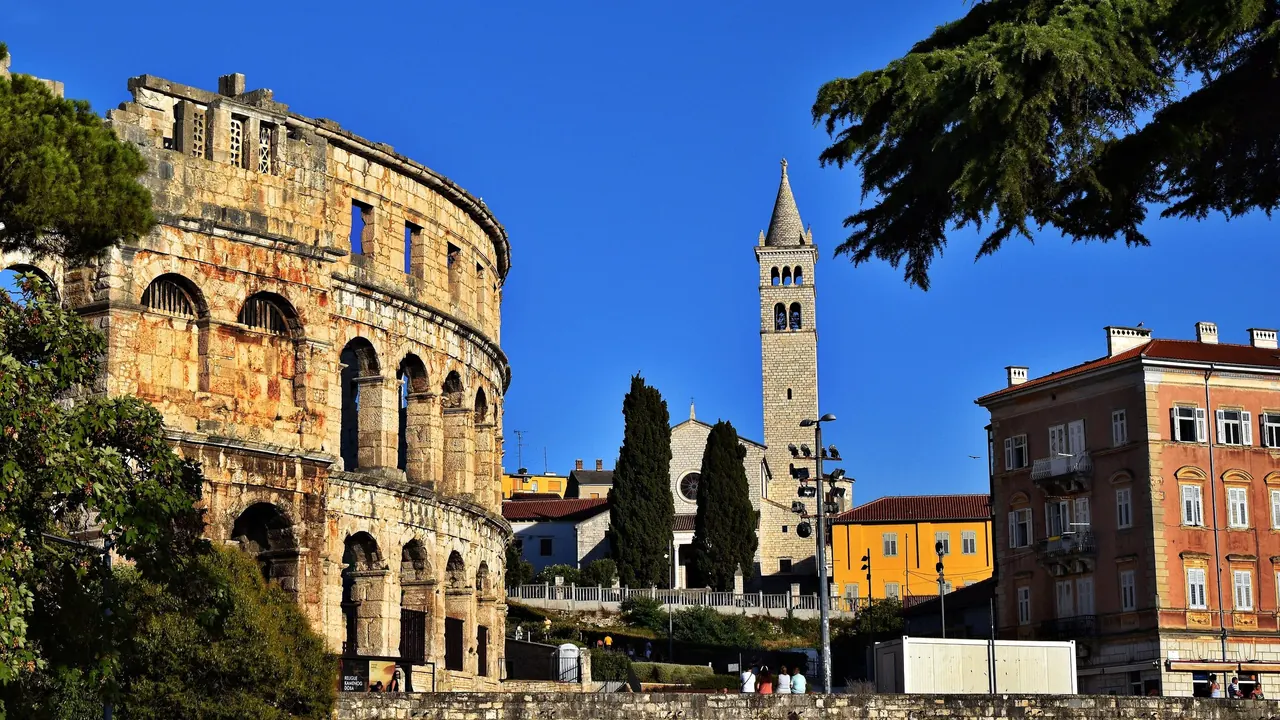
Photos: Milan by Jiuguang Wang, CC BY-SA 3.0, cropped; Pula by Miroslav.vajdic, CC BY-SA 4.0, cropped.
Milan or Pula?
Our verdict in twelve categories, each scored against the same fixed benchmark cities, and the climate month by month, so you can choose for your trip.
Choose Milan for
- shopping
- live music and the arts
- getting around
Milan suits travellers who want a city with depth. It has the Last Supper and the Brera paintings, opera at La Scala, the fashion houses of the Quadrilatero, aperitivo along the Navigli, and fast trains that put Verona, Turin and Lake Como within easy reach. It costs more, and a swim means a train to the lakes, but for a trip built around culture, shopping or food it is the stronger choice.
Choose Pula for
- beaches
- prices
- families
Pula is for a summer by clear Adriatic water, with a Roman arena in the middle of town and the wild coves of Kamenjak a short ride south. Evenings are quiet, the shopping is mostly olive oil and truffles, and you will want a car once you leave the centre. In return, a stay is gentler on the wallet, and the days go on swimming, Istrian cooking and the hill towns inland.
Scoreboard
Twelve categories on one fixed scale from 0 to 100. The shaded stretch is the gap between the two.
Your match
Pick a travel style or drag the sliders, and both match scores follow your weighting.
Wins on shopping and live music and the arts with your weighting.
Wins on beaches and prices with your weighting.
What matters to you?
Category by category
What the scores mean for a trip.
Beaches & swimming
Here the gap is wide. Milan is landlocked, so a swim means the Idroscalo basin, a city pool, or a train of about an hour to the pebbly lidos of Lake Como or Lake Maggiore. It is an occasional outing.
Pula has the sea on its doorstep. The water is very clear off the rocks, platforms and pine-shaded coves of the Verudela and Stoja peninsulas, and Cape Kamenjak's wild inlets are about 10km south. There is no sand, so bring water shoes, and families with small children do best in the shallow bays of Medulin.
Food & drink
Milan eats better and more widely. Alongside saffron risotto, ossobuco and cotoletta, it serves cooking from every Italian region and has serious fine dining. Aperitivo in Brera, Isola and along the Navigli can be a meal in itself.
Pula's kitchen is narrower but distinctive: Istrian pasta with truffle, scampi buzara, pršut and local Malvazija. The choice in town is limited and the tables by the Arena lean towards tourist menus, so the best meals usually mean driving out to village konobas or coastal harbours.
Culture & sights
Milan's heritage is richer and more varied. There is the Gothic Duomo with its rooftop terraces, Leonardo's Last Supper, the Brera paintings, the Rondanini Pietà in the Castello Sforzesco, and Sant'Ambrogio and the Ambrosiana besides. That is several days of sightseeing, even though it comes in clusters within a modern city.
Pula's story is mainly Roman. It has an Arena whose outer ring stands complete, the Temple of Augustus on the Forum and the Arch of the Sergii, with a Venetian fortress and Habsburg naval forts on top. It is remarkable, but you can cover it in a day or two.
Nightlife
Milan offers a proper night out. There are canal-side bars along the Navigli, a gay scene centred on Porta Venezia, dressy clubs around Corso Como and warehouse nights on the edges of the city, although it all thins out in August.
Pula is a low-key, summer-only affair: terrace drinks around the Forum, then cocktail and beach bars on Verudela and in Medulin. Out of season, most nights end early.
Nature & outdoors
Both have good outdoors within reach, but of different kinds. The land around Milan is flat and hazy, so the rewards lie about an hour north by train. There you find Lake Como and Lake Maggiore with ferries and sailing, the Grigne ridges for hiking and via ferrata, and ski slopes in winter, which take a long day out.
Pula's outdoors is coastal and close at hand. The car-free Kamenjak headland has cliffs, wild flowers and dinosaur footprints, and you can go sea kayaking, windsurf at Premantura or dive on naval-era wrecks. Its nearest mountains, the Učka range, are further off, and summer heat pushes walking into spring and autumn.
Day trips
Milan is one of the finest bases in Italy. Fast trains reach Verona, Turin, Bergamo and Lake Como in about an hour, and the Certosa di Pavia, Mantua, Parma and Lugano are also within range, none of them needing a car.
Pula has a good circuit of its own: Rovinj, the Byzantine mosaics of Poreč, the hill towns of Motovun and Hum, and the Brijuni islands. What differs is reach and ease, because buses are infrequent and most of these trips work best with a hire car.
Good for families
Neither is built around children, and they suit different kinds of family trip. Milan works as a city break with older children: the science and technology museum with its submarine, the playgrounds of Parco Sempione, easy trams, and Gardaland or Leolandia for a day out.
Pula is a seaside vacation. There are shallow bays at Medulin and Premantura, the aquarium inside an old fort, the Arena's underground passages to explore and the animals on Brijuni. Rocky shores and the need for a car add some effort.
Getting around
Milan is much easier to get around. Its flat centre is walkable, and five clear metro lines and a dense tram network cover the rest. Direct trains run out to the lakes and nearby towns, and the main nuisances are stuffy summer platforms and the long trip from Malpensa.
Pula's centre is just as easy on foot, and city buses reach Verudela. Beyond the city, though, the slow railway and infrequent regional buses make a car or scooter close to essential.
Shopping & style
Milan is a reason to travel in its own right. You have the great Italian fashion houses in the Quadrilatero, historic shops under the Galleria's glass roof, design showrooms, Brera boutiques and antique markets along the Navigli.
Pula has a pedestrian street of chain stores and souvenir shops, and nothing in luxury or design. Its best buys are edible: olive oil, truffle products, wine and pršut from the market hall or straight from producers.
Affordability
Pula is the cheaper of the two, especially in spring and autumn, when private apartments and simple konobas keep costs down. July and August narrow the gap, and car hire and boat trips add up quickly.
Milan is Italy's most expensive city, and hotel rates climb further during trade fairs and fashion weeks. Aperitivo snacks, lunchtime menus for office workers and a room near an outer metro stop all help.
Live music & performing arts
Milan is one of Europe's great stages. La Scala's season of opera, ballet and concerts opens each December, and around it are the Piccolo Teatro, a fine symphony orchestra, jazz rooms and big summer concerts at San Siro.
Pula has one memorable setting: the Arena on summer nights, when it hosts touring concerts and the film festival screenings. For the rest of the year there is little beyond Croatian-language drama at the Istrian National Theatre.
Wellness & relaxation
Neither is a place for a spa vacation, but Milan offers a little more. It has a thermal spa complex with outdoor pools south of the centre and the restored 1930s Bagni Misteriosi in summer, and quiet lakeside villas an hour away for real rest.
Pula has no bathing tradition and relies on resort hotel spas on Verudela and in Medulin. Its calm comes instead from the unhurried pace outside high summer and evening walks on the pine-shaded coast.
When should you go?
Pick your month. The climate figures are measured averages, not a forecast.
Milan in July
Pula in July
Daytime high, °C
Rainfall in the month, mm
Where the figures come from
Milan's sunshine is measured 41 km from the centre, at Novara / Cameri.
Pula's temperatures are measured 87 km from the centre, at Trieste.
Pula has no rain gauge within 25 km of the centre, so its rainfall comes from a gridded climate dataset read at the city rather than from a gauge further away.
Temperature and rainfall are climate normals, averaged over the years shown. Milan: 1991-2020 (rainfall 1971-2000) normals, Milano / Linate (8 km from centre). Pula: 1991-2020 normals, Trieste (87 km from centre).
Milan's summers are hot and humid, with highs around 30°C in July and August, which makes walking the streets tiring and sends locals to the lakes. Rain is spread through the year and peaks in May and October, at about 119mm a month. Winters are cold and grey, with highs near 7°C. Late April to June and September are the most comfortable months for sightseeing.
Pula is milder in winter and sunnier all year. The sea is warm enough for swimming from June to September and reaches about 25°C in August. Its summers are drier than Milan's, and the wet season comes in autumn, with about 107mm in November. Spring and early autumn are the best times for walking and cycling, and high summer is the time for the beach.
Which traveller are you?
On a beach and sun trip, choose Pula. Milan can offer a city pool, the Idroscalo basin or a day at the lakes, but swimming stays an outing you plan. In Pula the clear, warm sea is part of every day from June to September.
A shopping trip belongs in Milan. Fashion and design are what the city lives on, so the great Italian houses sit alongside independent boutiques and vintage shops. Pula has chain stores and souvenirs, and its best buys are things to eat.
For a culture and arts trip, Milan gives you days of material, with great painting and Leonardo by day and opera or theatre most evenings in season. Pula's Roman remains are superb but fill a day or two, and its stage is mostly summer-only.
Before you go
| Measure | Milan | Pula |
|---|---|---|
| Official language | Italian | Croatian |
| Currency | Euro (EUR) | Euro (EUR) |
| Sockets | CFL230 V, 50 Hz | CF230 V, 50 Hz |
| Driving side | Right | Right |
| Time zone | UTC+1, UTC+2 in summer | UTC+1, UTC+2 in summer |
| Emergency number | 112 | 112 |
| Elevation | 138 m | 5 m |
| Main airport | Milan Malpensa International Airport (MXP)40 km from centre208 non-stop destinations | Pula Airport (PUY)7 km from centre34 non-stop destinations |
| Public holidays this year | 13 days | 14 days |
By the numbers
| Measure | Milan | Pula |
|---|---|---|
| City population | 1,354,196 | 52,220 |
| People per km² | 7,453 | 971 |
| Museums within 10 km | 88 | 4 |
| UNESCO World Heritage sites within 50 km | 4 | 1 |
| Swim season, months above 21 °C | - | 4 months |
Where else could you go?
Every comparison below shares a destination with this one, so you can follow Milan or Pula somewhere new.