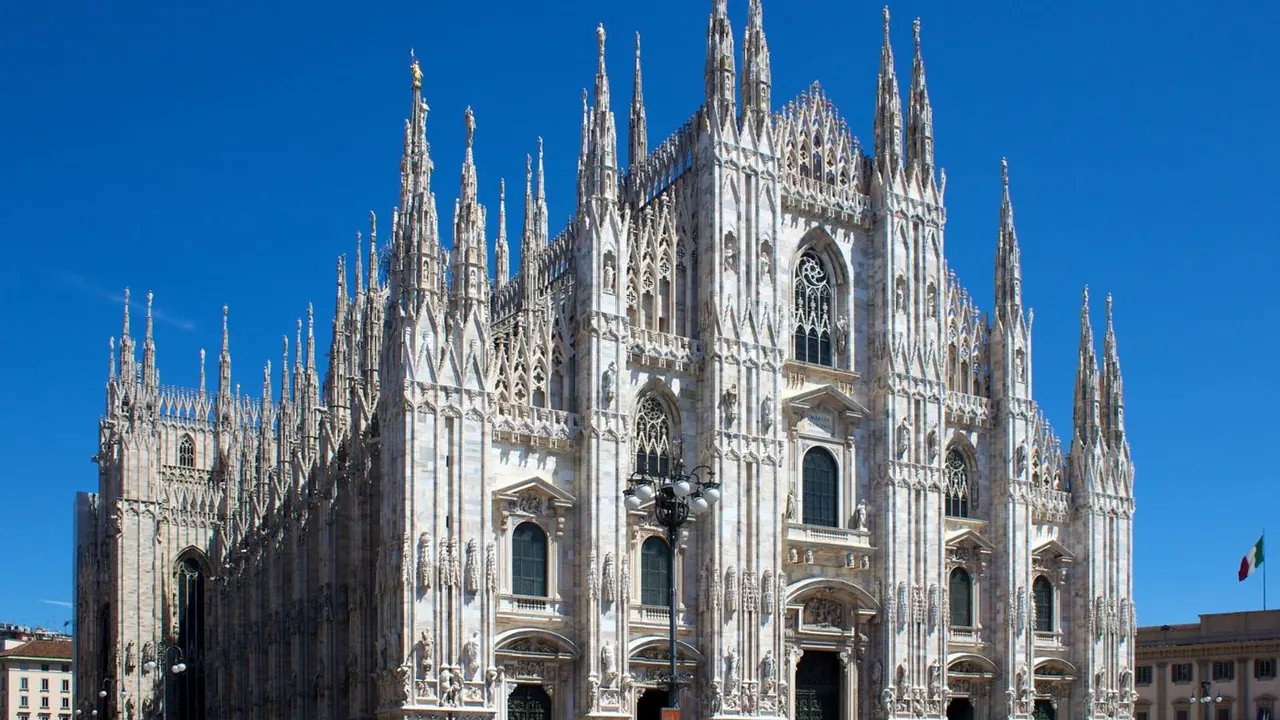
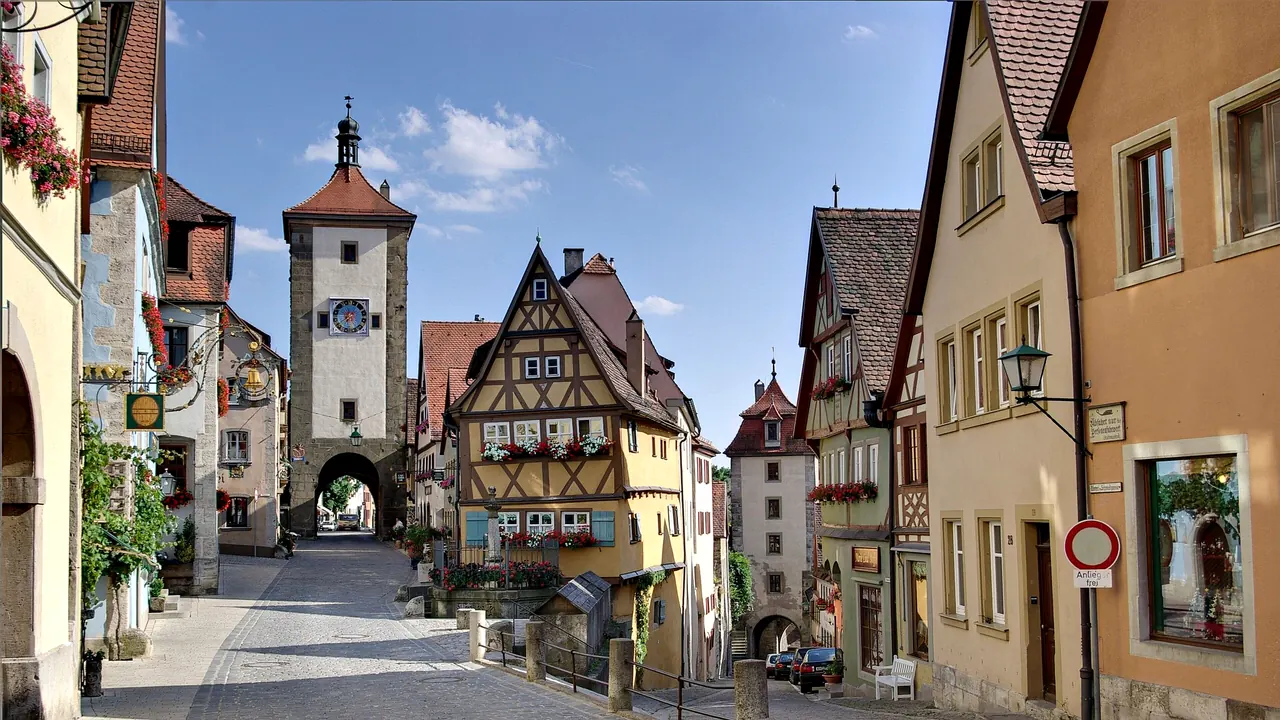
Photos: Milan by Jiuguang Wang, CC BY-SA 3.0, cropped; Rothenburg ob der Tauber by Berthold Werner, Public domain.
Milan or Rothenburg ob der Tauber?
Our verdict in twelve categories, each scored against the same fixed benchmark cities, and the climate month by month, so you can choose for your trip.
Choose Milan for
- shopping
- live music and the arts
- nightlife
Milan suits travellers who want a big city with plenty going on: serious food and aperitivo culture, opera at La Scala, the Last Supper and the Brera, and some of the best fashion and design shopping anywhere. It also works as a base, because fast trains reach the lakes, Verona, Turin and Bergamo without a car. You pay for all this, and the city itself is businesslike rather than calm.
Choose Rothenburg ob der Tauber for
- prices
Choose Rothenburg if what you want is the atmosphere of one place: a walled medieval town that is almost untouched inside the walls, best explored slowly on foot in the early morning and after the day visitors leave. It is cheaper than Milan, quiet at night and small enough to see in a day or two. It suits a stop on a Romantic Road drive better than a long stay, and it offers little in the way of nightlife, shops or varied food.
Scoreboard
Twelve categories on one fixed scale from 0 to 100. The shaded stretch is the gap between the two.
Your match
Pick a travel style or drag the sliders, and both match scores follow your weighting.
Wins on shopping and live music and the arts with your weighting.
Wins on prices with your weighting.
What matters to you?
Category by category
What the scores mean for a trip.
Beaches & swimming
Neither place is a beach destination, but Milan gives you more options for a swim. In the city there are the Idroscalo basin and open-air pools, and Lake Como and Lake Maggiore, with their pebbly lidos and swimming platforms, are about an hour away by train.
In Rothenburg, swimming means the town's outdoor pool or a drive of about an hour to the artificial lakes of the Franconian lake district. That is a planned outing rather than a quick dip.
Food & drink
Milan is much the stronger place to eat. Its own buttery northern dishes, such as saffron risotto and ossobuco, sit alongside good cooking from every Italian region, fine dining and an aperitivo ritual that can stand in for a light supper.
Rothenburg offers one cuisine done in a traditional way: Franconian roasts, Schäufele and bratwurst, with Silvaner in the Bocksbeutel bottle. The places around the Marktplatz mostly cater for coach parties, so the better meals are in family-run guesthouses and wine taverns away from the square.
Culture & sights
Milan has more to see, and of higher rank: the Duomo and its rooftop terraces, Leonardo's Last Supper, the Brera's Italian paintings and Michelangelo's Rondanini Pietà at the Castello Sforzesco. These come in clusters within a largely modern city, and there is enough to fill several days.
Rothenburg works the other way round. The whole walled town is the sight, with gabled houses, the Plönlein and the covered rampart walk, and its single great artwork is Riemenschneider's Holy Blood Altar in St Jakob's. It makes a complete and atmospheric visit, but a short one.
Nightlife
Milan has a real night out: aperitivo running on into the bars along the Navigli towpaths, the gay scene around Porta Venezia, and clubs that range from dressy venues near Corso Como to warehouse nights on the city's edges.
Rothenburg's evenings are wine taverns, dinner and the night watchman's lantern-lit tour, and the lanes are silent by about eleven. If you want a club, you have to go to Würzburg or Nuremberg.
Nature & outdoors
Milan has the better scenery within reach, though not in the city itself. The Po plain is flat and hazy, but within an hour by train you reach steep wooded lakeshores, sailing, and serious hiking and via ferrata on the Grigne ridges, and the Alpine ski resorts are possible as a long day out in winter.
Rothenburg's countryside starts at the town walls, which is a real advantage, but it is gentle: meadows and mills in the Tauber valley, the family-friendly cycle path through the vineyards, and the rolling Frankenhöhe. There are no mountains or big lakes.
Day trips
Milan is one of the best bases in Italy for days out, because high-speed trains put Verona, Turin, Bergamo and Bologna within easy reach. Lake Como's villages, the Certosa di Pavia and Lugano across the Swiss border can also be done without a car.
Rothenburg's surroundings are lovely, with Dinkelsbühl, Nördlingen inside its crater, Würzburg's Residenz and Nuremberg's castle all about an hour or less away. The catch is the branch-line railway, which makes a car close to essential.
Good for families
For a stay of several days, Milan gives children more to fill the time. The science and technology museum, with its submarine, trains and hands-on labs, is good for a wet day. Parco Sempione has playgrounds and the small aquarium, and older children can be taken to Leolandia or to Gardaland on Lake Garda. The drawbacks are the heavy summer heat and headline sights that are mostly aimed at adults.
Rothenburg works best as a day or two of storybook adventure: walking the covered ramparts, climbing the Rathaus tower and following the night watchman with his halberd. Older children are often gripped by the shame masks in the Crime Museum. There is little traffic inside the walls, but there is also little made for children, and the cobbles and steep valley paths are hard on pushchairs and small legs.
Getting around
In the centre, both places are walkable, but Milan connects far better beyond it. Its five metro lines, dense tram network and direct trains from Centrale, Garibaldi and Cadorna mean you never need a car, although the transfer from Malpensa is long.
Rothenburg can be crossed in fifteen minutes on cobbles, with a steep climb back up from the valley. Leaving it is the hard part: trains usually need a change at Steinach and regional buses are sparse, so the surrounding area is easier to see by car.
Shopping & style
In Milan, shopping can easily fill a whole trip. In Rothenburg, it fills the gaps between sights. Milan's flagship stores line Via Montenapoleone and Via della Spiga, there are old shops under the glass roof of the Galleria and there is La Rinascente beside the Duomo. Corso Buenos Aires covers everyday shopping, and the Navigli have weekend antique markets.
Rothenburg sells one thing well, and that is Christmas. The shops on the Herrngasse and Schmiedgasse stock glass baubles, nutcrackers and Erzgebirge carvings all year, as well as teddy bears, cuckoo clocks and pewter. In December the market on the Marktplatz is one of the most atmospheric in Germany. Fashion and design shops are almost entirely missing.
Affordability
Rothenburg is easier on the wallet. It costs about what you would expect in small-town Germany plus a tourist premium, entry fees to the sights are modest, and staying in a nearby village saves a good deal.
Milan is Italy's most expensive city, and hotels are especially hard on the budget during trade fairs and fashion weeks. Aperitivo snacks, lunchtime set menus and a room near a metro stop outside the centre help.
Live music & performing arts
The two are a long way apart here. Milan has La Scala, with its season of opera, ballet and concerts, and gallery seats are within reach if you are persistent. Around it are the Piccolo Teatro, a symphony orchestra at the Auditorium, jazz rooms and big summer concerts at San Siro.
Rothenburg's performances are mostly seasonal: the costumed Meistertrunk play, summer open-air theatre and organ concerts in St Jakob's. On most evenings there is no show to go to.
Wellness & relaxation
Neither place is built for rest, and they are about level here, though the ways of finding calm differ. In Milan you seek it out: a thermal spa complex with outdoor pools in the city, the 1930s Bagni Misteriosi in summer, or a train to the quiet lakeside villas.
In Rothenburg, calm comes with the time of day. The town empties early in the morning and in the evening, which is when a walk on the walls is at its best. For proper thermal bathing you need to drive to Bad Windsheim or Bad Mergentheim.
When should you go?
Pick your month. The climate figures are measured averages, not a forecast.
Milan in July
Rothenburg ob der Tauber in July
Daytime high, °C
Rainfall in the month, mm
Where the figures come from
Milan's sunshine is measured 41 km from the centre, at Novara / Cameri.
Rothenburg ob der Tauber's sunshine is measured 27 km from the centre, at Feuchtwangen-heilbronn.
Temperature and rainfall are climate normals, averaged over the years shown. Milan: 1991-2020 (rainfall 1971-2000) normals, Milano / Linate (8 km from centre). Rothenburg ob der Tauber: 1991-2020 normals, Rothenburg ob der Tauber (0.9 km from centre).
Milan has the hotter, sunnier summer, with afternoons around 30°C in July and August that can feel heavy in the streets and on the metro. That is the season for the lidos on Como and Maggiore. Rothenburg stays milder, around 25°C at the peak, which makes summer comfortable for walking the walls and the Tauber valley but only just warm enough for outdoor swimming. In both places the most pleasant months for walking are May, June and September.
Rain is more of a factor in Milan, where May and October are the wettest months at up to 119mm. Rothenburg's rainfall is lighter and spread more evenly through the year. Winter is colder and darker in Rothenburg, with highs near 3°C in January and very little sun in December. Milan is a few degrees milder, but it is also grey from November to January, so in winter both are better for indoor sights than for long days outside.
Which traveller are you?
On a shopping trip, Milan is the clear choice. The Quadrilatero holds the flagships of the great Italian fashion houses, and Brera and Porta Ticinese add boutiques, vintage shops and design showrooms. Rothenburg sells mostly Christmas decorations and souvenirs.
For a food and nightlife trip, choose Milan. You can start with aperitivo along the Navigli, eat risotto and cotoletta or cooking from anywhere in Italy, and go on to clubs late in the evening. Rothenburg serves hearty inn food and goes quiet by eleven.
On a trip on a tight budget, Rothenburg is the better bet. Rooms and meals cost less than in Milan, the beer and wine in the local inns are fairly priced, and walking the walls costs nothing. It is cheaper still if you sleep just outside the gates.
Before you go
| Measure | Milan | Rothenburg ob der Tauber |
|---|---|---|
| Official language | Italian | German |
| Currency | Euro (EUR) | Euro (EUR) |
| Sockets | CFL230 V, 50 Hz | CF230 V, 50 Hz |
| Driving side | Right | Right |
| Time zone | UTC+1, UTC+2 in summer | UTC+1, UTC+2 in summer |
| Emergency number | 112 | 112 |
| Elevation | 138 m | 430 m |
| Main airport | Milan Malpensa International Airport (MXP)40 km from centre208 non-stop destinations | Nuremberg Airport (NUE)66 km from centre56 non-stop destinations |
| Public holidays this year | 13 days | 12 days |
By the numbers
| Measure | Milan | Rothenburg ob der Tauber |
|---|---|---|
| City population | 1,354,196 | 11,331 |
| People per km² | 7,453 | 272 |
| Museums within 10 km | 88 | 6 |
| UNESCO World Heritage sites within 50 km | 4 | 2 |
Where else could you go?
Every comparison below shares a destination with this one, so you can follow Milan or Rothenburg ob der Tauber somewhere new.
- Comovs Milan
- Bergamovs Milan
- Luganovs Milan
- Nurembergvs Rothenburg ob der Tauber
- Bambergvs Rothenburg ob der Tauber
- Stuttgartvs Rothenburg ob der Tauber