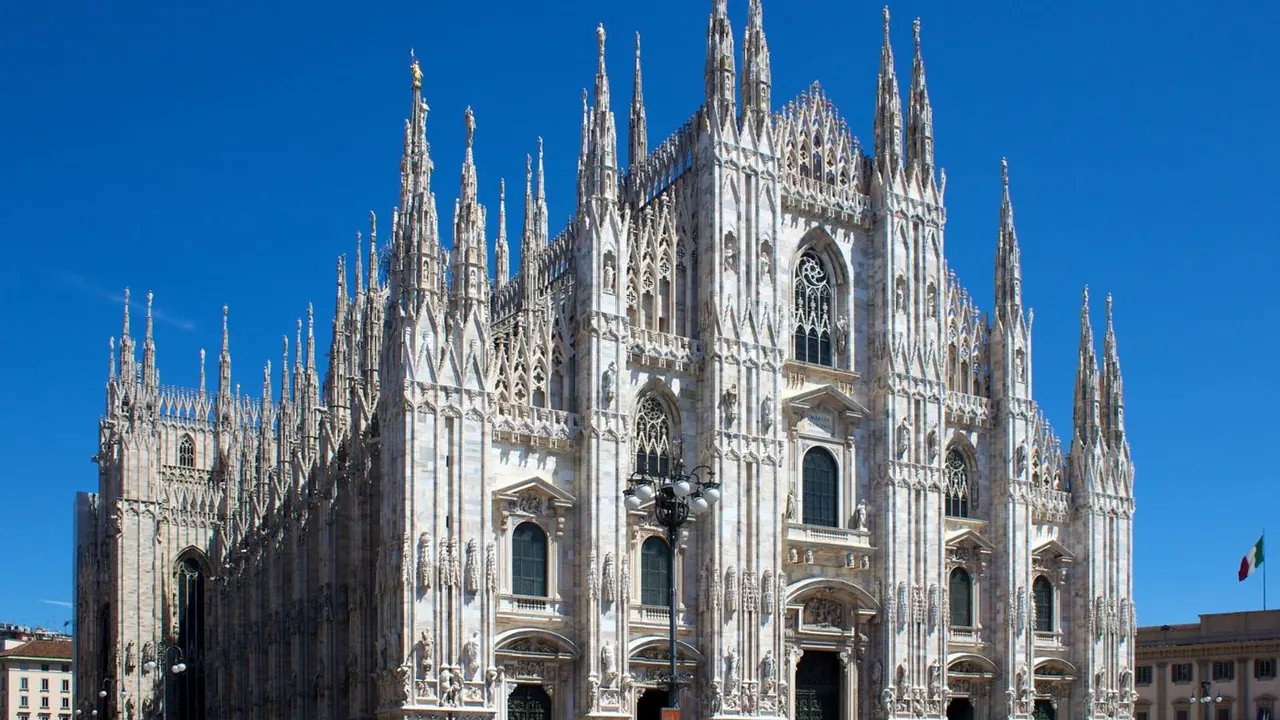
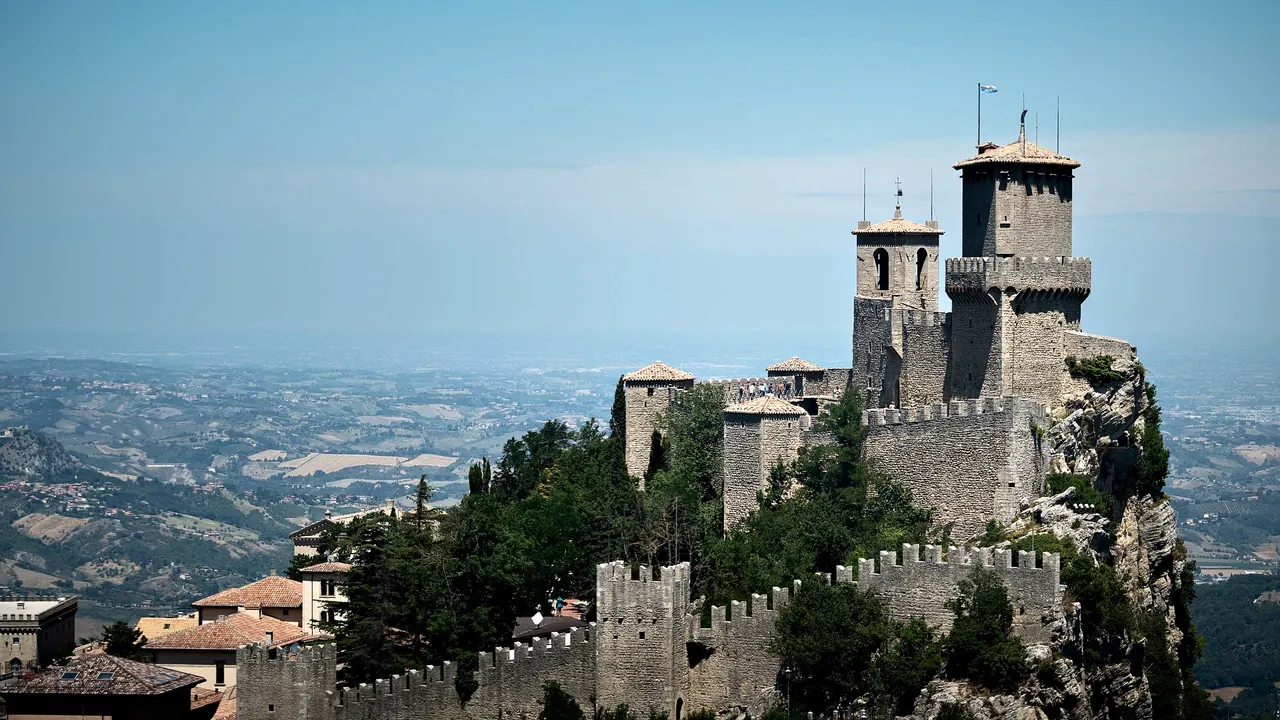
Photos: Milan by Jiuguang Wang, CC BY-SA 3.0, cropped; San Marino by Tibor Szabo, Pexels License.
Milan or San Marino?
Our verdict in twelve categories, each scored against the same fixed benchmark cities, and the climate month by month, so you can choose for your trip.
Choose Milan for
- live music and the arts
- shopping
- nightlife
Milan is the choice for a city trip with depth. You get the Last Supper and La Scala, the fashion houses of the Quadrilatero, aperitivo along the Navigli and fast trains that put Verona, Turin and Lake Como within an easy day. It suits travellers who want every evening full and will pay big-city prices for it.
Choose San Marino for
- beaches
- prices
San Marino works best as a short, quiet stop, or as a base for exploring Romagna and the Montefeltro by car. The walled summit and its towers fill half a day, the sandy Adriatic shore is close below and costs are gentler. Evenings are calm, though, and anyone after shows, serious shopping or late nights will find little.
Scoreboard
Twelve categories on one fixed scale from 0 to 100. The shaded stretch is the gap between the two.
Your match
Pick a travel style or drag the sliders, and both match scores follow your weighting.
Wins on live music and the arts and shopping with your weighting.
Wins on beaches and prices with your weighting.
What matters to you?
Category by category
What the scores mean for a trip.
Beaches & swimming
Neither is a beach town, but San Marino is much closer to the sea. Rimini and Riccione are about half an hour down the mountain, with long sandy beaches, rows of umbrellas and shallow water that suits small children. An afternoon on the Adriatic fits easily into a summer stay.
Milan is landlocked. A summer swim there means the Idroscalo basin, a public pool, or a train of about an hour to the pebbly lidos of Lake Como and Lake Maggiore. The Ligurian coast is roughly two hours away, too far for a casual swim.
Food & drink
Milan eats far better. Saffron risotto, ossobuco and cotoletta anchor a rich, buttery northern cuisine. Because the city draws people from all over Italy, you can also find good Neapolitan pizza, Sicilian pastry and real fine dining, with the aperitivo ritual in the Navigli, Brera and Isola around it all.
San Marino serves honest Romagna cooking: piadina, passatelli and hand-rolled pasta, with the republic's own Sangiovese to drink. On the summit, though, the terraces sell the view more than the food. The better meals are in the family trattorias of Borgo Maggiore and the lower villages.
Culture & sights
Milan has far more to see. There is the Duomo and its rooftop, Leonardo's Last Supper, the paintings in the Brera and Michelangelo's Rondanini Pietà in the Castello Sforzesco. Sant'Ambrogio and the Ambrosiana fill a second or third day.
In San Marino the appeal is the whole setting rather than its collections: three towers on the cliffs of Monte Titano, the Palazzo Pubblico and the story of one of the world's oldest surviving republics. It is memorable, but half a day covers it well.
Nightlife
Milan has a real night out. Aperitivo runs on into the canal-side bars of the Navigli, Isola and Porta Venezia have a relaxed, mixed scene, and the clubs range from dressy Corso Como to warehouse nights on the edge of town. San Marino has almost nothing beyond a quiet glass on a terrace above the lights of the coast, and the Riviera clubs are a drive away in Rimini and Riccione.
Nature & outdoors
Milan itself is flat and hazy, but within an hour the train reaches Lake Como and Lake Maggiore, with ferries, sailing and lakeside paths. The Prealps above them offer serious hiking and via ferrata, and in winter there is skiing further off.
San Marino has the better views on the doorstep: a limestone ridge looking out to the Adriatic, with paths through the woods between the towers. The walks are short, though, and the Montefeltro hills suit a gentle drive or bike ride rather than anything demanding.
Day trips
Both make good bases, but Milan's high-speed rail puts more within easy reach without a car. Verona, Turin, Bergamo and the lake villages are about an hour away and Bologna not much further. The Certosa di Pavia, Mantua and Cremona add more.
San Marino's options are fewer and more rural: the rock fortress of San Leo, Urbino's Renaissance court and the hill towns of Santarcangelo and Verucchio, with Ravenna's mosaics a little further. Most of these need a car, because the only regular public link is the bus down to Rimini.
Good for families
Neither place is built around children, but Milan has a slight edge for a city stay. The science and technology museum, with its submarine and hands-on labs, saves a rainy day, Parco Sempione has playgrounds, and Leolandia and Gardaland are within reach.
In San Marino, children love the towers, battlements and cable car. Steep steps make pushchairs hard work, though, and the summit has little built for children. The family attractions, such as waterparks, Italia in Miniatura and the shallow beaches, are on the coast below and easiest to reach with a car.
Getting around
Milan is much easier to get around. The centre is flat and walkable, the five metro lines are simple and take contactless cards, the old orange trams fill the gaps, and trains run straight to the lakes, so you never need a car. San Marino's core is small and car-free, but almost every street climbs or turns into steps. The cable car only links the summit with Borgo Maggiore, and beyond the bus from Rimini you really need a car.
Shopping & style
In Milan, shopping is a reason to make the trip. In San Marino it is mostly something to do between the towers. Milan has the flagships of the Quadrilatero della Moda, La Rinascente beside the Duomo and the old shops under the Galleria's glass roof. For everyday buys there is the long Corso Buenos Aires, and the design showrooms and Navigli antique markets give it more range.
San Marino's draw is lower taxes than in Italy, so the main streets sell perfume, watches, leather goods and spirits. Ceramics, souvenir crossbows and the republic's collectable stamps and coins fill the rest, and an outlet centre on the valley floor stocks fashion brands. Anyone looking for real independent design heads for Bologna.
Affordability
San Marino is easier on the wallet. Hotels are moderately priced outside August and the trattorias in the lower villages are fair, with only the view terraces and summit hotels charging more. Lower taxes also make fuel and spirits cheaper than in Italy.
Milan is Italy's most expensive city, and rooms become very hard to find at reasonable rates during trade fairs and fashion weeks. Aperitivo snacks, office-worker set lunches and staying near a metro stop outside the centre all help.
Live music & performing arts
La Scala alone puts Milan far ahead, with an opera and ballet season that opens each December on the feast of Sant'Ambrogio. The Piccolo Teatro, a fine symphony orchestra, jazz clubs and big summer concerts at San Siro add depth.
San Marino has a small theatre, occasional concerts by local ensembles and open-air music in the squares in summer. Its highlight is the Medieval Days festival, with costumed musicians, crossbow contests and flag-throwers. For opera or a proper concert season, people go to Bologna or Pesaro.
Wellness & relaxation
Neither is a place people choose in order to slow down, but Milan gives you more ways to do it. You can spend an afternoon soaking in the outdoor thermal pools south of the centre, or in summer swim at the Bagni Misteriosi, a set of 1930s pools beside a historic theatre. For real rest, though, most visitors take the train an hour north and spend the day by Lake Como or Lake Maggiore.
San Marino offers stillness rather than treatments. Apart from a hotel spa or two there is nowhere to soak, the nearest thermal baths are a separate trip, and summer afternoons around the towers are crowded. The calm comes once the coaches have gone, when an evening stroll along the walls with the plain spread out below is the most peaceful part of a stay.
When should you go?
Pick your month. The climate figures are measured averages, not a forecast.
Milan in July
San Marino in July
Daytime high, °C
Rainfall in the month, mm
Where the figures come from
Milan's sunshine is measured 41 km from the centre, at Novara / Cameri.
San Marino's temperatures are measured 52 km from the centre, at Frontone.
San Marino has no rain gauge within 25 km of the centre, so its rainfall comes from a gridded climate dataset read at the city rather than from a gauge further away.
Temperature and rainfall are climate normals, averaged over the years shown. Milan: 1991-2020 (rainfall 1971-2000) normals, Milano / Linate (8 km from centre). San Marino: 1991-2020 normals, Frontone (51.5 km from centre).
Both places are coldest in January at around 7°C and reach about 30°C in July and August. That makes spring and early autumn the comfortable months for walking. Milan's plain feels heavy and humid in midsummer, although July is also its sunniest month. Its wettest spells come in May and October, so late April, June and September are the safest bets for sightseeing.
San Marino's ridge is a little cooler in spring, and July is its driest month. July is also the beach season below. The Adriatic is warm enough for swimming from late June into September and reaches about 26°C in August. Rain builds from September and passes 100mm in November, which makes late autumn the greyest time on the mountain.
Which traveller are you?
For a shopping trip, Milan is in another league: the Quadrilatero della Moda holds flagships of houses founded in the city, and Brera and Porta Ticinese add vintage boutiques. San Marino has lower-tax perfume, souvenirs and an outlet centre.
On a food and nightlife trip, Milan wins easily. Risotto, cotoletta and fine dining fill the table, and Navigli aperitivo leads on to bars and dressy clubs. San Marino goes quiet by evening, and a night out means Rimini.
For a beach and sun trip, San Marino is the better base. The sandy shore at Rimini and Riccione lies half an hour below, with shallow water warm from late June. From Milan, a swim means a train to the lakes.
Before you go
| Measure | Milan | San Marino |
|---|---|---|
| Official language | Italian | Italian |
| Currency | Euro (EUR) | Euro (EUR) |
| Sockets | CFL230 V, 50 Hz | CFL230 V, 50 Hz |
| Driving side | Right | Right |
| Time zone | UTC+1, UTC+2 in summer | UTC+1, UTC+2 in summer |
| Emergency number | 112 | 112 |
| Elevation | 138 m | 675 m |
| Main airport | Milan Malpensa International Airport (MXP)40 km from centre208 non-stop destinations | Bologna Guglielmo Marconi Airport (BLQ)114 km from centre98 non-stop destinations |
| Public holidays this year | 13 days | 18 days |
By the numbers
| Measure | Milan | San Marino |
|---|---|---|
| City population | 1,354,196 | 4,040 |
| People per km² | 7,453 | 569 |
| Museums within 10 km | 88 | 19 |
| UNESCO World Heritage sites within 50 km | 4 | 2 |
| Swim season, months above 21 °C | - | 4 months |
Where else could you go?
Every comparison below shares a destination with this one, so you can follow Milan or San Marino somewhere new.
- Comovs Milan
- Bergamovs Milan
- Luganovs Milan
- Assisivs San Marino
- Florencevs San Marino
- Bolognavs San Marino