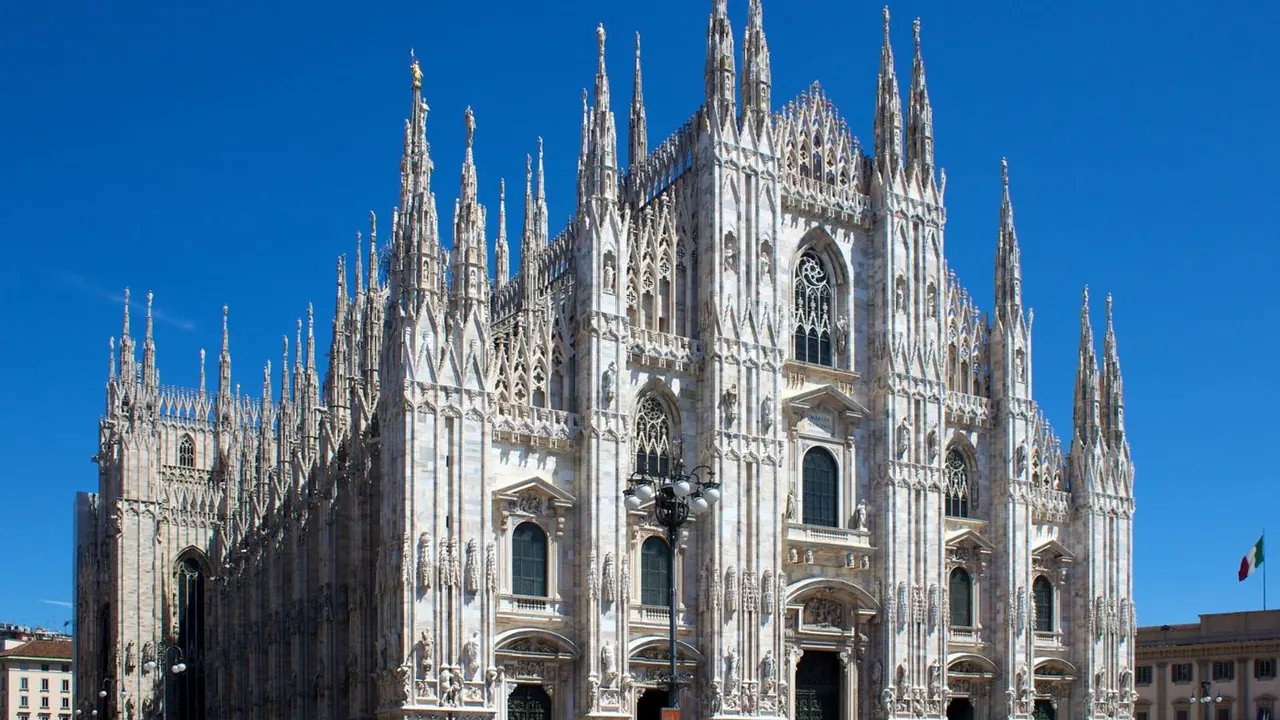
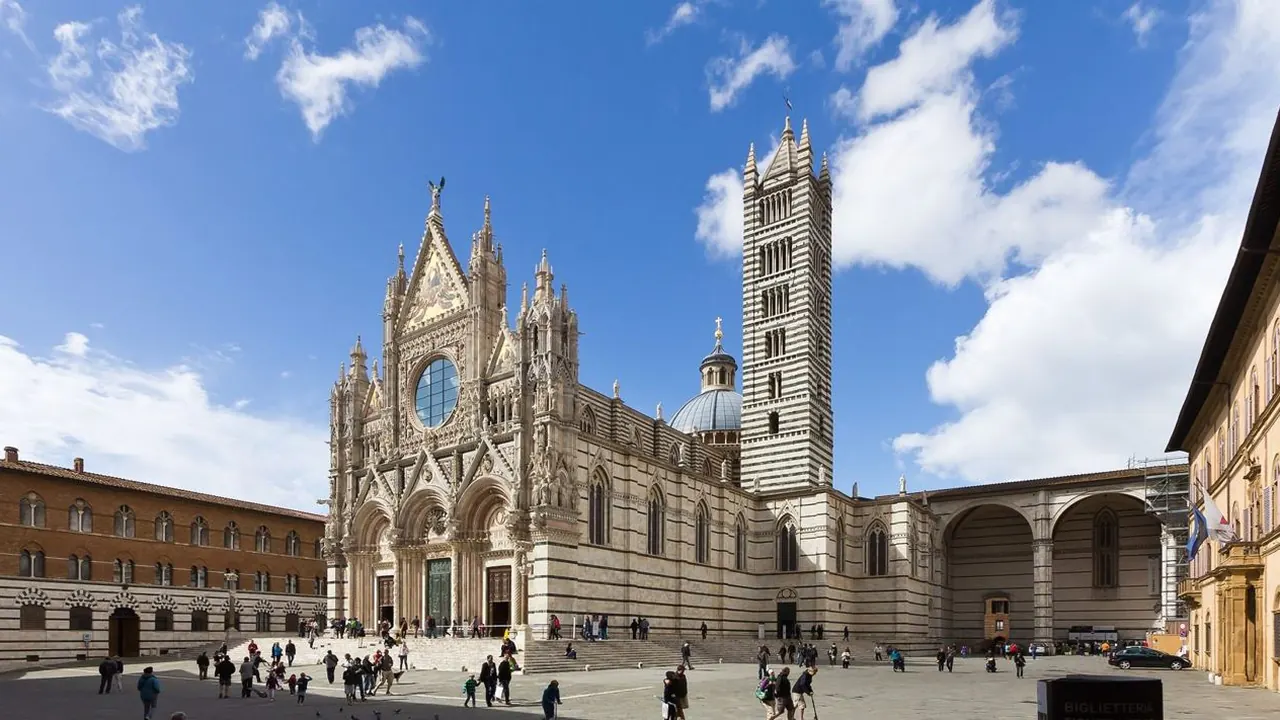
Photos: Milan by Jiuguang Wang, CC BY-SA 3.0, cropped; Siena by Raimond Spekking, CC BY-SA 4.0, cropped.
Milan or Siena?
Our verdict in twelve categories, each scored against the same fixed benchmark cities, and the climate month by month, so you can choose for your trip.
Choose Milan for
- shopping
- live music and the arts
- nightlife
Milan suits travellers who want a big Italian city with polish: flagship shopping in the Quadrilatero, a night at La Scala, aperitivo along the Navigli and then a club or bar until late. Its fast trains put Lake Como, Verona and Turin within easy reach without a car, and it is the easier of the two with children. The cost is that it is a pricier, more businesslike place to stay.
Choose Siena for
- wellness
- prices
- day trips
Siena is for a slower trip built around one intact medieval town and the Tuscan countryside around it. Evenings end with dinner and a walk across the Campo, and the shopping is modest. In return you get Sienese painting, osteria cooking, Chianti and Brunello on the doorstep and warm thermal pools in the hills to the south. It rewards anyone happy to hire a car and drive out to the hill towns.
Scoreboard
Twelve categories on one fixed scale from 0 to 100. The shaded stretch is the gap between the two.
Your match
Pick a travel style or drag the sliders, and both match scores follow your weighting.
Wins on shopping and live music and the arts with your weighting.
Wins on wellness and prices with your weighting.
What matters to you?
Category by category
What the scores mean for a trip.
Beaches & swimming
Neither city is a beach destination, but Milan makes summer swimming a little easier. Lake Como and Lake Maggiore are an hour away by train, with pebbly lidos and swimming platforms, and the Idroscalo basin and open-air pools serve for a quick dip in town.
From Siena the sea is the draw, on the sandy Maremma coast around Castiglione della Pescaia. It is a drive of well over an hour, though, so on most days swimming means the pool at your hotel or agriturismo.
Food & drink
Milan eats more widely. Alongside saffron risotto, ossobuco and cotoletta cooked in butter, the city gathers cooking from every Italian region, from Neapolitan pizza to Sicilian pastry, and it has a serious fine-dining tier. Aperitivo in the Navigli, Brera and Isola turns early evening into a meal of its own.
Siena's table is narrower but deeply local: pici with duck ragù, ribollita, cinta senese pork, and panforte and ricciarelli from bakeries that have been open for generations. Its strength is wine, with Chianti Classico, Brunello and Vino Nobile all grown nearby. Variety and international food are what you give up there.
Culture & sights
Both are first-rate for sightseeing, in very different ways. Milan offers a handful of world-class works spread across a modern city: the Duomo's rooftop among the spires, Leonardo's Last Supper, the Brera paintings and Michelangelo's Rondanini Pietà at the Castello Sforzesco.
Siena's appeal is the whole town. Its UNESCO-listed medieval centre runs from the sloping Campo to the striped Duomo, with Lorenzetti's Good and Bad Government frescoes and Duccio's Maestà along the way, while the contrade give each district its own flag and fountain. Siena is easier to take in over two or three days, but Milan has more to come back for.
Nightlife
Milan has a real night out and Siena largely does not. In Milan, aperitivo leads on to canal-side bars on the Navigli, Porta Venezia's mixed and gay-friendly streets, or clubs ranging from dressy Corso Como venues to warehouse nights on the edge of town.
Siena's evenings are a long dinner, a glass on the Campo and a stroll through the lit lanes, with a few student pubs and almost no clubs. The streets stay lively until late only around the Palio.
Nature & outdoors
Milan gives you mountains and water, Siena open farmland. The city itself is flat and hazy, with little beyond Parco Sempione and the canal towpaths. An hour north, though, the wooded slopes of Lake Como and Lake Maggiore bring ferries, sailing and lakeside paths, and the Grigne ridges above Lecco offer serious hikes and via ferrata, with skiing further off in winter.
Siena has no high peaks or shoreline, but the countryside begins at the walls. The bare clay hills of the Crete Senesi and the UNESCO-listed Val d'Orcia roll away to the south, and the white strade bianche gravel roads make it a natural base for road and gravel cyclists. Walkers can take to the Via Francigena and the wooded Montagnola.
Day trips
From Milan the day trips run on rails, so you never need a car. Fast trains reach Verona's Roman arena and Turin's Egyptian Museum in about an hour, and regional lines serve Bergamo's walled upper town, the Certosa di Pavia and Lugano across the Swiss border. On Lake Como the train stops at Varenna, and Bellagio is a short ferry ride across the water. Mantua's Gonzaga palaces, Cremona's violin workshops and the boats out to the Borromean Islands add even more choice.
Around Siena the sights are closer together, but you rely on the road more than the railway. San Gimignano's towers, walled Monteriggioni, the Chianti villages, Montalcino, Pienza and abbeys such as Sant'Antimo and San Galgano are all near enough for a morning's drive. Except for the fast bus to Florence, most are much easier with a hire car.
Good for families
Milan is the easier city with children. The science and technology museum, with its submarine and hands-on labs, covers rainy days, Parco Sempione has playgrounds, and Leolandia and Gardaland are close enough for a day out.
Siena is safe and mostly free of cars, and older children enjoy climbing the Torre del Mangia and watching the contrada drummers. But it has nothing built for children, and the steep lanes are a struggle with a pushchair, which is why many families stay at a country farmhouse with a pool instead.
Getting around
Milan is the simpler city to get around. Its flat centre is easy on foot, the five metro lines take a contactless card, and old orange trams fill the gaps. Direct trains run to the lakes, though the transfer from Malpensa is long.
Siena's centre is small and almost free of traffic, but it sits on three ridges, so walking means stepped lanes and steady climbs. Escalators link the walls to the station below. Trains are slow, and to see the countryside properly you really need a car.
Shopping & style
Milan is one of the world's fashion capitals, and it shows. The great Italian houses have their flagships on Via Montenapoleone and Via della Spiga, there are historic shops under the Galleria, and there are design showrooms, Brera boutiques and Navigli antique markets beyond that.
Siena is for small, local buys: majolica ceramics, contrada flags, pecorino, panforte and wine, plus the big weekly market by the Fortezza Medicea. It has no luxury streets or department stores, and the lanes around the Campo lean towards souvenirs.
Affordability
Siena is somewhat easier on the budget, though neither is cheap. Milan is Italy's most expensive city, and hotel rooms become scarce during trade fairs and fashion weeks. Aperitivo snacks in place of supper, office-worker lunch menus and a room near a metro stop outside the centre all help.
In Siena the squeeze is on the few rooms inside the walls, especially around the Palio. A simple osteria lunch is good value and walking costs nothing. Entry fees for the cathedral and civic museums add up, though, and an agriturismo outside town usually saves money.
Live music & performing arts
Milan is a major stage. La Scala's opera and ballet season opens each December on Sant'Ambrogio, gallery seats make it reachable, and the Piccolo Teatro, the symphony orchestra at the Auditorium and big summer concerts at San Siro fill out the year.
Siena's programme is provincial, but it is good for a town its size. The Accademia Chigiana's summer concerts in palaces and churches fall just when Milan's classical season is quiet. Siena Jazz and the Teatro dei Rinnovati add more, but opera means going to Florence.
Wellness & relaxation
Siena is the better place to unwind, thanks to the hot springs around it. Rapolano Terme is about half an hour away, and further south lie the medieval bath of Bagno Vignoni, the free limestone pools of Bagni San Filippo and Petriolo's sulphur river, all within easy reach of a rural spa hotel.
Milan is a working city. It does have a thermal spa complex in town and the 1930s Bagni Misteriosi pools for a summer afternoon, but most people looking for real calm take the train to the lakes.
When should you go?
Pick your month. The climate figures are measured averages, not a forecast.
Milan in July
Siena in July
Daytime high, °C
Rainfall in the month, mm
Where the figures come from
Milan has no rain gauge within 25 km of the centre, so its rainfall comes from a gridded climate dataset read at the city rather than from a gauge further away.
Milan's sunshine is measured 41 km from the centre, at Novara / Cameri.
Siena's temperatures are measured 45 km from the centre, at Arezzo.
Siena has no rain gauge within 25 km of the centre, so its rainfall comes from a gridded climate dataset read at the city rather than from a gauge further away.
Temperature and rainfall are climate normals, averaged over the years shown. Milan: 1991-2020 normals, Milano / Linate (8 km from centre). Siena: 2006-2017 (rainfall 1991-2020) normals, Arezzo (45 km from centre).
Milan is at its best in May and September, when highs sit in the low to mid twenties and the streets are comfortable to walk all day. June is already warm, and July and August peak around 30°C with heavy humidity on the plain, though July is also Milan's sunniest month. Winter days hover near 7°C, fine for museums and La Scala but chilly for strolling, and the rain gathers from September to November.
Siena follows a similar calendar but runs a couple of degrees warmer through the year. May and late September suit its steep lanes best. By June it is properly warm, and July and August reach about 31°C, which makes the climbs hard going in the afternoon. Its wettest stretch is late autumn and early winter, with November near 127mm, and March is wet too. Neither city has a beach, so summer heat matters mainly for lake swimming from Milan and pool days around Siena.
Which traveller are you?
On a shopping trip Milan is the clear pick. The Quadrilatero della Moda, La Rinascente and the design showrooms make shopping a reason to come in itself, while Siena offers majolica, contrada scarves, panforte and a weekly market but nothing comparable.
For a relaxing and wellness trip Siena suits better. Rapolano's travertine pools are half an hour away, Bagno Vignoni and Bagni San Filippo are further south, and there are farmhouse stays among the hills. Milan has a city spa, but real rest usually means leaving for the lakes.
On a food and nightlife trip, Milan wins. It has aperitivo in Navigli, Brera and Isola, fine dining and cooking from every Italian region, then bars, Porta Venezia's gay scene or dressy clubs. Siena's evenings are lovely but end with wine on the Campo.
Before you go
| Measure | Milan | Siena |
|---|---|---|
| Official language | Italian | Italian |
| Currency | Euro (EUR) | Euro (EUR) |
| Sockets | CFL230 V, 50 Hz | CFL230 V, 50 Hz |
| Driving side | Right | Right |
| Time zone | UTC+1, UTC+2 in summer | UTC+1, UTC+2 in summer |
| Emergency number | 112 | 112 |
| Elevation | 138 m | 322 m |
| Main airport | Milan Malpensa International Airport (MXP)40 km from centre208 non-stop destinations | Florence Airport, Peretola (FLR)55 km from centre46 non-stop destinations |
| Public holidays this year | 13 days | 13 days |
By the numbers
| Measure | Milan | Siena |
|---|---|---|
| City population | 1,354,196 | 52,812 |
| People per km² | 7,453 | 446 |
| Museums within 10 km | 88 | 30 |
| UNESCO World Heritage sites within 50 km | 4 | 5 |
Where else could you go?
Every comparison below shares a destination with this one, so you can follow Milan or Siena somewhere new.