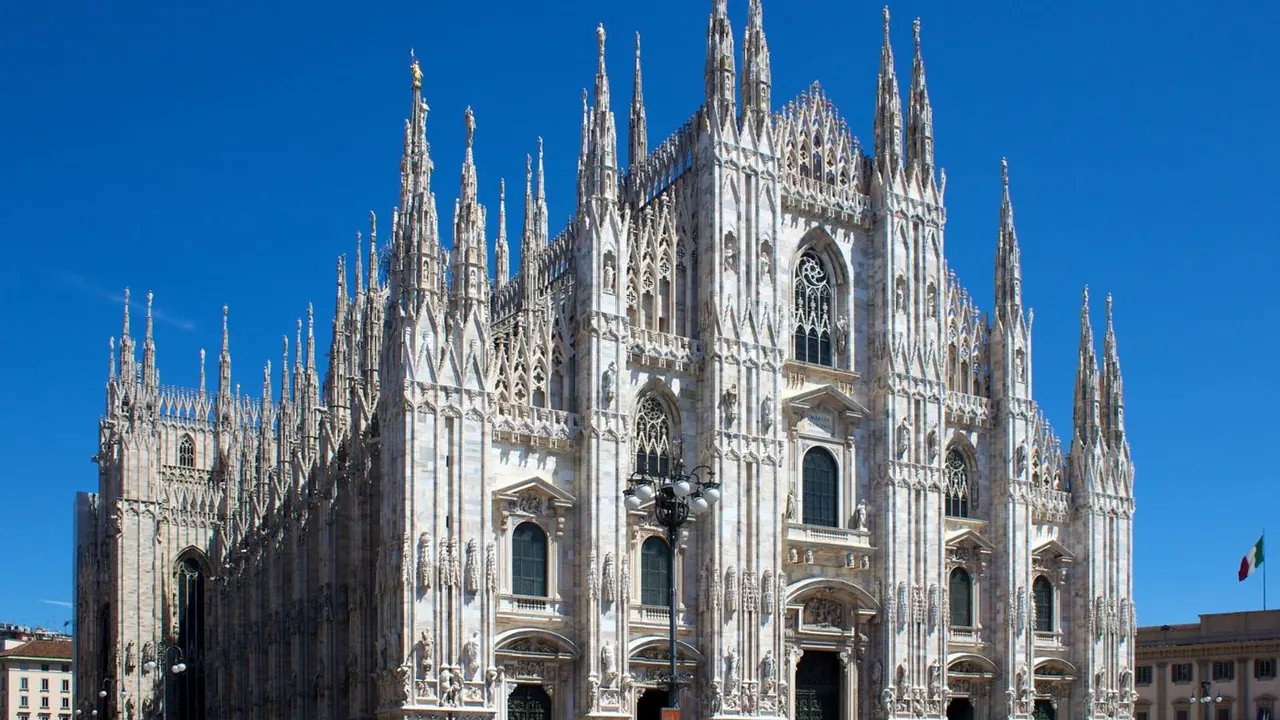
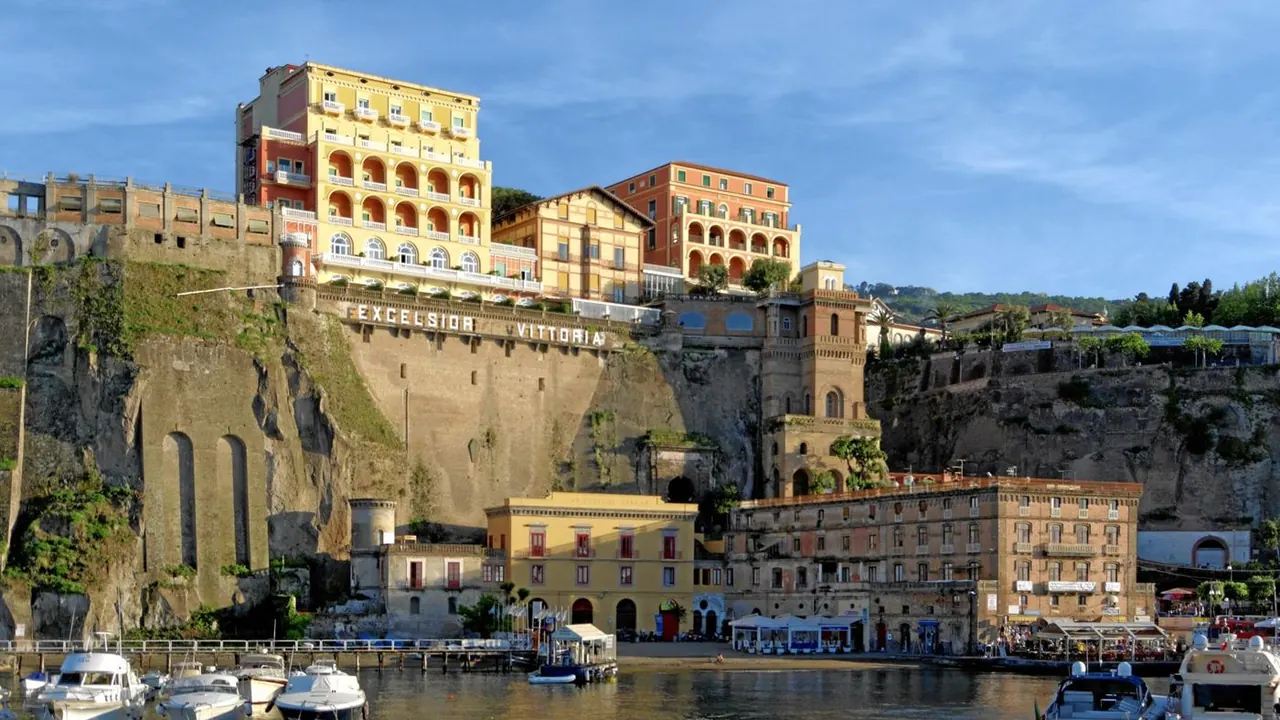
Photos: Milan by Jiuguang Wang, CC BY-SA 3.0, cropped; Sorrento by Berthold Werner, CC BY-SA 3.0, cropped.
Milan or Sorrento?
Our verdict in twelve categories, each scored against the same fixed benchmark cities, and the climate month by month, so you can choose for your trip.
Choose Milan for
- live music and the arts
- shopping
- culture and sights
Milan suits travellers who want a proper city, with the Duomo, Leonardo's Last Supper, an evening at La Scala and the fashion houses of the Quadrilatero all in a flat centre you can cross on foot or by tram. It is the better choice for shopping, opera, museums and a long night that starts with aperitivo on the Navigli. Fast trains to Verona, Turin and the lakes add plenty for anyone who likes variety.
Choose Sorrento for
- beaches
- nature and the outdoors
- wellness
Sorrento is for a slower Mediterranean stay where the sea and the landscape set the pace. Days go on swimming off the wooden piers at Marina Grande, walking the lemon terraces out to Punta Campanella, and taking the boat to Capri or the train to Pompeii. The town's own sights are modest and its evenings are quiet, so it rewards people who come for the view across the bay to Vesuvius rather than for city life.
Scoreboard
Twelve categories on one fixed scale from 0 to 100. The shaded stretch is the gap between the two.
Your match
Pick a travel style or drag the sliders, and both match scores follow your weighting.
Wins on live music and the arts and shopping with your weighting.
Wins on beaches and nature and the outdoors with your weighting.
What matters to you?
Category by category
What the scores mean for a trip.
Beaches & swimming
Sorrento is the place to swim. Its lidos stand on piers over clear, deep water at Marina Piccola and Marina Grande, a lift ride below the town, and boats run to pebble coves on Capri and the Amalfi side. The catch is that space is tight in high summer and the shore is mostly paid lidos.
Milan is landlocked. The nearest thing to a beach in the city is the artificial Idroscalo basin, and the real swimming is at the pebbly lidos of Lake Como or Maggiore, an hour away by train. Treat it as an occasional summer outing.
Food & drink
Milan gives you more range. On top of its butter-rich northern dishes such as saffron risotto, ossobuco and cotoletta, it serves good cooking from every Italian region and has serious fine dining. The aperitivo hour in Brera, Isola and along the Navigli is a ritual of its own.
Sorrento is narrower but very much rooted in its place: gnocchi alla sorrentina, fish cooked all'acqua pazza, local mozzarella and lemons in everything. Skip the tourist menus around Piazza Tasso and eat in the back-lane trattorias, at Marina Grande or up in the hill villages.
Culture & sights
Milan has far more to see, and of a far higher rank. The marble Duomo and its rooftop, the Last Supper, Brera's paintings and Michelangelo's Rondanini Pietà could fill several days, although the city between these clusters is mostly modern.
Sorrento's own sights fit into a gentle day or two: the Roman street grid, the cloister of San Francesco, the Museo Correale and the ravine of the Vallone dei Mulini. The area's famous names, from Pompeii to Naples, are trips out of town.
Nightlife
Milan offers a real night out, from aperitivo along the Navigli towpaths to dressy clubs around Corso Como and warehouse nights on the city's edge. Porta Venezia is the centre of its gay scene. The tone is stylish rather than wild, and it goes quiet in August.
Sorrento's evenings are a stroll on Corso Italia, a drink on a terrace over the bay, and maybe a piano bar playing Neapolitan songs. Because the last trains and ferries leave early, a late night in Naples or on Capri means staying over.
Nature & outdoors
Sorrento has the landscape right outside the door. Trails lead through olive and lemon terraces to Punta Campanella and the protected bay of Ieranto, the Path of the Gods and the crater of Vesuvius are close, and you can kayak or take a boat around the grottoes of Capri.
Milan sits on a flat, often hazy plain, with Parco Sempione and the canal towpaths for cycling out into the rice fields. Its good outdoors starts an hour north, with the lakes and the Grigne ridges for hiking and via ferrata, and ski resorts in winter are a full day out.
Day trips
Both are excellent bases, but the trips are of different kinds. From Milan, high-speed and regional trains take you to whole cities and art towns: Verona's arena, Turin's palaces, Bergamo's upper town, Mantua, Cremona and Parma, as well as Lake Como's villages and Lugano across the border.
From Sorrento, the trips are about ancient sites, islands and coast. The old Circumvesuviana line reaches Pompeii and Herculaneum, ferries go to Capri, and summer boats run to Positano and Amalfi. Because the coast road is slow, the sea is often the better way to travel.
Good for families
Milan is the easier choice with children. The science and technology museum, with its submarine and hands-on labs, covers rainy days, Parco Sempione has playgrounds, and Leolandia and Gardaland are within reach for a day out. The city's big sights, however, are mostly for adults.
Sorrento welcomes children warmly, and boat trips and Pompeii go down well, but there is little made for them. The swimming is into deep water off piers and rocks, and steep lanes without pavements make a hotel with a pool the usual answer.
Getting around
Both centres are flat and walkable, but Milan is far better connected. Five easy metro lines with contactless gates, a dense tram network and direct trains to the lakes cover almost every journey, and the only real drawback is the long trip in from Malpensa.
In Sorrento, getting beyond the town is the hard part. The Circumvesuviana is cheap but crowded and often late, and the Amalfi buses crawl round the hairpins in summer, so ferries are often the most comfortable choice. Hotels in the hills rely on shuttles or taxis.
Shopping & style
Milan is one of the world's fashion capitals. The great Italian houses have their flagships in the Quadrilatero, the Galleria and La Rinascente are long-standing institutions, and design showrooms and Corso Buenos Aires add depth at other levels.
Sorrento's shopping is small and local: intarsia boxes and trays, sandals made to measure while you wait, linen, cameos and a great deal of limoncello. Anyone after fashion goes to Naples or Capri.
Affordability
Neither is a cheap stay, though the costs work differently. In Milan the hotels are the problem, especially during trade fairs and fashion weeks, and you save by filling up at aperitivo, eating office-lunch set menus and staying near a metro stop outside the centre.
Sorrento charges resort prices in summer for sea-view rooms, sunbeds and private boats. Its savings come from cheap trains and buses, trattorias away from the main squares, and much lower hotel rates in spring and late autumn.
Live music & performing arts
Milan is in a different class. La Scala's opera and ballet season opens each December, gallery seats put it within reach, and the Piccolo Teatro, the symphony orchestra at the Auditorium and summer concerts at San Siro widen the choice.
Sorrento's stage is mostly Neapolitan song and tarantella shows for visitors, plus chamber concerts in the cloister of San Francesco in summer. For opera you need to go to the San Carlo in Naples.
Wellness & relaxation
Sorrento is slightly more restful because the place itself slows you down. There are cliff-top hotel spas and terraces over the bay, villa gardens among the lemon groves, and the thermal gardens of Ischia are a ferry ride away, though July and August are crowded and noisy.
Milan actually has a thermal spa complex within the city, and the 1930s pools of the Bagni Misteriosi in summer, but it is a busy, work-minded place. Most visitors go to the lakes when they want real calm.
When should you go?
Pick your month. The climate figures are measured averages, not a forecast.
Milan in July
Sorrento in July
Daytime high, °C
Rainfall in the month, mm
Where the figures come from
Milan has no rain gauge within 25 km of the centre, so its rainfall comes from a gridded climate dataset read at the city rather than from a gauge further away.
Milan's sunshine is measured 41 km from the centre, at Novara / Cameri.
Sorrento has no rain gauge within 25 km of the centre, so its rainfall comes from a gridded climate dataset read at the city rather than from a gauge further away.
Sorrento's sunshine is measured 54 km from the centre, at Grazzanise.
Temperature and rainfall are climate normals, averaged over the years shown. Milan: 1991-2020 normals, Milano / Linate (8 km from centre). Sorrento: 2005-2025 (sunshine 1991-2020, rainfall 1991-2020) normals, Capri (17 km from centre).
Milan is best in late spring and early autumn, roughly May, June and September, when it is warm enough to walk the streets without the sticky heat of July, which reaches about 30°C. Winters on the Po plain are grey and cold, with highs around 7°C, so walking around the city is a chilly business. Rain comes on and off all year, but autumn is the wettest stretch, peaking at about 128mm in November. Summer is also the sunniest season.
Sorrento is milder in winter and much drier in summer, with almost no rain in July and August. Beach weather runs from June to September, and the sea is at its warmest in August at around 26°C, still pleasant into October. Midsummer afternoons are hot for hiking or for climbing the town's steep lanes, so spring and autumn suit walkers better. The rain arrives in late autumn, heaviest in November at about 151mm, but winter days stay noticeably milder than in Milan.
Which traveller are you?
On a beach and sun trip, Sorrento is the clear choice. You can swim from the piers below the cliff, sunbathe on the rocks at the Bagni della Regina Giovanna and take a boat to the coves of Capri, while Milan is a train ride from the nearest lake lido.
For a culture and arts trip, Milan is far stronger. The Duomo, the Last Supper, the Brera gallery and the Castello Sforzesco make the days, and La Scala and the Piccolo Teatro fill the evenings, which a small town like Sorrento cannot match.
On a shopping trip, Milan is a destination in its own right. It has the flagships of Via Montenapoleone, design showrooms, vintage shops in Brera and Porta Ticinese, and the Navigli antique markets. Sorrento offers inlaid woodwork, made-to-measure sandals and plenty of lemon souvenirs.
Before you go
| Measure | Milan | Sorrento |
|---|---|---|
| Official language | Italian | Italian |
| Currency | Euro (EUR) | Euro (EUR) |
| Sockets | CFL230 V, 50 Hz | CFL230 V, 50 Hz |
| Driving side | Right | Right |
| Time zone | UTC+1, UTC+2 in summer | UTC+1, UTC+2 in summer |
| Emergency number | 112 | 112 |
| Elevation | 138 m | 50 m |
| Main airport | Milan Malpensa International Airport (MXP)40 km from centre208 non-stop destinations | Naples International Airport (NAP)30 km from centre131 non-stop destinations |
| Public holidays this year | 13 days | 13 days |
By the numbers
| Measure | Milan | Sorrento |
|---|---|---|
| City population | 1,354,196 | 15,407 |
| People per km² | 7,453 | 1,541 |
| Museums within 10 km | 88 | 6 |
| UNESCO World Heritage sites within 50 km | 4 | 5 |
| Swim season, months above 21 °C | - | 5 months |
Where else could you go?
Every comparison below shares a destination with this one, so you can follow Milan or Sorrento somewhere new.