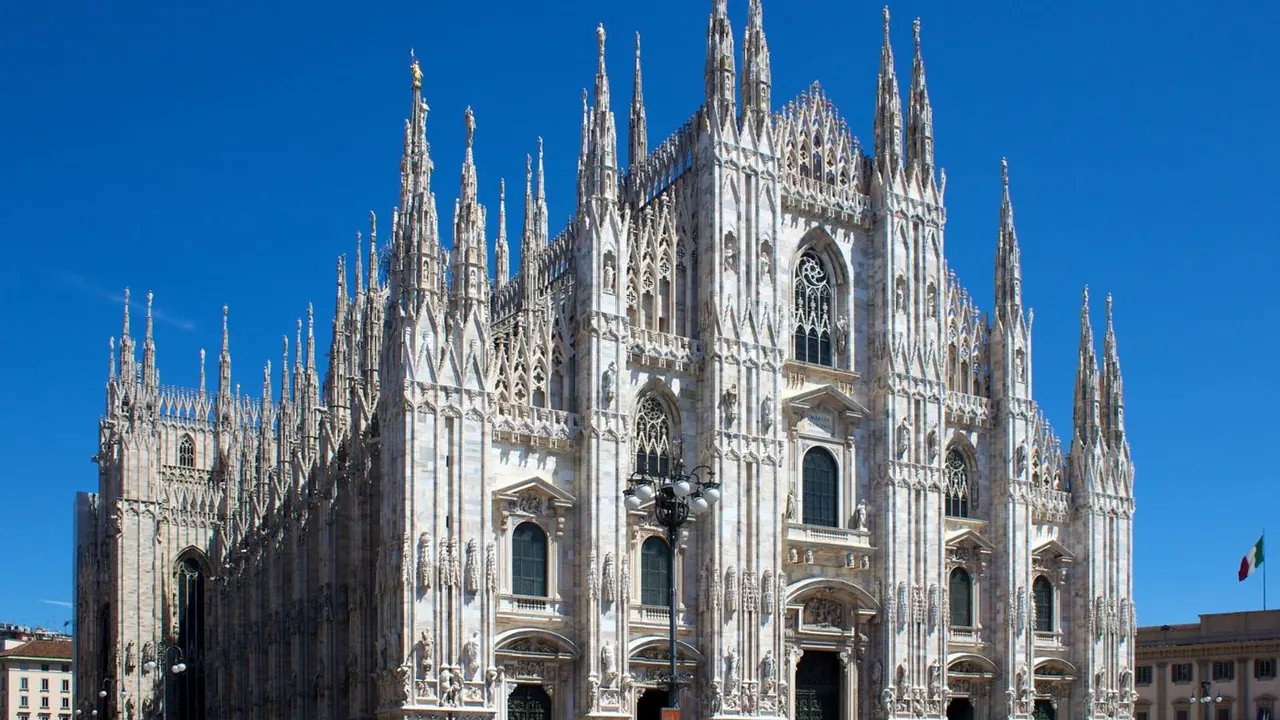
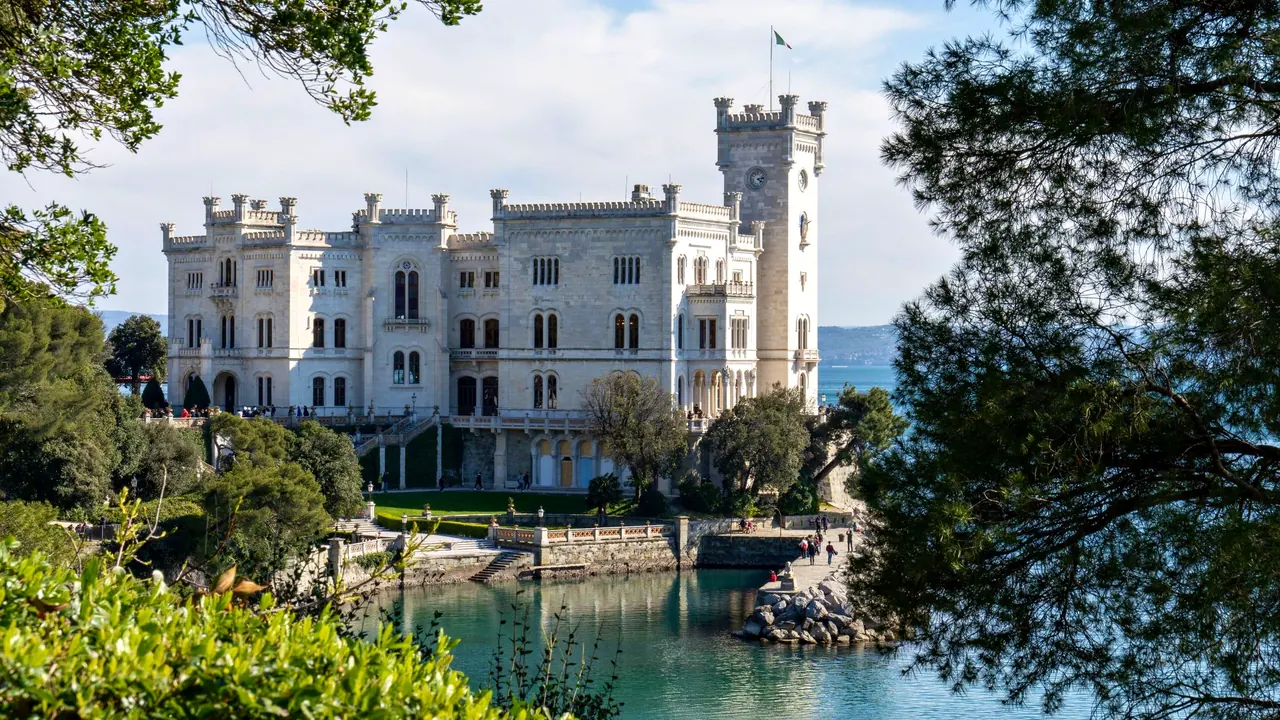
Photos: Milan by Jiuguang Wang, CC BY-SA 3.0, cropped; Trieste by Tibor Szabo, Pexels License.
Milan or Trieste?
Our verdict in twelve categories, each scored against the same fixed benchmark cities, and the climate month by month, so you can choose for your trip.
Choose Milan for
- shopping
- nightlife
- live music and the arts
Milan suits a traveller who wants a big city with a lot packed in: the Last Supper and the Duomo roof, an evening at La Scala, the fashion houses of the Quadrilatero, aperitivo along the Navigli and fast trains to Verona, Turin or Lake Como. It is the stronger choice for shopping, eating, going out and filling every day, as long as the budget can cope with Italy's most expensive hotels.
Choose Trieste for
- beaches
- prices
- nature and the outdoors
For a slower, cheaper stay by the sea, Trieste is the better pick. Its Habsburg squares and old coffee houses set an unhurried pace, the Adriatic is a ladder away at Barcola all summer, and the Karst, Miramare and Piran in Slovenia are close by. Nights are quiet and the shops are modest, and for the people who choose Trieste that is part of the appeal.
Scoreboard
Twelve categories on one fixed scale from 0 to 100. The shaded stretch is the gap between the two.
Your match
Pick a travel style or drag the sliders, and both match scores follow your weighting.
Wins on shopping and nightlife with your weighting.
Wins on beaches and prices with your weighting.
What matters to you?
Category by category
What the scores mean for a trip.
Beaches & swimming
Milan has no coast at all. Summer swimming means the Idroscalo basin near Linate, the city pools, or a train out to the pebbly lidos of Lake Como and Lake Maggiore, so it is an occasional outing.
Trieste has the sea on its doorstep, and swimming is a normal part of summer days. People lay their towels on Barcola's concrete steps and lawns and climb down ladders into clear water, and there are prettier pebble coves below the cliffs at Sistiana and Duino. The one thing missing is sand, so anyone hoping for soft beaches and shallow water should look elsewhere.
Food & drink
Milan is the richer place to eat. Its own dishes are buttery northern ones: saffron risotto, ossobuco and cotoletta. Because people come to Milan from all over Italy, you can also eat well from other regions, from Neapolitan pizza to Sicilian pastry, and there is a real fine-dining scene. Aperitivo with generous snacks shapes the early evening.
Trieste's cooking is more unusual but much narrower. It is a Central European mix of boiled pork carved at old buffet counters, jota soup, fried sardoni and strudel. Coffee has its own local vocabulary, and the farmhouse osmize on the Karst sell their own wine and cured meats. Beyond these specialities, the choice of restaurants is thin.
Culture & sights
Milan has the more important sights, even though they come in clusters within a largely modern city. Leonardo's Last Supper, the Duomo's marble spires, the paintings at the Brera and Michelangelo's Rondanini Pietà in the Castello Sforzesco are reasons to cross a continent.
Trieste offers a more even townscape rather than headline works of art. Piazza Unità opens onto the sea, the Borgo Teresiano grid runs along the Canal Grande, and San Giusto hill has its cathedral mosaics and a Roman theatre below. The white Miramare Castle and the sombre Risiera di San Sabba complete a picture of a Habsburg port with a complicated history.
Nightlife
Milan has a real night out to offer. Aperitivo leads on to the canal-side bars of the Navigli, Porta Venezia has a lively gay scene, and the choice runs from dressy clubs around Corso Como to warehouse nights on the edge of the city. The crowd is well dressed rather than wild.
Trieste's evenings stop at a spritz and a glass of local white wine around Piazza Unità or in Cavana, with student pubs and summer kiosks on the Barcola seafront. There are few clubs, and on a winter weeknight the streets are quiet before midnight.
Nature & outdoors
There is not much between them, but where you find the outdoors is very different. Milan's own surroundings are the flat, hazy plain, so walkers and cyclists take a train to the steep wooded shores of Como and Maggiore, the Grigne ridges or, on a long winter day, the ski slopes of the Valtellina.
In Trieste the wild country starts at the edge of town. You can walk along the Strada Napoleonica above the gulf, hike and climb in Val Rosandra or go down into the Grotta Gigante. On the water there is sailing on the gulf and snorkelling or kayaking in the Miramare marine reserve. This is limestone and sea, while Milan offers lakes and Alps.
Day trips
Italy's fastest rail lines meet in Milan, so a lot is about an hour away: Bergamo's walled upper town, Bellagio and Varenna on Lake Como, Verona's Roman arena and Turin's Egyptian Museum, with Bologna not much further. Closer in are the Certosa di Pavia and Vigevano's Renaissance square, and Lugano gives you Switzerland without a car.
Trieste's range spans three countries. Aquileia's huge mosaic floor, star-shaped Palmanova, the Collio wine country and Venetian-style Piran across the Slovenian border all make easy days out. Further afield it gets slower: the Istrian towns such as Rovinj are a trip by car, and Venice is about two hours each way by train, so there are fewer quick, effortless outings than from Milan.
Good for families
Neither city is built around children, but they suit different ages. Milan offers the science museum with its submarine and trains for rainy days, a flat centre that is easy with a pushchair, and the Leolandia and Gardaland theme parks within reach. Trieste is better for children who like the outdoors: the huge Grotta Gigante, the gardens at Miramare and summer days at Barcola. Its steep stepped streets and rocky swimming make it harder going with toddlers.
Getting around
Milan is the easier city to get around. Its centre is flat, the Duomo, Brera and the Castello are a short walk apart, and when your feet give out the metro and a close web of trams take over, all paid for with a tap of a contactless card. Direct trains from three main stations reach the lakes, so you can follow a full itinerary without a car. The only real irritations are the summer heat underground and the long ride in from Malpensa.
Trieste is just as easy as long as you stay by the water, where the squares, the Canal Grande and the museums sit together on level ground. Once you leave the waterfront it is harder work. With no metro you rely on buses, and San Giusto and the hillside districts are reached by climbing steps. The coast towards Miramare and Muggia means a bus or a boat rather than a quick train, and for the Karst villages or Slovenia a hire car helps, something a visitor to Milan can do without.
Shopping & style
For shopping, Milan is far ahead. Via Montenapoleone and Via della Spiga hold the flagships of the Italian fashion houses, many of which began here. Add the Galleria, La Rinascente, Corso Buenos Aires, the vintage shops of Porta Ticinese and design showrooms across the city, and shopping can fill a whole trip.
Trieste has no luxury scene. Corso Italia has ordinary chain shops, and the most interesting browsing is in the antique shops of the old town. The things to take home are edible: freshly roasted coffee, Karst honey and wine, and presnitz pastries.
Affordability
Trieste is the easier city on the wallet. A buffet lunch and coffee at the bar cost little, buses are cheap, and swimming at Barcola and walks on the Karst cost nothing. Rooms only get tight around the regatta and in high summer.
Milan's hotels are among the most expensive in Italy and become very hard to find at a fair rate during fashion weeks and trade fairs. To keep costs down, eat at office-worker set lunches, make an aperitivo spread your supper and stay near a metro stop outside the centre.
Live music & performing arts
Milan has La Scala, which is reason enough to book a trip around a performance. Gallery seats put even the grand season within reach. The Piccolo Teatro, a symphony orchestra at the Auditorium, jazz rooms and summer stadium concerts at San Siro mean there is something on most nights.
Trieste takes opera seriously on a smaller scale, with a proper season at the waterfront Teatro Verdi and a rare Habsburg fondness for operetta. A Slovenian-language theatre and summer concerts in the castle courtyard on San Giusto add local character, but the live-music circuit is small.
Wellness & relaxation
The two cities are about even, and they offer different kinds of rest. Milan has the facilities, with a thermal spa complex south of the centre, the 1930s open-air pools of the Bagni Misteriosi and good hotel spas, but the city itself feels busy and work-focused. Trieste has almost no spa offer, but it has a slow pace: long mornings in the old coffee houses, a swim off Barcola and an evening walk along the Molo Audace as the sun goes down over the gulf.
When should you go?
Pick your month. The climate figures are measured averages, not a forecast.
Milan in July
Trieste in July
Daytime high, °C
Rainfall in the month, mm
Where the figures come from
Milan's sunshine is measured 41 km from the centre, at Novara / Cameri.
Temperature and rainfall are climate normals, averaged over the years shown. Milan: 1991-2020 (rainfall 1971-2000) normals, Milano / Linate (8 km from centre). Trieste: 1991-2020 normals, Trieste (1.6 km from centre).
Both cities have similar summers, but they feel different. Milan sits on the Po plain and gets heavy and humid in July and August, when highs reach 30°C, so late May, June and September are better for walking the streets. Trieste is about as warm, but it has the sea. The Adriatic reaches 25°C in high summer and is pleasant for swimming from June to September, and Trieste gets clearly more sunshine through the warm months.
Autumn is the wettest season in both, and in Milan the rain peaks in October at 119mm. Milan's winters are grey and cold, with highs of 7°C and little sun. Trieste stays a few degrees milder and brighter, but the Bora can make winter days raw on the waterfront. For both cities, spring and early autumn are the safest choice for sightseeing.
Which traveller are you?
For a beach and sun trip, Trieste is the clear choice. You can swim in the clear Adriatic every day from the Barcola platforms, or from the coves at Sistiana and Grignano. Milan has no sea, and the lakes are an hour away by train.
On a shopping trip, Milan is in a different league. It has the flagship stores of the Quadrilatero della Moda, the Galleria and La Rinascente, plus design showrooms, Brera boutiques and Navigli antique markets. Trieste has ordinary high-street shops, and its best souvenirs are coffee and Karst wine.
For a food and nightlife trip, Milan offers much more. It has rich Milanese cooking, food from every Italian region and fine dining. After that come aperitivo in Brera or Isola, bars along the canals and clubs around Corso Como. In Trieste the streets are quiet by midnight.
Before you go
| Measure | Milan | Trieste |
|---|---|---|
| Official language | Italian | Italian |
| Currency | Euro (EUR) | Euro (EUR) |
| Sockets | CFL230 V, 50 Hz | CFL230 V, 50 Hz |
| Driving side | Right | Right |
| Time zone | UTC+1, UTC+2 in summer | UTC+1, UTC+2 in summer |
| Emergency number | 112 | 112 |
| Elevation | 138 m | 2 m |
| Main airport | Milan Malpensa International Airport (MXP)40 km from centre208 non-stop destinations | Trieste Airport (TRS)31 km from centre32 non-stop destinations |
| Public holidays this year | 13 days | 13 days |
By the numbers
| Measure | Milan | Trieste |
|---|---|---|
| City population | 1,354,196 | 198,417 |
| People per km² | 7,453 | 2,332 |
| Museums within 10 km | 88 | 33 |
| UNESCO World Heritage sites within 50 km | 4 | 5 |
| Swim season, months above 21 °C | - | 4 months |
Where else could you go?
Every comparison below shares a destination with this one, so you can follow Milan or Trieste somewhere new.