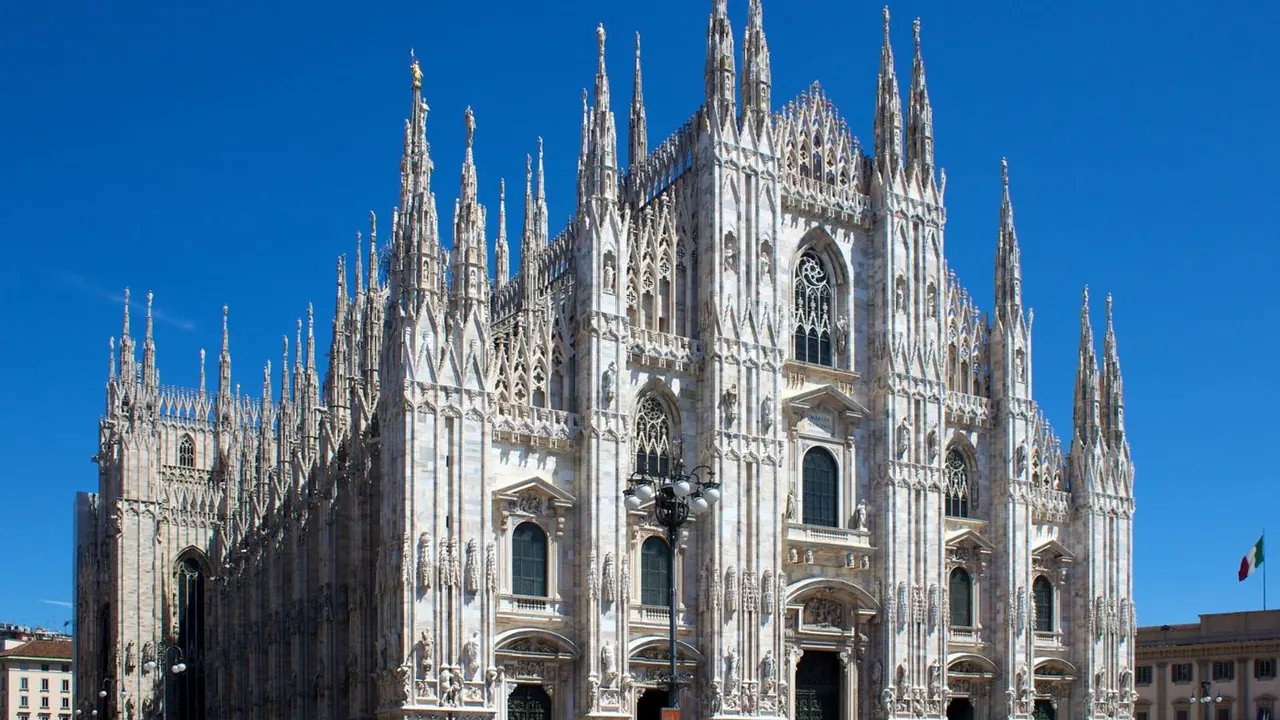
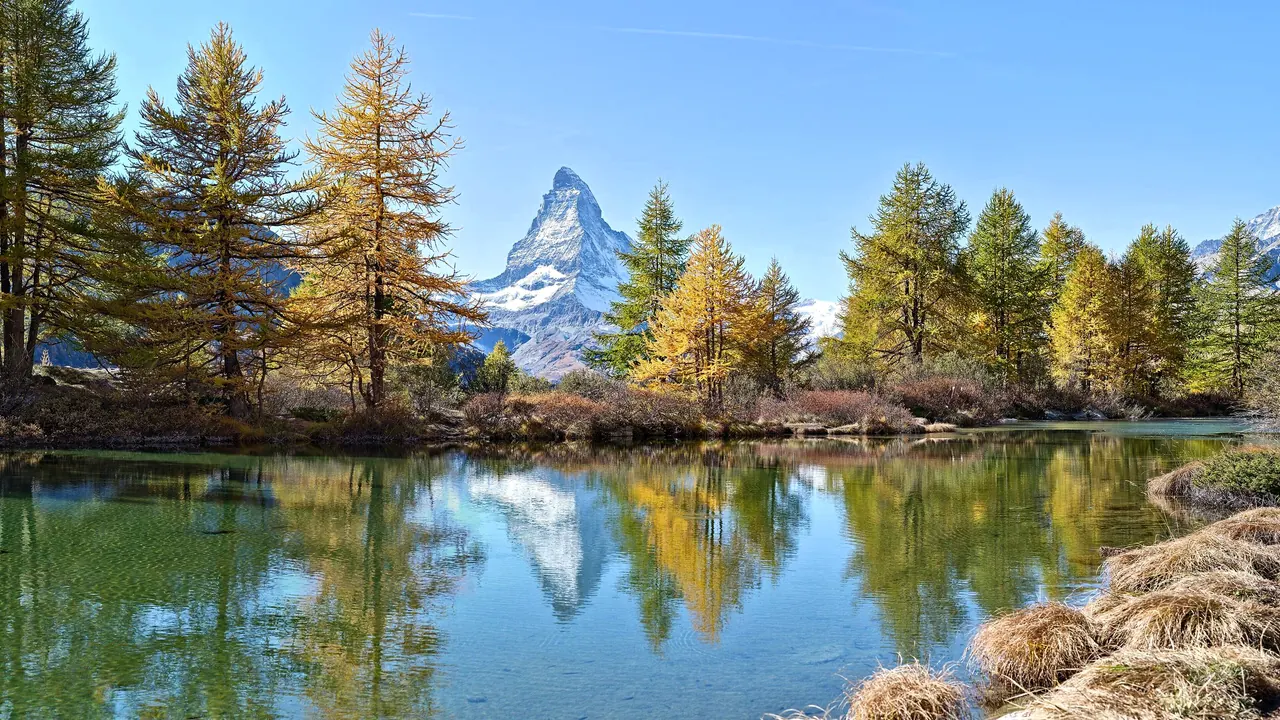
Photos: Milan by Jiuguang Wang, CC BY-SA 3.0, cropped; Zermatt by Roy Egloff, CC BY-SA 4.0, cropped.
Milan or Zermatt?
Our verdict in twelve categories, each scored against the same fixed benchmark cities, and the climate month by month, so you can choose for your trip.
Choose Milan for
- shopping
- live music and the arts
- culture and sights
Milan is for travellers who want a city. You get the Duomo, the Last Supper and opera at La Scala, aperitivo along the Navigli and the fashion houses of the Quadrilatero. Fast trains also put Bergamo, Verona and the villages of Lake Como about an hour away. It is expensive by Italian standards but still much easier on the wallet than Zermatt, and it suits a varied trip of sights, food and shopping.
Choose Zermatt for
- nature and the outdoors
- wellness
Choose Zermatt when the mountains are the whole point. The Matterhorn stands over a car-free village. Lifts climb to glacier terrain in winter and open a huge network of trails in summer, and evenings are for dinner, an après-ski drink or a hotel spa. Expect high prices at every turn, and not much to do on a day when cloud hides the peaks.
Scoreboard
Twelve categories on one fixed scale from 0 to 100. The shaded stretch is the gap between the two.
Your match
Pick a travel style or drag the sliders, and both match scores follow your weighting.
Wins on shopping and live music and the arts with your weighting.
Wins on nature and the outdoors and wellness with your weighting.
What matters to you?
Category by category
What the scores mean for a trip.
Beaches & swimming
Neither is a beach destination, but Milan at least gives you places to swim. In town there are the Idroscalo basin and the open-air pools, and in summer the pebbly lidos of Lake Como and Lake Maggiore are an hour away by train.
Zermatt has no bathing lake at all. The tarns on the walks above the village stay far too cold even in August, so swimming means a hotel pool.
Food & drink
Milan is a serious eating city. It has saffron risotto, ossobuco and cotoletta, a strong tier of fine dining, cooking from every Italian region and the aperitivo ritual in Brera, Isola and along the Navigli. You can eat well every night of a long stay without repeating yourself.
Zermatt's range is much narrower: Valais raclette, fondue and air-dried beef with Fendant or Cornalin, plus a few ambitious kitchens in the village. Its best meals are long terrace lunches in the hamlets around Findeln and Furi, reached on skis or on foot. Out of season, many places close.
Culture & sights
Milan's heritage comes in a few clusters, and each one is of real weight. There are the Duomo and its rooftop terraces, the Last Supper at Santa Maria delle Grazie, the Brera picture gallery and Michelangelo's Rondanini Pietà in the Castello Sforzesco. A culture-led trip can fill several days.
Zermatt's sights fill a single morning: the Matterhorn Museum on the first ascent of 1865, the mountaineers' cemetery and the old larch barns of the Hinterdorf. It is mountaineering history, and it means more because the peaks it describes are right outside.
Nightlife
Milan has a real night out. It starts with aperitivo on the Navigli towpaths and moves on to dressy clubs around Corso Como, warehouse nights on the edges of the city and the gay scene of Porta Venezia, though everything goes quiet in August. Zermatt's evenings depend on the season: loud, cheerful après-ski and a few late bars on the main street in winter, early nights among hikers in summer, and very little between seasons.
Nature & outdoors
Here Zermatt is in another league. The Matterhorn rises straight above the village, and lifts reach glacier terrain at over 3,800m. The skiing crosses into Italy, and summer opens hundreds of kilometres of trails, from the Five Lakes walk to guided climbs of four-thousanders.
Milan itself sits on the flat Po plain, with Parco Sempione and canal towpaths for cycling. Its real outdoors lies an hour north at Lake Como and Lake Maggiore and in the Grigne above Lecco. These are good for lakeside walks, sailing and via ferrata, but always a train ride away.
Day trips
Fast rail links make Milan one of the best bases in Italy. Bergamo, Verona, Turin and the villages of Lake Como are all around an hour away. The Certosa di Pavia, Mantua, Parma, the Borromean Islands and even Lugano across the Swiss border are also within easy reach.
From Zermatt, every outing starts with the long train down the valley. Sion's castle hills and Brig's Stockalper Palace make decent days out, but most visitors sensibly spend their spare days on the mountain instead.
Good for families
Both work with children, in different ways. Milan has indoor options, such as the science and technology museum with its submarine and the small civic aquarium, and Leolandia and Gardaland for older children. Its main sights and summer heat suit adults more than children.
Zermatt's strength is the village itself: car-free, calm and safe, with ski schools on the Sunnegga side and marmots to spot on summer walks. Rainy days are hard to fill, though, and the highest viewpoints can be too cold and thin-aired for small children.
Getting around
Both are easy without a car. Milan has a flat, walkable centre, five simple metro lines and the old orange trams, plus direct trains to the lakes. Its weak points are hot platforms in summer and the long transfer from Malpensa.
Zermatt is car-free and walkable from end to end, and its real network goes up the mountain: the Gornergrat cog railway, the underground funicular to Sunnegga and the gondolas. Arriving means taking the train, usually from the car park at Täsch, and hotels on the slopes mean a steep walk with luggage.
Shopping & style
Milan is a reason to travel in itself if you like to shop. It has the great fashion houses on Via Montenapoleone and Via della Spiga, the Galleria and La Rinascente beside the Duomo, vintage shops in Porta Ticinese and design showrooms across the city. Zermatt has a single main street of watch boutiques, souvenir shops and excellent ski and climbing outfitters, which are worth a visit if you need gear but offer little else.
Affordability
Neither is cheap, but Milan is far easier on the wallet. Aperitivo snacks can stand in for supper, lunchtime set menus are good value and public transport is fairly priced, although trade fairs and fashion weeks push hotel rates up sharply.
Zermatt is expensive at every turn: the rooms, the terrace meals, and the lifts and cog railways you need to see anything. Self-catering and a bed down the valley in Täsch help, but a tight budget will not stretch far here.
Live music & performing arts
Milan has La Scala, whose season opens each December on the feast of Sant'Ambrogio, and gallery seats bring opera within reach. There are also the Piccolo Teatro, a fine symphony orchestra and big summer concerts at San Siro. Zermatt has no theatre or concert hall, so you only get a cultural evening if your visit falls during Zermatt Unplugged in spring or the late-summer chamber music festival in the village church.
Wellness & relaxation
Zermatt is the more restful of the two. It has a large number of hotel spas with mountain views, some open to day visitors, and car-free streets with clean air. The mood is still active rather than slow in peak weeks.
Milan is a working city, though its thermal spa complex south of the centre and the 1930s Bagni Misteriosi pools make for a good afternoon. For real calm, people in Milan head out to the lakes.
When should you go?
Pick your month. The climate figures are measured averages, not a forecast.
Milan in July
Zermatt in July
Daytime high, °C
Rainfall in the month, mm
Where the figures come from
Milan's sunshine is measured 41 km from the centre, at Novara / Cameri.
Zermatt has no weather station within reach, so its figures come from a gridded climate model rather than a measured record, and read a broad area rather than the city itself.
Temperature and rainfall are climate normals, averaged over the years shown. Milan: 1991-2020 (rainfall 1971-2000) normals, Milano / Linate (8 km from centre). Zermatt: 1991-2020 normals, TerraClimate 4 km grid at the town, no weather station within 90 km.
Milan is at its best in May, June and September, when the afternoons are warm enough to walk the streets comfortably. July and August are the sunniest months, but the heat reaches about 30°C and the air feels heavy. That is fine for a trip to the lakes and tiring for sightseeing. Winters are grey and chilly at around 7°C, and May and October are the wettest months, with nearly 120mm each.
Zermatt has two seasons and almost nothing in common with Milan's year. From December to March, daytime highs stay around freezing, which is right for skiing. July and August peak at only about 14°C, which is ideal for hiking and too cool to think of swimming. Rain is spread fairly evenly through the year, but November is clearly the wettest month, with 130mm, and a poor time for either skiing or walking.
Which traveller are you?
On a culture and arts trip, Milan is the clear choice. The Last Supper, the Duomo and the Brera gallery fill the days, and La Scala and the Piccolo Teatro fill the evenings. Verona or Mantua are an easy train ride for more.
For an outdoors trip, Zermatt wins outright. Skiing that links across into Italy, glacier pistes into summer, hundreds of kilometres of marked trails and guided climbs on four-thousanders all start from the village. Milan's lakes and Prealps need a train ride first.
On a shopping trip, Milan is one of the best places in Europe to be. The Quadrilatero holds the flagships of the great Italian fashion houses, and Brera and Porta Ticinese add vintage and independent shops. Zermatt offers little beyond watches, souvenirs and ski gear.
Before you go
| Measure | Milan | Zermatt |
|---|---|---|
| Official language | Italian | French, German, Italian, Romansh |
| Currency | Euro (EUR) | Swiss Franc (CHF) |
| Sockets | CFL230 V, 50 Hz | CJ230 V, 50 Hz |
| Driving side | Right | Right |
| Time zone | UTC+1, UTC+2 in summer | UTC+1, UTC+2 in summer |
| Emergency number | 112 | 112 |
| Elevation | 138 m | 1,624 m |
| Main airport | Milan Malpensa International Airport (MXP)40 km from centre208 non-stop destinations | Geneva International Airport (GVA)128 km from centre150 non-stop destinations |
| Public holidays this year | 13 days | 9 days |
By the numbers
| Measure | Milan | Zermatt |
|---|---|---|
| City population | 1,354,196 | 6,023 |
| People per km² | 7,453 | 25 |
| Museums within 10 km | 88 | 2 |
| UNESCO World Heritage sites within 50 km | 4 | 2 |
Where else could you go?
Every comparison below shares a destination with this one, so you can follow Milan or Zermatt somewhere new.