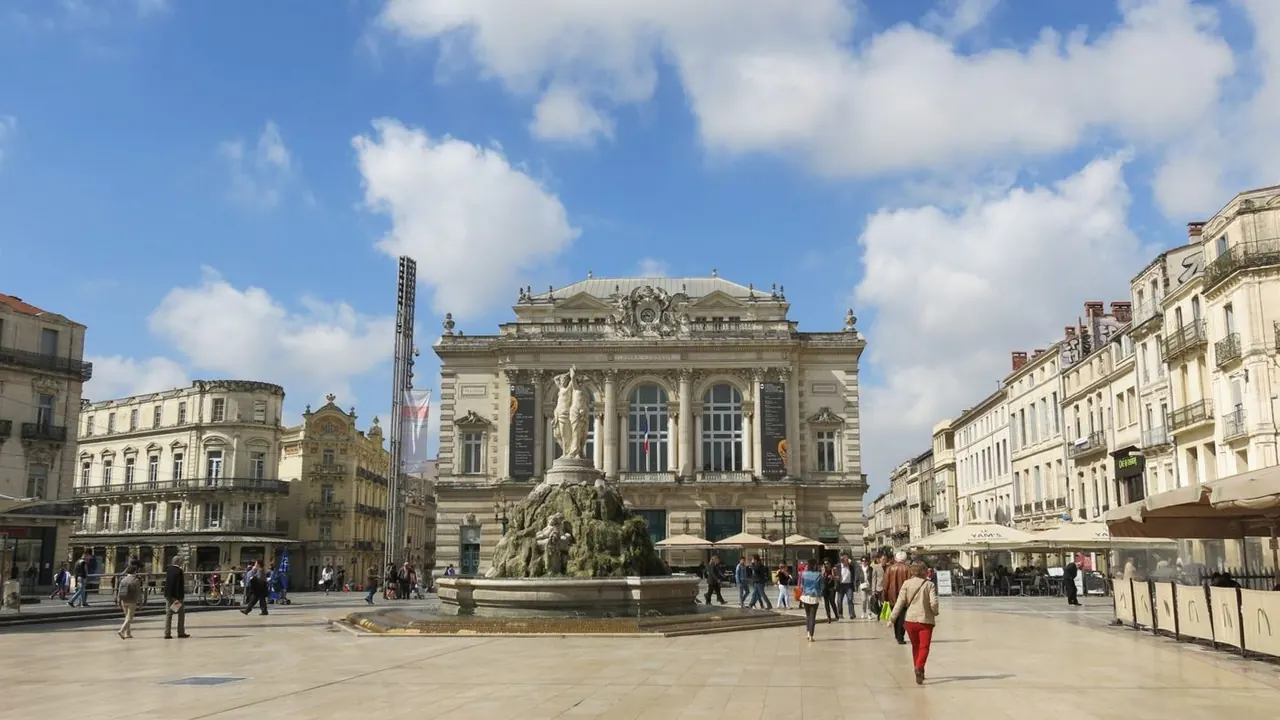
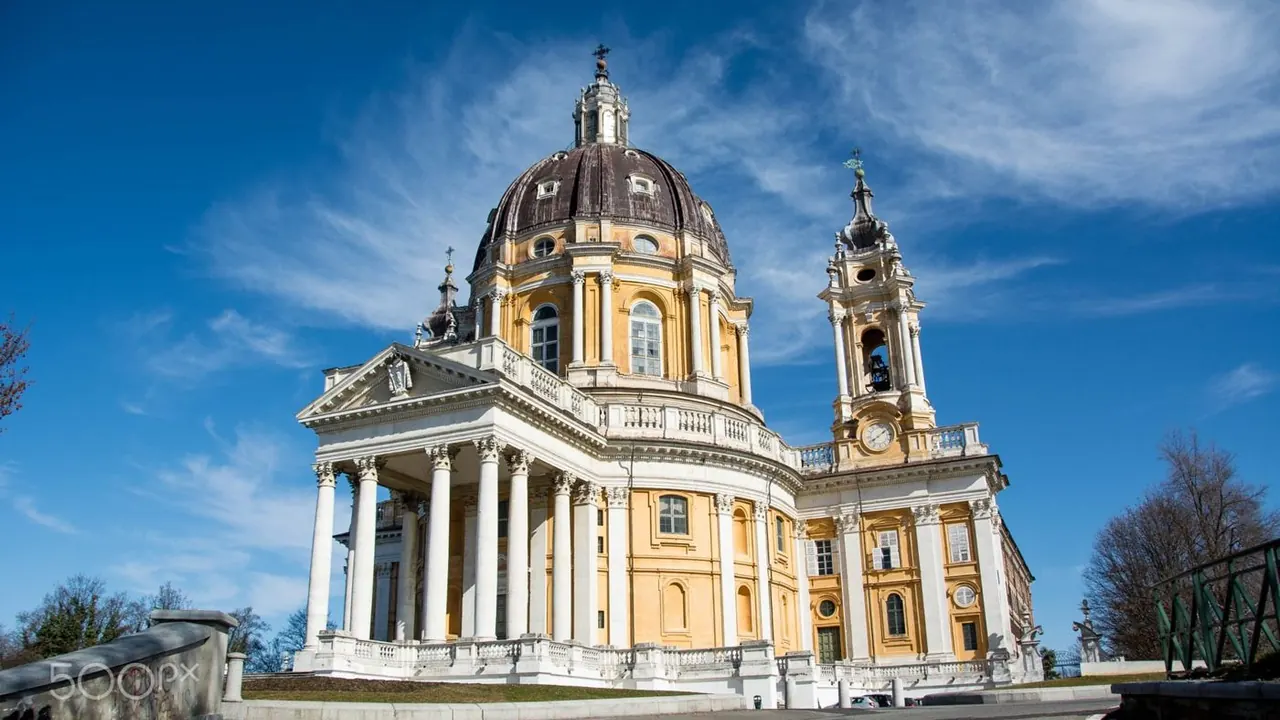
Photos: Montpellier by Peter, CC BY 2.0, cropped; Turin by Konstantin Dacosta, CC BY 3.0, cropped.
Montpellier or Turin?
Our verdict in twelve categories, each scored against the same fixed benchmark cities, and the climate month by month, so you can choose for your trip.
Choose Montpellier for
- beaches
- nightlife
- getting around
Choose Montpellier for a summer trip in the south of France that mixes old streets with the sea. The car-free Écusson, the trams and the long sandy coast a short ride away make it an easy, sunny base. Roman Nîmes, Arles and Avignon are along the railway, and its student terraces keep evenings lively. It suits travellers who want a few beach days and very little planning.
Choose Turin for
- culture and sights
- food and drink
- shopping
Turin is the stronger pick when eating and looking are the point of the trip. Piedmontese cooking, the Langhe wine hills and the aperitivo give it the better table. The Museo Egizio and the Savoy palaces give it the deeper sights, and the Alps on the horizon make it a base for mountain walking or skiing. Just don't come for a swim.
Scoreboard
Twelve categories on one fixed scale from 0 to 100. The shaded stretch is the gap between the two.
Your match
Pick a travel style or drag the sliders, and both match scores follow your weighting.
Too close to call, 1 point apart
Wins on beaches and nightlife with your weighting.
Wins on culture and sights and food and drink with your weighting.
What matters to you?
Category by category
What the scores mean for a trip.
Beaches & swimming
Montpellier has a real, if modest, beach option. Fine, flat sand runs from Palavas and Carnon east to the dunes of l'Espiguette, reached by tram and bus, and the shallow water suits easy swimming.
Turin has nothing like it. Its nearest sea is the Ligurian Riviera, well over an hour and a half away, so summer swimming in town means the small lakes at Avigliana or Viverone.
Food & drink
Both cities eat from their own wine country, but Turin has more depth. Agnolotti del plin, vitello tonnato, autumn truffles from the Langhe and Barolo on the list make for richer cooking. Vermouth and the aperitivo were invented here, and the city still treats the evening drink as a ritual. The arcade cafés serve bicerin and gianduiotti.
Montpellier's cooking is closer to the sea and the market. Expect Thau oysters and mussels, tielle from Sète and Pic Saint-Loup wines, with good bistros around the Halles Castellane and the Saturday market under the Arceaux. The student crowd keeps plenty of casual places open. You will eat well, but the food is not a reason to choose Montpellier.
Culture & sights
Turin has the heavier itinerary. The Museo Egizio alone justifies a visit. Around it stand the Royal Palace, Palazzo Madama, the cathedral of the Shroud, the cinema museum in the Mole and the ring of Savoy residences out to Venaria, enough for several full days.
Montpellier's appeal is more compact: the car-free lanes and hidden courtyards of the Écusson, the Peyrou terrace and its aqueduct, Bofill's Antigone and one serious gallery in the Musée Fabre. Two or three days do it justice.
Nightlife
Montpellier has a little more going on after dark. Its students fill the terraces around Place Jean-Jaurès and the Écusson on weeknights as well as weekends, and the mood is young and loud.
Turin's evenings are more grown-up. They begin with a long aperitivo, then spread to wine and cocktail bars in the Quadrilatero Romano, the pavements of San Salvario and, in summer, the riverside Murazzi. In both cities the clubs are away from the centre: out towards Lattes and the coast in Montpellier, in old industrial spaces in Turin.
Nature & outdoors
Turin wins for anyone who wants mountains. The Gran Paradiso, the Susa valley and the slopes around Sestriere are an hour or an hour and a half away. They give skiing in winter and hut-to-hut hiking and climbing in summer, and Superga and the Mandria park are closer to town.
Montpellier's outdoors is lower and warmer: flamingo lagoons and the Camargue to the south, the garrigue and the climb up Pic Saint-Loup to the north, canoeing in the Hérault gorges and wind sports on the coast. It is fine walking country in spring and autumn, but nothing there matches the scale of Turin's Alps.
Day trips
Both are excellent bases, and the difference is in what you go out to see. From Montpellier the trips are mostly about history: Roman Nîmes and the Pont du Gard, Arles, Avignon's papal palace and Carcassonne, plus Sète and Aigues-Mortes near the coast. The big Roman towns are on the main railway.
From Turin the trips lean towards wine and landscape: the Langhe villages around Barolo and Alba, Asti and the Monferrato, and the Sacra di San Michele on its rock. Milan is an hour away by fast train, with Genoa and Aosta further out. A car helps most in the Piedmont wine hills.
Good for families
Neither city is built around children, but both manage well, in different ways. Montpellier has more for small children: the Lunaret zoo, the aquarium and planetarium at Odysseum, and gently shelving beaches nearby.
Turin suits older children better, with the glass lift through the Mole, the car museum and the Egyptian mummies. Its flat, arcaded grid is the easier place to push a pushchair in sun or rain, but its zoo park lies outside the city and needs a car.
Getting around
Montpellier is the simpler city to move through. The small, car-free centre is easy to walk, and the trams link the station, the old town, Antigone and Odysseum. They also take you most of the way to the beach.
Turin's centre is just as walkable and flatter, and its grid and arcades make long walks easy. Beyond the centre, though, there is a single metro line, and the trams and buses are slower and take some working out. In both cities the hills and countryside are much easier by car.
Shopping & style
Turin gives a shopper more to do. Via Roma has the big fashion labels under its arcades and Via Maria Vittoria has its antique dealers. The Balon flea market fills every Saturday and grows into the Gran Balon once a month, and the chocolate and truffle shops sell the most distinctive things to take home.
Montpellier is ordinary by comparison. It has small boutiques in the lanes of the Écusson, the Polygone mall beside the Comédie, and wine, olive oil and honey from the markets as its best buys.
Affordability
Turin stretches a budget a little further. A generous aperitivo can stand in for dinner, Porta Palazzo and the neighbourhood trattorie are cheap, and public transport costs little, though trade fairs and the truffle season push prices up.
Montpellier is mid-range. Student bars and lunch menus keep daily spending down, but restaurant dinners with wine add up, and rooms in town and on the coast cost much more in July and August.
Live music & performing arts
The two are evenly matched on stage, with different strengths. Montpellier is a dance city, with the Montpellier Danse festival and a national choreographic centre. Its best season is summer, when the Radio France festival and outdoor theatre at the Domaine d'O take over.
Turin is steadier through the year. It has a full opera and ballet season at the Teatro Regio, the RAI National Symphony Orchestra, concerts in the Lingotto auditorium and a scatter of jazz clubs, though its spoken theatre is almost all in Italian.
Wellness & relaxation
Neither is a spa city, and in both the relaxation comes from the pace rather than the facilities. Montpellier has the closer thermal water, at Balaruc-les-Bains on the Thau lagoon about half an hour away, but its student-filled centre is livelier.
Turin's thermal baths at Acqui Terme or in the Aosta valley are nearer two hours away. The city itself, though, is the calmer place to slow down, with long café breaks, walks under the arcades and quiet afternoons in Valentino park.
When should you go?
Pick your month. The climate figures are measured averages, not a forecast.
Montpellier in July
Turin in July
Daytime high, °C
Rainfall in the month, mm
Where the figures come from
Turin has no rain gauge within 25 km of the centre, so its rainfall comes from a gridded climate dataset read at the city rather than from a gauge further away.
Temperature and rainfall are climate normals, averaged over the years shown. Montpellier: 1991-2020 normals, Montpellier (7.8 km from centre). Turin: 1991-2020 normals, Torino / Caselle (15.4 km from centre).
Montpellier is the warmer of the two in every month. The sea is warm enough for swimming in July and August, when it reaches about 22°C. July is almost dry, with only 17mm of rain and the longest hours of sunshine of the year. Midsummer can be too hot for long walks in the stone streets of the Écusson, so May and June are the best months for sightseeing: warm, sunny and not yet scorching. The rain arrives in September, and September to November is the wettest stretch, with October at about 93mm. Winters stay mild enough for walking.
Turin has a colder winter, with January highs around 7°C, and for most of the year it gets more rain than Montpellier. Its summer is nearly as hot, but there is no sea to cool off in. May is wet, and autumn is wetter still from September through November, peaking at about 127mm in November. June and July are the most settled months for the arcades and the wine hills, with July the drier of the two, though both can feel hot and sticky in the city.
Which traveller are you?
On a beach and sun trip, Montpellier is the only real choice of the two. Its long sandy coast is a tram and bus ride away and the shallow water warms through summer. Turin's nearest sea is a long day's round trip to Liguria.
For a culture and arts trip, Turin has more to fill the days: the Museo Egizio, the Royal Palace and Savoy residences, the cinema museum in the Mole and a full opera season at the Teatro Regio. Montpellier's sights take two or three days.
On a food and nightlife trip, Turin is the better pick for the table, with Piedmontese cooking, Barolo and an aperitivo ritual that blurs dinner and drinks. Montpellier's student bars stay livelier late, but its food is simpler market cooking.
Before you go
| Measure | Montpellier | Turin |
|---|---|---|
| Official language | French | Italian |
| Currency | Euro (EUR) | Euro (EUR) |
| Sockets | CE230 V, 50 Hz | CFL230 V, 50 Hz |
| Driving side | Right | Right |
| Time zone | UTC+1, UTC+2 in summer | UTC+1, UTC+2 in summer |
| Emergency number | 112 | 112 |
| Elevation | 7 m | 239 m |
| Main airport | Montpellier-Méditerranée Airport (MPL)8 km from centre41 non-stop destinations | Turin Airport (TRN)14 km from centre65 non-stop destinations |
| Public holidays this year | 11 days | 13 days |
By the numbers
| Measure | Montpellier | Turin |
|---|---|---|
| City population | 310,240 | 841,600 |
| People per km² | 5,452 | 6,474 |
| Museums within 10 km | 14 | 72 |
| UNESCO World Heritage sites within 50 km | 2 | 4 |
| Swim season, months above 21 °C | 2 months | - |
Where else could you go?
Every comparison below shares a destination with this one, so you can follow Montpellier or Turin somewhere new.