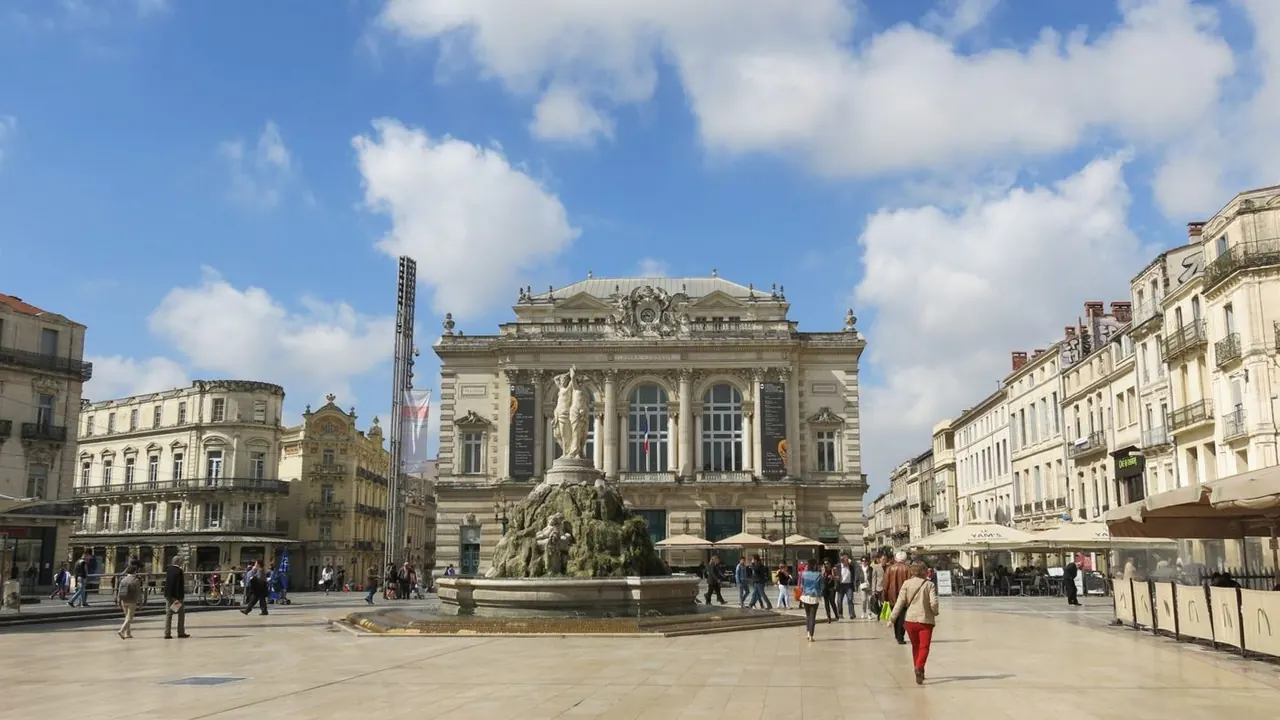
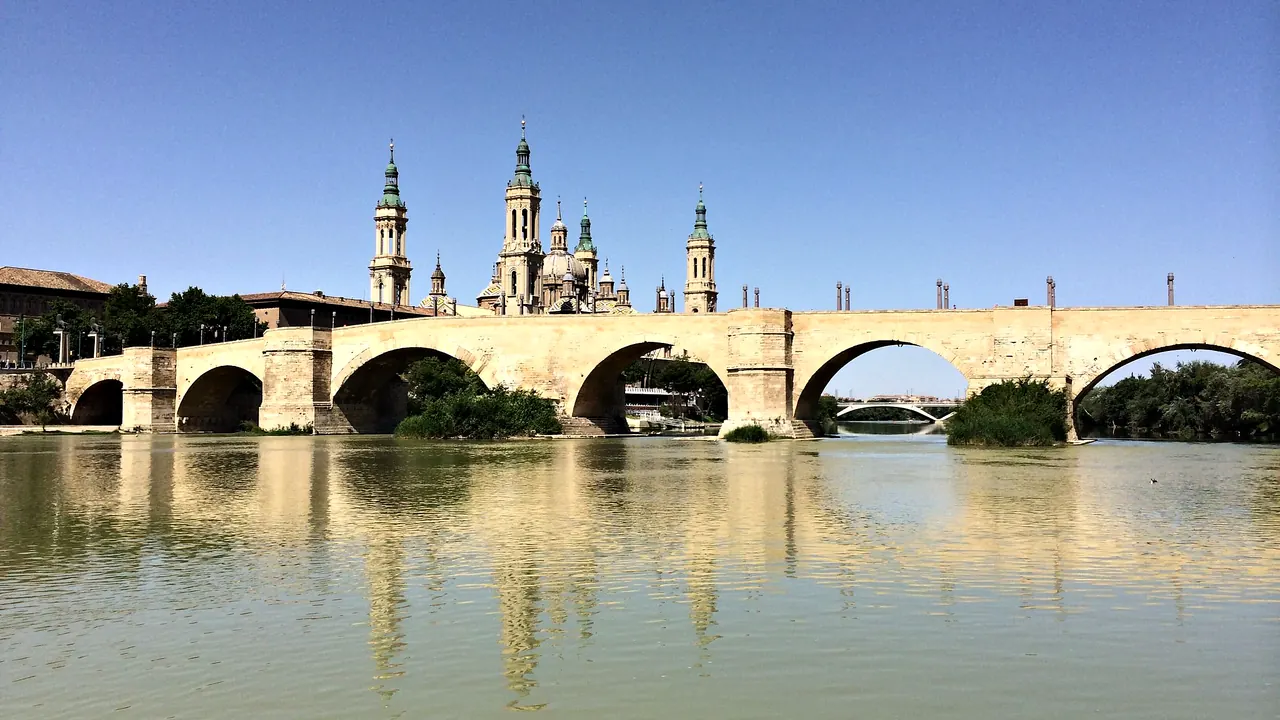
Photos: Montpellier by Peter, CC BY 2.0, cropped; Zaragoza by Pablo Alejandro Araujo Granda, CC BY-SA 2.0, cropped.
Montpellier or Zaragoza?
Our verdict in twelve categories, each scored against the same fixed benchmark cities, and the climate month by month, so you can choose for your trip.
Choose Montpellier for
- beaches
- live music and the arts
- nature and the outdoors
Montpellier suits travellers who want a city with the sea and the countryside close by. Sandy beaches are a tram and bus ride away, lagoons full of flamingos and the hills of Pic Saint-Loup are within easy reach, and fast trains reach Roman Nîmes, Arles and Avignon. It also has the stronger stage, with opera, a national orchestra and a dance festival respected across Europe, which makes it a good base for a summer trip that mixes city, coast and excursions.
Choose Zaragoza for
- prices
- culture and sights
Zaragoza is the better pick for a cheaper, more Spanish city break built around tapas and history. You can do an evening bar crawl through El Tubo, see Roman ruins, an Islamic palace and Goya's ceilings in a few days, and rooms and wine cost less than in Montpellier. With no sea and a stark plain around it, it works best in spring or autumn, perhaps as a stop on the high-speed line between Madrid and Barcelona.
Scoreboard
Twelve categories on one fixed scale from 0 to 100. The shaded stretch is the gap between the two.
Your match
Pick a travel style or drag the sliders, and both match scores follow your weighting.
Wins on beaches and live music and the arts with your weighting.
Wins on prices and culture and sights with your weighting.
What matters to you?
Category by category
What the scores mean for a trip.
Beaches & swimming
Montpellier gives you real beach days without making the trip a beach vacation. Palavas, Carnon and the long sands running east to the dunes of l'Espiguette are close, and the water is shallow, gently shelving and warm by late summer. Expect crowds and full car parks in July and August, and flat open sand rather than coves.
Zaragoza has nothing comparable. It stands on the Ebro plain far from the sea, nobody swims in the river, and in the heat locals go to municipal pools. If you want to swim in the sea, you will need to add separate days on the coast.
Food & drink
The two are fairly even, but the meals are quite different. Montpellier eats from the Languedoc: Pic Saint-Loup wines, oysters and mussels from the Thau lagoon, Sète's octopus tielle, and market halls such as the Halles Laissac, where you can eat at the counters. Its strength is bistros and market cooking.
Zaragoza is about the tapas crawl. You move through the lanes of El Tubo from one bar's speciality to the next, then sit down to hearty Aragonese dishes such as ternasco lamb and borage with clams, washed down with cheap Cariñena or Somontano reds. Neither city offers much fine dining.
Culture & sights
Zaragoza's history goes deeper and has more layers. Underground museums show the Roman forum and baths, the eleventh-century Aljafería keeps its Islamic palace, and the Basílica del Pilar has ceilings painted by a young Goya. La Seo adds Mudéjar brick and tile.
Montpellier is more about the pleasure of its old streets. It has the car-free medieval Écusson with its courtyard mansions, the formal Peyrou terrace and aqueduct, and France's oldest botanical garden. For paintings, the Musée Fabre's European collection is the stronger single museum, and Bofill's Antigone adds modern architecture that Zaragoza has no match for.
Nightlife
Both are student cities with friendly, unpolished nights out, but they run on different schedules. Montpellier's terraces around Place Jean-Jaurès are busy even on weeknights. Once the bars close, though, the clubs are out towards Lattes and the coast, usually a taxi ride away, and the centre goes quiet outside term time.
Zaragoza starts later and stays in the old town. Tapas in El Tubo leads on to the bars of Plaza San Felipe and Santa Marta, with Thursdays and weekends the big nights. During the Fiestas del Pilar in October the streets stay full until dawn, which Montpellier has no equivalent for.
Nature & outdoors
Montpellier has better countryside close to town. Shallow lagoons with flamingos and herons lie just south, the Camargue is about an hour away, and to the north the garrigue climbs to Pic Saint-Loup and the canoeing gorges of the Hérault. Flat coastal cycle paths and a windy shore for kitesurfing add to the choice.
Around Zaragoza the land is dry, windswept steppe, and in town the outdoors means the Ebro path and the big parks. The landscapes worth the effort are further out by car: beech forests on Moncayo, the red towers of the Mallos de Riglos and the badlands of the Bardenas Reales.
Day trips
Both are good bases, but Montpellier has more to see in a short radius by train. Nîmes is about half an hour away, with its Roman arena and temple. Arles and Avignon take about an hour and Carcassonne about an hour and a half, while Sète and Aigues-Mortes are closer still.
Zaragoza's big advantage is reaching Madrid or Barcelona in about an hour and a half on the high-speed line. Its regional sights, such as Loarre castle, the ruins of Belchite, Tarazona and Albarracín, are excellent but spread out, and most need a hired car.
Good for families
With children, the sea is the big difference. Montpellier has warm, gently shelving beaches nearby for small swimmers, along with the Lunaret zoo in its wooded park and an aquarium and planetarium side by side at Odysseum.
Zaragoza has no beach, but its late Spanish evenings help. Local families stay out together after dark, so children out late fit right in. The flat centre is easy on small legs, the riverside aquarium is devoted to the world's great rivers, the Parque del Agua has playgrounds, and the Pilar fiestas bring parades of giants and big-heads.
Getting around
Both cities are easy without a car, and both need one for the countryside. Montpellier has the fuller tram network, linking the station, the old town, Antigone and Odysseum, but the Écusson sits on a low hill with slopes and uneven paving. The trip to the beach by tram and bus is slow in summer.
Zaragoza's sights lie along a flat stretch from the Pilar riverfront to the Aljafería, which is pleasant to walk. It has a single tram line backed by plenty of buses, and the Delicias high-speed station is a short ride out of the centre.
Shopping & style
Neither city is a shopping destination, and the best buys in both are things to eat and drink. Montpellier has small boutiques, bookshops and delis in the stone lanes of the Écusson, the Polygone mall next to the Comédie, and wine, olive oil and honey from the covered markets.
Zaragoza is more about high-street chains and a classic department store along Paseo de la Independencia. Older shops and pastry makers line Calle Alfonso I, and candied frutas de Aragón and ceramics from nearby Muel are the souvenirs worth taking home.
Affordability
Zaragoza is the cheaper stay. Central hotels are good value most of the year, set lunches and tapas are generous, local wine costs little and the Pilar basilica is free. The exception is the October fiestas, when rooms fill and prices rise sharply.
Montpellier is mid-range for Western Europe. Student bars, market halls and lunch menus help, but restaurant dinners with wine soon add up. Rooms both in town and on the coast also cost noticeably more in July and August.
Live music & performing arts
Montpellier has the richer stage by some way. The Opéra Comédie and the Opéra Berlioz share a season of opera, ballet and concerts by a national orchestra. Contemporary dance is its speciality, with a national choreographic centre and the Montpellier Danse festival. In summer the Radio France festival adds many free classical and jazz concerts.
Zaragoza offers a solid but provincial programme at the Auditorio and the Teatro Principal, so check what is on before you go. What it has that Montpellier lacks is the jota, Aragon's leaping folk song and dance, which you are most likely to see during the Pilar fiestas.
Wellness & relaxation
Neither city has its own bathing tradition, so relaxing mostly means hotel spas and taking things slowly. Montpellier has the easier spa trip: Balaruc-les-Bains on the Thau lagoon is about half an hour away, and its thermal centre takes day visitors.
Zaragoza has an Arab-style bathhouse or two in town, but its nearest thermal water, at Alhama de Aragón, is over an hour away. Its gentler pleasures are evening walks along the Ebro and shade in Parque Grande, though the summer heat and the cierzo wind can take the edge off them.
When should you go?
Pick your month. The climate figures are measured averages, not a forecast.
Montpellier in July
Zaragoza in July
Daytime high, °C
Rainfall in the month, mm
Temperature and rainfall are climate normals, averaged over the years shown. Montpellier: 1991-2020 normals, Montpellier (7.8 km from centre). Zaragoza: 1991-2020 normals, Zaragoza / Aeropuerto (11.2 km from centre).
Montpellier is warm enough for the beach from late June to mid-September. July is the sunniest and driest month, and the sea is warmest in August at about 22°C. Rain arrives with the autumn. September and October each bring about 90mm, often in heavy bursts, so these are the wettest weeks of the year. May and early June are the best time to walk the old town and the hills, warm but not yet scorching.
Zaragoza is hotter in summer and drier all year. July highs on the plain reach about 33°C, which makes afternoon sightseeing hard work, but rain is light in every month. April, May, late September and October are the comfortable times to go. Winters in the two cities are similar, cool and fairly bright with highs around 11°C in Zaragoza, but Zaragoza gets much less rain.
Which traveller are you?
On a beach and sun trip, choose Montpellier. You can stay in a real city and still spend afternoons on fine sand, which inland Zaragoza cannot offer at all. Keep the mornings for the old town and head to the coast after lunch.
For a trip on a tight budget, Zaragoza is the safer pick. Rooms, meals and wine all cost less than in Montpellier, so the money lasts longer. Just avoid the October fiestas, when it stops being a bargain.
For an outdoors trip, Montpellier is the better base. Walking, birdwatching, cycling and wind sports all start close to town, and some need no car. In Zaragoza the rewarding landscapes are a drive away, so outdoor days take more planning.
Before you go
| Measure | Montpellier | Zaragoza |
|---|---|---|
| Official language | French | Spanish |
| Currency | Euro (EUR) | Euro (EUR) |
| Sockets | CE230 V, 50 Hz | CF230 V, 50 Hz |
| Driving side | Right | Right |
| Time zone | UTC+1, UTC+2 in summer | UTC+1, UTC+2 in summer |
| Emergency number | 112 | 112 |
| Elevation | 7 m | 200 m |
| Main airport | Montpellier-Méditerranée Airport (MPL)8 km from centre41 non-stop destinations | Zaragoza Airport (ZAZ)13 km from centre12 non-stop destinations |
| Public holidays this year | 11 days | 12 days |
By the numbers
| Measure | Montpellier | Zaragoza |
|---|---|---|
| City population | 310,240 | 693,091 |
| People per km² | 5,452 | 712 |
| Museums within 10 km | 14 | 22 |
| UNESCO World Heritage sites within 50 km | 2 | 1 |
| Swim season, months above 21 °C | 2 months | - |
Where else could you go?
Every comparison below shares a destination with this one, so you can follow Montpellier or Zaragoza somewhere new.