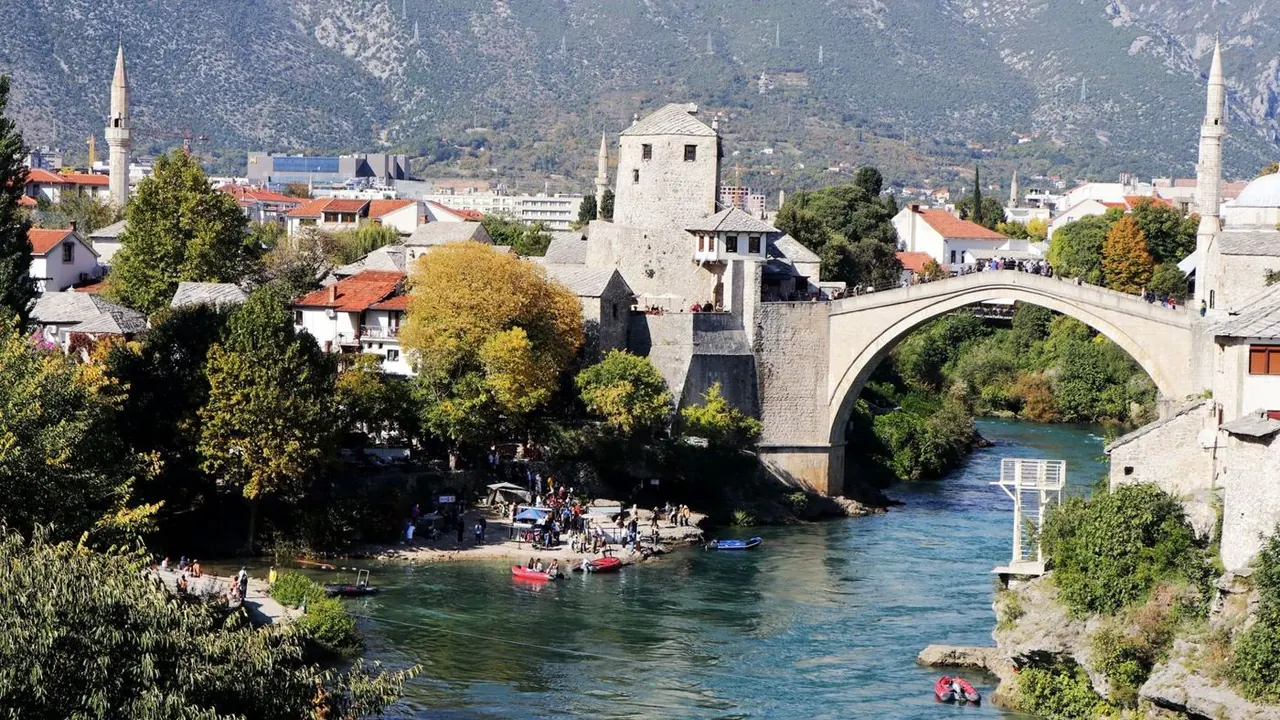
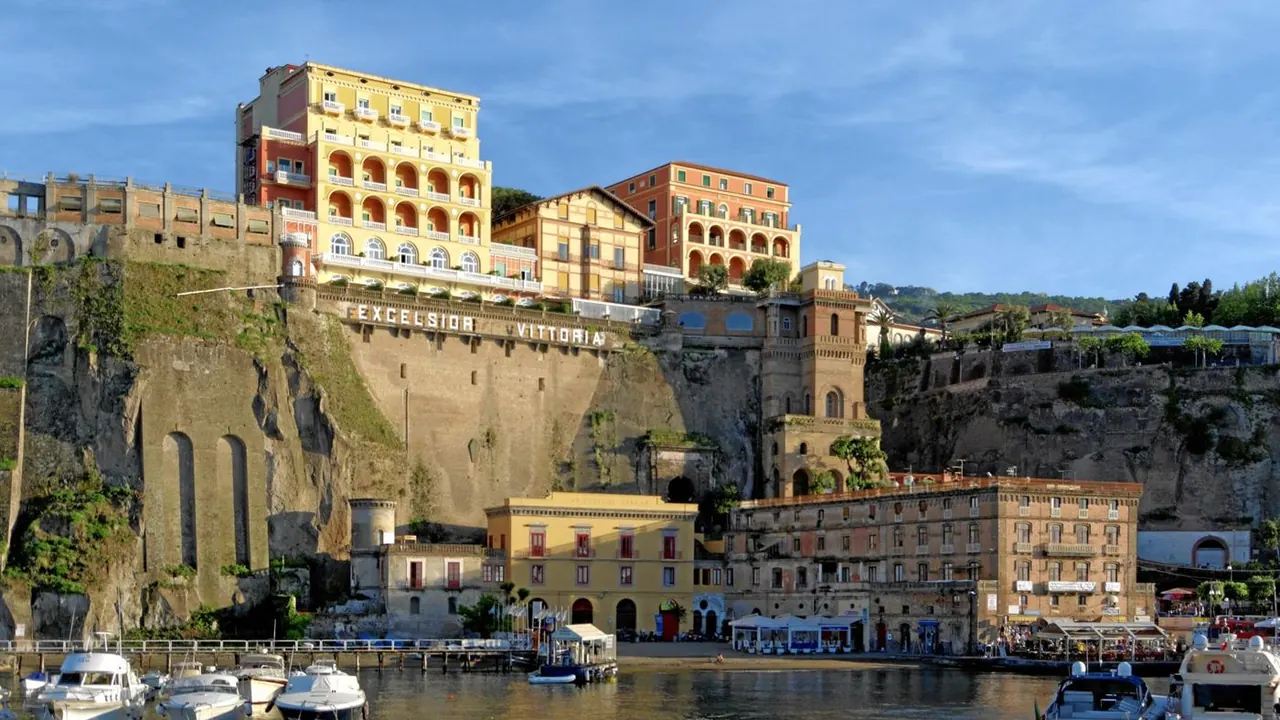
Photos: Mostar by Alan Wang, Pexels License; Sorrento by Berthold Werner, CC BY-SA 3.0, cropped.
Mostar or Sorrento?
Our verdict in twelve categories, each scored against the same fixed benchmark cities, and the climate month by month, so you can choose for your trip.
Choose Mostar for
- prices
- culture and sights
Mostar suits travellers who want history they can stand inside and a vacation budget that stretches a long way. The Old Bridge, the Ottoman houses and the scars along the old front line make a short, absorbing stay. Add rafting on the Neretva and a drive out to Blagaj or Počitelj, and you have a cheap and memorable two or three days, though not a long beach stay.
Choose Sorrento for
- beaches
- day trips
- wellness
Sorrento is the better choice for a week by the sea with a lot within easy reach. Pompeii, Capri, Vesuvius and the Amalfi Coast are all a train or ferry ride away. Between outings there are deep-water swims from the piers, cliff paths over the bay and long Campanian lunches. You pay resort prices for it, especially in summer.
Scoreboard
Twelve categories on one fixed scale from 0 to 100. The shaded stretch is the gap between the two.
Your match
Pick a travel style or drag the sliders, and both match scores follow your weighting.
Wins on prices and culture and sights with your weighting.
Wins on beaches and day trips with your weighting.
What matters to you?
Category by category
What the scores mean for a trip.
Beaches & swimming
Mostar has no beach of its own. A swim means a cold plunge into the Neretva below the old town or a trip to the pool beneath the Kravica waterfalls, about 40km south. The Adriatic at Neum or along the Makarska Riviera only works as a day out.
Sorrento has no sand either, but the sea is at the foot of the town. The lidos on piers at Marina Piccola and Marina Grande and the rocky inlet of the Bagni della Regina Giovanna give clear, deep water a short walk or a lift ride away. Pebble coves at Marina del Cantone and around Capri are a bus or boat ride further.
Food & drink
Mostar's cooking is hearty and narrow: ćevapi in somun bread, burek, stuffed peppers and slow stews, with Žilavka and Blatina wines from the Herzegovina valleys and a long ritual of Bosnian coffee. It is satisfying for a few days, but there is little variety beyond it.
Sorrento has the richer table. Gnocchi alla sorrentina, fish cooked all'acqua pazza, mozzarella and provolone from the hill dairies and lemons in everything give it much more range. The hill villages above the town also hold serious fine dining. In both places the best meals are found a few lanes back from the main sight.
Culture & sights
Mostar has the stronger sights within the town. The rebuilt sixteenth-century arch of Stari Most and its divers, the Kujundžiluk, the minaret of Koski Mehmed Pasha and the carpeted Ottoman houses fill a day or two. The shell-marked buildings of the old front line add a sobering second layer.
Sorrento's own sights are gentler and smaller: the Roman street grid, the cloister of San Francesco, the Museo Correale and the sunken ruined mill of the Vallone dei Mulini. The area's great classical sites, Pompeii and Herculaneum, are outside the town and are covered under day trips.
Nightlife
Neither town is a place for a big night out, and they are quiet in different ways. In Mostar the evening means a terrace facing the floodlit bridge, with a few student clubs and cocktail bars busy at weekends. The crowd there is younger and more local.
Sorrento's evening is the passeggiata along Corso Italia, then wine bars, pubs for British visitors and piano bars playing Neapolitan songs to an older crowd. For anything livelier you would stay overnight in Naples or on Capri.
Nature & outdoors
Mostar's landscape is wilder and drier: a karst basin beneath Velež and the jagged Prenj range, rafting in the Neretva canyons, the Blidinje plateau and the birdlife of Hutovo Blato. Most of it takes a car to reach.
Sorrento combines mountain and sea, which gives it the edge. You can walk to Punta Campanella and the protected bay of Ieranto straight from the peninsula. The Path of the Gods, Monte Faito and the crater of Vesuvius are close by, and you can hire boats and kayaks to explore the grottoes and coves.
Day trips
Mostar's day trips are small and full of character: the dervish tekke at Blagaj under its cliff, walled Počitelj, the stećci tombstones near Stolac, and Konjic with Tito's bunker. Sarajevo makes a long day by train through the Neretva gorge. Most of the rest need a car or a tour.
Sorrento is one of the best bases in Europe for day trips. Pompeii is about half an hour away by train, and you can do Herculaneum and Vesuvius on the same day out. Ferries reach Capri in under an hour, and Positano, Amalfi, Ravello and Naples with its archaeological museum are all easy to reach without a car.
Good for families
Both places welcome children warmly, but neither has much built for them. Sorrento is the easier of the two: its flat, mostly pedestrian centre suits a pushchair, and boat rides to Capri, the train to Pompeii and plenty of gelato keep children busy. The catch is that swimming is in deep water off piers and rocks.
Mostar is harder work with small children. The steep, polished cobbles are slippery, and the summer heat in the valley is tiring. The bridge divers and the swim at Kravica make good outings for a day or two.
Getting around
In both towns you can walk to the sights. In Mostar the old town, the bridge and the Austro-Hungarian centre are a short stroll along the river. Beyond that, Blagaj, Počitelj and Kravica mean a car, taxi or tour, because the local buses serve residents.
Sorrento has the better links. The Circumvesuviana runs straight to Pompeii and Naples, and ferries go to Capri and along the coast, so you never need a car. The train is crowded and the summer buses crawl round the hairpins, but every major outing is reachable.
Shopping & style
Mostar's bazaar and Sorrento's craft lanes are both good for a browse, and Sorrento has a little more that is actually made there. In Mostar, shopping means the Kujundžiluk. Among the stalls of imported souvenirs, look for the few coppersmiths still hammering coffee sets by hand in their doorways, along with kilims and embroidered textiles. Beyond the bazaar there are only ordinary malls.
Sorrento has plenty of lemon-themed souvenirs, but it also has genuine local crafts: intarsia boxes and trays, leather sandals made to measure while you wait, and linen, coral and cameo jewellery. Neither town is good for fashion, but from Sorrento the boutiques of Naples and Capri are an easy trip.
Affordability
Mostar is far cheaper. Family-run guesthouses, plates of ćevapi and bottles of local wine all cost little, and prices drop again a few streets away from the bridge.
Sorrento charges resort prices, especially in summer, for sea-view rooms, lido sunbeds and private boats. You can bring the cost down by using the cheap trains and buses, eating in back-lane trattorias and travelling in spring or late autumn.
Live music & performing arts
Neither town has much on stage, so this should not decide your trip. Mostar's national theatre and youth theatre perform mostly in local languages, and summer adds open-air concerts.
Sorrento's offer is aimed more at visitors: evenings of Neapolitan song and tarantella, and summer chamber music in the cloister of San Francesco. For opera, the Teatro di San Carlo in Naples is about an hour away.
Wellness & relaxation
Mostar has no working bathing tradition, because its old hammam survives only as a monument, and there are few spas. The restful part of a stay is the slow coffee and the hush of the river once the day visitors leave.
Sorrento gives you more ways to unwind. The cliff-top hotels have spas and pools above the bay, and the old villa gardens are calm places to spend an afternoon. The thermal gardens of Ischia are a ferry ride away.
When should you go?
Pick your month. The climate figures are measured averages, not a forecast.
Mostar in July
Sorrento in July
Daytime high, °C
Rainfall in the month, mm
Where the figures come from
Sorrento has no rain gauge within 25 km of the centre, so its rainfall comes from a gridded climate dataset read at the city rather than from a gauge further away.
Sorrento's sunshine is measured 54 km from the centre, at Grazzanise.
Temperature and rainfall are climate normals, averaged over the years shown. Mostar: 1991-2020 normals, Mostar (0.9 km from centre). Sorrento: 2005-2025 (sunshine 1991-2020, rainfall 1991-2020) normals, Capri (17 km from centre).
Mostar has the harsher climate. Its valley bakes in July and August at around 33°C, which makes walking the stone lanes at midday hard work. Winters are cool, at about 9°C, and wet, with rain building through the autumn to nearly 198mm in December. The comfortable months for walking are May, early June and late September into October. Summer is the time for a cold plunge in the river or a swim at Kravica.
Sorrento is a little milder at both ends of the year, with winter highs around 13°C, and its summers are very dry. The sea is warm enough for swimming from June to October and peaks at about 26°C in August. November is its wettest month. Spring and early autumn are the best time for walking the peninsula, and July and August are the beach season. In Mostar those same months are better spent near water or in the shade.
Which traveller are you?
For a beach and sun trip, Sorrento is the only real option. You can swim from the lidos on piers below the town, take a boat to the coves of Capri, and the sea is warm all summer. Mostar is inland, and its river stays cold.
On a trip on a tight budget, Mostar goes much further. Guesthouses, grilled ćevapi, local wine and slow Bosnian coffee all cost little. Sorrento charges resort prices for rooms, sunbeds and boat trips, especially in high summer.
On a culture and arts trip based on the town itself, Mostar gives more. It has the UNESCO-listed bridge and old town, Ottoman houses and the city's recent war history. Sorrento's own sights are modest, though Pompeii and Naples are close by as day trips.
Before you go
| Measure | Mostar | Sorrento |
|---|---|---|
| Official language | Croatian, Serbian, Bosnian | Italian |
| Currency | Convertible Mark (BAM) | Euro (EUR) |
| Sockets | CF230 V, 50 Hz | CFL230 V, 50 Hz |
| Driving side | Right | Right |
| Time zone | UTC+1, UTC+2 in summer | UTC+1, UTC+2 in summer |
| Emergency number | 112 | 112 |
| Elevation | 60 m | 50 m |
| Main airport | Sarajevo International Airport (SJJ)68 km from centre38 non-stop destinations | Naples International Airport (NAP)30 km from centre131 non-stop destinations |
| Public holidays this year | 8 days | 13 days |
By the numbers
| Measure | Mostar | Sorrento |
|---|---|---|
| City population | 105,448 | 15,407 |
| People per km² | 90 | 1,541 |
| Museums within 10 km | 3 | 6 |
| UNESCO World Heritage sites within 50 km | 1 | 5 |
| Swim season, months above 21 °C | - | 5 months |
Where else could you go?
Every comparison below shares a destination with this one, so you can follow Mostar or Sorrento somewhere new.