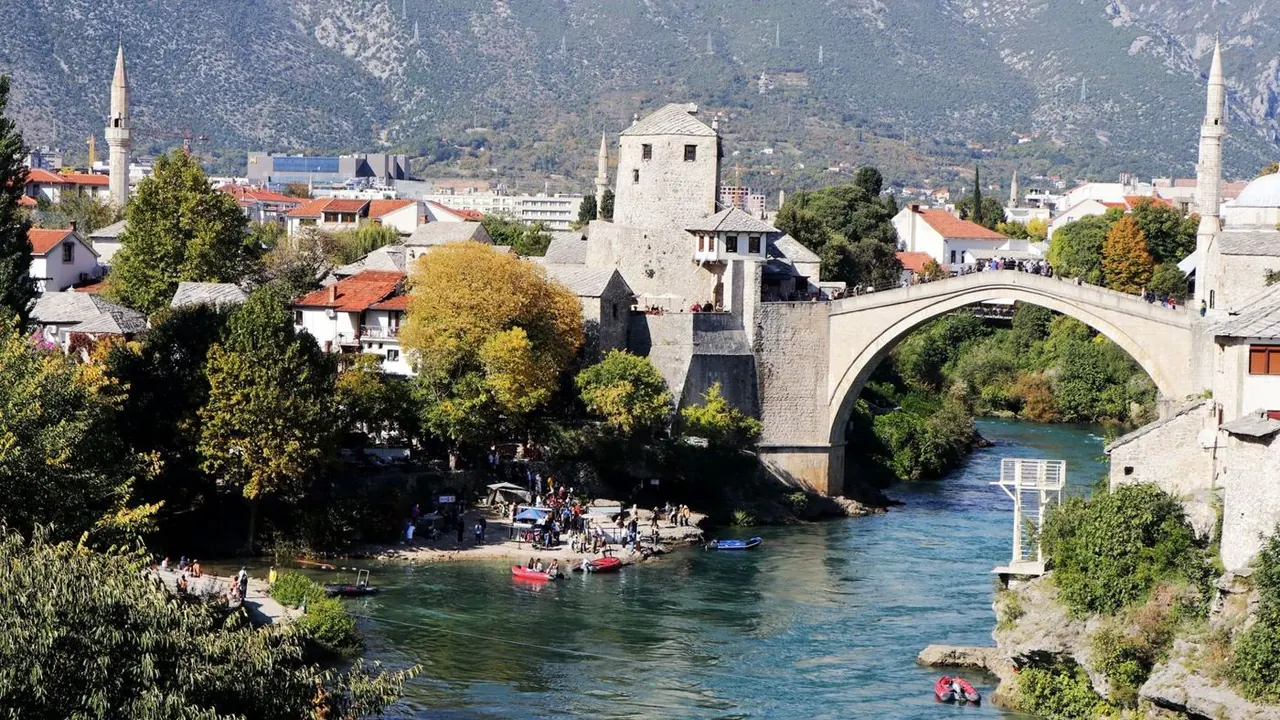
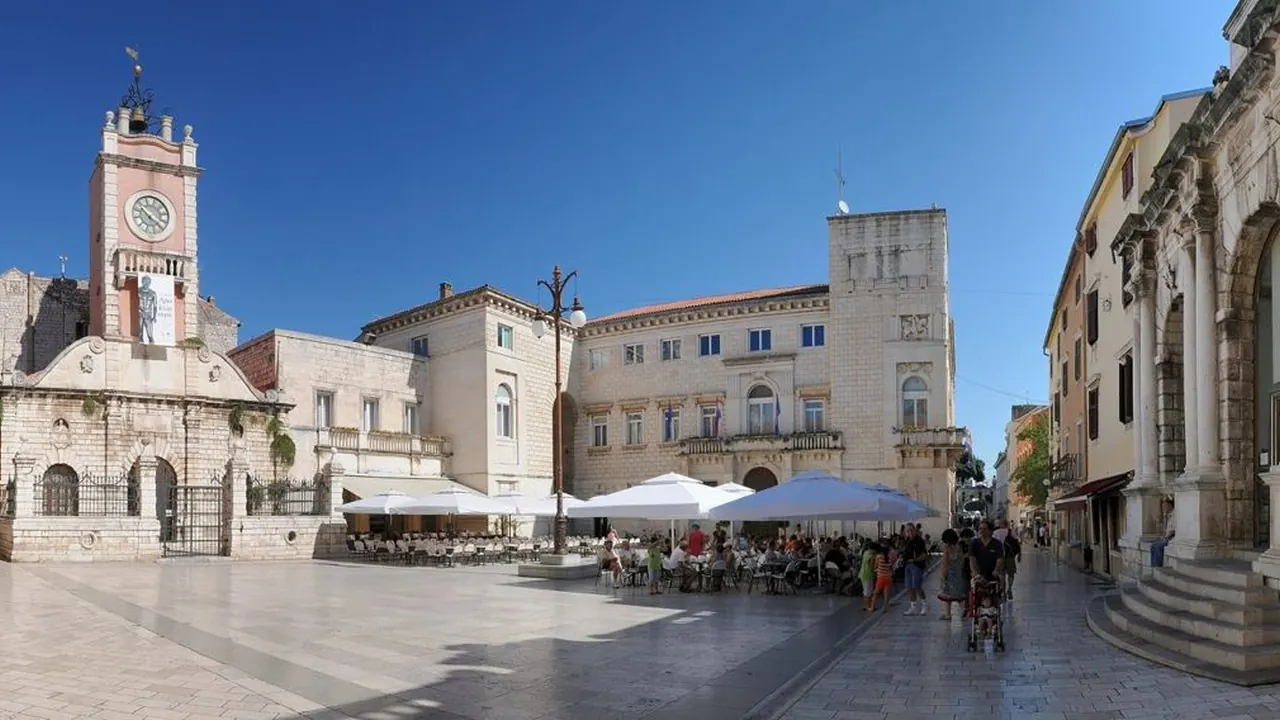
Photos: Mostar by Alan Wang, Pexels License; Zadar by Böhringer Friedrich, CC BY-SA 2.5, cropped.
Mostar or Zadar?
Our verdict in twelve categories, each scored against the same fixed benchmark cities, and the climate month by month, so you can choose for your trip.
Choose Mostar for
- prices
- shopping
Mostar suits a traveller on a tight budget who wants a short, concentrated dose of Ottoman history and Bosnian life. The Old Bridge, the bazaar lane and the war-marked streets fill a day or two. Guesthouses, ćevapi and local wine cost little, and Počitelj, Blagaj and Kravica are close by for a car-based loop through Herzegovina. It works best as a stop on a longer Balkan route rather than as a base for a week.
Choose Zadar for
- beaches
- families
- nature and the outdoors
Zadar is the better choice for anyone who wants the sea at the centre of the trip. It has swimming off the promenade, ferries to the islands, and Paklenica, Kornati and Krka within reach for hiking, sailing and waterfalls. The flat, car-free old town makes it much easier with children, and summer evenings on the Riva are livelier. You pay more than in Mostar, but you get a fuller vacation for it.
Scoreboard
Twelve categories on one fixed scale from 0 to 100. The shaded stretch is the gap between the two.
Your match
Pick a travel style or drag the sliders, and both match scores follow your weighting.
Wins on prices and shopping with your weighting.
Wins on beaches and families with your weighting.
What matters to you?
Category by category
What the scores mean for a trip.
Beaches & swimming
Swimming is where the two part company most. In Mostar the Neretva is beautiful but mountain-cold, so the swim worth making is the pool beneath the Kravica falls, and the sea at Neum or the Makarska Riviera is a full day's outing.
In Zadar the sea is part of every summer day. You can swim off the peninsula's western edge, at Kolovare or under the pines at Borik, though these are pebble and concrete rather than sand. Nin's sandy shallows and Sakarun on Dugi Otok are within easy reach for softer beaches.
Food & drink
The two are much alike in standard and differ mainly in what is on the plate. Mostar cooks inland Bosnian food with an Ottoman lineage: charcoal-grilled ćevapi in somun, burek and stuffed peppers, washed down with Žilavka or Blatina and finished with coffee from a copper džezva.
Zadar's table is coastal Dalmatian: grilled squid, black risotto, octopus under the peka, Pag cheese and a glass of Maraschino. Both cities have a narrow range with little international cooking, and in both the better meals are found away from the tourist-facing terraces and main streets.
Culture & sights
These two are evenly matched, and each has about two days of sights, but the history they show is very different. Mostar is a story of one bridge: the rebuilt Stari Most with its divers, the Kujundžiluk, the Koski Mehmed Pasha minaret, Ottoman houses and the scars of the 1990s front line.
Zadar covers a much longer span, from the open Roman forum and round St Donatus to Venetian walls and the Land Gate. It also has small but rewarding museums of ancient glass and archaeology, which Mostar lacks, along with the modern Sea Organ.
Nightlife
Neither is a party city, but Zadar has more going on. Mostar's evenings mostly mean dinner on a terrace facing the floodlit bridge, with a few cocktail bars and student clubs at weekends.
On summer nights Zadar starts with sunset at the Sea Organ and then moves on to café-bars along Kalelarga and terrace bars on the walls. Clubbers can make the hour's trip to Zrće on Pag. Out of season, though, both towns go quiet.
Nature & outdoors
Mostar's surroundings are wild karst: the bare Velež and Prenj ranges, rafting in the Neretva canyons, the Buna spring at Blagaj and birdlife at Hutovo Blato. It is rewarding country, but rugged and mostly visited by car.
Zadar offers more variety and more of it within easy reach. You have mountains and sea together: Paklenica's gorges for hiking and climbing, sailing among the Kornati islands, Telašćica's cliffs, and Krka and Plitvice for waterfalls and lakes. Sea kayaking and island cycling round it out.
Day trips
From Mostar the outings are small and atmospheric: the dervish house at Blagaj, the walled hillside of Počitelj, Stolac's stećci tombstones, and the bridges and Tito's bunker at Jablanica and Konjic. Sarajevo makes one long day by train.
Zadar has the stronger list. UNESCO-listed Šibenik is about an hour away, and Split's palace and Trogir are within a long day. Royal Nin is close by, and car-free Silba and other islands are reached by ferry from the harbour. Both cities are much easier to explore with a car.
Good for families
Zadar is the easier place with children. The old town is flat and car-free, the promenade suits scooters, and the light-up tiles of the Greeting to the Sun are a reliable hit. Nin's shallow sand and short ferry rides give children days at the sea.
Mostar is fine for a day or two, with the bridge divers, a minaret climb and the Kravica pool to remember. But the polished, steep lanes defeat pushchairs and the summer heat wears small children out. In both, there are no attractions built specially for children.
Getting around
Both centres are walkable, but Zadar is the more practical base. Its peninsula is flat and fully pedestrian, Kolovare is a stroll away, and ferries to the islands leave right from the edge of the old town.
In Mostar, the bridge, bazaar and Austro-Hungarian quarter are a short walk apart, but you walk on slippery cobbles and hills. City buses are of little use to visitors, so Blagaj, Počitelj and Kravica mean a car, taxi or tour. The train to Sarajevo is its scenic link outward.
Shopping & style
Neither city is somewhere to shop seriously, but the finds differ. Mostar has the Kujundžiluk, where a few coppersmiths still hammer coffee sets by hand among kilims, lamps and a lot of imported souvenirs.
Zadar's best buys are things to eat, drink and wear lightly: Maraschino, Pag cheese, olive oil and Pag lace. Kalelarga has jewellers and fashion chains, and the market by the walls is the pleasantest place to browse.
Affordability
Mostar is clearly the cheaper stay. Guesthouses, grilled meals, local wine and coffee all cost little, and only the bridge-view terraces and old town rooms in midsummer push prices up.
Zadar is gentler than Split or Dubrovnik, but it is still priced like a mid-range Western European city. High-summer rooms on the peninsula, national park entry and boat excursions make the biggest dent in a budget.
Live music & performing arts
Live performance is a small part of a visit to either, but Zadar has one standout: the summer Musical Evenings in St Donatus, chamber and early music inside the ninth-century church, with klapa singing in squares in July and August.
Mostar's national and youth theatres play mostly in local languages, and apart from summer open-air concerts, music means a band in a café bar.
Wellness & relaxation
Neither has a bathing tradition, and in both the relaxation comes from the slow pace rather than from spas. Zadar adds hotel spas at Borik and the mineral mud of Nin's lagoon, plus sunset on the Sea Organ steps.
In Mostar the hammam is a monument rather than a working bath. Rest means long coffees in the shade and the quiet old town early and late, once the day-trippers have gone.
When should you go?
Pick your month. The climate figures are measured averages, not a forecast.
Mostar in July
Zadar in July
Daytime high, °C
Rainfall in the month, mm
Where the figures come from
Zadar has no rain gauge within 25 km of the centre, so its rainfall comes from a gridded climate dataset read at the city rather than from a gauge further away.
Temperature and rainfall are climate normals, averaged over the years shown. Mostar: 1991-2020 normals, Mostar (0.9 km from centre). Zadar: 1999-2020 (rainfall 1991-2020) normals, Zadar / Zemunik (9.9 km from centre).
Both cities are warm from May to September, but Mostar's sheltered valley gets much hotter. July and August reach about 33°C there, with long, cloudless days, which makes sightseeing on the stone lanes hard going at midday. Zadar is a little cooler in midsummer, and from June to September the Adriatic is warm enough for daily swimming, reaching around 25°C in August. Outside that window the sea is too cool for most people.
Spring and autumn are the best months for walking in both places. Late April to early June and the second half of September are pleasantly warm in each. Mostar is the wetter of the two all year: from September onwards the rain sets in heavily, and November and December are its wettest, grey months. Zadar's winters are milder and noticeably drier, though still too cool and quiet for a beach trip.
Which traveller are you?
For a beach and sun trip, Mostar only gives you days out: a dip beneath the Kravica falls or the drive down to Neum. Zadar puts the sea on your doorstep, with morning swims off the promenade, afternoons on Nin's sand and ferries to quiet island coves.
On a tight budget, Mostar lets you eat out at every meal and add an extra night without much thought. In Zadar the swimming costs nothing, but the boat trips and national park visits that make the stay special soon add up.
On a family trip with children, Mostar works best as a one-night stop: an afternoon watching the bridge divers, then a cooling swim at Kravica. Zadar can fill a whole week with beach mornings, ferry rides to the islands and evenings out as a family.
Before you go
| Measure | Mostar | Zadar |
|---|---|---|
| Official language | Croatian, Serbian, Bosnian | Croatian |
| Currency | Convertible Mark (BAM) | Euro (EUR) |
| Sockets | CF230 V, 50 Hz | CF230 V, 50 Hz |
| Driving side | Right | Right |
| Time zone | UTC+1, UTC+2 in summer | UTC+1, UTC+2 in summer |
| Emergency number | 112 | 112 |
| Elevation | 60 m | 5 m |
| Main airport | Sarajevo International Airport (SJJ)68 km from centre38 non-stop destinations | Zadar Airport (ZAD)10 km from centre66 non-stop destinations |
| Public holidays this year | 8 days | 14 days |
By the numbers
| Measure | Mostar | Zadar |
|---|---|---|
| City population | 105,448 | 70,779 |
| People per km² | 90 | - |
| Museums within 10 km | 3 | 1 |
| UNESCO World Heritage sites within 50 km | 1 | 2 |
| Swim season, months above 21 °C | - | 4 months |
Where else could you go?
Every comparison below shares a destination with this one, so you can follow Mostar or Zadar somewhere new.