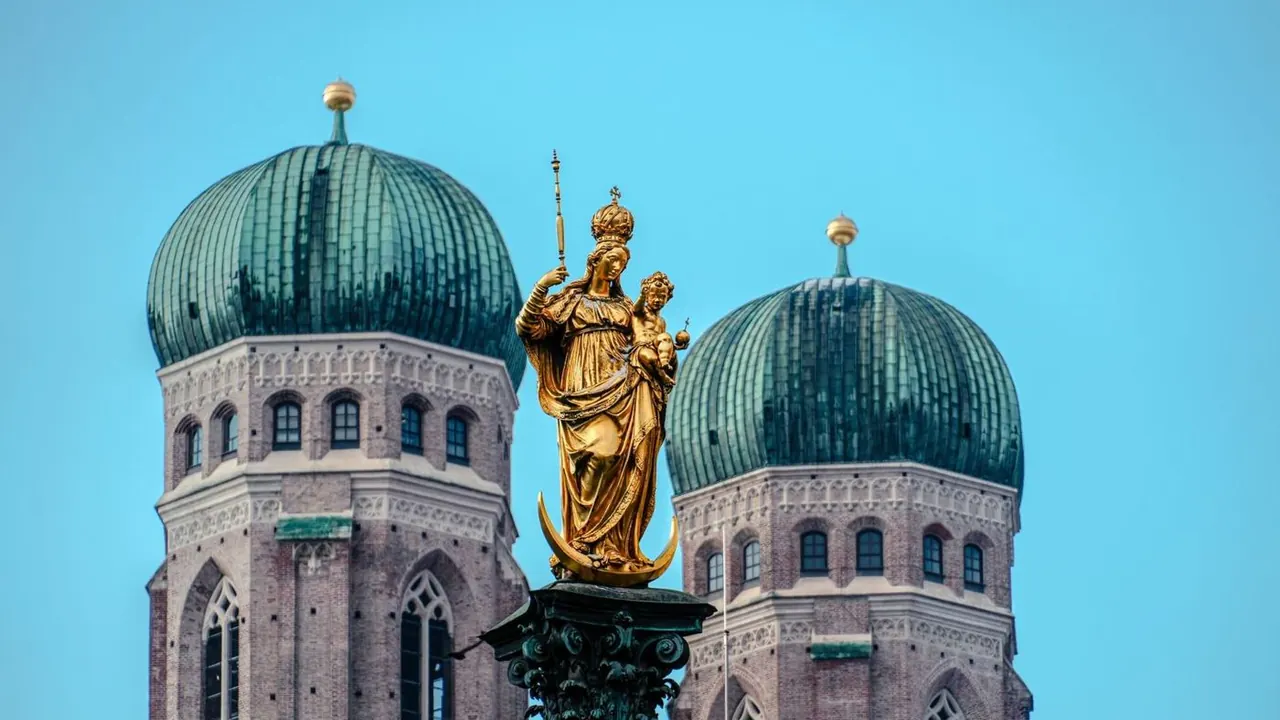
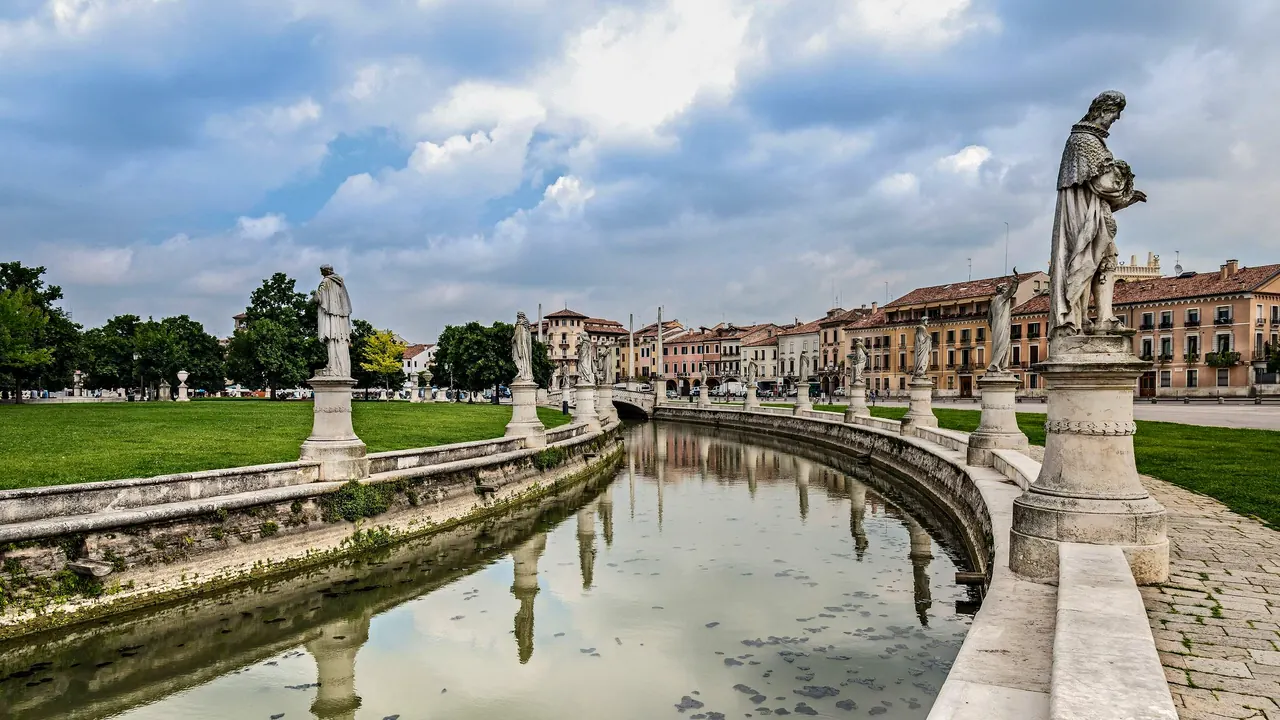
Photos: Munich by 0xd1ma, Pexels License; Padua by Didier Descouens, CC BY-SA 4.0, cropped.
Munich or Padua?
Our verdict in twelve categories, each scored against the same fixed benchmark cities, and the climate month by month, so you can choose for your trip.
Choose Munich for
- live music and the arts
- families
- nature and the outdoors
Munich suits travellers who want a large, polished city with serious evenings and the mountains on the horizon. It has world-class opera and orchestras, the royal collections of the Kunstareal, the English Garden, and alpine trails and lakes a short train ride away. It is also the easier choice with children and the better one for shopping, as long as the budget can cope with the highest hotel prices in Germany.
Choose Padua for
- prices
- day trips
- wellness
Padua is for people who would rather sleep somewhere calm and moderately priced and spend their days on the move. Venice is under half an hour away by train, with Vicenza, Verona and Bologna not far behind. Giotto's Scrovegni Chapel and the Basilica of Saint Anthony fill a day or two in town, the evenings centre on a spritz in the market squares, and the thermal pools of Abano are close enough for a soak after sightseeing.
Scoreboard
Twelve categories on one fixed scale from 0 to 100. The shaded stretch is the gap between the two.
Your match
Pick a travel style or drag the sliders, and both match scores follow your weighting.
Wins on live music and the arts and families with your weighting.
Wins on prices and day trips with your weighting.
What matters to you?
Category by category
What the scores mean for a trip.
Beaches & swimming
Neither city is a beach destination, but the swimming is different in kind. Munich's is freshwater: the gravel banks of the Isar at the Flaucher, and the clear, cool alpine lakes of Starnberg and Ammersee, under an hour away by S-Bahn.
Padua's swimming is a sea outing. The Adriatic sand at Sottomarina or on the Lido of Venice is about an hour away. The water is warmer and shallow, which suits paddling children, but the beaches are flat rows of umbrellas rather than lawns and jetties.
Food & drink
Both cities eat well and both are thin on cooking from further afield. Munich's table centres on the beer hall and the chestnut-shaded beer garden, with roast pork, white sausage and pretzels, the Viktualienmarkt for snacking, and a better choice of starred restaurants when you want a special meal.
Padua is about Venetian home cooking and the market: bigoli with duck sauce, baccalà and spring risotto, bought or eaten around Piazza delle Erbe and Piazza della Frutta. Drinking means a spritz in the squares and Euganean wine, not a litre of Helles.
Culture & sights
Both are rewarding for sightseeing, but their strengths differ in scale. Munich offers breadth: the old masters of the Alte Pinakothek and the rest of the Kunstareal, the Residenz and Nymphenburg palaces, and the vast Deutsches Museum. That is enough for several unhurried days, though the rebuilt old town is handsome rather than ancient.
Padua offers concentrated depth. Giotto's frescoes in the Scrovegni Chapel are among the turning points of European painting, and they sit beside a UNESCO-listed group of fresco cycles, the Basilica of Saint Anthony, the world's oldest permanent anatomical theatre and the 1545 botanical garden. Book the timed Scrovegni visit, then expect to finish the centre fairly quickly.
Nightlife
Munich gives a fuller night out. Evenings can stay in a beer hall, move on to the cocktail and gay bars of Glockenbach and Gärtnerplatz, or end in a techno club that runs until morning at weekends. For just over two weeks from late September, the Oktoberfest takes over the city.
Padua's evening is the aperitivo: students and locals standing with a spritz around the Palazzo della Ragione, then wine bars in the old ghetto. It is sociable and charming, but there are few clubs, and the centre goes quiet in high summer and during university breaks.
Nature & outdoors
Munich has the clear advantage because of the Alps. Regional trains reach Garmisch-Partenkirchen, the Zugspitze and Tegernsee for real mountain hiking in summer and skiing in winter. In town, the English Garden is large enough for whole afternoons, and surfers ride the Eisbach wave at its edge.
Padua's outdoors is gentler and needs more effort. The volcanic Euganean Hills, about 15km out, have vineyard trails and roads popular with cyclists, and the Brenta towpaths make level rides. Proper mountains such as Monte Grappa mean about one and a half hours by car.
Day trips
Padua is the better base, mainly because its excursions are so close. Venice is under half an hour away, near enough to visit on several days. Vicenza's Palladian buildings are a quarter of an hour by train, Verona and Bologna about an hour, and the Brenta villas and the walled towns around the Euganean Hills are closer still.
Munich's list is also long but more spread out. Augsburg and Nuremberg are easy by train, while Salzburg, Innsbruck and the Neuschwanstein castles take between an hour and a half and two hours. In return, its outings include mountains and royal castles, which Padua's lack.
Good for families
Munich is much better suited to children. The Hellabrunn zoo along the Isar, the children's area at the Deutsches Museum, the Sea Life aquarium and beer gardens with playgrounds fill the days, and summer adds the lakes and the English Garden.
Padua is safe, flat and welcoming at the trattoria table, but its sights are frescoes and churches. Beyond running around Prato della Valle and the botanical glasshouses, families tend to rely on trips to Gardaland, Lake Garda or the Adriatic.
Getting around
Munich has the stronger transport, because it combines a walkable centre with a full network. Beyond the pedestrian streets of the old town, U-Bahn, S-Bahn, trams and buses run as one system, so Nymphenburg, the Olympic Park, the lakes and the airport are each a single straightforward ride. The flat city also suits a bike along the Isar. Its weak point is the S-Bahn trunk line under the centre, where one hold-up can slow trains far out of town.
Padua has far less network but much less need for one. Its sights sit close together, linked by arcaded streets that keep off the sun and rain, and a single tram, a few buses and the bicycle cover the longer hops. Where it holds its own against Munich is the railway, since main lines through the station let you leave the city for the day without ever hiring a car.
Shopping & style
Munich is the shopping city of the two. Maximilianstrasse and the Theatinerstrasse arcades have the luxury houses, and Neuhauser Strasse has the department stores. There are boutiques in Glockenbach and Schwabing, and it has a distinctive purchase in Tracht from specialist tailors, plus the December Christmas markets.
In Padua, shopping fits around sightseeing. There are Italian shoe and fashion shops along the arcades, the delicatessens under the Palazzo della Ragione for cheese and Euganean wine to take home, and the monthly antiques market on Prato della Valle. Serious fashion shoppers go on to Venice or Milan.
Affordability
Padua is the cheaper place to stay. Its hotels are moderately priced for northern Italy, which is why many visitors sleep there and spend their days in Venice. Trattoria meals are fairly priced, and walking the centre costs nothing. Rooms go up around the trade fairs and graduation season.
Munich is expensive throughout, and hotels take the largest share, especially during the Oktoberfest and big trade fairs. Picnics in beer gardens, the free parks and lakes, and token Sunday museum entry help to soften the bill.
Live music & performing arts
This is one of the widest gaps between the two. Munich has the Bavarian State Opera in the National Theatre, three orchestras of real standing, chamber opera in the rococo Cuvilliés Theatre, operetta at the Gärtnerplatztheater, jazz clubs and big concerts at the Olympic Park. You can plan whole evenings around the stage.
Padua's programme is modest. It has the horseshoe Teatro Verdi, a chamber orchestra playing in the Sala dei Giganti and the Basilica, and student gigs. For major opera, visitors take the train to the Fenice in Venice or the summer Arena in Verona.
Wellness & relaxation
Padua has the edge here because the thermal district of Abano and Montegrotto lies only about 12km away. Its hot mineral springs, mud treatments and spa hotels welcome day visitors, so a soak fits easily into an ordinary sightseeing day.
Munich's bathing culture is more urban: the Art Nouveau Müller'sches Volksbad, textile-free public saunas, and the large Erding thermal complex about forty minutes out. Shady beer gardens and quiet Sundays do the rest.
When should you go?
Pick your month. The climate figures are measured averages, not a forecast.
Munich in July
Padua in July
Daytime high, °C
Rainfall in the month, mm
Where the figures come from
Padua's temperatures are measured 35 km from the centre, at Treviso / Istrana.
Padua has no rain gauge within 25 km of the centre, so its rainfall comes from a gridded climate dataset read at the city rather than from a gauge further away.
Padua's sunshine is measured 36 km from the centre, at Treviso / S. Angelo.
Temperature and rainfall are climate normals, averaged over the years shown. Munich: 1991-2020 normals, München (1.9 km from centre). Padua: 1991-2020 normals, Treviso / Istrana (35.4 km from centre).
Munich is at its best from late spring to early autumn. July and August reach about 25°C, which is warm enough for the lakes and long beer garden evenings without being tiring on foot. Summer is also its wettest stretch, peaking at about 120mm a month in June and July, so pack for showers. September and early October are usually the most comfortable months for walking the city. From November to February it is cold, grey and short on sunshine.
Padua is warmer in every month. It also gets more sun in high summer and is noticeably brighter in winter. July and August climb to about 31°C on the humid plain, which is too hot for long days on the pavements. Those same months are the beach months, with the nearby Adriatic at around 26°C. April, May, September and October are the best times for sightseeing. Padua's rain peaks in autumn rather than summer, at about 97mm in November, and its winters are milder than Munich's but often foggy.
Which traveller are you?
On a family trip with young children, Munich is the stronger choice. The Hellabrunn zoo, the hands-on Deutsches Museum, beer gardens with playgrounds and lake beaches by S-Bahn fill the days easily. Padua welcomes children but has little made for them beyond Prato della Valle.
For an outdoors trip, choose Munich. Trains reach the alpine trails around Garmisch and the Zugspitze, with skiing in winter, and the Five Lakes are good for cycling and sailing. Padua's Euganean Hills are pleasant but gentle, and its real mountains need a car.
On a trip on a tight budget, Padua goes further. Rooms are moderately priced, a standing spritz and market food cost little, and the centre is walkable. Short train rides reach Venice without Venetian room rates, whereas Munich's hotels stay expensive all year.
Before you go
| Measure | Munich | Padua |
|---|---|---|
| Official language | German | Italian |
| Currency | Euro (EUR) | Euro (EUR) |
| Sockets | CF230 V, 50 Hz | CFL230 V, 50 Hz |
| Driving side | Right | Right |
| Time zone | UTC+1, UTC+2 in summer | UTC+1, UTC+2 in summer |
| Emergency number | 112 | 112 |
| Elevation | 519 m | 12 m |
| Main airport | Munich Airport (MUC)29 km from centre210 non-stop destinations | Venice Marco Polo Airport (VCE)39 km from centre103 non-stop destinations |
| Public holidays this year | 12 days | 13 days |
By the numbers
| Measure | Munich | Padua |
|---|---|---|
| City population | 1,505,036 | 206,496 |
| People per km² | 4,844 | 2,220 |
| Museums within 10 km | 75 | 29 |
| UNESCO World Heritage sites within 50 km | 1 | 5 |
| Swim season, months above 21 °C | - | 4 months |
Where else could you go?
Every comparison below shares a destination with this one, so you can follow Munich or Padua somewhere new.
- Venicevs Padua
- Veronavs Padua
- Innsbruckvs Munich
- Bolognavs Padua
- Salzburgvs Munich
- Cortina d'Ampezzovs Padua