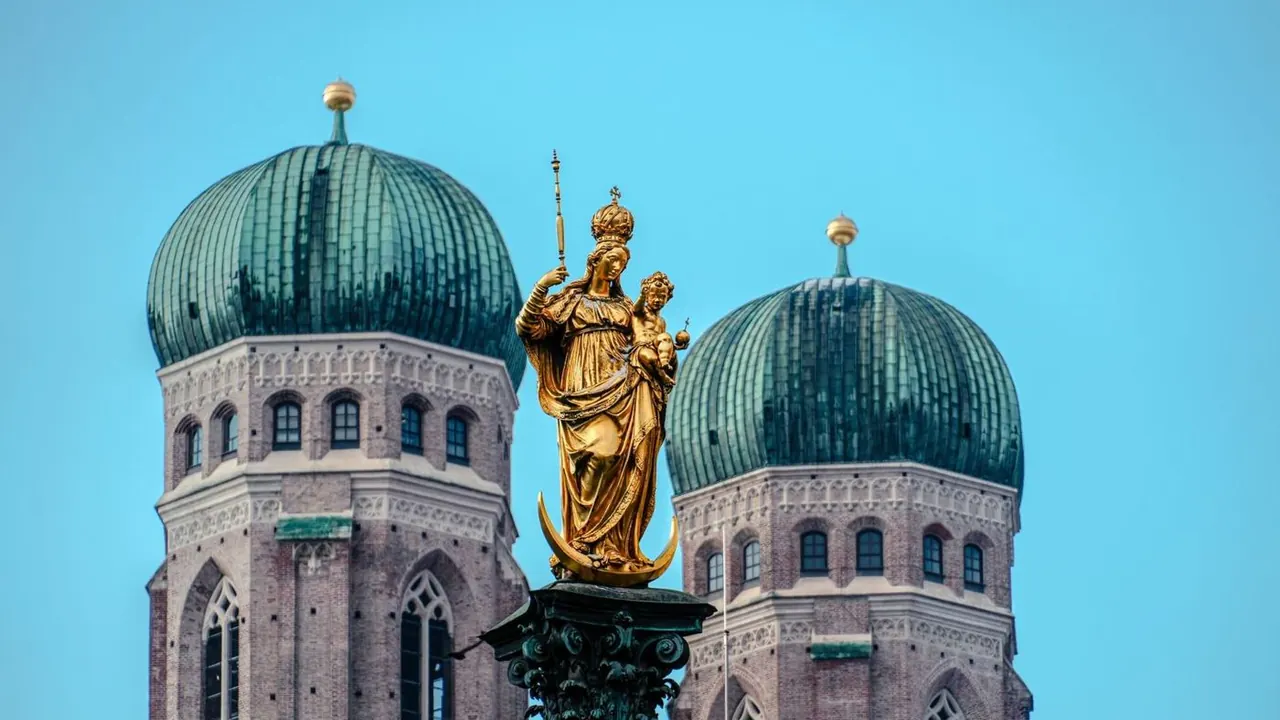
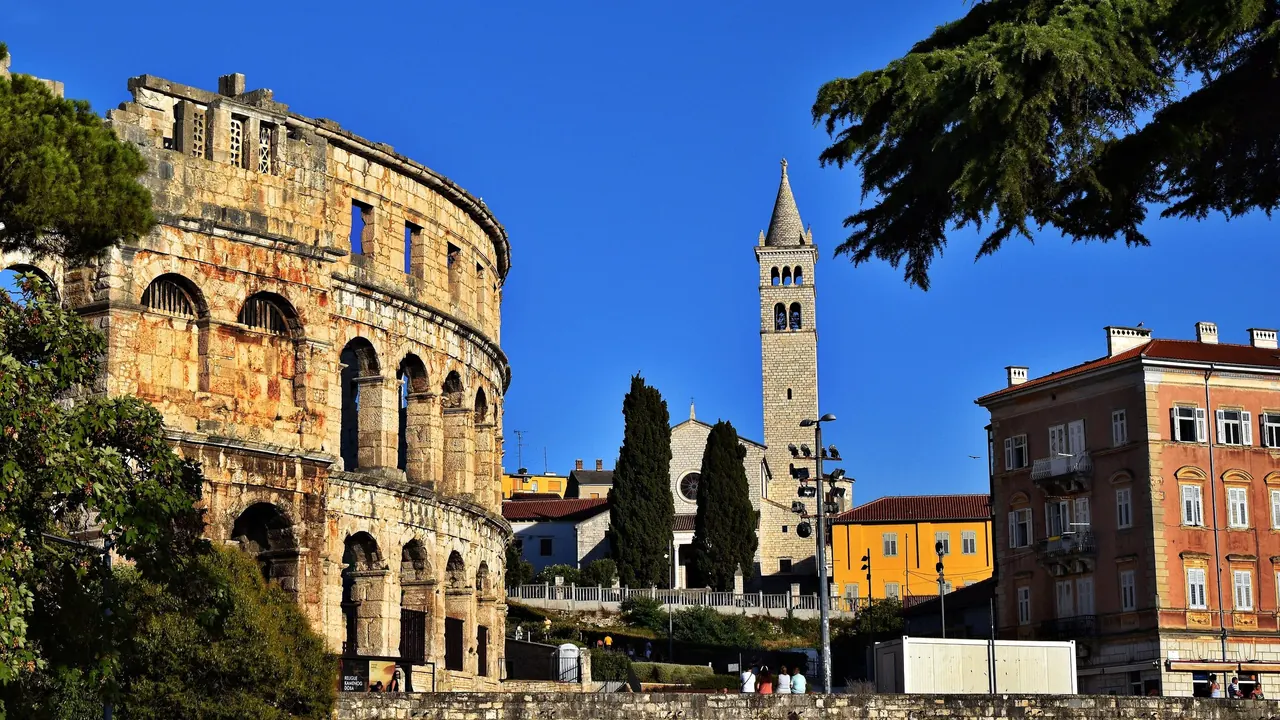
Photos: Munich by 0xd1ma, Pexels License; Pula by Miroslav.vajdic, CC BY-SA 4.0, cropped.
Munich or Pula?
Our verdict in twelve categories, each scored against the same fixed benchmark cities, and the climate month by month, so you can choose for your trip.
Choose Munich for
- live music and the arts
- shopping
- getting around
Munich is the stronger choice for almost any city-based trip. It has royal art collections and palaces, one of the world's great opera houses, an integrated transport network, and the Alps, Salzburg and the Bavarian castles within reach by train. It suits travellers who want plenty to see and do without a car, in any season, and who are willing to pay German big-city prices for it.
Choose Pula for
- beaches
- prices
Pula is the one for warm water and a slower pace. The clear Adriatic, the wild coves of Cape Kamenjak and a Roman arena standing above the harbour make for a summer trip built around swimming, with Istria's hill towns and truffle country close by. It costs less than Munich, especially outside high summer, but you will want a car, and there is little to fill your evenings or a rainy day.
Scoreboard
Twelve categories on one fixed scale from 0 to 100. The shaded stretch is the gap between the two.
Your match
Pick a travel style or drag the sliders, and both match scores follow your weighting.
Wins on live music and the arts and shopping with your weighting.
Wins on beaches and prices with your weighting.
What matters to you?
Category by category
What the scores mean for a trip.
Beaches & swimming
Pula is a real swimming destination. Munich is not. Pula's coast south of the centre breaks into rocky ledges, concrete platforms and pebble coves around Verudela and Stoja, with very clear water and pines almost down to the sea. The wild inlets of Cape Kamenjak are the best of it. There is no sand, and you will need water shoes because of sea urchins, while families with small children usually head for the shallower bays at Medulin.
Munich's summer swimming is a pleasant extra rather than a reason to go. You can sunbathe on the gravel banks of the Isar at the Flaucher, or take the S-Bahn to the Starnberger See or the Ammersee, where there are jetties and lawns. The water is fed from the Alps and stays fresh even in July.
Food & drink
Munich has the edge for eating in town. The beer halls and chestnut-shaded beer gardens serving roast pork, Schweinshaxe and white sausage are an experience in their own right. The Viktualienmarkt, the serious coffee-and-cake culture and a group of starred restaurants add variety, although beyond Bavarian, Italian, Turkish and Balkan cooking the choice thins out.
Pula's kitchen is lighter and more interesting: truffle fuži, scampi buzara, pršut, grilled squid, Malvazija and Teran. But the city has only a modest choice of restaurants, and tables around the Arena lean towards tourist menus. The best Istrian meals are in family taverns inland or in the harbour villages, so it helps to have a car.
Culture & sights
Munich has far more to see. The Kunstareal alone, with the Alte Pinakothek, the Glyptothek and the Lenbachhaus's Blue Rider paintings, could fill several days. Add the Residenz, Nymphenburg Palace and the vast Deutsches Museum, and there is enough for a week of museums.
Pula has one outstanding monument: the Arena, one of the best-preserved Roman amphitheatres anywhere, its three-storey outer ring still complete. The Temple of Augustus, the Arch of the Sergii and the Venetian fortress make for a rewarding Roman and Habsburg walk, but you can see them all in a day or two.
Nightlife
Munich offers more going out, and all year round. Evenings often start and end in a beer hall, but the Glockenbachviertel has dense rows of cocktail bars and gay bars, and a few serious techno clubs stay open until morning at weekends. During Oktoberfest the whole city becomes a party.
Pula's nightlife is mostly a summer affair: terraces around the Forum, beach bars on Verudela and in Medulin, and a few small clubs. Most evenings come down to a glass of wine by the floodlit Arena, and outside summer the town goes quiet early.
Nature & outdoors
Munich is better placed for the outdoors because the Alps are so close. The Zugspitze, the Wetterstein and Tegernsee can be reached by train for summer hiking or winter skiing, and the Five Lakes are good for sailing and cycling. In town, the English Garden and the surfers on the Eisbach wave bring the outdoors into the city.
Pula's outdoors is coastal: the car-free headland of Kamenjak with its cliffs, wild flowers and dinosaur footprints, sea kayaking around the islets, and diving on naval-era wrecks. The nearest real hills, the Učka range, are about an hour and a half away, and summer heat makes midday hiking hard.
Day trips
Both cities make good bases, but Munich offers more, and you can reach it all by train. Salzburg, Nuremberg, Regensburg and Augsburg are each within about an hour and a half, and Neuschwanstein and the island palace of Herrenchiemsee are classic royal excursions.
From Pula, the trips are smaller in scale but full of charm: Venetian Rovinj, the Byzantine mosaics of Poreč, the hilltop villages of Motovun and Hum, and the Brijuni islands by boat. The catch is that buses are limited, so most of these are much easier with a hire car.
Good for families
Munich is easier with children. It is clean and green and easy with a pushchair, and it has a riverside zoo at Hellabrunn, hands-on galleries at the Deutsches Museum and beer gardens with playgrounds. Legoland is within a day's drive.
Pula works well if your family wants to spend the days by the sea. The shallow bays at Medulin and Premantura, the aquarium inside a Habsburg fort and climbing around the Arena keep children busy. But rocky shores, midday heat and needing a car for most outings make it harder work.
Getting around
In Munich you never need a car. The pedestrianised old town is compact, and the U-Bahn, S-Bahn, trams and buses run as one network to the museums, Nymphenburg, the lakes and the airport. Regional trains handle most day trips, and the flat city is easy to cycle.
Pula's centre is just as easy on foot, with the Arena, the Forum and the market minutes apart, and city buses reach Verudela. Beyond town, though, slow trains and infrequent buses mean that Kamenjak, the hill towns and the wider coast are realistic only with a car or scooter.
Shopping & style
Munich is a real shopping city. It has luxury houses along Maximilianstrasse, department stores on the Kaufingerstrasse axis, independent boutiques in Glockenbach, and traditional Bavarian costume made by specialist tailors. The old Dallmayr delicatessen and the December Christmas markets add local character.
Pula has little shopping beyond chain stores and souvenirs on its main street. The things worth taking home are edible: Istrian olive oil, truffle products, Teran wine and honey, best bought at the market hall or from producers inland.
Affordability
Pula is the cheaper of the two, although the gap narrows in high summer. In spring and autumn, private apartments and simple konobas keep costs low. In July and August, rooms cost about as much as on Western European coasts, and car hire and boat trips add up.
Munich is Germany's most expensive city, and you feel it most in the price of a hotel room, especially during Oktoberfest and the big trade fairs. Free parks and lakes, cheap Sunday museum entry and a picnic in a beer garden help soften the bill.
Live music & performing arts
The two are far apart here. Munich is a major music capital. The Bavarian State Opera plays most of the year in the National Theatre, three orchestras of real standing fill the Herkulessaal and the Prinzregententheater, and the rococo Cuvilliés Theatre stages chamber opera. There is also a good jazz scene, plus big touring acts at the Olympic Park.
Pula has one magical setting: summer concerts and film festival screenings under the arches of the Arena. Outside summer there is mainly Croatian-language drama at the Istrian National Theatre.
Wellness & relaxation
Munich has a real bathing culture. The Art Nouveau Müller'sches Volksbad with its Roman-style steam bath, the textile-free public saunas with infusion rituals, and the huge thermal baths at Erding make a spa day easy. Long afternoons in a beer garden help too.
Pula has no spa tradition of its own, only the wellness areas of resort hotels on Verudela and in Medulin. It relaxes you in a different way: long coffees on the Forum, evening walks on pine-shaded coastal paths, and a pace that slows right down once high summer is over.
When should you go?
Pick your month. The climate figures are measured averages, not a forecast.
Munich in July
Pula in July
Daytime high, °C
Rainfall in the month, mm
Where the figures come from
Pula's temperatures are measured 87 km from the centre, at Trieste.
Pula has no rain gauge within 25 km of the centre, so its rainfall comes from a gridded climate dataset read at the city rather than from a gauge further away.
Temperature and rainfall are climate normals, averaged over the years shown. Munich: 1991-2020 normals, München (1.9 km from centre). Pula: 1991-2020 normals, Trieste (87 km from centre).
Pula is warmer for most of the year, and its summer is the real beach season. The sea is warm enough for comfortable swimming from June to September and reaches 25°C in August. Daytime highs of about 29°C in July and August make the middle of the day too hot for long walks, but July is also the sunniest month. Spring and early autumn are the best times for sightseeing and cycling. The rain arrives in autumn and peaks at about 107mm in November.
Munich follows a different pattern. Its summers are mild, with highs of about 25°C, and they are also its wettest months, with around 121mm in June, often falling as thunderstorms. Even so, the long sunny days of summer are the best time for the lakes and beer gardens. May, September and early October are the best months for walking around the city and in the foothills. Winter is cold and grey, with highs only a few degrees above freezing, but it brings snow to the nearby mountains.
Which traveller are you?
For a beach and sun trip, Pula is the clear choice. It has clear Adriatic water from June to September, pine-shaded rocky coves on Verudela and at Kamenjak, and shallow bays at Medulin. Munich can only offer cool alpine lakes as a break from sightseeing.
On a culture and arts trip, choose Munich. The old masters in the Alte Pinakothek, the Residenz, Nymphenburg and the Deutsches Museum are a lot to see, and evenings at the Bavarian State Opera or with one of three major orchestras round it out. Pula's Roman sights fill a day or two.
On a trip on a tight budget, Pula goes further, especially in spring or autumn when private apartments and simple konobas cost little. Munich's hotels are expensive all year, although free parks and lakes and a picnic in a beer garden help.
Before you go
| Measure | Munich | Pula |
|---|---|---|
| Official language | German | Croatian |
| Currency | Euro (EUR) | Euro (EUR) |
| Sockets | CF230 V, 50 Hz | CF230 V, 50 Hz |
| Driving side | Right | Right |
| Time zone | UTC+1, UTC+2 in summer | UTC+1, UTC+2 in summer |
| Emergency number | 112 | 112 |
| Elevation | 519 m | 5 m |
| Main airport | Munich Airport (MUC)29 km from centre210 non-stop destinations | Pula Airport (PUY)7 km from centre34 non-stop destinations |
| Public holidays this year | 12 days | 14 days |
By the numbers
| Measure | Munich | Pula |
|---|---|---|
| City population | 1,505,036 | 52,220 |
| People per km² | 4,844 | 971 |
| Museums within 10 km | 75 | 4 |
| UNESCO World Heritage sites within 50 km | 1 | 1 |
| Swim season, months above 21 °C | - | 4 months |
Where else could you go?
Every comparison below shares a destination with this one, so you can follow Munich or Pula somewhere new.