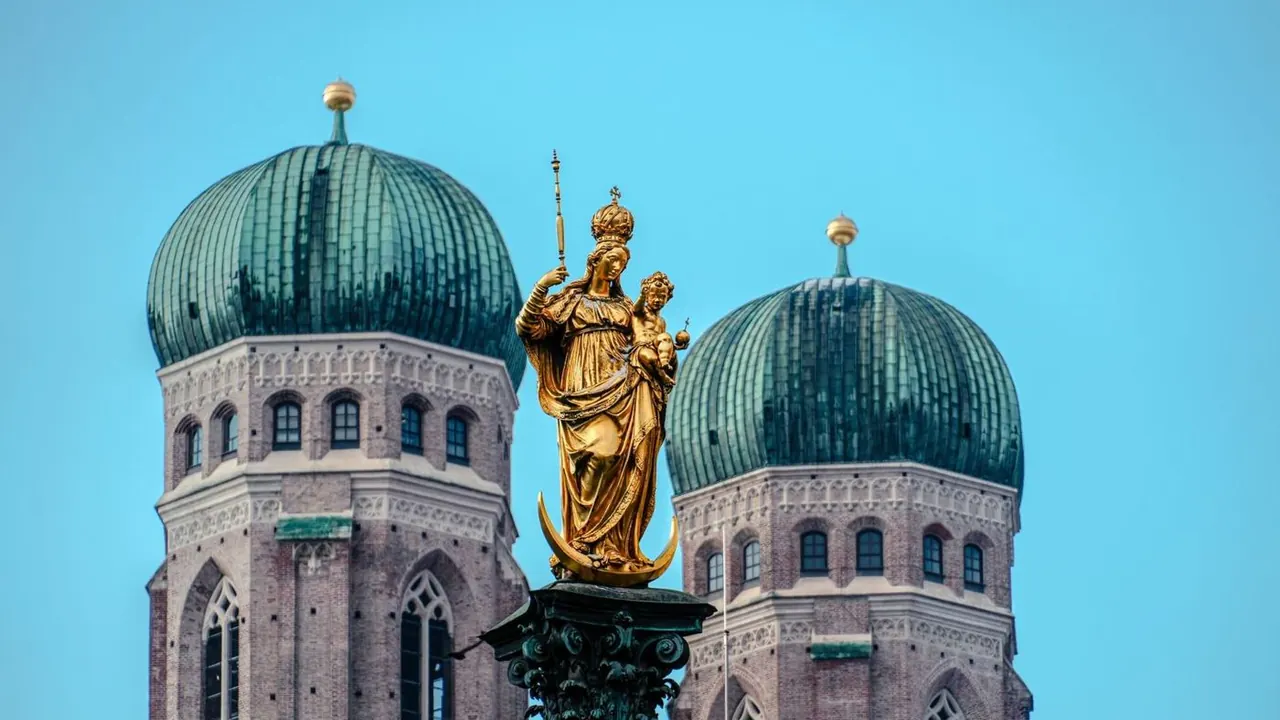
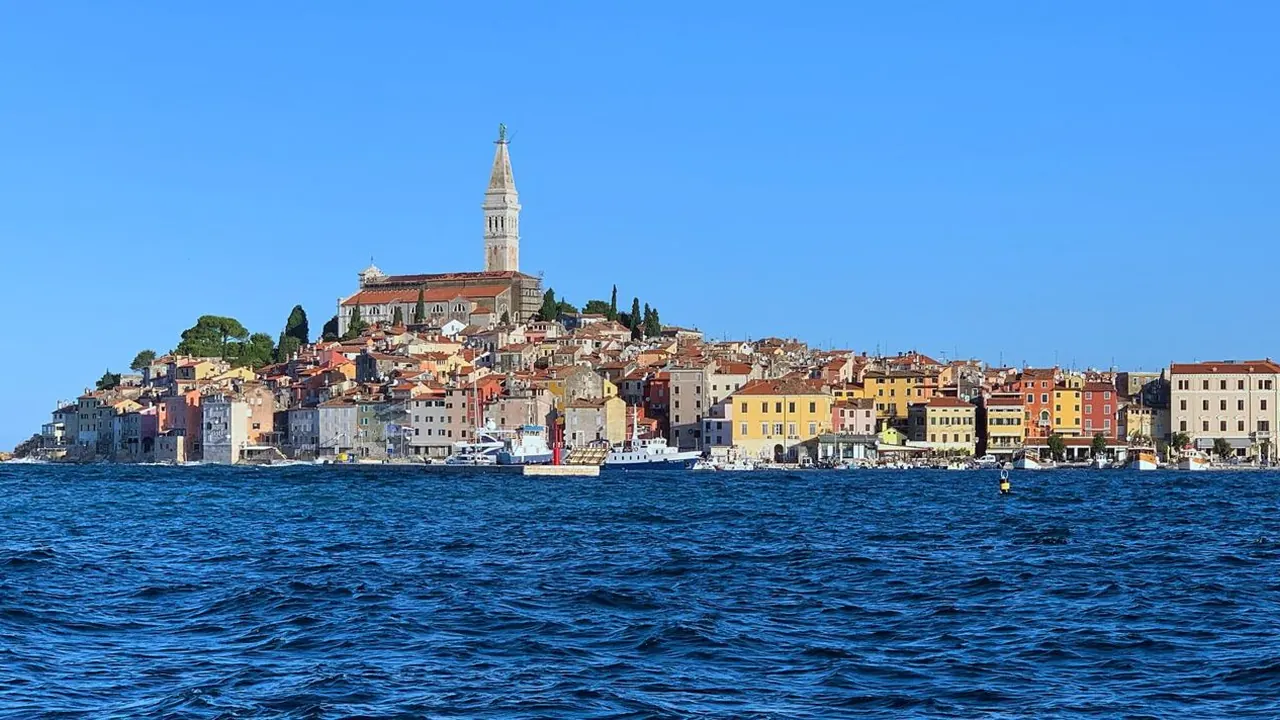
Photos: Munich by 0xd1ma, Pexels License; Rovinj by Vyacheslav Bukharov, CC BY-SA 4.0, cropped.
Munich or Rovinj?
Our verdict in twelve categories, each scored against the same fixed benchmark cities, and the climate month by month, so you can choose for your trip.
Choose Munich for
- live music and the arts
- shopping
- culture and sights
Munich is the choice for a trip built on what a large city can offer. Its great art collections, a world-class opera house and three serious orchestras keep the evenings full, and the Alps, Salzburg and the royal castles are all within reach by train. It suits travellers who want plenty to do, good transport, and children or parents who will be happy with museums, a zoo and lake days rather than the sea.
Choose Rovinj for
- beaches
- prices
Rovinj answers a simpler wish: a week by the Adriatic in a pretty Venetian harbour town, with swims off the rocks, long fish dinners and slow evenings. Go there to swim and unwind, with Roman Pula and the hill towns of Istria as outings, and accept that culture, nightlife and shopping are thin and that a car makes the region far easier.
Scoreboard
Twelve categories on one fixed scale from 0 to 100. The shaded stretch is the gap between the two.
Your match
Pick a travel style or drag the sliders, and both match scores follow your weighting.
Wins on live music and the arts and shopping with your weighting.
Wins on beaches and prices with your weighting.
What matters to you?
Category by category
What the scores mean for a trip.
Beaches & swimming
Rovinj is the place to swim. The Adriatic is very clear and warm in high summer, you can swim from the stones right below the old town walls, and the Golden Cape shore gives you several kilometres of limestone ledges and small coves. Expect rock and concrete rather than sand, and pack water shoes.
Munich's swimming takes more effort and is more a pleasant extra. Locals sunbathe on the Isar gravel at the Flaucher, and the real swims are in the Starnberger See and the Ammersee, under an hour away by S-Bahn, where the fresh, alpine-fed water is cooler than the sea in Istria.
Food & drink
Munich has more to offer at the table, though most of it comes back to beer. You can sit in a beer hall or under the chestnuts of a beer garden with roast pork, white sausage and pretzels, pick at cheese and snacks in the Viktualienmarkt, eat in a starred restaurant, and find decent Italian, Turkish and Balkan food when you tire of Bavarian dishes.
Rovinj's cooking is more focused and more Mediterranean: grilled fish, scampi buzara, truffled fuži, Istrian oil and Malvazija wine. The best meals are in a few refined restaurants and in country konobas a drive away, because the harbour menus are written for passing visitors.
Culture & sights
Munich has more sights than a long weekend can hold. The Kunstareal alone holds old masters, Greek sculpture and the Blue Rider painters, and there are also the Residenz, Nymphenburg and the vast Deutsches Museum, with the Dachau memorial just outside the city.
In Rovinj the main sight is the town itself: the pastel Venetian houses climbing to St Euphemia, a bell tower you can climb, and the Batana House on the fishing boats. It is charming and photogenic, and you will have seen it all in an afternoon.
Nightlife
Munich gives you a proper night out. The beer halls and beer gardens come first, then the cocktail and gay bars of Glockenbachviertel and Gärtnerplatz, student pubs in Schwabing, and techno clubs that run until morning at weekends. If you are there during the Oktoberfest, the whole city turns into a party.
Rovinj's evenings are gentler: a long dinner, a drink on the rocks at sunset, a few waterfront bars in summer, and quiet lanes by midnight. Clubbers will have to head to bigger resorts along the coast.
Nature & outdoors
Munich has the bigger landscapes, because the Alps rise about an hour south. Trains reach the Zugspitze, Garmisch and Tegernsee for summer hiking and winter skiing. In the city itself there is the English Garden, with surfers on the Eisbach wave, and cycle paths run along the Isar.
Rovinj's outdoors is lower-key and based on the sea. You can walk or cycle the pine paths of the Golden Cape, kayak and dive around the archipelago's reefs and wrecks, and take a boat up the Lim Fjord to the oyster farms. Inland there are gentle vineyards, but no mountains.
Day trips
Munich makes the stronger base, and nearly everything is reachable by train. You can go to Augsburg, Nuremberg and Regensburg, cross the border to Salzburg and Innsbruck, and visit the fairytale castles at Neuschwanstein and on the Chiemsee.
Rovinj's outings are fewer but still very good: Pula's Roman amphitheatre, the mosaics of the Euphrasian Basilica in Porec, the hill towns of Motovun and Hum, and the Brijuni islands. The difference is that most of them really need a car.
Good for families
Munich is easier with children. There are the Hellabrunn zoo along the Isar, the hands-on rooms of the Deutsches Museum, an aquarium in the Olympic Park, playgrounds in the beer gardens, and Legoland within a day's reach. Transport also copes well with pushchairs.
Rovinj offers island boat trips, gelato and shady park paths, and the big campsites have pools. However, the sea is entered from rock with urchins, and pushing a pushchair up the old town's steep, polished cobbles is hard work.
Getting around
Both towns have a walkable centre, but the similarity ends there. Munich's pedestrianised old town is linked to an integrated network of U-Bahn, S-Bahn and trams that reaches the museums, the lakes and the airport, and regional trains carry you to the mountains and other cities without a car.
In Rovinj, life in town is entirely on foot along the promenade, with taxi boats out to the islands. Once you leave town, though, there is no railway, only intercity buses, so the wineries and hill towns mean renting a car and hunting for summer parking.
Shopping & style
Munich is a real shopping city, with luxury on Maximilianstrasse, department stores along Kaufingerstrasse, design boutiques in Glockenbach, the old delicatessen Dallmayr, and dirndls and lederhosen from specialist tailors.
Rovinj has no fashion streets at all. What it offers is regional produce, truffles, olive oil, Teran wine and brandies, plus the artists' studios along Grisia.
Affordability
Neither is a cheap trip, but the costs work in different ways. In Munich, hotel rooms are dear all year and peak during the Oktoberfest and trade fairs, though beer-hall meals, bringing a picnic to a beer garden, free parks and token-fee museum Sundays help.
Rovinj's prices are seasonal. July and August bring resort rates and fish sold by weight, while private apartments, campsites, bakery lunches and a trip in late spring or September bring the cost down noticeably.
Live music & performing arts
This is where the two differ most. Munich has the Bavarian State Opera in the National Theatre, three orchestras of real standing, chamber opera in the rococo Cuvilliés Theatre, operetta at the Gärtnerplatztheater, jazz clubs, and big concerts in the Olympic Park.
Rovinj offers summer concerts in St Euphemia, music on the harbour and occasional performances of bitinada singing, and very little the rest of the year. The bigger summer concerts are in Pula's arena.
Wellness & relaxation
Munich has a real bathing culture to offer. You can swim under the Art Nouveau vaults of the Müller'sches Volksbad, try textile-free saunas with infusion rituals, spend a day at the huge thermal complex at Erding, or go to the spa towns towards the mountains.
Rovinj relies on hotel spas and its slower pace: long lunches, late swims and walks in the pines. That works best in May, June and September, before the old town fills up.
When should you go?
Pick your month. The climate figures are measured averages, not a forecast.
Munich in July
Rovinj in July
Daytime high, °C
Rainfall in the month, mm
Where the figures come from
Rovinj's temperatures are measured 64 km from the centre, at Trieste.
Rovinj has no rain gauge within 25 km of the centre, so its rainfall comes from a gridded climate dataset read at the city rather than from a gauge further away.
Temperature and rainfall are climate normals, averaged over the years shown. Munich: 1991-2020 normals, München (1.9 km from centre). Rovinj: 1991-2020 normals, Trieste (63.7 km from centre).
Munich is at its best from late spring to early autumn. Summer days reach about 25°C, which is comfortable for walking, and lake swims are good from June to early September. But May to August is also the wettest stretch, at around 120mm a month at its peak, so expect showers and thunderstorms in summer. From November to February it is cold, grey and short of sun, better for museums, concert halls and the Christmas markets than for long walks.
Rovinj is warmer and sunnier all year. Its swimming season runs from June to September, with the sea reaching about 26°C in August and daytime highs near 29°C. That is hot, but short walks in the old town are fine, especially in the evening. September keeps the water warm, then rain builds through autumn to a peak of about 102mm in November, and winter is mild and grey. For walking the Golden Cape paths, May, June and late September are the most pleasant months in Rovinj. In Munich, May and September are the best months for mild days and long sunny spells, and September is the drier of the two.
Which traveller are you?
On a beach and sun trip, Rovinj is the clear pick. It has clear Adriatic water, rock ledges and pebble coves along the Golden Cape and taxi boats out to the islands, where Munich can offer only alpine lakes and the gravel banks of the Isar.
For a culture and arts trip, Munich wins by a wide margin. The Pinakotheks, the Residenz and the Deutsches Museum fill the days, and the Bavarian State Opera and the city's orchestras fill the evenings. Rovinj's old town and church take a single afternoon.
On a shopping trip, Munich has luxury houses on Maximilianstrasse, department stores on the pedestrian axis, independent boutiques and tailored Tracht. Rovinj's shopping comes down to truffles, olive oil, wine and the small galleries on Grisia, which make good gifts but are hardly a reason to go.
Before you go
| Measure | Munich | Rovinj |
|---|---|---|
| Official language | German | Croatian |
| Currency | Euro (EUR) | Euro (EUR) |
| Sockets | CF230 V, 50 Hz | CF230 V, 50 Hz |
| Driving side | Right | Right |
| Time zone | UTC+1, UTC+2 in summer | UTC+1, UTC+2 in summer |
| Emergency number | 112 | 112 |
| Elevation | 519 m | 0 m |
| Main airport | Munich Airport (MUC)29 km from centre210 non-stop destinations | Pula Airport (PUY)31 km from centre34 non-stop destinations |
| Public holidays this year | 12 days | 14 days |
By the numbers
| Measure | Munich | Rovinj |
|---|---|---|
| City population | 1,505,036 | 12,968 |
| People per km² | 4,844 | - |
| Museums within 10 km | 74 | 1 |
| UNESCO World Heritage sites within 50 km | 1 | 1 |
| Swim season, months above 21 °C | - | 4 months |
Where else could you go?
Every comparison below shares a destination with this one, so you can follow Munich or Rovinj somewhere new.