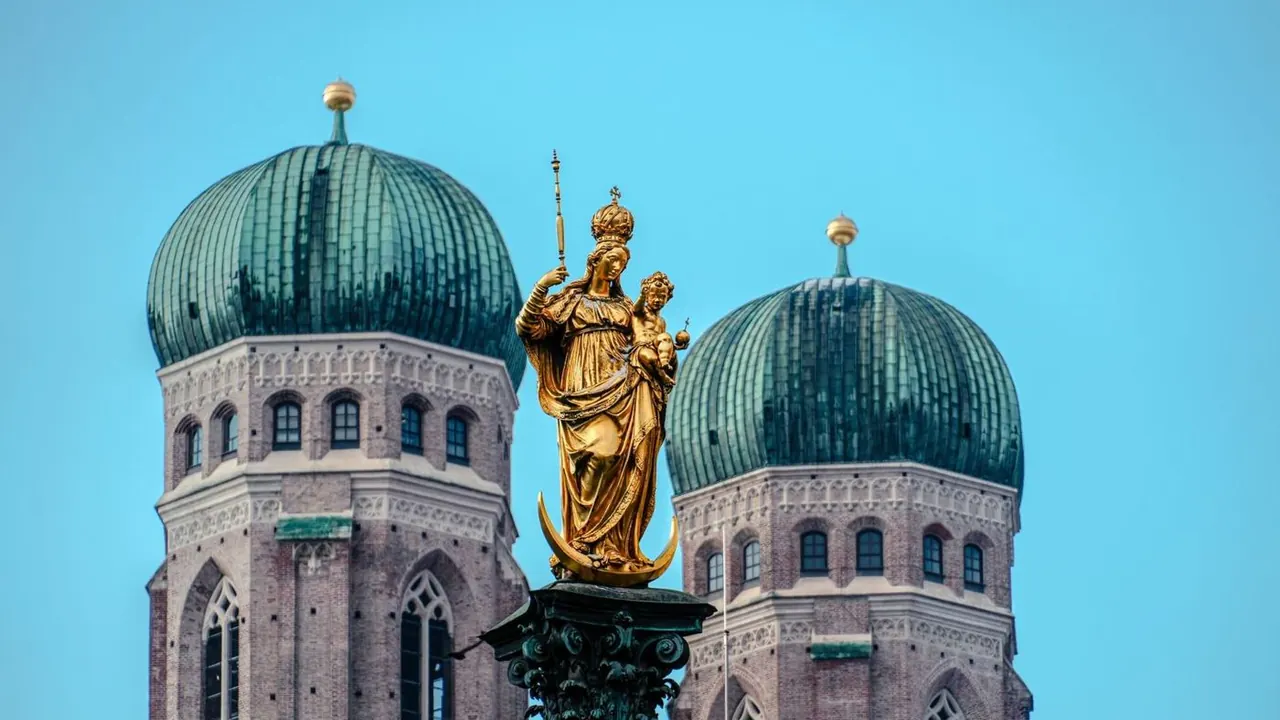
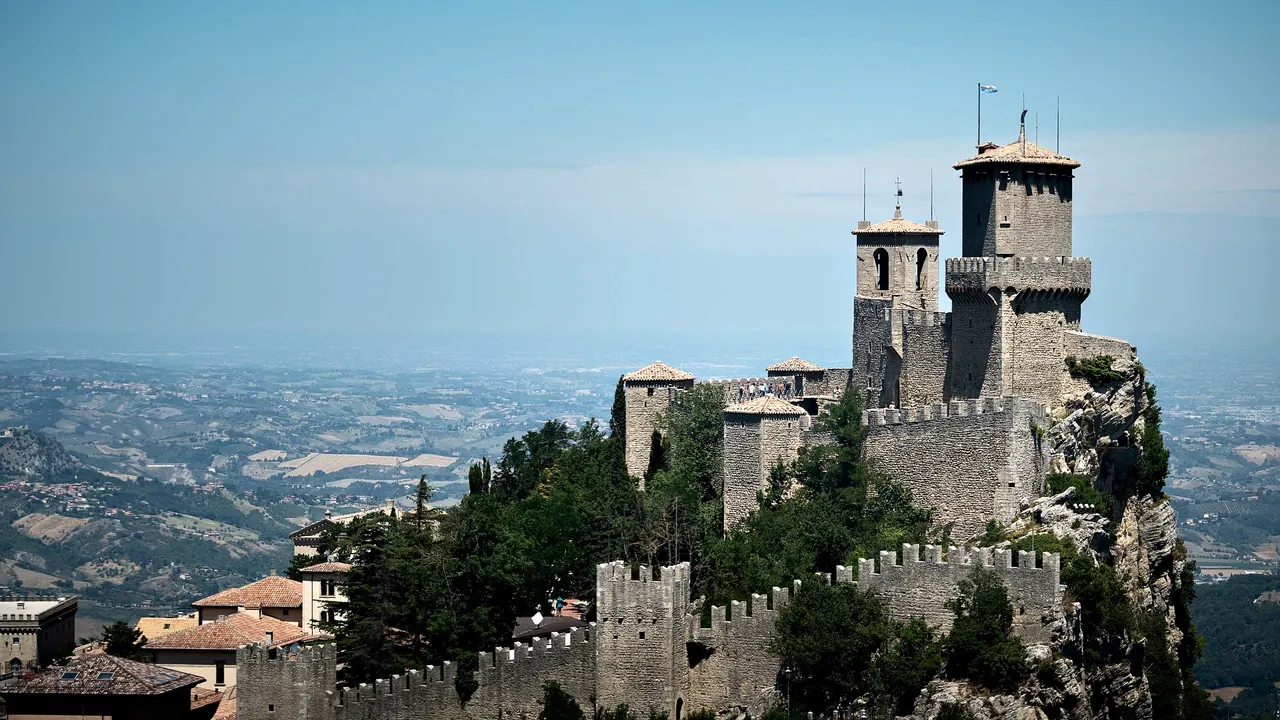
Photos: Munich by 0xd1ma, Pexels License; San Marino by Tibor Szabo, Pexels License.
Munich or San Marino?
Our verdict in twelve categories, each scored against the same fixed benchmark cities, and the climate month by month, so you can choose for your trip.
Choose Munich for
- live music and the arts
- nightlife
- getting around
Munich suits travellers who want several full days of things to do. It has the Pinakothek galleries and the Residenz, an opera house of world standing, beer gardens for the evenings and one train network that reaches the Alps, Salzburg and Neuschwanstein without a car. It is also the easier city for families, if your budget can take its hotel prices.
Choose San Marino for
- prices
- beaches
San Marino is a smaller, slower trip with a car at its heart. The walled town and towers on Monte Titano take about half a day to see. After that it becomes a base for driving to San Leo, Urbino and Ravenna and for going down to the Adriatic sand at Rimini. Choose it for a summer mix of hill towns and sea at moderate prices, with quiet evenings on the walls instead of a night out.
Scoreboard
Twelve categories on one fixed scale from 0 to 100. The shaded stretch is the gap between the two.
Your match
Pick a travel style or drag the sliders, and both match scores follow your weighting.
Wins on live music and the arts and nightlife with your weighting.
Wins on prices and beaches with your weighting.
What matters to you?
Category by category
What the scores mean for a trip.
Beaches & swimming
Munich has lakes instead of sea. The Starnberger See and the Ammersee are a short S-Bahn ride away, with lawns and jetties, and on warm days people sunbathe on the gravel banks of the Isar at the Flaucher. The water is alpine-fed and fresh, so a swim there is a break from sightseeing rather than a beach day.
San Marino has a real beach within reach, about half an hour's drive away. The Romagna shore at Rimini and Riccione has long sandy beaches with numbered umbrellas, beach clubs and shallow, warmer water that suits children. You still have to go down the mountain to reach it.
Food & drink
For eating well, Munich is clearly the stronger of the two. Its cooking revolves around the breweries and their beer halls and chestnut-shaded gardens, with roast pork with crackling, white sausage and pretzels before noon, and the Viktualienmarkt for cheese and snacks. A respectable tier of starred restaurants covers a special night. Beyond Bavarian fare there is good Italian, Turkish and Balkan cooking, but other cuisines have little depth.
San Marino offers honest Romagna and Montefeltro cooking: piadina, passatelli in broth and hand-rolled pasta, with the republic's own Sangiovese to drink. The summit terraces sell the view more than the food, so the better meals mean going down to family trattorias in Borgo Maggiore or across the border. It is pleasant eating, but not a reason to go.
Culture & sights
Munich is a museum city on a large scale. It has the old masters of the Alte Pinakothek and the Blue Rider painters at the Lenbachhaus, the Residenz and Nymphenburg palaces and the huge Deutsches Museum, enough for a week.
In San Marino the town itself is the sight: a medieval crest with the Guaita and Cesta towers joined by a cliffside path, and the Palazzo Pubblico, which tells the story of one of the world's oldest republics. It is dramatic, but you will have seen it well within half a day.
Nightlife
Munich has a real, if well-behaved, night out. Evenings often start in a beer hall, and there are cocktail and gay bars around Gärtnerplatz and the Glockenbachviertel, student pubs in Schwabing and a few techno clubs that stay open until morning at weekends.
San Marino has almost nothing after dark: once the coaches leave, it is dinner and a glass of wine above the lights of the coast. For clubs, people drive down to Rimini.
Nature & outdoors
From Munich the Alps are about an hour away. There is hiking around Garmisch-Partenkirchen and the Zugspitze in summer, skiing in winter, and cycling and sailing in the Five Lakes region. In the city itself you have the English Garden, surfers on the Eisbach wave and cycle paths along the Isar.
San Marino's outdoors is gentler: footpaths around a limestone ridge about 740m high, woods leading down to Borgo Maggiore, and quiet roads through the Montefeltro hills. It is good for a morning walk with views to the Adriatic, but it has no mountains to compare with Munich's.
Day trips
Both cities make good bases, but Munich's trips are easier to make and cover more. Augsburg, Nuremberg, Regensburg, Salzburg and Innsbruck are all reachable by train, and so are the royal castles of Neuschwanstein and Herrenchiemsee.
San Marino's list is strong: the rock fortress of San Leo, Renaissance Urbino, Ravenna's Byzantine mosaics and the castle at Gradara. The only regular public transport is the bus to Rimini, though, so most of these trips need a car.
Good for families
Munich is the easier city with children. It is flat and clean, the transport takes pushchairs, the Hellabrunn zoo stretches along the Isar meadows, the Deutsches Museum has hands-on sections, and many beer gardens have playgrounds.
In San Marino, children enjoy the towers, the battlements and the cable car, but the steep steps and summer crowds are hard work with a pushchair. The family attractions, such as Italia in Miniatura, Fiabilandia and the shallow beaches, are all down on the coast, so the stay works best with a car.
Getting around
Munich runs on a single integrated network of U-Bahn, S-Bahn, trams and buses. The old town is flat and walkable, there are long cycle routes, and the lakes and most day trips can be reached without a car.
San Marino's centre is small, but nearly every street climbs, often by steps, and a cable car drops down to Borgo Maggiore. Apart from the bus from Rimini, public transport is thin, so for anything beyond the summit you need a car.
Shopping & style
Munich has serious shopping. The luxury houses line Maximilianstrasse, department stores fill the pedestrian Neuhauser Strasse and Kaufingerstrasse, and Glockenbach and Schwabing have independent boutiques. Dirndls and lederhosen made by specialist Tracht tailors are the local thing to buy.
San Marino's streets sell mostly souvenirs: ceramics, decorative crossbows, and stamps and coins for collectors. Lower taxes make perfume, watches and spirits cheaper than in Italy, and there is an outlet centre on the valley floor. Beyond that there is little depth.
Affordability
San Marino is the easier place to stay on a budget. Munich is Germany's most expensive city: hotels are dear all year and very dear during the Oktoberfest and trade fairs, and restaurant meals cost what they do in a capital. Beer-garden picnics, free parks and fairly priced transport soften the bill.
San Marino follows the prices of provincial central Italy, with moderate hotels outside August, fair trattorias in the lower villages and cheap sights. The summit costs more than the villages, but overall a stay here is noticeably cheaper than in Munich.
Live music & performing arts
For an evening at the opera or a concert, Munich is in another league. The Bavarian State Opera plays in the National Theatre, and the city has three orchestras of real standing. The gilded Cuvilliés Theatre stages chamber opera, the Gärtnerplatztheater does operetta, and there is a respected jazz scene.
San Marino has a small theatre, occasional local concerts and summer music in the squares. Its best-known event is the Medieval Days festival, with costumed musicians and crossbow contests. For opera, visitors go to Bologna or Pesaro.
Wellness & relaxation
If a spa day matters to you, the gap between the two is wide. Munich bathes in the German style, from the vaulted Art Nouveau pools and Roman-style steam bath of the Müller'sches Volksbad to public saunas with infusion rituals, and the huge thermal complex at Erding is about forty minutes away. Long beer-garden afternoons and quiet Sundays make the city easy to slow down in.
San Marino has only a few hotel spas. What it offers instead is calm in the evening, walking the walls once the day visitors have gone, though summer days around the towers are crowded. Thermal spas mean a separate trip down to the coast or into the Apennines.
When should you go?
Pick your month. The climate figures are measured averages, not a forecast.
Munich in July
San Marino in July
Daytime high, °C
Rainfall in the month, mm
Where the figures come from
San Marino's temperatures are measured 52 km from the centre, at Frontone.
San Marino has no rain gauge within 25 km of the centre, so its rainfall comes from a gridded climate dataset read at the city rather than from a gauge further away.
Temperature and rainfall are climate normals, averaged over the years shown. Munich: 1991-2020 normals, München (1.9 km from centre). San Marino: 1991-2020 normals, Frontone (51.5 km from centre).
Munich is at its best from May to September, when daytime highs reach about 25°C in July and August and the days are long and sunny. Summer is also its wettest season, with about 121mm of rain in June, so pack for showers. The lakes are pleasant for swimming from June. Spring and early autumn are the best months for walking. Winter is cold and often grey in the city, and is better spent in the museums or skiing in the mountains.
San Marino runs warmer and follows the opposite rain pattern. July reaches about 30°C, which is hot for climbing the steep streets at midday but right for the beach below, where the sea warms to about 26°C in August. May, June and September are the most comfortable months for walking the ridge. Its rain comes in autumn rather than summer, building to about 105mm in November.
Which traveller are you?
On a beach and sun trip, San Marino is the better choice. The sandy Adriatic shore at Rimini and Riccione is about half an hour's drive down the mountain, and the sea is warm in high summer. Munich has only fresh alpine lakes and the gravel banks of the Isar.
For a culture and arts trip, choose Munich. The Pinakotheks, the Residenz and the Deutsches Museum can fill several days, and in the evenings there is the Bavarian State Opera or a concert by one of three major orchestras. San Marino's towers and palazzo take half a day.
On a tight budget, San Marino makes the money go further. Its walks between the towers cost nothing, and lower taxes make fuel cheaper for the car trips into the hills. If you choose Munich anyway, save the big museums for Sunday, when several charge only a token fee.
Before you go
| Measure | Munich | San Marino |
|---|---|---|
| Official language | German | Italian |
| Currency | Euro (EUR) | Euro (EUR) |
| Sockets | CF230 V, 50 Hz | CFL230 V, 50 Hz |
| Driving side | Right | Right |
| Time zone | UTC+1, UTC+2 in summer | UTC+1, UTC+2 in summer |
| Emergency number | 112 | 112 |
| Elevation | 519 m | 675 m |
| Main airport | Munich Airport (MUC)29 km from centre211 non-stop destinations | Bologna Guglielmo Marconi Airport (BLQ)114 km from centre98 non-stop destinations |
| Public holidays this year | 12 days | 18 days |
By the numbers
| Measure | Munich | San Marino |
|---|---|---|
| City population | 1,505,036 | 4,040 |
| People per km² | 4,844 | 569 |
| Museums within 10 km | 75 | 19 |
| UNESCO World Heritage sites within 50 km | 1 | 2 |
| Swim season, months above 21 °C | - | 4 months |
Where else could you go?
Every comparison below shares a destination with this one, so you can follow Munich or San Marino somewhere new.
- Assisivs San Marino
- Florencevs San Marino
- Innsbruckvs Munich
- Bolognavs San Marino
- Sienavs San Marino
- Salzburgvs Munich