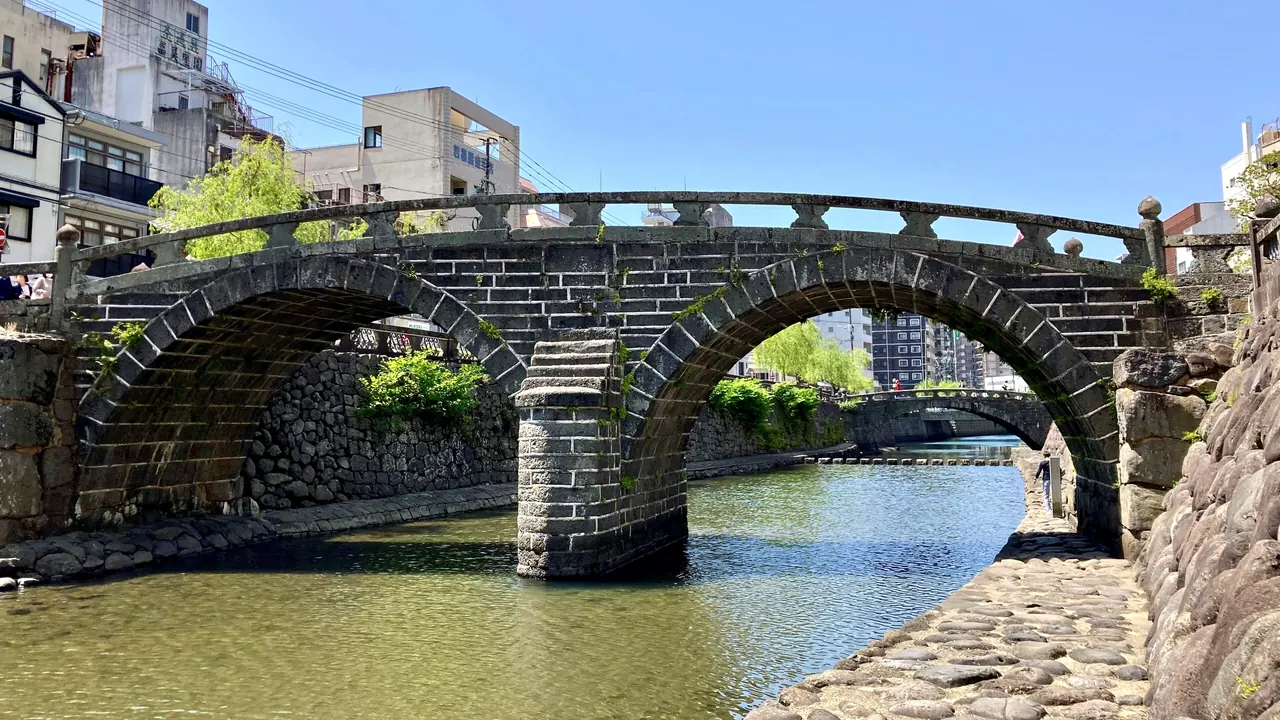
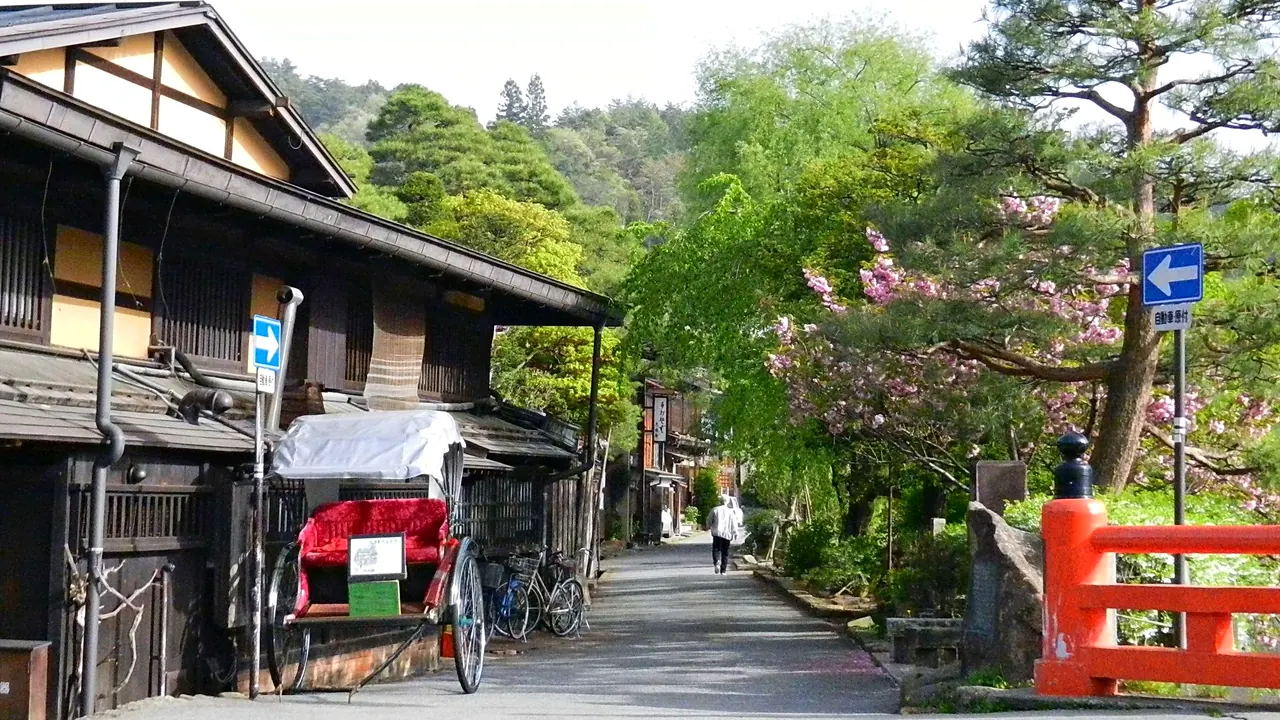
Photos: Nagasaki by Dudva, CC0; Takayama by lienyuan lee, CC BY 3.0, cropped.
Nagasaki or Takayama?
Our verdict in twelve categories, each scored against the same fixed benchmark cities, and the climate month by month, so you can choose for your trip.
Choose Nagasaki for
- beaches
- nightlife
- food and drink
Nagasaki suits travellers who want a city with weight to its history and enough going on to fill the evenings. The Atomic Bomb Museum and Peace Park, Dejima and the hillside merchant houses tell a story no other Japanese city can, the cooking is distinctive, and Shianbashi gives you somewhere to go after dinner. It is also the gentler choice for families, for tighter budgets and for anyone travelling in winter.
Choose Takayama for
- wellness
- nature and the outdoors
- day trips
Takayama is for slowing down in the mountains. Its Edo-era merchant lanes are best in the early morning, and evenings are spent in a ryokan bath. Shirakawa-go, the Okuhida valleys and the high trails of the Northern Alps are all close by. Choose it for hot springs, mountain scenery and craft, and accept that nights out and range of food are not why you are there.
Scoreboard
Twelve categories on one fixed scale from 0 to 100. The shaded stretch is the gap between the two.
Your match
Pick a travel style or drag the sliders, and both match scores follow your weighting.
Wins on beaches and nightlife with your weighting.
Wins on wellness and nature and the outdoors with your weighting.
What matters to you?
Category by category
What the scores mean for a trip.
Beaches & swimming
Neither is a beach destination, but Nagasaki at least has the sea within reach. Takahama's sandy bay on the Nomo coast is about an hour away by bus, and Iojima is a short ferry ride across the harbour. Both work as a half-day break from sightseeing between July and early September.
Takayama lies high in the Hida mountains, with the coast about two hours away. If you want to swim, plan a separate stop somewhere else. Here the nearest thing to a dip is an open-air hot spring.
Food & drink
Nagasaki has the more distinctive table. Centuries of foreign trade left it dishes found nowhere else in Japan: champon, sara udon, castella from the Portuguese and shippoku banquets that mix Chinese, Dutch and Japanese cooking. The range is still narrow and there is little fine dining, but fresh fish in the izakaya around Shianbashi and buns in Chinatown make it easy to eat well.
Takayama relies on a few mountain specialities: Hida beef grilled on a hoba leaf or seared on skewers, soy-glazed dango and pickles from the riverside markets. Its real strength is sake, poured for tasting in the old breweries with cedar balls over the door. After two or three days, though, the menus start to repeat.
Culture & sights
Nagasaki has the deeper and more varied sights. The atomic bomb sites in Urakami are why many people come, and around them are layers of foreign contact found nowhere else in Japan: the Dutch post on Dejima, Oura Cathedral, Glover Garden, and the Chinese heritage of Sofukuji and the Confucian shrine.
Takayama offers one well-preserved townscape rather than a run of major sites. The dark-timbered lanes of Sanmachi Suji, the old government office at Takayama Jinya and the thatched farmhouses of Hida Folk Village make an atmospheric day or two, and the appeal is the feel of the place more than its museums.
Nightlife
Nagasaki is quiet by big-city standards, but Shianbashi is a real entertainment district, a tight grid of izakaya, counter bars, karaoke and snack bars where a few places stay open late. The other evening favourite is the ropeway up Mount Inasa for the lights over the harbour.
Takayama has almost nothing after dark. Most guests eat at their ryokan, and the old town closes with its shops. A few bars near the station are fine for a sake after dinner, and that is about all.
Nature & outdoors
Takayama has the bigger landscapes. In about an hour and a half you can ride the Shin-Hotaka ropeway up among peaks near 3,000m, or walk the flat riverside trails of Kamikochi beneath the Hotaka range. There is summer walking on Norikura and skiing in winter, though mountain trips depend on bus timetables.
Nagasaki's nature is coastal and volcanic. The steep green hills around the harbour, the rocky Nomo coast and the view from Mount Inasa are part of everyday sightseeing. For proper hiking you head about two hours out to the steaming peaks of Unzen, or to the islands of Kujukushima by boat.
Day trips
Takayama has the slight edge because its best outings are so close. The thatched UNESCO village of Shirakawa-go is under an hour by bus, Hida-Furukawa's canals are a quarter of an hour by train, and Gero Onsen and Kanazawa make easy next stops.
Nagasaki's day trips are more varied but further away. The boat to the ruins of Gunkanjima depends on the weather. Shimabara's samurai street, Huis Ten Bosch and the porcelain towns of Arita and Imari each take most of a day.
Good for families
Nagasaki has more that children enjoy. The trams and the Mount Inasa ropeway are fun in themselves, the Penguin Aquarium lets its birds walk out onto a beach, and Huis Ten Bosch makes a full day out. The catches are the stepped streets, which are hard with a pushchair, and the Atomic Bomb Museum, which needs some thought for young children.
Takayama is flat and compact, and the market snacks, festival floats and winter snow keep children happy for a while. With no aquarium or theme park, though, it works best as a short stop on a longer trip.
Getting around
Both are easy without a car, but in different ways. In Nagasaki the trams do the work: a flat fare along the valley floor links the station, Peace Park, Dejima and Glover Garden, but any trip up the hillsides means steps.
Takayama is simply small and flat, with the old town, Jinya and markets all within a fifteen-minute walk of the station. The effort comes when you leave town, because regional buses to Shirakawa-go and Okuhida need planning around connections.
Shopping & style
Both are modest places to shop, with little fashion, and the best buys are local. Nagasaki's gifts are boxed castella, glassware and porcelain from Hasami, Mikawachi and Arita, and the Hamanomachi arcade covers everyday needs.
Takayama's old lanes are more given over to craft: amber Shunkei lacquerware, yew carvings cut from a single block, Hida bentwood furniture and bottles from the sake breweries. There are plenty of sarubobo souvenirs alongside the better pieces.
Affordability
Nagasaki is a little easier on the wallet. Business hotels near the station are fair, a bowl of champon costs little, and one tram ticket covers a day of sightseeing. The costs build up with the Gunkanjima boats and long evenings of sake and sashimi.
Takayama's everyday costs are low too, but the things most people come for are the expensive ones: a ryokan night with a multi-course dinner, a proper Hida beef meal, and rooms in festival weeks.
Live music & performing arts
Neither city has a performing arts life worth planning a trip around, but Nagasaki has more. The October Kunchi at Suwa Shrine brings dragon dances and ship floats, the Lantern Festival fills Chinatown, and a municipal concert hall hosts touring shows.
Takayama's performance comes almost entirely from its spring and autumn festival, with karakuri puppets on the floats and lantern-lit processions in the evening. Outside those days there is nothing to see.
Wellness & relaxation
Takayama is the place to soak. Many ryokan pipe in spring water for their indoor and open-air baths, so a bath before dinner comes with the room. The open-air pools beside the rivers of Okuhida and the famous baths of Gero Onsen are each about an hour away.
Nagasaki has only a few sento and spring-fed facilities in town. Its real onsen, the seaside footbath at Obama and the steaming mountain resort of Unzen, are on the Shimabara peninsula and really need an overnight stay.
When should you go?
Pick your month. The climate figures are measured averages, not a forecast.
Nagasaki in July
Takayama in July
Daytime high, °C
Rainfall in the month, mm
Where the figures come from
Takayama's sunshine is measured 65 km from the centre, at Matsumoto.
Temperature and rainfall are climate normals, averaged over the years shown. Nagasaki: 1991-2020 normals, Nagasaki (2.2 km from centre). Takayama: 1971-2000 (sunshine 1991-2020, rainfall 1981-2010) normals, Takayama (0.5 km from centre).
Nagasaki has the milder winter, with January highs around 11°C, so walking its stepped streets is comfortable from autumn right through to spring. April, May, October and November are the best months. The rainy season hits hard in June, the wettest month at 334mm, and July and August are hot and humid for climbing hills. That heat does bring the only beach season of the pair: the sea reaches about 28°C in August, and swimming runs from July to early September.
Takayama has proper mountain winters, with highs near 3°C from December to February and snow on the ground. It is a good season for thatched villages and hot baths, and the skies are often clearer than in Nagasaki at that time of year. Spring comes later here, so May is fresh and pleasant. Summer is warm, but rain peaks in July and again in September at 263mm. October is the safest choice, cooler and drier, with autumn colour in the hills.
Which traveller are you?
On a food and nightlife trip, Nagasaki is the better pick. Its cooking is found nowhere else in Japan, and an evening can run from dinner to a counter bar to karaoke. In Takayama, most evenings end at the ryokan table.
For a relaxing and wellness trip, Takayama makes rest part of every day. In Nagasaki a proper soak means a night away on the Shimabara peninsula. In Takayama, quiet mornings, early nights and a hot bath before dinner are simply how the town runs.
For an outdoors trip, Nagasaki's hills and coast are pleasant breaks between sights. Takayama puts real Alpine country within a day's reach, so you can spend the day high in the mountains, come back for a bath, and have snow in winter.
Before you go
| Measure | Nagasaki | Takayama |
|---|---|---|
| Official language | Japanese | Japanese |
| Currency | Yen (JPY) | Yen (JPY) |
| Sockets | AB100 V, 50 and 60 Hz depending on the region | AB100 V, 50 and 60 Hz depending on the region |
| Driving side | Left | Left |
| Time zone | UTC+9 | UTC+9 |
| Emergency number | Police 110, fire 119 | Police 110, fire 119 |
| Elevation | 105 m | 573 m |
| Main airport | Nagasaki Airport (NGS)19 km from centre10 non-stop destinations | Chubu Centrair International Airport (NGO)149 km from centre43 non-stop destinations |
| Public holidays this year | 16 days | 16 days |
By the numbers
| Measure | Nagasaki | Takayama |
|---|---|---|
| City population | 404,656 | 85,199 |
| People per km² | 996 | 39 |
| Museums within 10 km | 26 | 14 |
| UNESCO World Heritage sites within 50 km | 2 | 1 |
| Swim season, months above 21 °C | 6 months | - |
Where else could you go?
Every comparison below shares a destination with this one, so you can follow Nagasaki or Takayama somewhere new.
- Kanazawavs Takayama
- Fukuokavs Nagasaki
- Kyotovs Takayama
- Hakonevs Takayama
- Naravs Takayama
- Nikkovs Takayama