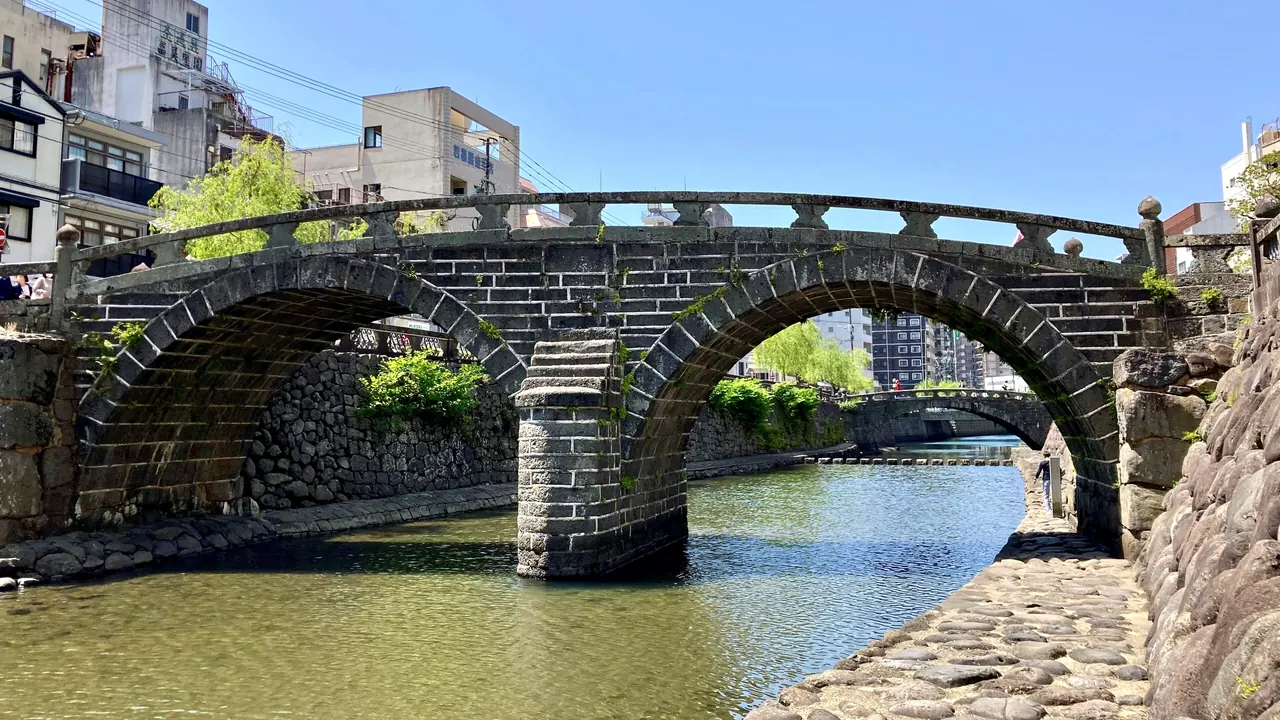
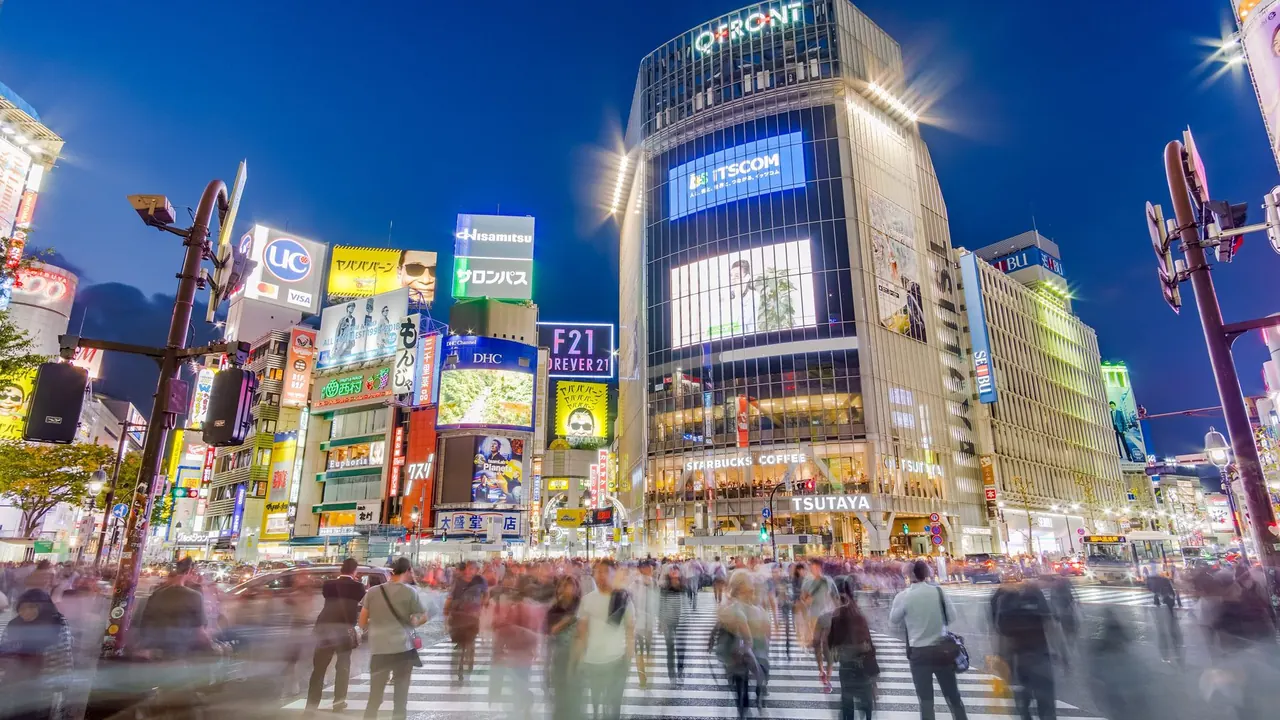
Photos: Nagasaki by Dudva, CC0; Tokyo by Benh LIEU SONG, CC BY-SA 2.0, cropped.
Nagasaki or Tokyo?
Our verdict in twelve categories, each scored against the same fixed benchmark cities, and the climate month by month, so you can choose for your trip.
Choose Nagasaki for
- prices
Nagasaki suits a traveller who wants one powerful story told well, at an unhurried pace and a gentler cost. The atomic bomb sites, Dejima and the Chinese and Christian heritage fit into a compact harbour city you can see in a few days by tram. It also works well as a quieter second stop on a Kyushu route, with Gunkanjima and the Unzen hot springs within reach.
Choose Tokyo for
- shopping
- live music and the arts
- nightlife
Choose Tokyo if you want depth in almost everything. Its food, shopping, nightlife, theatre and museums go far deeper than Nagasaki's, it is one of the easiest big cities anywhere for children, and its rail network brings Kamakura, Nikko and Hakone within a day. You will pay more for your room, but for a first trip to Japan or a long stay there is far more to fill the days.
Scoreboard
Twelve categories on one fixed scale from 0 to 100. The shaded stretch is the gap between the two.
Your match
Pick a travel style or drag the sliders, and both match scores follow your weighting.
Wins on prices with your weighting.
Wins on shopping and live music and the arts with your weighting.
What matters to you?
Category by category
What the scores mean for a trip.
Beaches & swimming
Neither city is a place to swim, and in both the real beaches are about an hour out of town. From Nagasaki that means the clean, sandy bay at Takahama on the Nomo coast, facing the open sea, or a short ferry ride to the small resort beach on Iojima.
Tokyo's swimmers take the train to the Shonan coast, to the dark volcanic sand of Yuigahama, Zushi and Enoshima. That coast is easy to pair with Kamakura's temples, but on summer weekends it fills with day-trippers from the capital. Nagasaki's water is a little warmer and its season runs into early September, though jellyfish arrive late in the summer.
Food & drink
Nagasaki's food is distinctive rather than deep. Centuries of foreign trade gave it champon, sara udon, castella and the shippoku banquet, and the fish in the Shianbashi izakaya is excellent. Still, the range is narrow and there is little fine dining.
Tokyo is one of the great food cities of the world. You can eat at standing soba counters, at sushi and tempura specialists who have made one dish for decades, or in kaiseki rooms, and you can spend whole afternoons in the depachika halls and the Tsukiji outer market. A food lover could eat for weeks in Tokyo and only a few days in Nagasaki.
Culture & sights
Nagasaki tells a story no other Japanese city can. The Atomic Bomb Museum and the Peace Park sit alongside Dejima's Dutch trading post, Oura Cathedral, the Glover Garden merchant houses and the Ming-style Sofukuji temple. It is focused and moving, and two or three days cover it.
Tokyo's heritage is more scattered, because the 1923 earthquake and the 1945 bombing destroyed most of the old city. It still offers far more to see: Senso-ji, Meiji Jingu and the Imperial Palace moats, and above all Ueno's museums, led by the Tokyo National Museum's vast collection of Japanese art. Its modern architecture is worth seeing in its own right.
Nightlife
A night out in Nagasaki means Shianbashi: izakaya, karaoke and snack bars that mostly serve their regulars. The streets empty well before midnight, and many visitors spend the evening on the night view from Mount Inasa instead.
Tokyo's nights are on a completely different scale. You can move from Omoide Yokocho's yakitori stalls to the two hundred tiny bars of Golden Gai, or to whole buildings of bars devoted to whisky or vinyl. The clubs in Shibuya and Roppongi keep going until the first trains.
Nature & outdoors
Nagasaki's landscape starts at your door. The city climbs steep green hills around a deep harbour, and the ropeway up Mount Inasa gives the famous night view. Further out are the rocky Nomo coast, the volcanic peaks of Unzen about two hours away and the wooded Kujukushima islands, best seen by kayak.
Tokyo is mostly city, but its trains reach a wider and grander range of outdoors. Mount Takao is an easy first hike, the Okutama valleys have gorges and cedar ridges, and Hakone and the Fuji Five Lakes give the classic views of Mount Fuji, with the climb itself possible in July and August.
Day trips
Nagasaki's best outing is the boat to Gunkanjima's concrete ruins, though landings depend on the weather. Shimabara's samurai street, the porcelain towns of Arita and Imari and the Dutch-themed Huis Ten Bosch resort are all rewarding, but most of them take a long day.
Tokyo's rail network puts much more within easy reach. Kamakura's Great Buddha and Zen temples, Nikko's Toshogu shrine, Yokohama's harbour and the old merchant streets of Kawagoe are all simple trips. Hakone's hot-spring inns and lake boats round out a list you could fill a week with.
Good for families
Nagasaki pleases children in a modest way, with the trams, the Inasa ropeway and the Penguin Aquarium, where the birds waddle out onto a small beach. But its stepped hillside lanes are hard work with a pushchair, and the Atomic Bomb Museum needs some care with younger children.
Tokyo is one of the easiest big cities in the world with children. Disneyland and DisneySea, the Ghibli Museum, Ueno Zoo and the hands-on Miraikan could fill a fortnight. Stations with lifts and baby rooms, and clean toilets everywhere, make each day simpler, though rush-hour trains and the August heat are best avoided.
Getting around
Nagasaki is simple: a handful of flat-fare tram lines along the valley floor link the station, Peace Park, Dejima, Chinatown and Glover Garden. Anywhere off the flat means climbing long flights of steps.
Tokyo's metro and overground lines form the densest rail network anywhere, with English signs and trains that run to the minute. Between stations are neighbourhoods that are a pleasure to walk. The only real hurdles are huge stations like Shinjuku on the first day, and the last train at around midnight.
Shopping & style
In Nagasaki, shopping means the covered Hamanomachi arcade and a mall by the station. The things to take home are local: boxed castella, Nagasaki glass and porcelain from Hasami, Mikawachi and Arita.
Tokyo may be the best city in the world to shop. Ginza has the luxury houses and Mitsukoshi, Harajuku and Shimokitazawa have vintage clothing and independent labels, and there are specialist districts for knives, books and electronics. Even a stationery shop can fill an afternoon.
Affordability
Nagasaki is the easier city on a moderate budget, mostly because rooms cost less. Business hotels near the station are fairly priced, and a day of trams costs little. The spending comes from the Gunkanjima boats, the ropeway and evenings of sake and sashimi.
Tokyo is cheaper to eat in than its reputation suggests, with ramen, set lunches and convenience-store meals. Its central rooms, though, are small and expensive, and prices climb in cherry-blossom season and Golden Week.
Live music & performing arts
Nagasaki's great show is a festival. The Kunchi at Suwa Shrine every October brings dragon dances and ship floats, and the Lantern Festival lights up Chinatown around Chinese New Year. Outside those dates there is little to plan around.
Tokyo has stage life all year. Single-act kabuki tickets at the Kabuki-za, Noh theatres, the Takarazuka Revue, the NHK Symphony, opera at the New National Theatre and hundreds of small live houses in Koenji and Shimokitazawa mean there is something on every night.
Wellness & relaxation
In Nagasaki itself there are only a few baths and sento. The proper soaking happens on the Shimabara peninsula, at Obama's seaside footbath or among Unzen's steaming vents, and both are best with a night in a ryokan.
Tokyo builds bathing into daily life. Hundreds of neighbourhood sento, some fed by dark mineral spring water, and large sauna complexes are easy to fit around sightseeing, and Hakone's mountain onsen are about ninety minutes away. Nagasaki's quiet hillside temples offer their own calm, but Tokyo gives far more ways to unwind. In both, check the tattoo rules before you go.
When should you go?
Pick your month. The climate figures are measured averages, not a forecast.
Nagasaki in July
Tokyo in July
Daytime high, °C
Rainfall in the month, mm
Temperature and rainfall are climate normals, averaged over the years shown. Nagasaki: 1991-2020 normals, Nagasaki (2.2 km from centre). Tokyo: 1991-2020 normals, Tokyo (3.6 km from centre).
The two cities share the same summer: both reach about 32°C in August, heavy and humid, which makes long walks hard work. Nagasaki's rainy season is far heavier, with around 334mm in June and still a lot of rain in July. Tokyo's wettest spell comes later, in September and October, at about 237mm. For swimming, Nagasaki's sea is warmer, near 28°C in August, and stays pleasant into September. Around Tokyo the water is a little cooler and the bathing season shorter.
Spring, from late March to May, is good in both cities, and so is November. In Nagasaki October is drier and brighter too, while in Tokyo it is still wet. Winter divides them most. Tokyo's cold months are dry and very sunny, which makes them good for sightseeing, while Nagasaki's winters are grey, with far less sunshine.
Which traveller are you?
On a trip on a tight budget, Nagasaki is the better choice. Its sights lie within a short tram ride of each other, many charge only modest entry fees, and champon makes a filling, inexpensive meal. You can eat cheaply in Tokyo too, but its rooms eat up the savings.
For a shopping trip, go to Tokyo and leave space in your suitcase. It serves every kind of shopper, whether you are after luxury fashion, crafts, kitchenware or stationery. In Nagasaki, shopping amounts to an afternoon spent picking up a few local gifts.
For a food and nightlife trip, Tokyo is the clear choice. You could eat a different speciality at every meal for weeks and keep finding new districts to drink in, whether the night ends at the last train or at dawn. Nagasaki is good for a night or two of fresh fish and sake, and then it goes to bed early.
Before you go
| Measure | Nagasaki | Tokyo |
|---|---|---|
| Official language | Japanese | Japanese |
| Currency | Yen (JPY) | Yen (JPY) |
| Sockets | AB100 V, 50 and 60 Hz depending on the region | AB100 V, 50 and 60 Hz depending on the region |
| Driving side | Left | Left |
| Time zone | UTC+9 | UTC+9 |
| Emergency number | Police 110, fire 119 | Police 110, fire 119 |
| Elevation | 105 m | 6 m |
| Main airport | Nagasaki Airport (NGS)19 km from centre10 non-stop destinations | Tokyo Haneda International Airport (HND)18 km from centre98 non-stop destinations |
| Public holidays this year | 16 days | 16 days |
By the numbers
| Measure | Nagasaki | Tokyo |
|---|---|---|
| City population | 404,656 | 14,264,798 |
| People per km² | 996 | 6,501 |
| Museums within 10 km | 26 | 192 |
| UNESCO World Heritage sites within 50 km | 2 | 1 |
| Swim season, months above 21 °C | 6 months | 4 months |
Where else could you go?
Every comparison below shares a destination with this one, so you can follow Nagasaki or Tokyo somewhere new.