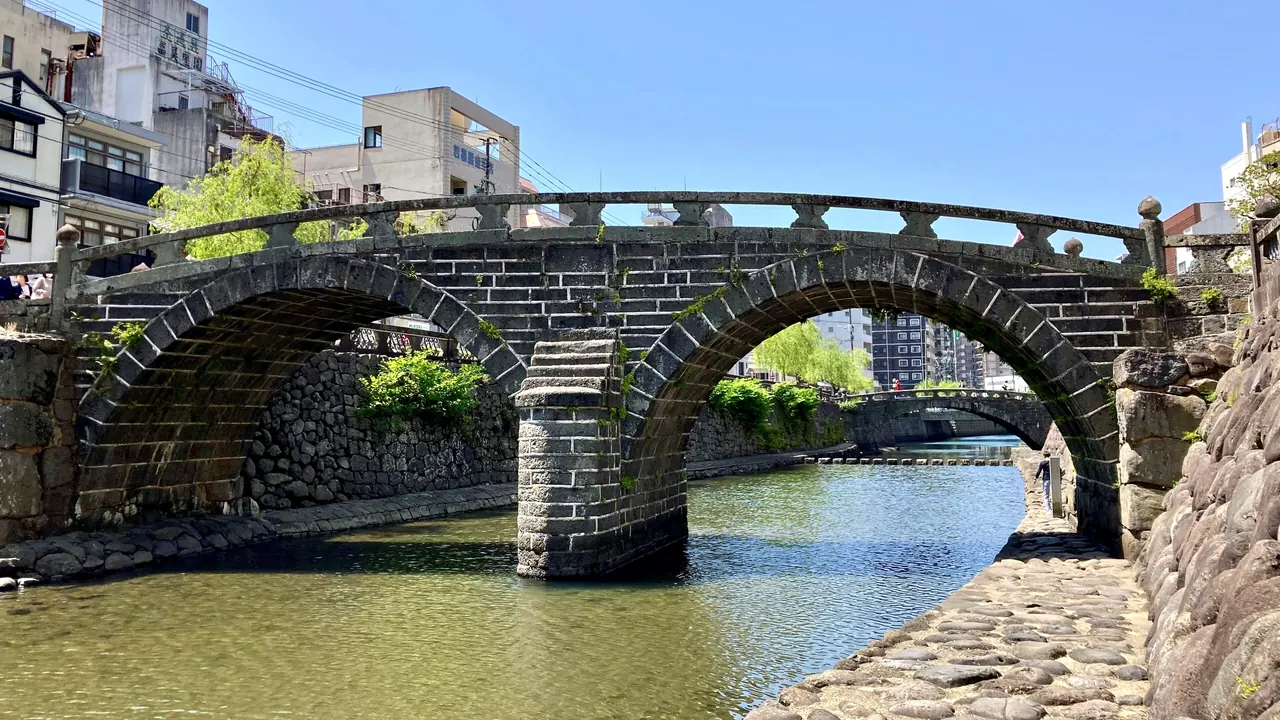
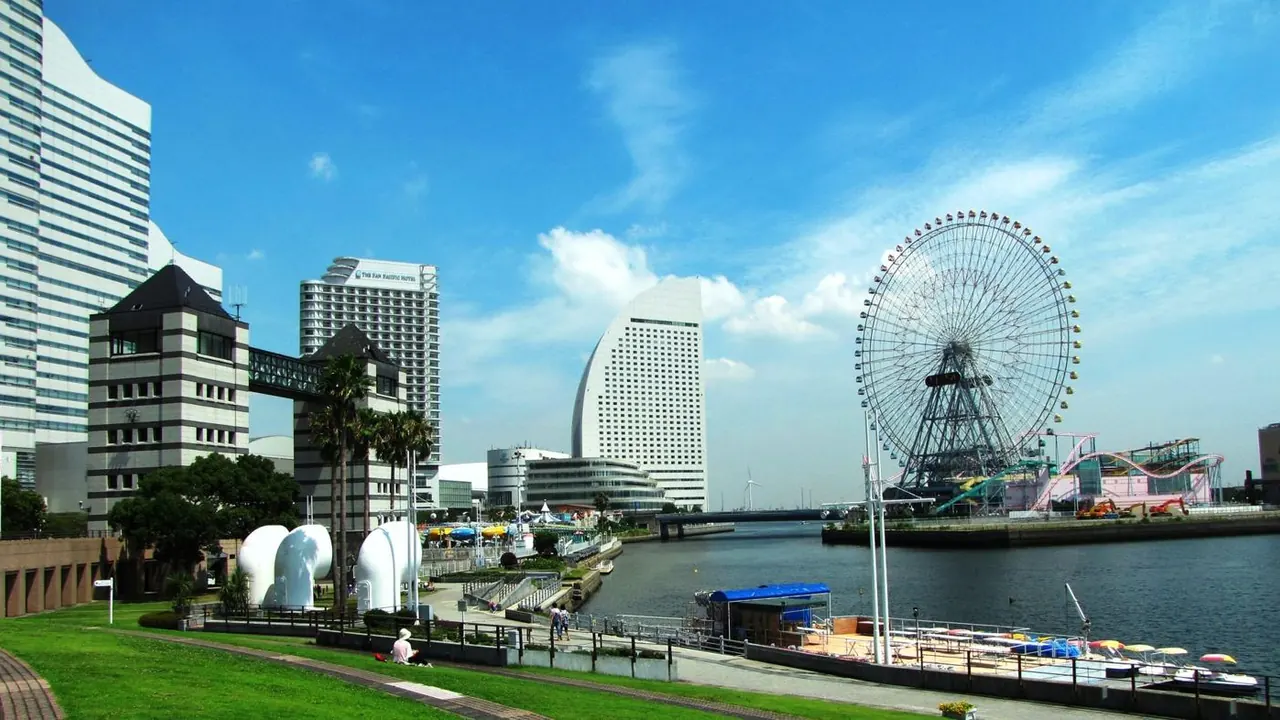
Photos: Nagasaki by Dudva, CC0; Yokohama by Yoshio Kohara, CC BY 3.0, cropped.
Nagasaki or Yokohama?
Our verdict in twelve categories, each scored against the same fixed benchmark cities, and the climate month by month, so you can choose for your trip.
Choose Nagasaki for
- culture and sights
- prices
Nagasaki suits a traveller who wants a city with a story to tell. The atomic bomb sites in Urakami, the Dutch trading post at Dejima, Oura Cathedral and the Chinese temples make up a history no other Japanese city has, and it all fits into a compact valley you can cover by tram in two or three days. It is quieter and a little easier on the budget. The trade-off is thin nightlife, little on stage outside festival time, and steep stairways that make it hard work with small children.
Choose Yokohama for
- families
- live music and the arts
- day trips
Yokohama is the better pick for families, for anyone who wants plenty of options, and for using one hotel as a base for the wider region. Its rail network puts Tokyo, Kamakura and Hakone within easy reach. The flat harbour front, the family attractions of Minato Mirai and the large Chinatown make every day simple to fill. Its own sights are pleasant rather than essential, so it works best when you treat the city as a base and travel out from it.
Scoreboard
Twelve categories on one fixed scale from 0 to 100. The shaded stretch is the gap between the two.
Your match
Pick a travel style or drag the sliders, and both match scores follow your weighting.
Wins on culture and sights and prices with your weighting.
Wins on families and live music and the arts with your weighting.
What matters to you?
Category by category
What the scores mean for a trip.
Beaches & swimming
Neither city is a beach destination, and in both the waterfront is for walking, not swimming. Yokohama comes out slightly ahead because the beaches are easier to reach. Trains run to the broad grey-brown sands of Zushi, Kamakura, Enoshima and the Miura Peninsula, and these sit alongside some of the region's best sightseeing.
Nagasaki's best beach is Takahama on the Nomo coast, a clean sandy bay facing the open sea, but it is about an hour away by bus. The Iojima resort beach is a ferry ride away. Its sea gets a little warmer and the season is a little longer.
Food & drink
Nagasaki's cooking is narrower but more distinctive, shaped by centuries of trade with the Portuguese, Dutch and Chinese. Champon, sara udon, castella and the shippoku banquet are the city's own dishes and are at their best in their home town. The local fish served simply in the Shianbashi izakaya is excellent.
Yokohama is the stronger place for a trip built around eating. Its Chinatown is the largest in Japan, iekei ramen comes from here, and Shin-Yokohama has a whole museum given over to ramen. The food halls under the station department stores and the grill bars of Noge make good everyday meals easy, although, as in Nagasaki, there is little fine dining.
Culture & sights
Nagasaki's sights carry much more weight. The Atomic Bomb Museum, the Peace Park and the hypocentre are reasons to visit in themselves. Around them are Dejima, Oura Cathedral, the Twenty-Six Martyrs memorial, Sofukuji temple and the Meganebashi bridge, a history of foreign contact stretching back four centuries.
Yokohama tells a later part of the same story, as a port opened to foreign trade in the 1850s. The merchant houses on the Yamate Bluff are a close match for Glover Garden. Its best sights are Sankeien's relocated temple buildings and the Museum of Art, which are pleasant but less central to the trip.
Nightlife
Both cities are better for an evening of drinks and grilled food than for dancing. Yokohama has more to offer. Noge's standing bars and the bars of Kannai stay lively with office workers, Minato Mirai has bars with harbour views, and Tokyo is half an hour away for a bigger night.
In Nagasaki, going out means Shianbashi, an old grid of izakaya and snack bars, and many of those bars are built around regulars. The streets empty early, and many visitors go up Mount Inasa for the night view instead.
Nature & outdoors
The two are fairly close, but the scenery sits in different places. In Nagasaki it is part of the city itself: steep green hills around a narrow harbour and the night view from Mount Inasa. The volcanic hikes of Unzen are about two hours away.
Yokohama itself is built up, but its outdoor options start closer and go further. There are temple trails on the ridges around Kamakura, coastal walks on the Miura Peninsula with Fuji on the horizon in winter, day hikes in the Tanzawa mountains and Hakone's crater lake, all within an hour or so.
Day trips
Yokohama is the stronger base by a wide margin. Tokyo is under half an hour away, and medieval Kamakura is about 25 minutes. Enoshima, Hakone, Odawara and Kawagoe are also easy rail trips, so you could fill a week without changing hotel.
Nagasaki has the more unusual single outing: the boat trip to the ruined island of Gunkanjima, if the weather allows a landing. Shimabara's samurai street, Unzen and the porcelain towns of Arita and Imari are rewarding, but they take longer and the journeys are slower.
Good for families
Yokohama is one of the easiest Japanese cities to visit with children. Minato Mirai alone has the Cup Noodles Museum, a Ferris wheel and the Anpanman museum. Hakkeijima's aquarium, Zoorasia and Tokyo Disneyland add more days out, and the flat harbour and step-free stations make pushchairs easy.
Nagasaki has fewer attractions but some appealing ones: the trams, the Inasa ropeway, the Penguin Aquarium's beach walk and a day at Huis Ten Bosch. Its stairway streets are hard work with a pushchair, and the Atomic Bomb Museum needs care with younger children.
Getting around
Yokohama has the better network. Underground lines, JR, subways and private railways all take one IC card, there are English signs, and fast trains run to Tokyo, Kamakura and Haneda. The harbour walk from Minato Mirai to Chinatown is flat.
Nagasaki's tram system is easy to use and links almost every sight along the valley floor. Away from the valley, though, the hillside lanes and steps make every walk a climb, and buses fill the gaps.
Shopping & style
Yokohama has far more shops. There are the department stores and underground arcades around the station, the waterfront malls and design shops at the Red Brick Warehouses, and Motomachi with its long tradition of leather goods. Serious fashion shoppers still take the train to Tokyo.
Nagasaki is a place for buying local things rather than for browsing. Boxed castella, Nagasaki glass and porcelain from Hasami, Mikawachi and Arita are the main finds, and the Hamanomachi arcade covers everyday needs.
Affordability
Costs are similar in the two cities, with Nagasaki slightly easier on a moderate budget. Its business hotels, bowls of champon and cheap tram travel keep daily costs low. The spending adds up on the Hashima boat tour, the ropeway and evenings of sake and sashimi.
Yokohama's savings come from a different place. Its harbour promenades, Yamashita Park and the houses on the Bluff are all free. Rooms get dearer on summer weekends and when a big concert or convention is on, and the harbour-view hotels in Minato Mirai are expensive.
Live music & performing arts
Yokohama gives you far more to see on stage. Minato Mirai Hall, with its pipe organ, is the home of the Kanagawa Philharmonic. There is opera and dance at the Kanagawa Arts Theatre, and jazz cafés in Noge and Kannai keep up a tradition that goes back to the port's postwar years. Tokyo's Kabuki is half an hour away.
Nagasaki's main show is its festivals. Kunchi in October brings dragon dances and ship floats, and the Lantern Festival lights up Chinatown, but outside those dates there is little to plan a trip around.
Wellness & relaxation
Yokohama makes bathing easier. Large hot-spring complexes in the city, one of them on the Minato Mirai waterfront, can fill an evening, and Hakone's mountain inns are about an hour or so away. Sankeien's ponds and teahouses are the quiet corner in the city itself.
Nagasaki's onsen are further away. The seaside springs of Obama and the mountain spa of Unzen really need a night in a ryokan. The city itself is slower than Yokohama, though, and its hillside temples and harbour walks are restful in a way a working port next to the capital rarely is.
When should you go?
Pick your month. The climate figures are measured averages, not a forecast.
Nagasaki in July
Yokohama in July
Daytime high, °C
Rainfall in the month, mm
Where the figures come from
Yokohama's sunshine is measured 29 km from the centre, at Tokyo.
Temperature and rainfall are climate normals, averaged over the years shown. Nagasaki: 1991-2020 normals, Nagasaki (2.2 km from centre). Yokohama: 1971-2000 (sunshine 1991-2020, rainfall 1991-2020) normals, Yokohama (1.6 km from centre).
Both cities are at their best in spring and autumn, but their wet seasons fall at different times. Nagasaki takes the rainy season hard: June brings around 334mm and July is almost as wet. August then reaches about 32°C, which is heavy going on its hillside steps. The sea is warmest in August at about 28°C, so July to early September is the beach window. April, May, October and November are the comfortable months for walking.
Yokohama has a gentler June but saves its heaviest rain for early autumn, with October the wettest month at around 276mm, so early autumn is a gamble there rather than a safe choice. Its winters are notably sunnier than Nagasaki's, with clear, cool days that suit walking and bring views of Mount Fuji. Late spring and November to December are the best months, and midsummer is hot and humid in both cities.
Which traveller are you?
On a culture and arts trip, Nagasaki wins on history, with sights that tell of the atomic bomb and four centuries of foreign contact, a story no other Japanese city has. Yokohama is the better pick only if concerts and theatre matter more.
On a family trip with young children, Nagasaki works for a day or two, but its hills soon tire small legs. Yokohama is much the easier choice, with enough aimed at children to fill a week and little strain getting about.
On a shopping trip, Nagasaki is good for a few well-chosen local gifts and not much more. Yokohama can fill whole afternoons of browsing, from big stores to a smart, long-established street, and Tokyo's shops are a short train ride away.
Before you go
| Measure | Nagasaki | Yokohama |
|---|---|---|
| Official language | Japanese | Japanese |
| Currency | Yen (JPY) | Yen (JPY) |
| Sockets | AB100 V, 50 and 60 Hz depending on the region | AB100 V, 50 and 60 Hz depending on the region |
| Driving side | Left | Left |
| Time zone | UTC+9 | UTC+9 |
| Emergency number | Police 110, fire 119 | Police 110, fire 119 |
| Elevation | 105 m | 24 m |
| Main airport | Nagasaki Airport (NGS)19 km from centre10 non-stop destinations | Tokyo Haneda International Airport (HND)18 km from centre98 non-stop destinations |
| Public holidays this year | 16 days | 16 days |
By the numbers
| Measure | Nagasaki | Yokohama |
|---|---|---|
| City population | 404,656 | 3,757,630 |
| People per km² | 996 | 8,585 |
| Museums within 10 km | 26 | 38 |
| UNESCO World Heritage sites within 50 km | 2 | 1 |
| Swim season, months above 21 °C | 6 months | 5 months |
Where else could you go?
Every comparison below shares a destination with this one, so you can follow Nagasaki or Yokohama somewhere new.
- Kamakuravs Yokohama
- Tokyovs Yokohama
- Hakonevs Yokohama
- Fukuokavs Nagasaki
- Nikkovs Yokohama
- Takayamavs Yokohama