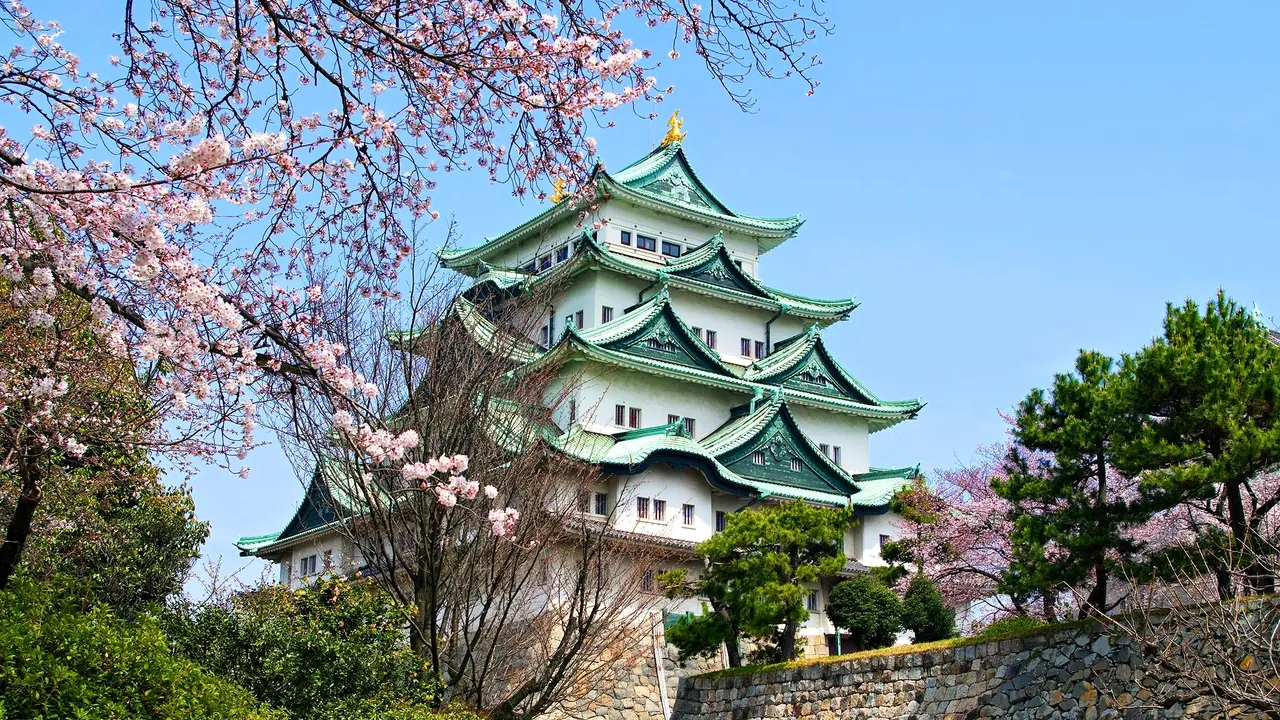
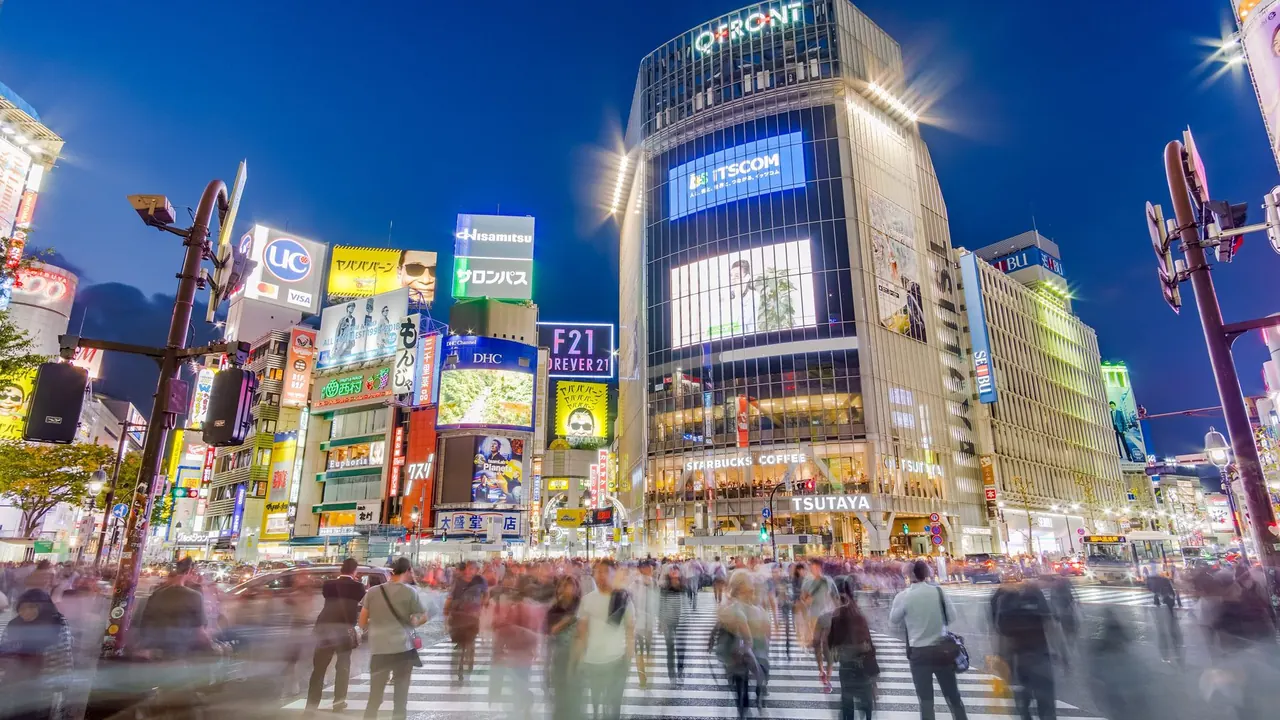
Photos: Nagoya by Hiroaki Kaneko, CC BY-SA 3.0, cropped; Tokyo by Benh LIEU SONG, CC BY-SA 2.0, cropped.
Nagoya or Tokyo?
Our verdict in twelve categories, each scored against the same fixed benchmark cities, and the climate month by month, so you can choose for your trip.
Choose Nagoya for
- prices
- day trips
Nagoya is the place to stay for a traveller who wants to see central Japan rather than one city. Kyoto, Ise Jingu, Nara and a run of original castle towns are all easy day trips by train, rooms cost less than in the big tourist cities, and the rich miso-based local cooking makes the evenings worth staying in for. It suits people who are happy with quiet nights and a working city as a base.
Choose Tokyo for
- nightlife
- shopping
- live music and the arts
When the city itself is the point of the trip, Tokyo is the clear choice. It goes deeper almost everywhere: in eating, in museums, in shopping, on stage and late at night. It is also the better choice for a family with children, with more to do and the easiest everyday logistics. Rooms cost more, but the rail network makes every day effortless.
Scoreboard
Twelve categories on one fixed scale from 0 to 100. The shaded stretch is the gap between the two.
Your match
Pick a travel style or drag the sliders, and both match scores follow your weighting.
Wins on prices and day trips with your weighting.
Wins on nightlife and shopping with your weighting.
What matters to you?
Category by category
What the scores mean for a trip.
Beaches & swimming
Neither city has anywhere to swim on its own waterfront, and both send swimmers about an hour south by train in July and August. The beaches themselves differ in kind.
From Nagoya you reach the Chita Peninsula, where beaches such as Utsumi are wide and sheltered but the water is not very clear, and small islands like Shinojima lie a ferry ride beyond. From Tokyo the Shonan coast offers dark volcanic sand at Yuigahama, Zushi and Enoshima, and a swim can be paired with Kamakura's temples, though summer weekends are crowded.
Food & drink
Nagoya eats very well within one strong regional tradition: hitsumabushi eel eaten three ways, miso katsu, peppery tebasaki wings and misonikomi udon, plus the morning-service breakfast and cheap snacks in Osu. It is a city to eat its own dishes rather than everything.
Tokyo is on another scale. Specialist counters that have made one dish for decades, the depachika halls, the Tsukiji outer market and the alleys under the tracks at Yurakucho sit alongside more Michelin-starred restaurants than anywhere else, and French, Italian and Chinese cooking of real distinction. The fine-dining tier that thins out in Nagoya is where Tokyo is deepest.
Culture & sights
Both lost most of their old fabric in 1945, so in each the heritage comes as separate sights in a modern city. Nagoya's set is compact: the rebuilt castle and its painted-cypress Honmaru Palace, Atsuta Shrine in its forest, the Tokugawa Art Museum's samurai treasures, and the Toyota and railway museums for anyone curious about industry.
Tokyo has far more to fill the days. Senso-ji, Meiji Jingu and the Imperial Palace moats are only the start; Ueno Park alone holds the Tokyo National Museum's unrivalled collection of Japanese art, and the Nezu, the Mori and the city's modern architecture add days more.
Nightlife
Nagoya's nights gather in Sakae and Nishiki, with izakaya, karaoke and a few clubs that fill at weekends, but the city has a name for early nights and midweek is mostly office workers at dinner.
Tokyo is one of the great nights out anywhere. Golden Gai's two hundred tiny bars, whole buildings of whisky and vinyl bars, Omoide Yokocho's smoky yakitori stalls and the clubs of Shibuya and Roppongi give a range Nagoya cannot touch, shaped by the choice at midnight between the last train home or staying out until dawn.
Nature & outdoors
Both sit on wide plains, so real landscape means a train ride, and Tokyo's is the better reach. Mount Takao is an hour away, the Okutama gorges lie inside Tokyo's own western edge, and Hakone and the Fuji Five Lakes bring the classic views of Mount Fuji, with the summit itself climbable in midsummer.
From Nagoya the options are gentler: the ropeway and trails of Mount Gozaisho, Korankei's autumn maples, and the Nakasendo walk through the Kiso Valley about two hours north. The Japan Alps are closer, but need more than a day.
Day trips
Both are superb bases, and the difference lies in where they point. Nagoya's place on the shinkansen puts Kyoto about 35 minutes away and Osaka under an hour, with Ise Jingu, Nara, the original castle keeps of Inuyama and Hikone, and the pottery towns of Seto and Tokoname all in range.
Tokyo looks to its own region instead: Kamakura's Great Buddha and Zen temples, Nikko's Toshogu shrine in cedar forest, Yokohama's harbour, Hakone's lakes and the merchant streets of Kawagoe. Kyoto, the easy outing from Nagoya, is just out of comfortable day range from Tokyo.
Good for families
Both are safe, clean and easy with children, and Tokyo has the edge. Disneyland and DisneySea across the bay, the Ghibli Museum, Miraikan and Ueno Zoo come with spotless toilets, baby rooms in stations and food that suits fussy eaters.
Nagoya holds its own with orcas and belugas at the port aquarium, Legoland, Ghibli Park and the rides at Nagashima Spa Land. The catch is that these sit in different corners of the city, so expect more time on trains.
Getting around
Tokyo is one of the easiest cities in the world to move around: the densest rail network anywhere, English signs, a station near every sight, and neighbourhoods such as Yanaka or the walk from Shibuya to Harajuku that are a pleasure on foot. Its giant stations and crammed rush hours are the price.
Nagoya works smoothly but feels different. Its postwar grid of very wide avenues is easy to read yet dull to walk beyond the Sakae, castle and Osu core, and the smaller subway network, sharing one IC card with the regional railways, takes you to everything else.
Shopping & style
Nagoya's shopping is solid rather than special: department stores around Sakae and above the station, luxury brands on the avenues between, and the covered Osu arcades for anime, secondhand clothes and the temple flea market. Arimatsu shibori and Seto pottery are good buys.
Tokyo is a destination for shopping in itself. Ginza and Omotesando cover luxury, Harajuku and Shimokitazawa have some of the best vintage and independent labels anywhere, and specialist streets go deep: Kappabashi for knives, Jimbocho for books, Akihabara for electronics.
Affordability
Nagoya is the cheaper of the two, and the saving is mostly in beds. Its many business hotels keep rooms moderate, and eating cheaply is easy, with eel the main splurge and shinkansen trips the cost that mounts up.
Tokyo eats just as cheaply if you follow the locals to ramen, set lunches and convenience stores, and many shrines and parks are free. The money goes on small central rooms, which climb sharply in cherry-blossom season and Golden Week, and on taxis and cocktail bars.
Live music & performing arts
Nagoya has a respectable programme: kabuki at the Misono-za, Noh near the castle, the Nagoya Philharmonic and touring opera at the Aichi Arts Center, though most of it assumes Japanese and needs checking in advance.
Tokyo's stage is far richer and easier for visitors to try. The Kabuki-za sells single-act tickets, the Takarazuka Revue offers all-female spectacle, Suntory Hall and the NHK Symphony anchor a deep classical season, and live houses in Shimokitazawa and Koenji, plus jazz listening bars, have something on every night.
Wellness & relaxation
Both share Japan's everyday bathing culture, and Tokyo offers more of it. Hundreds of neighbourhood sento, some with dark mineral hot-spring water, large bathing complexes with saunas and Hakone's onsen inns about ninety minutes away give plenty of choice, and quiet temple grounds and backstreets offset the crowds.
Nagoya relies on its super sento, the hot-spring complex at Nagashima and Gero Onsen, a scenic two hours into the mountains and best with an overnight stay. Tokugawaen and Shirotori gardens supply the calm in a city that is orderly rather than restful.
When should you go?
Pick your month. The climate figures are measured averages, not a forecast.
Nagoya in July
Tokyo in July
Daytime high, °C
Rainfall in the month, mm
Temperature and rainfall are climate normals, averaged over the years shown. Nagoya: 1991-2020 normals, Nagoya (5.7 km from centre). Tokyo: 1991-2020 normals, Tokyo (3.6 km from centre).
The two cities follow the same calendar. Winters are dry, bright and cool at around 10°C, spring and autumn are the best weather for walking, June turns wet, and July and August are hot and humid enough to make long walks hard going. The beaches near both are only warm enough for swimming in midsummer, when Ise Bay reaches about 27°C, a touch warmer than Sagami Bay.
The differences are small but real. Nagoya runs slightly hotter in summer, peaking around 33°C in August, and gets its heaviest rain in July and September, with about 225mm in September. Tokyo's wettest month comes later, in October at about 237mm, so late autumn there can be damper. Nagoya is the sunnier of the two in April and May, while Tokyo has the brighter midwinter, which makes January a good month for a city trip there.
Which traveller are you?
For a food and nightlife trip, Tokyo is the easy answer. You can eat a different cuisine at every meal for a week without planning, then find somewhere lively any night of the week. Nagoya rewards one regional menu and turns quiet after dinner midweek.
On a shopping trip, Tokyo justifies the journey on its own. Whether you are after a designer label, a chef's knife, secondhand books or stationery, it has a whole district for it. Nagoya covers the everyday needs and its local pottery well, but little beyond.
On a tight budget, Nagoya makes the money go further. Beds are where Japan gets expensive, and here they cost less. An early coffee brings toast and an egg with it, and nearby towns like Inuyama and Arimatsu are cheap outings by local train.
Before you go
| Measure | Nagoya | Tokyo |
|---|---|---|
| Official language | Japanese | Japanese |
| Currency | Yen (JPY) | Yen (JPY) |
| Sockets | AB100 V, 50 and 60 Hz depending on the region | AB100 V, 50 and 60 Hz depending on the region |
| Driving side | Left | Left |
| Time zone | UTC+9 | UTC+9 |
| Emergency number | Police 110, fire 119 | Police 110, fire 119 |
| Elevation | 25 m | 6 m |
| Main airport | Chubu Centrair International Airport (NGO)37 km from centre43 non-stop destinations | Tokyo Haneda International Airport (HND)18 km from centre98 non-stop destinations |
| Public holidays this year | 16 days | 16 days |
By the numbers
| Measure | Nagoya | Tokyo |
|---|---|---|
| City population | 2,326,844 | 14,264,798 |
| People per km² | 7,129 | 6,501 |
| Museums within 10 km | 63 | 192 |
| UNESCO World Heritage sites within 50 km | 0 | 1 |
| Swim season, months above 21 °C | 5 months | 4 months |
Where else could you go?
Every comparison below shares a destination with this one, so you can follow Nagoya or Tokyo somewhere new.