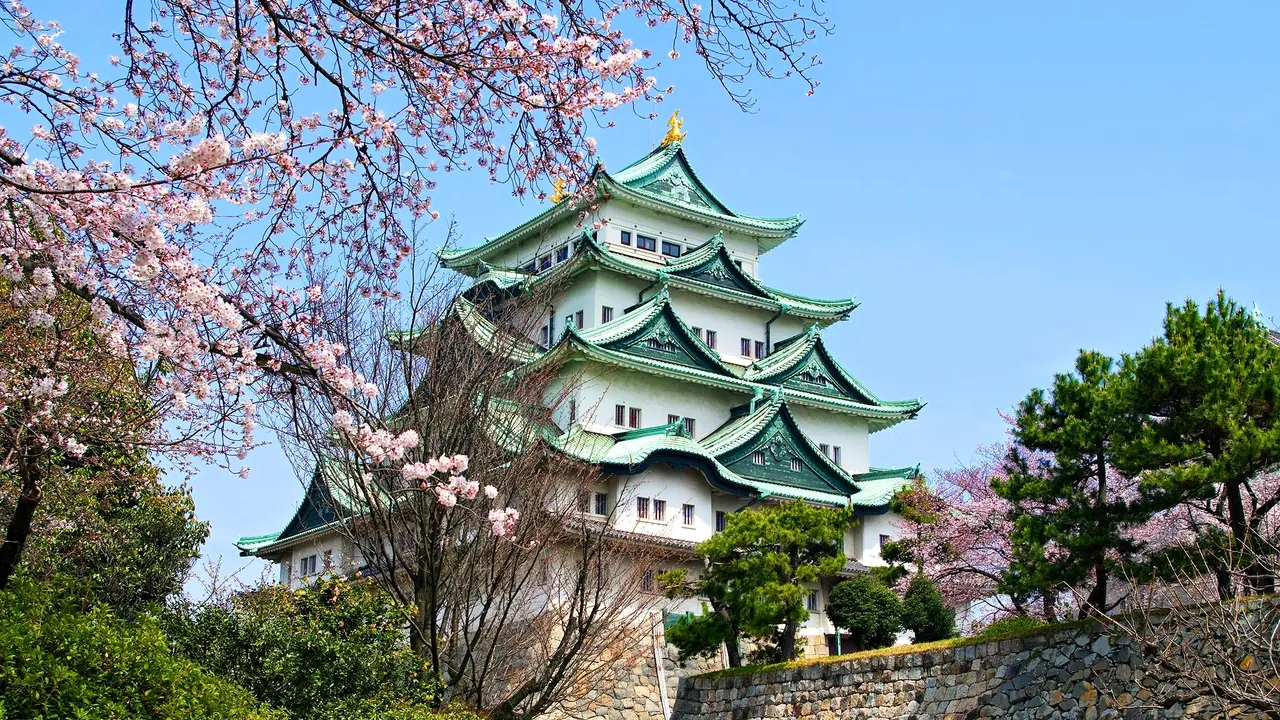
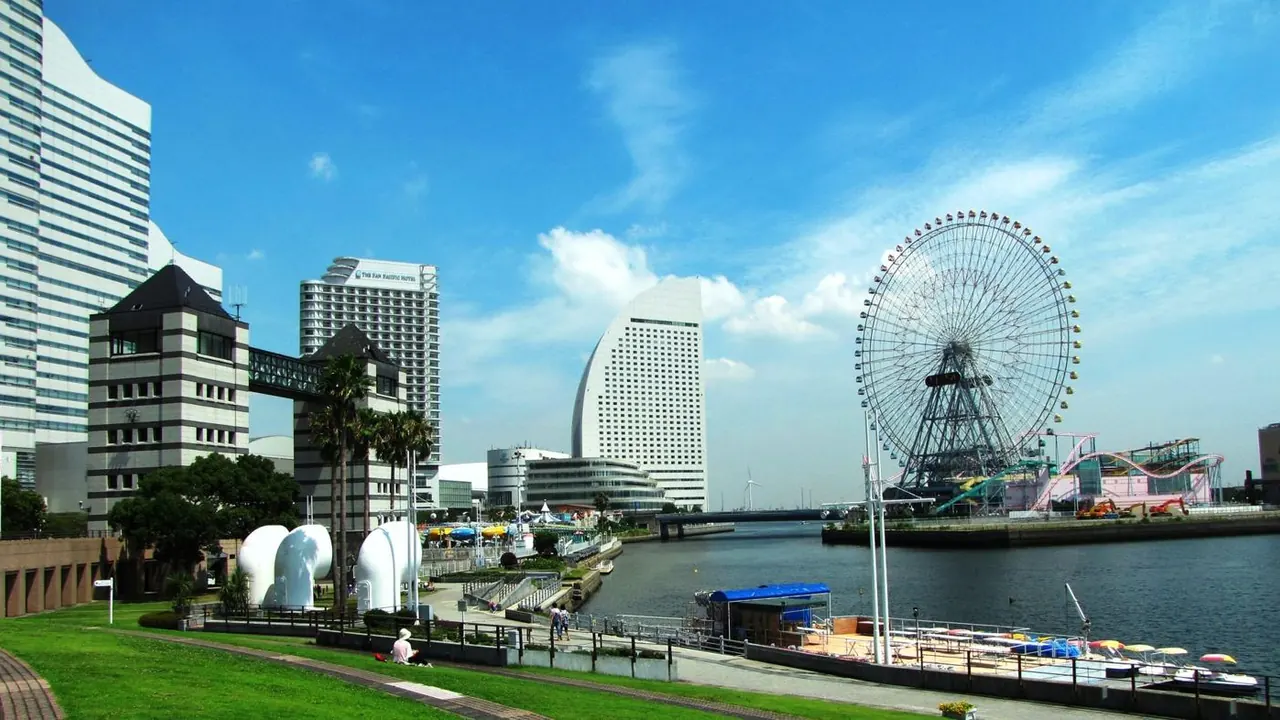
Photos: Nagoya by Hiroaki Kaneko, CC BY-SA 3.0, cropped; Yokohama by Yoshio Kohara, CC BY 3.0, cropped.
Nagoya or Yokohama?
Our verdict in twelve categories, each scored against the same fixed benchmark cities, and the climate month by month, so you can choose for your trip.
Choose Nagoya for
- food and drink
- culture and sights
- shopping
Nagoya suits the traveller who wants a practical base in the middle of Japan. The bullet train puts Kyoto, Osaka and Ise within easy reach, and Inuyama and Hikone have original castle keeps closer still. The rich local cooking, built on dark miso and grilled eel, makes the evenings worth coming back for. It rewards people who plan their days and don't mind long train rides between scattered sights.
Choose Yokohama for
- beaches
- getting around
- nature and the outdoors
Yokohama is the easier and more relaxed of the two. The harbour walk from Minato Mirai to Chinatown is flat and pleasant, the signs are in English, and Tokyo and Kamakura are close enough to fit around a slow morning. It also has coast and hills nearby, with Shonan beaches, the Kamakura ridges and Hakone all within a short trip, so it is the better choice if you want sea air and walking alongside the city.
Scoreboard
Twelve categories on one fixed scale from 0 to 100. The shaded stretch is the gap between the two.
Your match
Pick a travel style or drag the sliders, and both match scores follow your weighting.
Too close to call, 1 point apart
Wins on food and drink and culture and sights with your weighting.
Wins on beaches and getting around with your weighting.
What matters to you?
Category by category
What the scores mean for a trip.
Beaches & swimming
Neither city is a place to stay for the beach, but Yokohama gets you to the sand more easily. It has a small man-made beach of its own at Umi no Koen. The broad beaches at Zushi, Kamakura and Enoshima are under an hour away and fit easily around the temples nearby.
Nagoya's own shore is port and industry. The closest swimming is at Utsumi on the Chita Peninsula, about an hour away, or on islands such as Shinojima, a ferry ride further on, where the water is sheltered but not very clear.
Food & drink
The two are close, but they eat in very different ways. Nagoya has a regional cuisine of its own, sweet and rich with red miso: eel over rice eaten three ways, kishimen noodles and udon simmered in a clay pot. In the mornings, cafés serving morning service add toast and an egg to your coffee.
Yokohama's food comes from its port. Japan's largest Chinatown is full of dim sum halls and steamed-bun stalls, and the city has its own ramen styles, iekei and sanma-men, with a whole museum given to noodles. Neither city has a deep fine-dining tier.
Culture & sights
Nagoya's sights tell the story of samurai power and industry, and Yokohama's tell of a port opened to foreign ships. In Nagoya you can see the rebuilt castle with the painted cypress rooms of the Honmaru Palace, the forest shrine of Atsuta and the Tokugawa Art Museum's samurai treasures and Genji scrolls. The Toyota and railway museums carry the story on into cars and bullet trains.
Yokohama was among the first ports opened to trade in the 1850s, and that meeting with the West shows in the merchant houses and foreigners' cemetery on the Yamate Bluff, the stone customs buildings of Kannai and the 1930s liner moored off Yamashita Park. Its best single sight is Sankeien, a garden of historic buildings brought from Kyoto and Kamakura.
Nightlife
Nights out are modest in both cities, and both tend to go home early. Nagoya has more of a late-night side. Its bars, karaoke boxes and a few dance clubs are packed into the narrow buildings of Sakae and Nishiki, and some places stay open until dawn at weekends.
Yokohama is better for a long evening of eating and drinking. You can wander between the standing bars of Noge or have a drink with a view over the lit harbour at Minato Mirai. For a big night out, locals take the train to Tokyo.
Nature & outdoors
Yokohama has more landscape close at hand. The wooded hills around Kamakura, the sea cliffs and caves of Enoshima and the rocky Miura shore are all near, and Mount Fuji shows on the horizon in clear winter weather. Hakone's volcanic valleys and crater lake make a fuller trip.
Nagoya sits on the flat, built-up Nobi Plain, so you go further for open country. Mount Gozaisho and the autumn maples of Korankei gorge are about an hour away. The Nakasendo road through the Kiso Valley is a longer trip, but it is a fine walk.
Day trips
Both are excellent bases for day trips, but in different directions. From Nagoya you head west and south into old Japan. Kyoto is barely half an hour away by bullet train, Ise Jingu and Nara are easy days out, and the original castle keeps at Inuyama and Hikone are close. The craft towns of Seto and Arimatsu fill quieter days.
From Yokohama, Tokyo is near enough to visit again and again. Kamakura, the old shogunate capital with its Great Buddha, pairs with Enoshima for one of the best day trips in the country. Hakone and Kawagoe's merchant streets round out the choice.
Good for families
Children are well looked after in both cities, so the difference is in the layout. Nagoya has the bigger headline attractions: an aquarium with orcas and belugas, Legoland, Ghibli Park and full-size bullet trains at the railway museum. But they lie in different corners of the city, so expect long rides between them.
Yokohama keeps more of its attractions in one place. The Cup Noodles Museum, the Anpanman museum and the Ferris wheel all sit along a flat harbour that suits pushchairs. Hakkeijima's island aquarium and Tokyo Disneyland are each a single trip away.
Getting around
Yokohama is the easier city to move around. One underground line links the station, Minato Mirai, Chinatown and Motomachi. English signs and fast lines to Tokyo, Kamakura and Haneda make travel simple, and the harbour between the main sights is a pleasant flat walk, with water buses across the bay.
Nagoya's postwar grid of very wide avenues is easy to follow but tiring on foot. Beyond the walkable triangle of Sakae, the castle and Osu, you rely on the subway and a sightseeing loop bus. The aquarium, Legoland and Ghibli Park each take up to fifty minutes to reach.
Shopping & style
The two are much alike, with department stores at the centre of each. Nagoya's character comes from Osu, where covered arcades of secondhand clothes, anime and electronics shops surround the Kannon temple and its flea market. Nearby craft towns supply shibori tie-dye and Seto pottery.
Yokohama is smarter and more Western in tone. Motomachi's long street of leather goods and the design shops of the Red Brick Warehouses set it apart, while Chinatown adds teas and tableware.
Affordability
In Nagoya you save on your bed, and in Yokohama you save on sightseeing. As a business city, Nagoya has plenty of plain hotels that cost less than rooms in Kyoto, so some visitors stay there and travel in to see the temples. Coffee that comes with a free breakfast keeps mornings cheap too. Costs go up with eel dinners, bullet-train trips and the theme parks.
Yokohama's rooms cost a little more overall. The harbour-front towers of Minato Mirai are at the top, and the plainer business hotels of Kannai and Sakuragicho are nearer Nagoya's level. In return, much of the sightseeing is free: Yamashita Park, the Western houses on the Bluff and the harbour walks cost nothing, and short local train rides are cheap.
Live music & performing arts
Go to Nagoya for traditional theatre and to Yokohama for jazz. Kabuki plays at Nagoya's Misono-za, whose grand seasons bring in stars from Tokyo, and Noh and kyogen are staged in a theatre near the castle. Nearly all of it is performed for a Japanese audience, so if you don't speak the language, look up the programme and choose carefully.
Yokohama's music is easier for a visitor to drop into, because a jazz set in a record café in Noge or Kannai needs no translation. The city's taste for jazz goes back to its years as a port and the American presence after the war, and every autumn a festival brings jazz to halls and streets across the city. Minato Mirai Hall, with its big pipe organ, is a good choice for an orchestral evening, but for kabuki and the large musicals you go into Tokyo.
Wellness & relaxation
Bathing culture is part of everyday life in both. Nagoya's super sento are easy for visitors to use, Nagashima's hot-spring complex is close, and Gero Onsen is a classic mountain spa town worth a night in a ryokan. In the city itself, calm means the pond gardens of Tokugawaen and Shirotori.
Yokohama has a large hot-spring bath on the waterfront and sends you to Hakone for a mountain inn with a view. Its slow moments are Sankeien's teahouses, the rose gardens on the Bluff and evening walks by the water.
When should you go?
Pick your month. The climate figures are measured averages, not a forecast.
Nagoya in July
Yokohama in July
Daytime high, °C
Rainfall in the month, mm
Where the figures come from
Yokohama's sunshine is measured 29 km from the centre, at Tokyo.
Temperature and rainfall are climate normals, averaged over the years shown. Nagoya: 1991-2020 normals, Nagoya (5.7 km from centre). Yokohama: 1971-2000 (sunshine 1991-2020, rainfall 1991-2020) normals, Yokohama (1.6 km from centre).
Nagoya runs hotter and sunnier, while Yokohama has its wettest weeks later in the year. In Nagoya, August afternoons reach around 33°C, which makes long days on foot tiring, and the rain peaks in July and again in September. From March to May it gets more sun than Yokohama, so April and May are good months for sightseeing, and so is November once the rain has eased. Yokohama stays a few degrees cooler in midsummer. Its heaviest rain comes in September and above all October, at about 276mm, so late April, May and November are its most comfortable months.
The sea is warm enough for swimming from July to September in both cities. Nagoya's bay is slightly warmer and peaks near 27°C in August, while Yokohama's reaches about 26°C. In both, the water in September is still warmer than in July. Winters are cool and fairly dry in both cities, and Yokohama gets a little more January sun, which suits clear-air walks on the coast.
Which traveller are you?
On an outdoors trip, Yokohama is the better pick. The temple trails on the wooded ridges around Kamakura, the coastal walks on the Miura Peninsula and the day hikes in the Tanzawa mountains all start close by. From Nagoya, real landscape is an hour or more across a flat plain.
For a short city break, choose Yokohama. You can walk the harbour, Chinatown and the Red Brick Warehouses in an easy loop, and fast trains with English signs keep connections simple. Nagoya's sights are spread across a grid of wide avenues, so you spend more time on trains.
On a food and nightlife trip, Nagoya has the edge. You can eat hitsumabushi, miso katsu and tebasaki wings at specialist restaurants, then go on to Sakae and Nishiki, where dance clubs fill at weekends and some bars stay open until morning. Yokohama's evenings are mostly grill bars that wind down earlier.
Before you go
| Measure | Nagoya | Yokohama |
|---|---|---|
| Official language | Japanese | Japanese |
| Currency | Yen (JPY) | Yen (JPY) |
| Sockets | AB100 V, 50 and 60 Hz depending on the region | AB100 V, 50 and 60 Hz depending on the region |
| Driving side | Left | Left |
| Time zone | UTC+9 | UTC+9 |
| Emergency number | Police 110, fire 119 | Police 110, fire 119 |
| Elevation | 25 m | 24 m |
| Main airport | Chubu Centrair International Airport (NGO)37 km from centre43 non-stop destinations | Tokyo Haneda International Airport (HND)18 km from centre98 non-stop destinations |
| Public holidays this year | 16 days | 16 days |
By the numbers
| Measure | Nagoya | Yokohama |
|---|---|---|
| City population | 2,326,844 | 3,757,630 |
| People per km² | 7,129 | 8,585 |
| Museums within 10 km | 63 | 38 |
| UNESCO World Heritage sites within 50 km | 0 | 1 |
| Swim season, months above 21 °C | 5 months | 5 months |
Where else could you go?
Every comparison below shares a destination with this one, so you can follow Nagoya or Yokohama somewhere new.