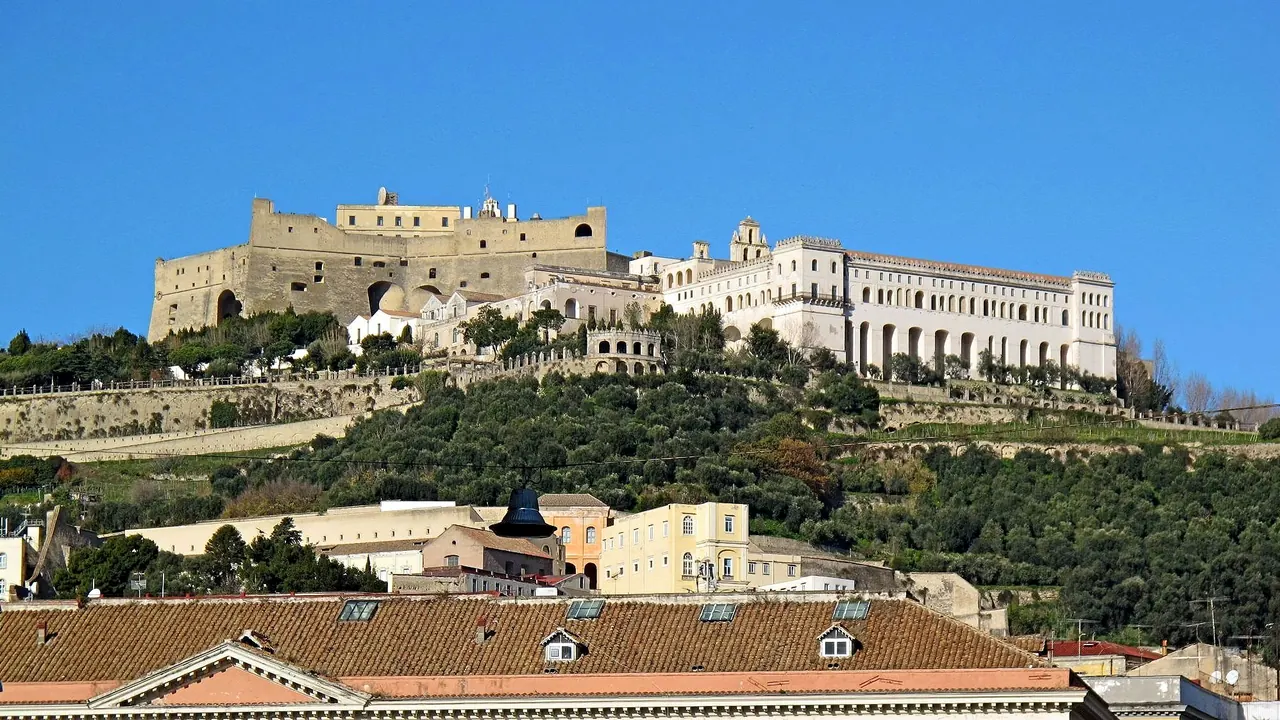
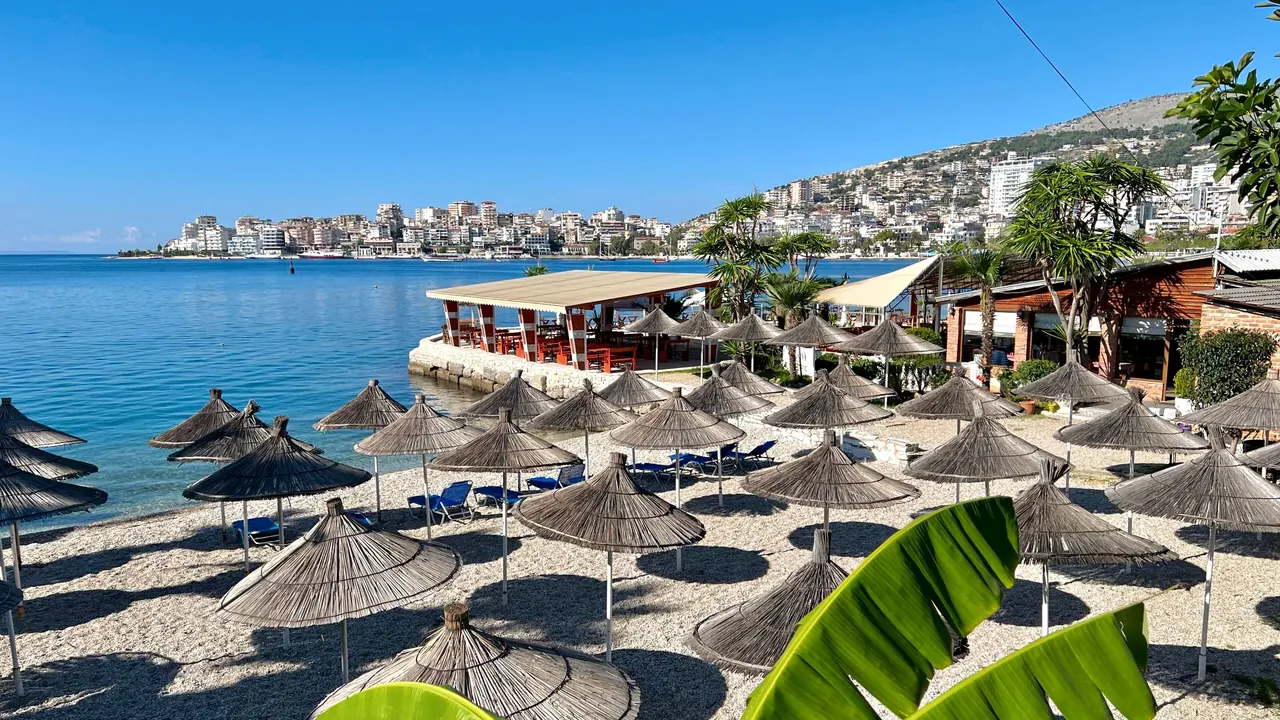
Photos: Naples by pietro scerrato, CC BY 3.0, cropped; Saranda by Sharon Hahn Darlin, CC BY 2.0, cropped.
Naples or Saranda?
Our verdict in twelve categories, each scored against the same fixed benchmark cities, and the climate month by month, so you can choose for your trip.
Choose Naples for
- culture and sights
- live music and the arts
- food and drink
Naples suits travellers who want a city to get to know properly. It has the Greek street grid of the historic centre, the Pompeii treasures in the Archaeological Museum, pizza where it was invented and an evening at the San Carlo. Add Pompeii, Herculaneum, Capri and the Amalfi Coast within easy reach, and it rewards a busy, curious week far more than a lazy one.
Choose Saranda for
- beaches
- prices
For a sea vacation, Saranda is the stronger pick. The clear coves at Ksamil, the quieter pebble bays up the Riviera and Butrint close by make for days split between swimming and a little ancient history, and they cost less. The town itself offers little beyond that, so go for the water and the light rather than the streets.
Scoreboard
Twelve categories on one fixed scale from 0 to 100. The shaded stretch is the gap between the two.
Your match
Pick a travel style or drag the sliders, and both match scores follow your weighting.
Wins on culture and sights and live music and the arts with your weighting.
Wins on beaches and prices with your weighting.
What matters to you?
Category by category
What the scores mean for a trip.
Beaches & swimming
Saranda is the beach destination of the two. Ksamil's pale coves and islets are twenty minutes from town, and the Riviera adds longer, quieter pebble bays such as Lukova and Borsh. The sea is the main reason people go there.
In Naples you swim off the rocks below the Lungomare or at small lidos in Posillipo, and the water near the port is not always clean. Its best sea is on the islands and the Sorrento peninsula, a boat ride away, so a beach day there is an outing rather than the pattern of the trip.
Food & drink
Naples is one of Italy's great places to eat. There is pizza at shared tables in the historic centre, fried pizza and cones of seafood in the street, sfogliatelle and babà from the pastry shops, and markets such as the Pignasecca piled with buffalo mozzarella and San Marzano tomatoes.
Saranda eats simply and well when it sticks to what it does best: mussels from the Butrint lagoon, grilled octopus and byrek in the morning, ideally in the family taverns behind the seafront. Beyond that there is not much choice, and coffee and wine get little attention compared with Naples.
Culture & sights
You could spend a week sightseeing in Naples without leaving the city. There is the Greek grid around Spaccanapoli with a church in almost every block, the Pompeii frescoes in the Archaeological Museum, Capodimonte, and the tunnels and catacombs beneath the streets.
Saranda is a modern resort town with a short list of sights: a synagogue that later became a church, with mosaic floors, some stretches of old wall, and Lekuresi Castle, visited mainly for the view to Corfu. Its real history is outside town, at Butrint.
Nightlife
Both towns go out outdoors, but Naples does it all year. Students sit on the steps around Piazza Bellini, and a better-dressed crowd fills the alleys behind Piazza dei Martiri until late.
Saranda's nightlife is seasonal. In July and August the promenade fills with cocktail bars, and a few DJ beach clubs at Ksamil draw a young crowd of Albanian and Kosovar visitors. Outside those months, a night out shrinks to a quiet drink on the waterfront.
Nature & outdoors
Naples has the more dramatic landscape. A trail climbs to the crater rim of Vesuvius, the Phlegraean Fields have old craters such as Astroni and Monte Nuovo, Gaiola is good for snorkelling, and the Path of the Gods runs high above the Amalfi Coast.
Saranda's outdoors are quieter and less organised. Butrint's lagoon and reed beds are good for birdwatching, the Blue Eye spring is inland, and the Riviera has sea kayaking and unmarked mountain trails. In both places, summer heat pushes walking into spring and autumn.
Day trips
Naples has an exceptional choice of day trips. Pompeii and Herculaneum are on the local train, Caserta's palace is inland, ferries go to Capri, Ischia and Procida, and the Amalfi Coast and the temples of Paestum are within a day.
Saranda's list is shorter but well chosen. Butrint's ancient city is half an hour away, Gjirokaster's Ottoman tower houses about an hour and a quarter, and the ferry puts Corfu's old town within an easy day. The difference is how many there are: from Naples you could see somewhere famous every day for two weeks.
Good for families
Neither is easy with small children, but the problems are different. In Naples it is the city itself, with scooters in narrow lanes and cobbles that defeat pushchairs. On the other hand there are the zoo and Edenlandia, and older children enjoy the tunnels and funiculars.
Saranda has nothing built for children, but the calm, sheltered water at Ksamil suits young swimmers, and the evening promenade with ice cream and rides is easy entertainment. Families in Saranda do best with a pool hotel in June or September, while in Naples they often stay in Sorrento or on an island.
Getting around
Naples has a proper city network, with Metro Line 1 and its art-gallery stations and four funiculars up to Vomero and Posillipo. Buses are slow and the Circumvesuviana is crowded and unreliable, but you never need a car.
Saranda is easy on foot along the promenade. Beyond the buses to Ksamil and Butrint, which have no printed timetables, the Blue Eye, Gjirokaster and the Riviera are much easier with a hire car or taxi, on narrow roads that jam in summer.
Shopping & style
Naples is much the better place to shop. Via Toledo and the iron-and-glass Galleria Umberto I give it a proper high street, Via Chiaia and Via dei Mille add smarter boutiques, and the old tailoring workshops in Chiaia still make shirts, suits and silk ties by hand. The crafts are what make it worth the time: nativity figures from the workshops on Via San Gregorio Armeno, coral and shell cameos from Torre del Greco, ceramics and lemon goods. The choice is distinctive rather than wide, so an afternoon or two covers it.
Saranda has little to browse beyond beachwear and souvenirs along the promenade. The modest things worth packing come from market stalls and small grocers: local olive oil, mountain honey, dried herbs and a bottle of raki. For carved stone or copperwork, wait for the old bazaar on a day trip to Gjirokaster.
Affordability
Both are cheap by Western European standards, but your money goes a little further in Saranda. Grilled fish, byrek, buses and family-run rooms cost little, and so does entry to Butrint. Prices rise in July and August, when sunbeds at Ksamil and seafront hotels get expensive.
Naples is cheap for pizza, coffee and getting around the city. Its biggest draws are trips out of town, though, and ferries, island hotels and fees at the archaeological sites soon add up.
Live music & performing arts
The difference here is a full opera season against almost nothing to attend. In Naples it is worth planning an evening around the Teatro di San Carlo, with its gilded horseshoe auditorium and season of opera, ballet and concerts. Neapolitan song turns up at small concerts and even at your trattoria table. Spoken theatre is nearly all in Italian or dialect, and jazz clubs are few, so most visitors' choice comes down to the opera house and the music in the churches and conservatory.
Saranda has no theatre or concert hall. With luck, a summer visit coincides with an open-air concert on the seafront or a performance in Butrint's ancient theatre, and some restaurants bring in Albanian musicians on busy nights. For the region's polyphonic singing you need to head inland towards Gjirokaster.
Wellness & relaxation
Neither is a restful place in high season, but Naples has a real thermal tradition close by. There are the springs at Agnano, used since Roman times, and an hour away by hydrofoil, Ischia's thermal parks terraced above the sea.
Saranda has no bathing tradition, so wellness means a hotel spa or a massage. Its calm depends on the time of year instead. In May, June and late September the town slows down to long lunches and quiet evening walks by the bay.
When should you go?
Pick your month. The climate figures are measured averages, not a forecast.
Naples in July
Saranda in July
Daytime high, °C
Rainfall in the month, mm
Where the figures come from
Naples's sunshine is measured 28 km from the centre, at Grazzanise.
Saranda's temperatures are measured 30 km from the centre, at Kerkyra Airport.
Saranda has no rain gauge within 25 km of the centre, so its rainfall comes from a gridded climate dataset read at the destination rather than from a gauge further away.
Temperature and rainfall are climate normals, averaged over the years shown. Naples: 2005-2020 (sunshine 1991-2020, rainfall 1971-2000) normals, Napoli / Capodichino (4.6 km from centre). Saranda: 1991-2020 normals, Kerkyra Airport (29.8 km from centre).
In both places the sea is warm enough to swim from June into October and peaks at about 25°C in August, so the beach seasons match closely. The summers feel different, though. Saranda is the hotter and sunnier of the two, reaching 32°C in July and August with almost no rain. That suits lying by the water but not the climb to Lekuresi Castle at midday. Naples is only slightly cooler, and high summer makes its crowded lanes and the shadeless ruins of Pompeii hard going.
For sightseeing in Naples, April and May are the best months, warm but not yet hot, and late September is good too. October and November are the wettest months there, at around 160mm each. Saranda's winter is wetter still, with more than 220mm in November and December, and the town goes quiet. Its best months are May, June and September, when the sea is warm without the August heat.
Which traveller are you?
For a beach and sun trip, Saranda wins clearly. Ksamil's clear coves and islets are twenty minutes away and the quieter Riviera bays lie further north, while from Naples you have to take a ferry to Procida or Ischia for swimming as good.
On a culture and arts trip, Naples is far ahead. The Greek-gridded centre, the Archaeological Museum, the Veiled Christ, the underground city and opera at the San Carlo can fill a week. Saranda's own sights come down to a castle and a mosaic floor.
For a food and nightlife trip, Naples is the better choice. It has pizza, fried street food and pastry shops, and evening crowds fill Piazza Bellini and Chiaia all year. Saranda has good seafood but little variety, and its nights only come alive in July and August.
Before you go
| Measure | Naples | Saranda |
|---|---|---|
| Official language | Italian | Albanian |
| Currency | Euro (EUR) | Lek (ALL) |
| Sockets | CFL230 V, 50 Hz | CF220 V, 50 Hz |
| Driving side | Right | Right |
| Time zone | UTC+1, UTC+2 in summer | UTC+1, UTC+2 in summer |
| Emergency number | 112 | 112 |
| Elevation | 17 m | 0 m |
| Main airport | Naples International Airport (NAP)7 km from centre131 non-stop destinations | Corfu Ioannis Kapodistrias International Airport (CFU)32 km from centre88 non-stop destinations |
| Public holidays this year | 13 days | 14 days |
By the numbers
| Measure | Naples | Saranda |
|---|---|---|
| Population | 913,462 | 22,613 |
| People per km² | 7,676 | 383 |
| Museums within 10 km | 65 | 0 |
| UNESCO World Heritage sites within 50 km | 5 | 3 |
| Swim season, months above 21 °C | 5 months | 5 months |
Where else could you go?
Every comparison below shares a destination with this one, so you can follow Naples or Saranda somewhere new.
- Sorrentovs Naples
- Corfuvs Saranda
- Positanovs Naples
- Amalfivs Naples
- Amalfi Coastvs Naples
- Salernovs Naples