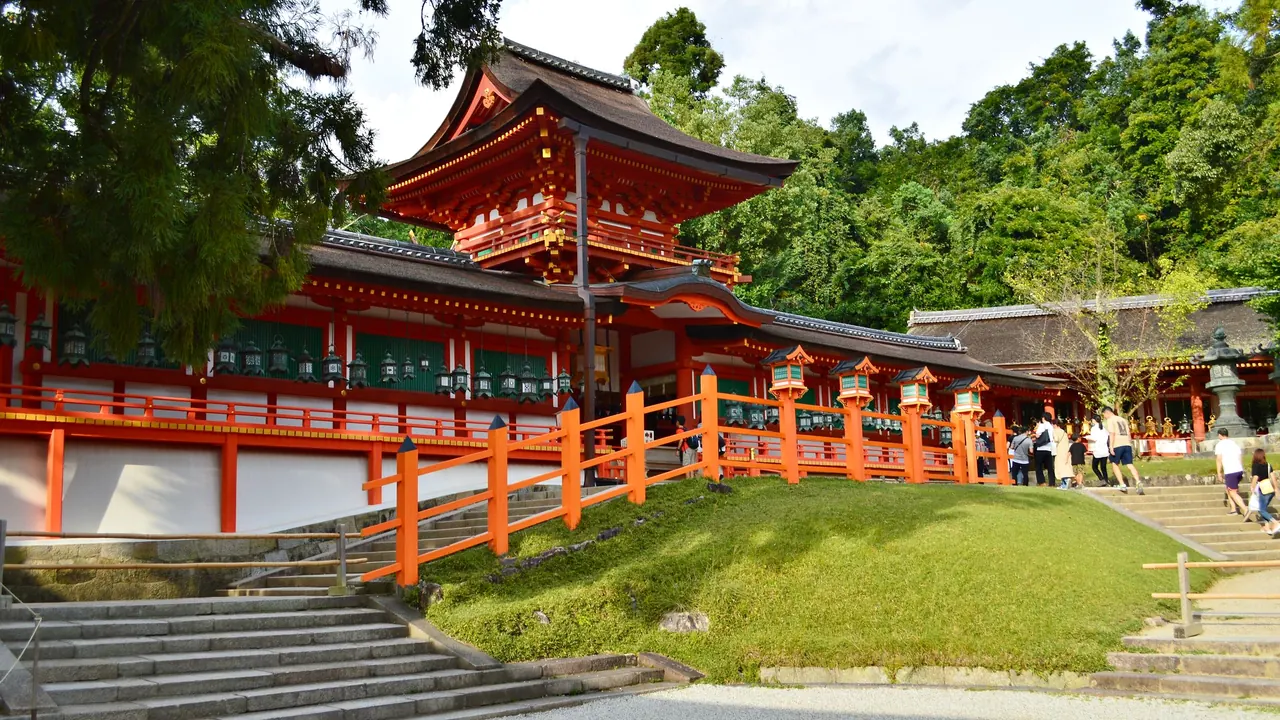
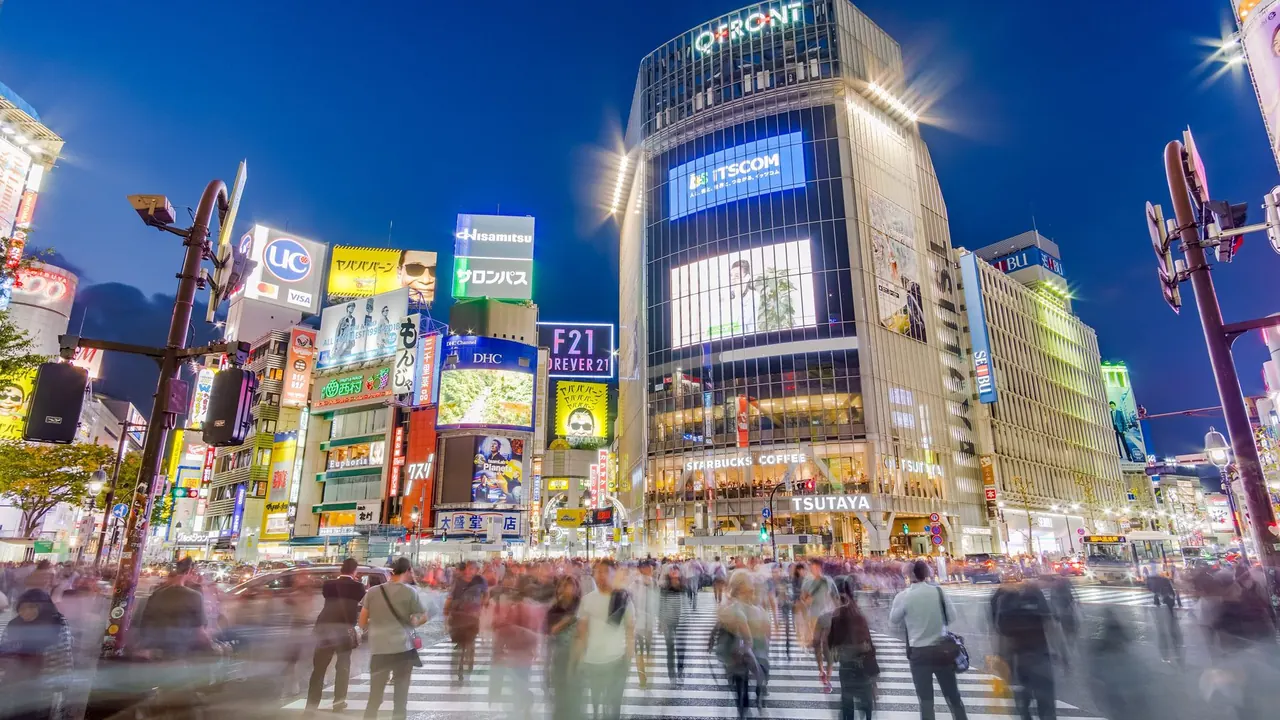
Photos: Nara by Saigen Jiro, CC0; Tokyo by Benh LIEU SONG, CC BY-SA 2.0, cropped.
Nara or Tokyo?
Our verdict in twelve categories, each scored against the same fixed benchmark cities, and the climate month by month, so you can choose for your trip.
Choose Nara for
- prices
- day trips
- culture and sights
Nara is for the traveller who came to Japan for its oldest temples and wants to see them slowly. The eighth-century capital fits into a park you can walk across, with deer on the lawns and Todai-ji at the end of the path. Kyoto and Osaka are both close enough for a day out. Rooms cost a little less, and the evenings are quiet. It suits a calm stretch of two or three days, either inside a longer trip or as a quiet base for exploring the Kansai region.
Choose Tokyo for
- nightlife
- shopping
- live music and the arts
Choose Tokyo if you want a city that keeps you busy from breakfast until the last train. It is far ahead for eating, shopping, going out, live performance and travelling with children, and its trains make all of it easy. The old sights are fewer and spread through a modern city, but the museums make up for that. It suits a first trip to Japan, a longer stay or anyone who gets bored once the temples close.
Scoreboard
Twelve categories on one fixed scale from 0 to 100. The shaded stretch is the gap between the two.
Your match
Pick a travel style or drag the sliders, and both match scores follow your weighting.
Wins on prices and day trips with your weighting.
Wins on nightlife and shopping with your weighting.
What matters to you?
Category by category
What the scores mean for a trip.
Beaches & swimming
Neither city is a place for a beach trip, but Tokyo is the better of the two for a swim. The Shonan coast at Kamakura and Enoshima is about an hour away by train, with dark volcanic sand and warm water in July and August.
Nara is in an inland basin. Its nearest shore is the industrial edge of Osaka Bay, and the clear water of the Kii Peninsula takes most of a day to reach. In summer, a hotel pool is the realistic way to cool off.
Food & drink
Nara's food is a short list of local dishes to try once: persimmon-leaf sushi, vegetables pickled in sake lees, Miwa somen noodles and sake tastings around Naramachi. Away from those, it is mostly quick lunches near the park, and many kitchens close early.
Tokyo is in a different league. It has specialist counters that have made one dish for decades, the Tsukiji outer market, the depachika food halls and the yakitori alleys under the tracks at Yurakucho, and you can eat well at any level without planning ahead. Many people staying in Nara take the train to Osaka for dinner.
Culture & sights
The two are level here, but their heritage is of very different kinds. Nara keeps an exceptional, compact group of temples and shrines that date from the eighth-century capital or stand on sites from that time. They include the Great Buddha hall at Todai-ji, Kofuku-ji's pagoda, the lantern-lined paths to Kasuga Taisha and the Tang-style halls of Toshodai-ji and Yakushiji. Many of the buildings were rebuilt over the centuries, and the palace itself survives only as an open archaeological site. Even so, it is all close together and best seen slowly over a few days.
Tokyo lost most of its older buildings in 1923 and 1945, so its temples, shrines and gardens are scattered through a modern city. Its strength is museums. The Tokyo National Museum in Ueno holds the largest collection of Japanese art anywhere, and modern buildings such as Tange's Olympic gymnasium add something Nara does not have.
Nightlife
Tokyo wins this easily. It has hundreds of tiny themed bars stacked through Shinjuku, izakaya around every major station and clubs in Shibuya and Roppongi that stay open until the first morning train.
In Nara, an evening means dinner at an izakaya near Kintetsu Nara station and perhaps a glass at a sake counter, and most places close early. For a real night out you have to go to Osaka, and the last train back decides when the night ends.
Nature & outdoors
Tokyo has a slight edge because its trains reach real mountains. Mount Takao and the Okutama gorges are inside the wider Tokyo area, and Hakone and the Fuji Five Lakes give views of Mount Fuji.
In Nara, nature is closer to hand and gentler. The deer park, the protected Kasugayama forest and the grassy slope of Mount Wakakusa start where the town ends. The Yamanobe-no-michi path and the flat basin are good for an easy walk or a bike ride, and Yoshino's blossom hills are within reach.
Day trips
Nara has the stronger choice of day trips. Kyoto and Osaka are both under an hour away, and Horyu-ji, home to the oldest wooden buildings in the world, is a short ride from the centre. The burial mounds of Asuka, the mountain temples of Hase-dera and Muro-ji, and the tea town of Uji are close as well.
Tokyo is also a good base, with Kamakura, Nikko's Toshogu shrine, Yokohama and the Edo-period streets of Kawagoe all within easy reach. Kyoto, though, is too far for a comfortable day out from Tokyo, while it is a short hop from Nara.
Good for families
Tokyo is far better for a long vacation with children. Disneyland and DisneySea, the Ghibli Museum, Ueno Zoo, several aquariums and the hands-on Miraikan science museum can fill a week. Stations with lifts and baby rooms make the logistics easy.
Nara offers one or two excellent days. Children can feed the deer, see the Great Buddha and squeeze through the pillar at Todai-ji. After that there is no zoo or aquarium, and families usually go to Osaka for those.
Getting around
Tokyo's trains are hard to beat: the densest network in the world, one card for everything, signs in English and a station near almost every sight. The main drawbacks are confusing giant stations and crowded rush hours.
Nara is easy in a different way. You walk from Kintetsu Nara station to the park, the main temples and Naramachi. Local trains, buses or a rented bicycle take you to the western temples and Horyu-ji, although the buses fill up at busy weekends.
Shopping & style
Tokyo is one of the great shopping cities. It has the department stores of Ginza, the architect-designed flagships on Omotesando, vintage clothing in Shimokitazawa and whole districts for one thing, such as electronics in Akihabara and kitchen knives on Kappabashi.
Shopping in Nara is narrower and more local. Naramachi has centuries-old sumi ink and brush makers, hand-woven linen and Akahada pottery, and the covered arcades sell sweets and deer souvenirs. Anyone who wants fashion goes to Osaka.
Affordability
Nara is the cheaper stay, mainly because there are plenty of guesthouses and business hotels near its two stations. The park costs nothing, and the temples charge only small entry fees. Rail fares for day trips add up, though, so check regional passes before you go.
Tokyo's everyday food is a real bargain, from set lunches to convenience-store meals. Its central rooms are small and cost more, and prices rise sharply in cherry-blossom season and Golden Week.
Live music & performing arts
Tokyo has a stage scene that Nara cannot match. You can see kabuki at the Kabuki-za, often just a single act, or Takarazuka's revue, hear the NHK Symphony in Suntory Hall, or catch a band in a small live house in Koenji or Shimokitazawa.
Nara's performances are older and tied to particular dates. Gagaku court music and bugaku dance are performed at Kasuga Taisha, above all at the winter On-matsuri, and the fire rites of Omizutori take place at Todai-ji in early spring. Outside those dates, the stage is mostly in Osaka.
Wellness & relaxation
Tokyo offers much more for anyone who wants a proper soak. There are hundreds of neighbourhood sento, some fed with hot-spring water, large bathing complexes with saunas, and Hakone's onsen inns about ninety minutes away. Many baths still turn away guests with tattoos, so check first.
Nara has a few old bathhouses and complexes on the edge of town, but no hot springs of its own. Its strength is calm. The park at dawn, tea near a temple garden and the quiet old town in the evening make it a good place to slow down between busier cities.
When should you go?
Pick your month. The climate figures are measured averages, not a forecast.
Nara in July
Tokyo in July
Daytime high, °C
Rainfall in the month, mm
Where the figures come from
Nara's sunshine is measured 26 km from the centre, at Osaka.
Temperature and rainfall are climate normals, averaged over the years shown. Nara: 1971-2000 (sunshine 1991-2020, rainfall 1991-2020) normals, Nara (2.6 km from centre). Tokyo: 1991-2020 normals, Tokyo (3.6 km from centre).
The two cities follow almost the same seasons. Winters are cool and dry, and summer highs reach about 32°C in August, which is too hot and humid for long walks between temples or across Tokyo's neighbourhoods. Spring and autumn are the best seasons in both, with April, May, late October and November mild enough to walk all day.
The rain comes at different times. Nara's wettest month is July, at about 200mm, and the early summer is its dampest stretch. Tokyo's heaviest rain comes later, in September and October, with October the wettest at about 237mm. That makes Nara the better choice in early autumn and Tokyo the drier one in July. In winter Tokyo gets more sunshine, while Nara's sunniest month is August.
Which traveller are you?
On a food and nightlife trip, Tokyo is the clear choice. Plan the days around meals, from a standing soba counter to a kaiseki dinner, and end the evening in the tiny bars of Golden Gai. In Nara, most kitchens and bars close early.
For a shopping trip, Tokyo wins by a wide margin. Give each district its own afternoon, from the bookshops of Jimbocho to the design boutiques of Daikanyama, and leave space in the case for stationery and washi paper. Nara offers an afternoon of Ittobori dolls and lacquerware.
On a trip with a tight budget, Nara goes further. The main sights are within walking distance of each other, a rented bicycle reaches the western temples, and noodle counters keep meals cheap. Tokyo's set lunches are cheap too, even at fine restaurants, but each night's room costs more.
Before you go
| Measure | Nara | Tokyo |
|---|---|---|
| Official language | Japanese | Japanese |
| Currency | Yen (JPY) | Yen (JPY) |
| Sockets | AB100 V, 50 and 60 Hz depending on the region | AB100 V, 50 and 60 Hz depending on the region |
| Driving side | Left | Left |
| Time zone | UTC+9 | UTC+9 |
| Emergency number | Police 110, fire 119 | Police 110, fire 119 |
| Elevation | 70 m | 6 m |
| Main airport | Kansai International Airport (KIX)59 km from centre62 non-stop destinations | Tokyo Haneda International Airport (HND)18 km from centre98 non-stop destinations |
| Public holidays this year | 16 days | 16 days |
By the numbers
| Measure | Nara | Tokyo |
|---|---|---|
| City population | 352,377 | 14,264,798 |
| People per km² | 1,273 | 6,501 |
| Museums within 10 km | 31 | 192 |
| UNESCO World Heritage sites within 50 km | 6 | 1 |
| Swim season, months above 21 °C | 5 months | 4 months |
Where else could you go?
Every comparison below shares a destination with this one, so you can follow Nara or Tokyo somewhere new.