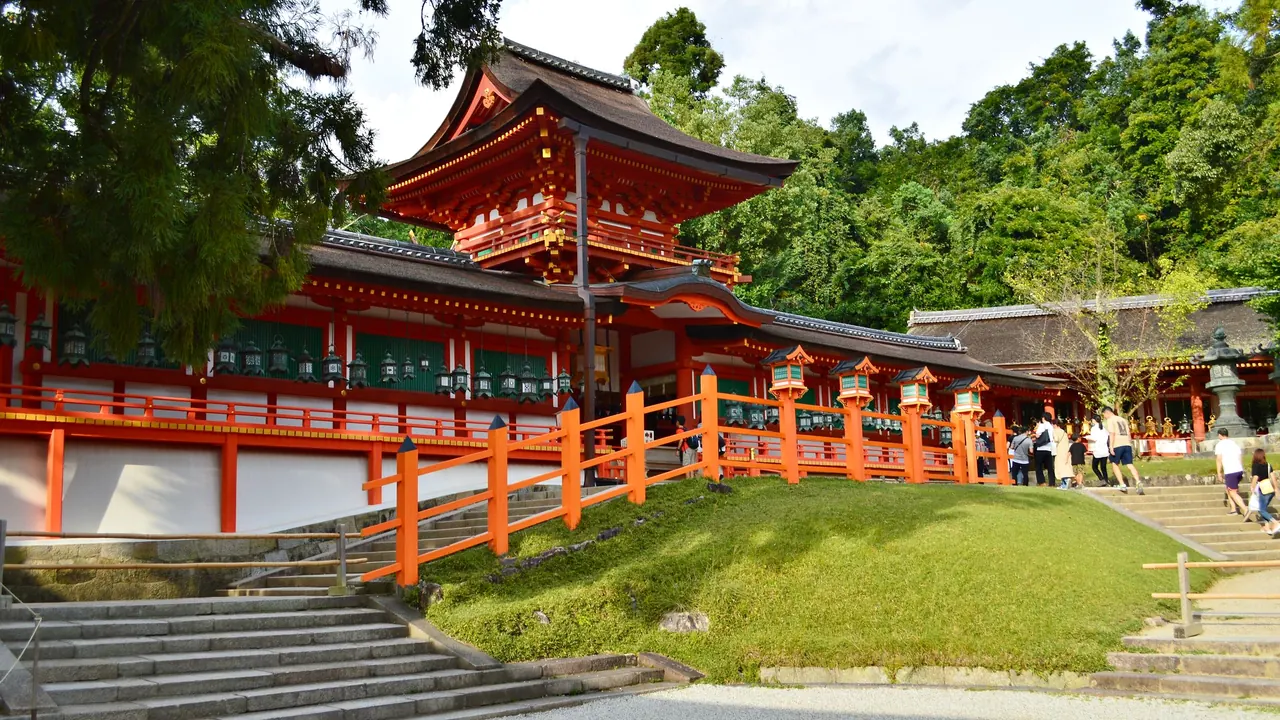
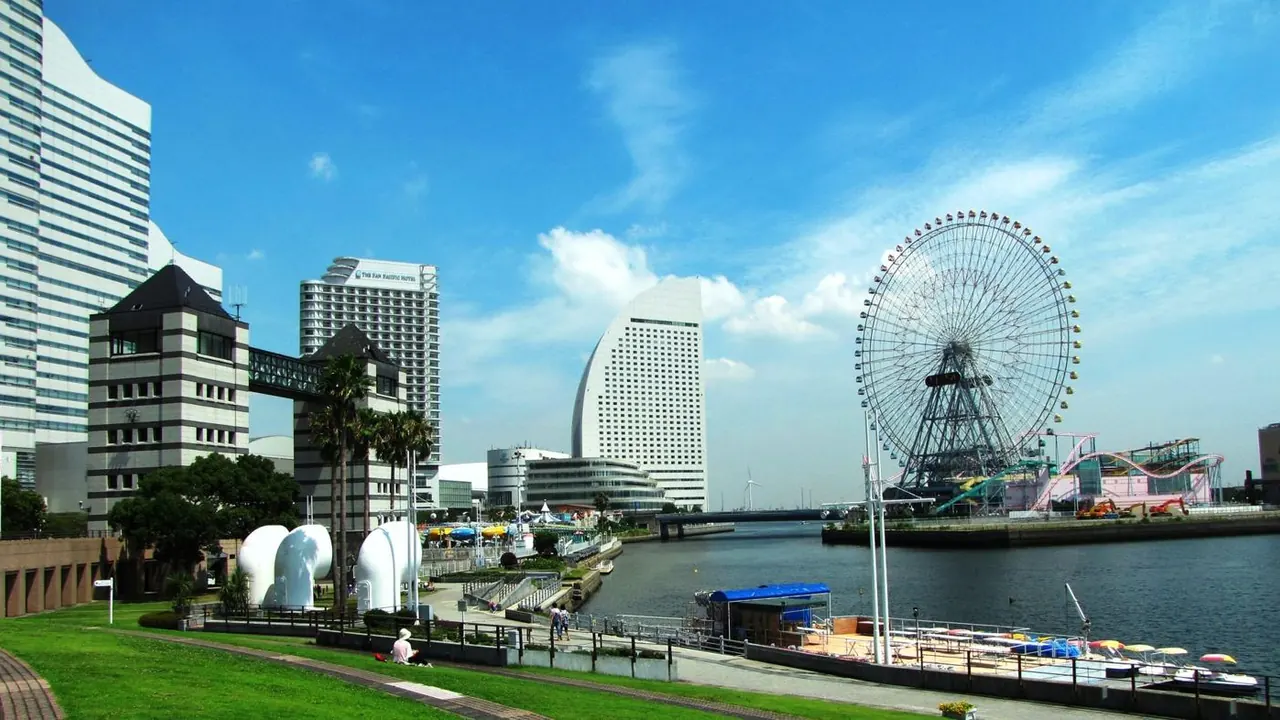
Photos: Nara by Saigen Jiro, CC0; Yokohama by Yoshio Kohara, CC BY 3.0, cropped.
Nara or Yokohama?
Our verdict in twelve categories, each scored against the same fixed benchmark cities, and the climate month by month, so you can choose for your trip.
Choose Nara for
- culture and sights
- day trips
- prices
Choose Nara if the point of the trip is old Japan. The eighth-century temples, the Great Buddha hall and the lantern paths of Kasuga Taisha make up a set of sights that Yokohama cannot match. Kyoto and Osaka are both within easy reach for days out. It suits travellers who are happy with quiet evenings, early nights and a slow pace between the busier cities nearby.
Choose Yokohama for
- beaches
- families
- food and drink
Yokohama is the better pick for families and for anyone who wants a comfortable base with more going on after dark. Chinatown and the bar lanes of Noge give it a far wider table, the harbour has museums and rides that children love, and trains to Tokyo, Kamakura and Hakone are quick and simple. What it lacks is a single sight that justifies the journey on its own.
Scoreboard
Twelve categories on one fixed scale from 0 to 100. The shaded stretch is the gap between the two.
Your match
Pick a travel style or drag the sliders, and both match scores follow your weighting.
Wins on culture and sights and day trips with your weighting.
Wins on beaches and families with your weighting.
What matters to you?
Category by category
What the scores mean for a trip.
Beaches & swimming
Nara has no beach at all. It is an inland city, the nearest sand is on the industrial Osaka Bay shore more than an hour away, and summer swimming means a pool.
Yokohama is no beach city either, but the sea is within easy reach. Besides the man-made beach at Umi no Koen, trains reach the broad grey-brown sands of Zushi, Kamakura and Enoshima in under an hour, which makes for a good midsummer day out in July and August.
Food & drink
Nara's table is short and local: persimmon-leaf sushi, sake-lees pickles, Miwa somen and tastings at the sake counters of Naramachi. It is worth trying, but kitchens close early and most of what lies near the park is quick lunches.
Yokohama offers far more choice. Japan's largest Chinatown, the city's own iekei ramen and sanma-men, a ramen museum in Shin-Yokohama and the counter bars of Noge mean a different meal every night of a long stay.
Culture & sights
This is where Nara leaves Yokohama behind. As the eighth-century capital it keeps Todai-ji's Great Buddha, Kofuku-ji's pagoda, the lantern-lined approach to Kasuga Taisha and the Tang-style halls of Toshodai-ji and Yakushiji, sights that would fill two or three days even without Kyoto next door.
Yokohama tells a younger and different story, that of a treaty port opened to the West in the 1850s. The merchant houses on the Yamate Bluff, the Red Brick Warehouses and the liner Hikawa Maru are pleasant to see, and Sankeien's relocated temple buildings are the highlight, but none of it matches Nara's ancient temples.
Nightlife
Nara goes quiet once the day visitors leave. An evening means an izakaya near Kintetsu Nara station or a drink at a sake counter, and for anything more you go to Osaka and watch the time of the last train back.
Yokohama gives you a proper evening out, even if it is not a clubbing city. The warren of standing bars and izakaya in Noge, the pubs and karaoke of Kannai and the harbour-view bars of Minato Mirai suit a long night of yakitori and beer.
Nature & outdoors
The two are broadly level for the outdoors, but the green is in different places. In Nara it starts in the middle of town: the deer park, the protected Kasugayama Primeval Forest, the easy climb up Mount Wakakusa, and the Yamanobe-no-michi path through orchards and rice fields, all of it good for gentle walking and cycling.
Yokohama itself is densely built, so its nature lies a train ride away, and it is wilder. There are ridge trails between Kamakura's temples, sea cliffs at Enoshima, coastal walks on the Miura Peninsula, proper hikes in the Tanzawa mountains and volcanic scenery at Hakone.
Day trips
Both make excellent bases, and Nara is the stronger of the two. Kyoto and Osaka are each less than an hour away, Horyu-ji's ancient wooden halls are a short ride, and Asuka, Uji's Byodo-in and the mountain temples of Hase-dera and Muro-ji add still more. Himeji is possible in a longer day.
Yokohama's list is shorter but very good. Tokyo is under half an hour away, and Kamakura's Great Buddha and Zen temples pair neatly with Enoshima. Hakone and Kawagoe's Edo-era streets fill longer days.
Good for families
Children remember feeding the bowing deer and squeezing through the pillar at Todai-ji, but Nara has little else made for them. There is no zoo or aquarium, and most families spend a day or two there before heading to Osaka.
Yokohama can fill a family week. Children make their own noodles at the Cup Noodles Museum, and there are the aquarium and rides of Hakkeijima Sea Paradise, the Anpanman museum, Zoorasia and the waterfront amusement park. The flat harbour, with lifts and nursing rooms in the stations, makes pushchairs easy.
Getting around
Nara's main sights are a gentle walk from Kintetsu Nara station, though the distances add up over a day. The western temples need a local train or a bus, and buses crowd in blossom season, so a rental bicycle on the flat basin is often the best answer.
Yokohama is easier still. The Minatomirai Line, JR, subways and private railways all take one tap-on card, the harbour from Minato Mirai to Chinatown is a level stroll, and water buses cross the bay. Neither city needs a car.
Shopping & style
Nara is the place for traditional crafts in small specialist shops: sumi ink and calligraphy brushes, Nara-zarashi linen, Akahada pottery and carved Ittobori dolls. Beyond those and the souvenir arcades there is little to browse.
Yokohama offers more of almost everything else. It has department stores and underground arcades around the main station, waterfront malls in Minato Mirai and the long, smart Motomachi street with its leather goods. For luxury fashion, though, both cities send you on, to Osaka or to Tokyo.
Affordability
Costs are much alike, and they come from different things. Nara has plenty of fairly priced business hotels because so many visitors leave by evening. Its temples charge small fees hall by hall, and the money goes on ryokan dinners and on rail fares if you use the city as a base.
In Yokohama many of the main sights are free, among them Yamashita Park, the Bluff houses and the promenades, and local trains are cheap. Rooms rise on summer weekends and when a big concert fills the city, and the family attractions charge admission.
Live music & performing arts
Nara's stage is ritual and seasonal. Gagaku music and bugaku dance at Kasuga Taisha, the On-matsuri in winter and the Omizutori fire rites in early spring are remarkable if your dates fall right, but on most evenings there is little to attend.
Yokohama has a year-round programme. The Kanagawa Philharmonic plays at Minato Mirai Hall, there is opera and dance at the Kanagawa Arts Theatre, and touring acts fill the harbour arenas. Old jazz cafés in Noge and Kannai keep the port's jazz tradition going.
Wellness & relaxation
Nara's calm comes from its pace rather than its baths. It has no hot springs, only old bathhouses and a few complexes on the outskirts, but an early walk in the park or a tea house by a temple garden is restful in itself.
Yokohama gives you more of the Japanese soak. Neighbourhood sento and a large hot-spring complex on the Minato Mirai waterfront allow a whole evening of baths and saunas, Hakone's mountain onsen are about an hour or so away, and Sankeien's ponds provide the quiet.
When should you go?
Pick your month. The climate figures are measured averages, not a forecast.
Nara in July
Yokohama in July
Daytime high, °C
Rainfall in the month, mm
Where the figures come from
Nara's sunshine is measured 26 km from the centre, at Osaka.
Yokohama's sunshine is measured 29 km from the centre, at Tokyo.
Temperature and rainfall are climate normals, averaged over the years shown. Nara: 1971-2000 (sunshine 1991-2020, rainfall 1991-2020) normals, Nara (2.6 km from centre). Yokohama: 1971-2000 (sunshine 1991-2020, rainfall 1991-2020) normals, Yokohama (1.6 km from centre).
Neither city is pleasant for long walks in high summer, and Nara is the harder of the two. Its enclosed basin reaches about 32°C in August, and the rainy season peaks earlier there, at around 200mm in July. Nara is at its best in April and May and again from late October into November, when the temples and the park are comfortable to walk all day. Winters are cold but fairly dry.
Yokohama stays a few degrees cooler in summer, and July and August are the months for the nearby beaches, with the sea around 26°C. Its heaviest rain comes later, in September and October, with October reaching about 276mm, so the settled autumn weather arrives there only in November. Winter is a good season for the coast, sunnier than in Nara and clear enough to see Mount Fuji. Spring is mild in both cities but wetter in Yokohama.
Which traveller are you?
For a culture and arts trip, Nara is the clear choice. Todai-ji, Kofuku-ji, the National Museum's Buddhist sculpture and the calm western temples are of the first rank, and Horyu-ji and Kyoto are short train rides away.
On a family trip with children, Yokohama does far more. The Cup Noodles Museum, the Sea Paradise aquarium, Zoorasia and the harbour Ferris wheel fill several days, whereas Nara's deer and the Great Buddha make a lovely day but not a week.
For a food and nightlife trip, go to Yokohama. Chinatown's dim sum halls, the city's own ramen styles and the small grill bars of Noge keep evenings full, while Nara's kitchens and bars close early and the streets empty after dark.
Before you go
| Measure | Nara | Yokohama |
|---|---|---|
| Official language | Japanese | Japanese |
| Currency | Yen (JPY) | Yen (JPY) |
| Sockets | AB100 V, 50 and 60 Hz depending on the region | AB100 V, 50 and 60 Hz depending on the region |
| Driving side | Left | Left |
| Time zone | UTC+9 | UTC+9 |
| Emergency number | Police 110, fire 119 | Police 110, fire 119 |
| Elevation | 70 m | 24 m |
| Main airport | Kansai International Airport (KIX)59 km from centre62 non-stop destinations | Tokyo Haneda International Airport (HND)18 km from centre98 non-stop destinations |
| Public holidays this year | 16 days | 16 days |
By the numbers
| Measure | Nara | Yokohama |
|---|---|---|
| City population | 352,377 | 3,757,630 |
| People per km² | 1,273 | 8,585 |
| Museums within 10 km | 31 | 38 |
| UNESCO World Heritage sites within 50 km | 6 | 1 |
| Swim season, months above 21 °C | 5 months | 5 months |
Where else could you go?
Every comparison below shares a destination with this one, so you can follow Nara or Yokohama somewhere new.