New Zealand
Dunedin
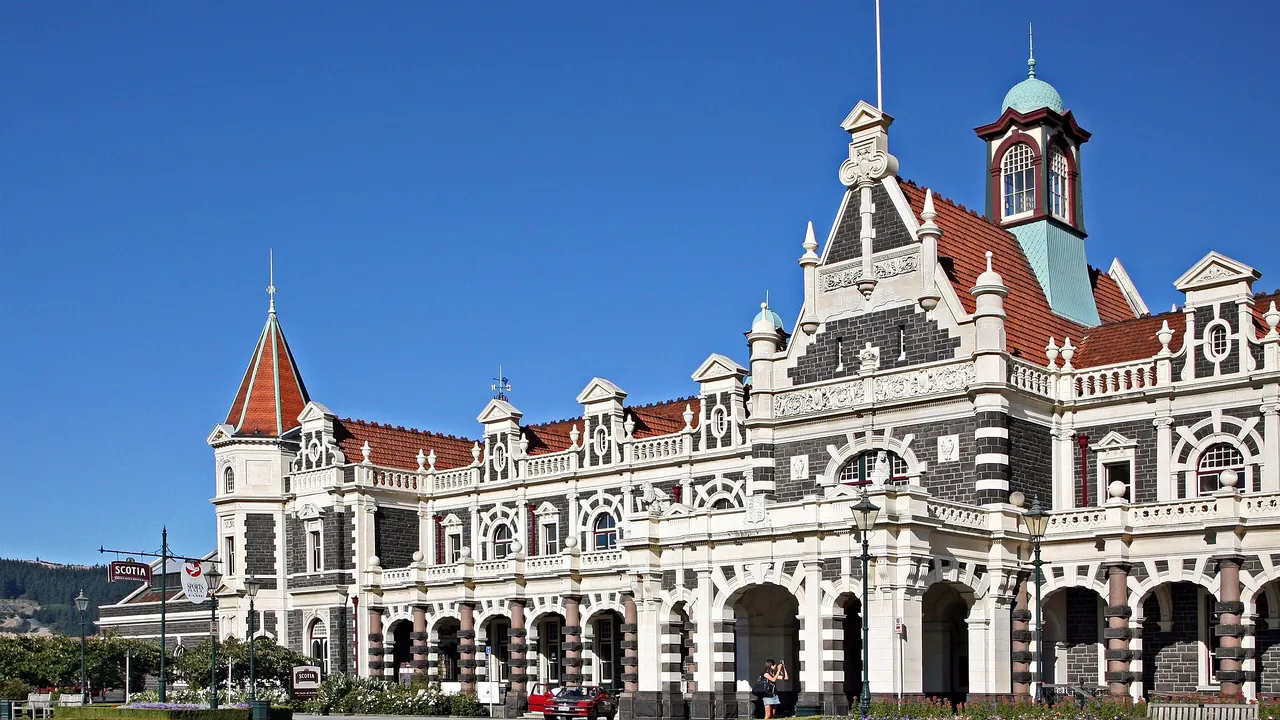
The railway station with its red roofs and copper towers
- Nature & outdoors80
- Families55
- Culture & sights52
Photo: W. Bulach, CC BY-SA 4.0, cropped
Match
42
Every category weighted equally
- Beach & sun41
- Culture & arts42
- Food & nightlife38
- Family trip46
- Outdoors48
- Relax & unwind42
- Shopping & style40
- On a budget42
Dunedin in twelve categories
Our verdict on each, scored 0 to 100 against the same fixed benchmark cities, so a score means the same thing on every page.
Beaches & swimming. Scores 28 out of 100.
Food & drink. Scores 42 out of 100.
Culture & sights. Scores 52 out of 100.
Nightlife. Scores 32 out of 100.
Nature & outdoors. Scores 80 out of 100.
Day trips. Scores 42 out of 100.
Good for families. Scores 55 out of 100.
Getting around. Scores 42 out of 100.
Shopping & style. Scores 32 out of 100.
Affordability. Scores 40 out of 100.
Live music & performing arts. Scores 32 out of 100.
Wellness & relaxation. Scores 32 out of 100.
Dunedin category by category
Beaches & swimming
28Dunedin has proper sand inside the city. St Clair and St Kilda form one long surf beach on the southern edge of town, and quieter bays such as Brighton and those on the Otago Peninsula are close by. The trouble is the water. The Pacific here comes up from the Southern Ocean and reaches only about 14-15°C at the height of summer, and the swell and rips mean you swim between the flags or not at all.
Locals surf in wetsuits and walk the esplanade more than they sunbathe. The heated saltwater pool at the end of St Clair beach is how most visitors get into the sea air. Treat the beaches as somewhere to walk, not the reason for the trip.
Food & drink
42Eating out in Dunedin is easygoing and local rather than ambitious. The Saturday farmers' market beside the railway station is the best thing on the food calendar, with Otago cheese, stone fruit from the interior, smoked fish and bakery stalls. The city also has a serious brewing tradition, from the old brewery on Rattray Street to smaller craft producers, and the cafés in the centre and around the university make good flat whites.
Southern specialities are worth trying: blue cod, Bluff oysters in season, and the cheese roll, a toasted southern snack you will find in cafés. Dinner choices cluster around the Octagon and George Street and cover the usual range without much depth. Fine dining is limited.
Culture & sights
52Dunedin was built on Otago gold-rush money by Scottish settlers, and much of that Victorian and Edwardian city still stands. The Flemish-style railway station is the best-known building. First Church, the bluestone University of Otago clocktower and the streets around the Octagon carry the same confident nineteenth-century look. Olveston, an Edwardian family house with its contents intact, and Larnach Castle, the colonial mansion on the peninsula ridge, show how the wealthy lived.
The museums are good for a city this size. Otago Museum covers Māori and Pacific culture and natural history, Toitū tells the settler story, and the Public Art Gallery and the Chinese garden fill out an afternoon. Two or three days covers it all at a gentle pace.
Nightlife
32Most of Dunedin's nightlife runs on its students. During term, the bars around the Octagon and up George Street fill on Thursday to Saturday nights, and a few places stay open late with DJs. The rest is craft-beer bars, wine bars and pubs in the old warehouse streets, where the evening is mostly about conversation.
Outside term, and on most weeknights, the city goes quiet early. It suits a relaxed drink after dinner much better than a big night out.
Nature & outdoors
80Wildlife is the reason many people come to Dunedin, and it is right on the city's edge. The Otago Peninsula has a breeding colony of royal albatross at Taiaroa Head, the only one on any mainland. Rare yellow-eyed penguins come ashore at dusk, and New Zealand sea lions and fur seals haul out on beaches such as Sandfly Bay and Allans Beach. Boat trips around the heads add seabirds and the odd dolphin. Orokonui Ecosanctuary, north of the city, protects native forest birds behind a predator-proof fence.
For walking, there are the sea-carved sandstone at Tunnel Beach, the hill tracks up Mount Cargill and Signal Hill, and the bush of the Town Belt. St Clair has good surf. The weather is cool and changeable all year, so bring layers.
Day trips
42The best outing is Oamaru, about an hour and a quarter up the coast. Its harbourside streets of white limestone Victorian warehouses and banks form one of the most complete nineteenth-century precincts in the country, and little blue penguins come ashore there at dusk. On the way you pass the fishing village of Moeraki. Port Chalmers, the old harbour town at the head of the harbour, is a short drive and has galleries and historic churches.
Inland, the road into Central Otago leads to the gold-rush settlements of Lawrence, Naseby and St Bathans and the art deco town of Ranfurly. The Central Otago vineyards around Alexandra and Clyde take a long day. Further afield, the region is mostly landscape rather than towns.
Good for families
55Dunedin is a relaxed city for children. It is small, safe and unhurried, and its best family experiences involve animals: watching albatross glide over Taiaroa Head, spotting sea lions on a peninsula beach, or taking a penguin tour at dusk. Otago Museum has a hands-on science centre and a tropical butterfly house. The Botanic Garden has an aviary and plenty of lawn to run on, and the heated saltwater pool at St Clair is a good bet on a cool day.
The drawbacks are the weather, which can be cold and wet even in summer, the steep streets, which are hard work with a pushchair, and the lack of any big purpose-built attraction.
Getting around
42The centre is compact and mostly flat. The Octagon, George Street, the railway station and the university are an easy walk from each other, and the city buses reach St Clair, the Botanic Garden and the outer suburbs. Leave the valley floor and the hills begin quickly. Some residential streets are among the steepest anywhere, which makes walking to viewpoints a workout.
The main problem is the Otago Peninsula. The albatross colony, penguin beaches and Larnach Castle lie along narrow, winding roads with little public transport, so most visitors hire a car or book a tour that includes transport. A car is also the practical way to reach anything beyond the city.
Shopping & style
32George Street is the main shopping street, with national chains and some independent shops. Dunedin has a small fashion scene of its own, with local designers who favour dark, practical clothing and a long-running student fashion show. There are second-hand bookshops to match its literary reputation, vintage stores, outdoor gear and merino knitwear.
The farmers' market is good for food to take home. Beyond that, there is little to shop for here.
Affordability
40Dunedin is one of the cheaper places to stay in New Zealand, but that does not make it a cheap trip. Rooms are reasonably priced outside graduation and big sports weekends, and the student population keeps casual food and cafés affordable. Many sights cost nothing: the Botanic Garden, Otago Museum's main galleries, the art gallery, Toitū and the coastal walks.
Restaurant meals, drinks and groceries sit at New Zealand levels, which are high. The guided albatross, penguin and harbour tours, which are the main reason to come, add up quickly, and so does hiring a car to reach the peninsula.
Live music & performing arts
32Dunedin is best known in music for the Dunedin Sound, the jangly guitar indie rock that came out of the city in the 1980s. That tradition carries on in small venues and pubs, where local and touring bands play to student crowds. The Regent, an old picture palace on the Octagon, hosts touring shows and comedy, and the Town Hall holds orchestral concerts by the city's regional orchestra.
The programme is small and depends heavily on the university calendar. You can usually find a gig, but there is no regular opera or major theatre season to plan a trip around.
Wellness & relaxation
32Dunedin has no spa or bathing tradition. The nearest thing is the heated saltwater pool on the St Clair esplanade, where you can swim in warm seawater looking out at the surf. A few day spas and massage studios cover the rest.
What the city does offer is a slow pace. Traffic is light, crowds are rare outside events, and a morning in the Botanic Garden followed by a long café lunch feels typical rather than indulgent. It is a calm base, but not a place to come for treatments.
When should you go?
Pick a month to see what it is like. The climate figures are measured averages, not a forecast.
Dunedin in July
Daytime high, °C
Rainfall in the month, mm
The whole year
Shaded against this city’s own year: the deepest cell is its best month for that figure and the palest its weakest.
Where the figures come from
Dunedin has no weather station within reach, so its figures come from a gridded climate model rather than a measured record, and read a broad area rather than the city itself.
Temperature and rainfall are climate normals, averaged over the years shown. Dunedin: 2001-2020 normals, NASA POWER reanalysis grid, no weather station within 90 km.
Before you go
| Measure | Dunedin |
|---|---|
| Official language | English, New Zealand Sign Language, Māori |
| Currency | New Zealand Dollar (NZD) |
| Sockets | I230 V, 50 Hz |
| Driving side | Left |
| Time zone | UTC+12, UTC+13 in summer |
| Emergency number | 111 |
| Elevation | 19 m |
| Main airport | Dunedin International Airport (DUD)24 km from centre4 non-stop destinations |
| Public holidays this year | 12 days |
By the numbers
| Measure | Dunedin |
|---|---|
| City population | 106,200 |
| People per km² | 32 |
| Museums within 10 km | 11 |
| UNESCO World Heritage sites within 50 km | 0 |
| Swim season, months above 21 °C | None |
Compare Dunedin with
Every comparison with a written verdict behind it.