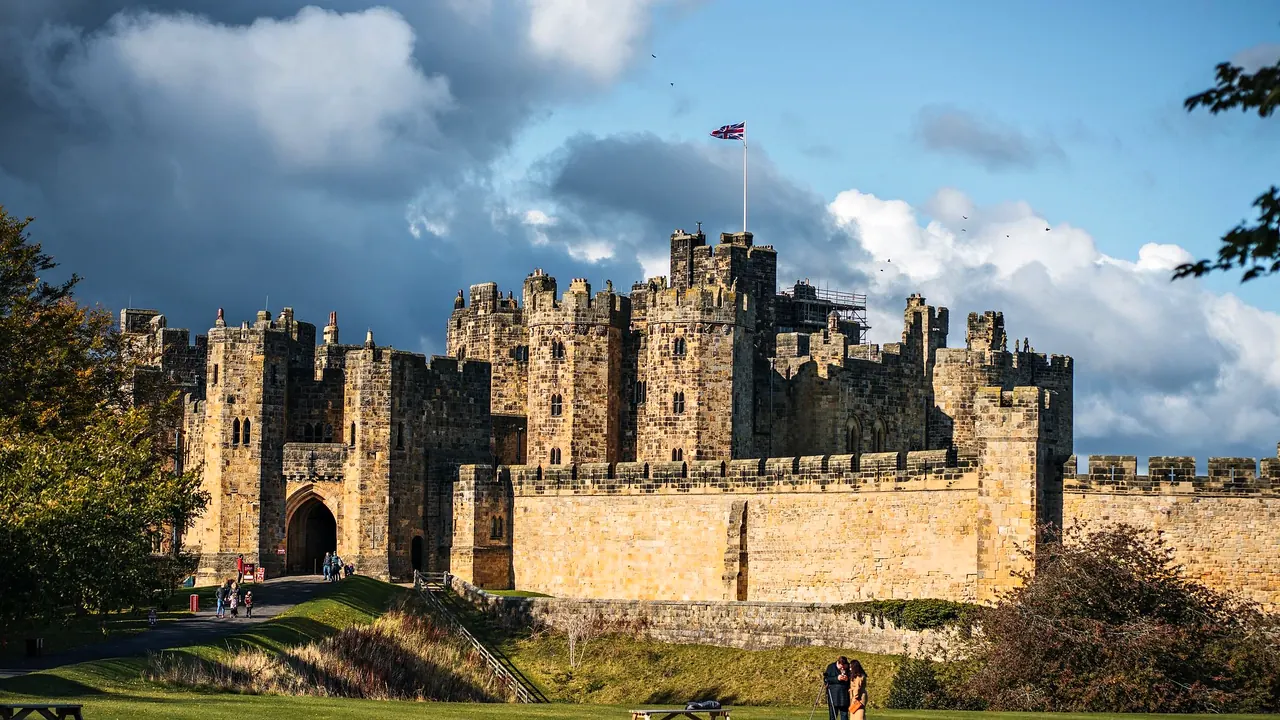
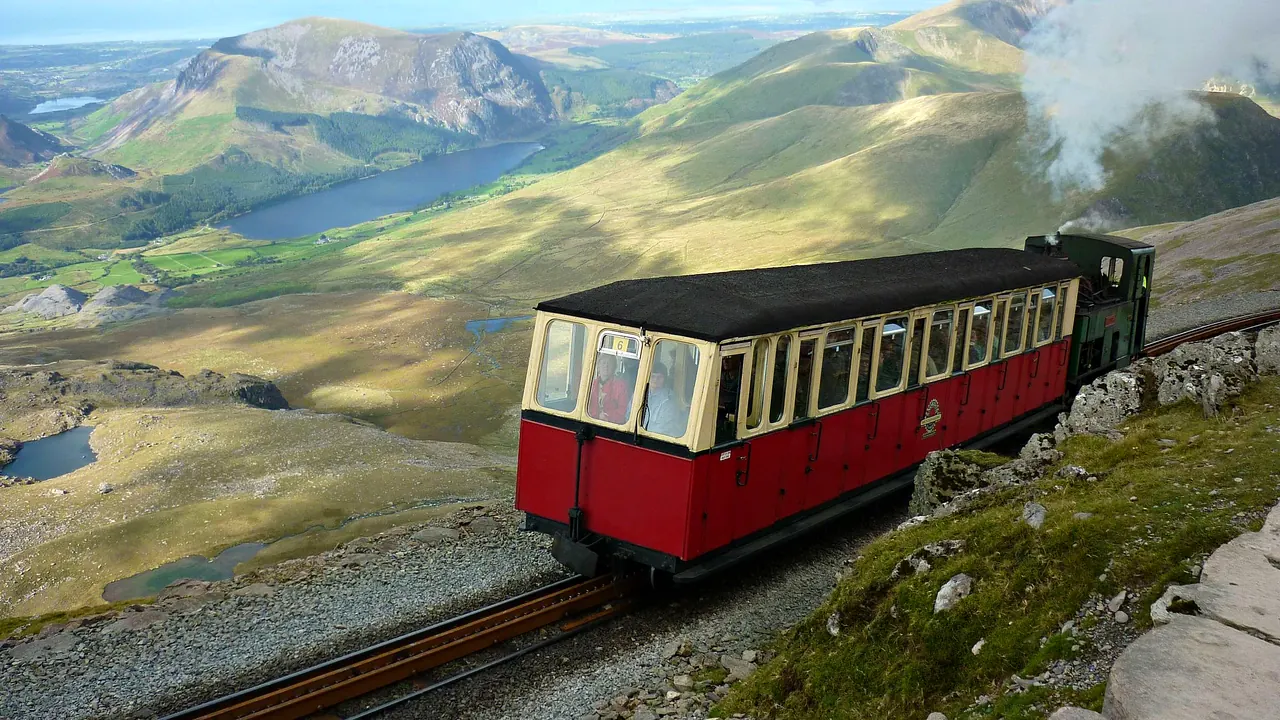
Photos: Northumberland by Clément Proust, Pexels License; Snowdonia by Porius1, CC BY-SA 3.0, cropped.
Northumberland or Snowdonia?
Our verdict in twelve categories, each scored against the same fixed benchmark cities, and the climate month by month, so you can choose for your trip.
Choose Northumberland for
- culture and sights
- live music and the arts
- getting around
Northumberland suits travellers who want history along a coastline: castles on rocks above empty sands, Hadrian's Wall across the moors, Holy Island reached over its tidal causeway, and puffin boats from Seahouses. It is the gentler and drier choice. Rail links are better, the seafood is more distinctive, and Edinburgh and Newcastle are close by when you want an evening in a city.
Choose Snowdonia for
- nature and the outdoors
- beaches
Choose Snowdonia if the mountains are the point. Yr Wyddfa, Tryfan and the Glyderau offer real hillwalking and scrambling that the rounded Cheviots cannot match, and mountain biking, white-water rafting and zip lines in old slate quarries add more active days. The price is weather and fewer sights. It is far wetter, and its heritage of Harlech, the slate villages and the narrow-gauge railways makes a few good stops rather than a full itinerary.
Scoreboard
Twelve categories on one fixed scale from 0 to 100. The shaded stretch is the gap between the two.
Your match
Pick a travel style or drag the sliders, and both match scores follow your weighting.
Wins on culture and sights and live music and the arts with your weighting.
Wins on nature and the outdoors and beaches with your weighting.
What matters to you?
Category by category
What the scores mean for a trip.
Beaches & swimming
Neither is a place to swim, and the beaches are about as good as each other but different in kind. Northumberland's are long North Sea strands beneath castles, at Bamburgh and at Embleton Bay below Dunstanburgh. A walk on the sand doubles as sightseeing, and the beaches stay empty even in high summer.
Snowdonia's Cardigan Bay sands at Harlech, Black Rock and Barmouth face west into slightly warmer water, and the Llŷn adds sheltered coves for windy days. On both coasts, expect wetsuits and short dips.
Food & drink
Northumberland has the more distinctive local food. Oak-smoked Craster kippers, Lindisfarne oysters and crab sandwiches in Seahouses and Amble give the coast a real food identity, and a few ambitious kitchens in Hexham and Alnwick go beyond pub dinners.
Snowdonia eats like a walking base: lamb, cawl and big breakfasts in Llanberis and Betws-y-Coed, with Conwy mussels and Menai seafood on the edges of the park. Choice is thin in the small villages of both, but Northumberland has Newcastle close by when you want more variety.
Culture & sights
Northumberland has the richer and denser heritage. Bamburgh, Alnwick, Warkworth and Dunstanburgh are all within easy reach of each other. Hadrian's Wall, with Vindolanda and Housesteads, adds Roman history of international importance, and Lindisfarne's priory and Berwick's walls come on top of that.
Snowdonia's strength is different. It has a working landscape of slate quarries and terraced villages, Harlech Castle, the narrow-gauge railways and the oddity of Portmeirion, with Welsh spoken all around you. It is memorable but thinner, a handful of stops rather than a week of sights.
Nightlife
Both go quiet early, and neither has clubs. The difference is the kind of pub and what lies beyond it. Snowdonia's inns in Llanberis and Capel Curig fill with climbers comparing routes on summer weekends. Northumberland's evenings are fireside pints in its market towns, with Newcastle a train ride away for anyone who wants a late night.
Nature & outdoors
Both are big outdoor destinations, but Snowdonia is the mountain one. Yr Wyddfa, the Crib Goch ridge, Tryfan and the Llanberis cliffs offer serious walking, scrambling and climbing. Mountain biking, white water on the Tryweryn and the Mawddach cycle trail widen the choice.
Northumberland's appeal is space and wildlife rather than height. It has puffins and seals on the Farne Islands, the coast path past its castles, the rolling Cheviots and Kielder's dark skies. It is gentler and drier, which suits walkers who prefer moor and shore to crags.
Day trips
Northumberland has the slightly better range of outings because three cities are within reach. Edinburgh is under an hour by train from Berwick, and Newcastle's quayside and Durham's cathedral are an easy trip from Hexham or Morpeth. The ruined abbeys of Melrose and Jedburgh in the Scottish Borders are a short drive west.
Snowdonia's edges are strong too, with the castles of Caernarfon, Conwy and Beaumaris, Victorian Llandudno under the Great Orme and Bodnant Garden in the Conwy Valley. There is no large city close by, though. Chester is about an hour and a half away, and a car does most of the work.
Good for families
Both suit families who like being outdoors, and both struggle on wet days. The difference is in the treats. Northumberland has costumed activities at Alnwick Castle, puffin boats and the tidal crossing to Holy Island.
Snowdonia has steam railways, underground slate-mine tours and long zip lines that suit older children who want thrills. Its rain and steep paths make the days harder to plan.
Getting around
Northumberland is the easier region to get around. The east coast main line stops at Morpeth, Alnmouth and Berwick, the Tyne Valley line reaches Hadrian's Wall, and the A1 makes driving quick. The only real planning is the Holy Island tides.
In Snowdonia the trains run around the edges and the Sherpa'r Wyddfa buses serve the main paths. Between valleys, though, the roads are narrow and winding, summer traffic builds and trailhead car parks fill early.
Shopping & style
Alnwick's Victorian railway station holds one of Britain's largest second-hand bookshops and is worth a detour on its own. Hexham adds delis and weekly markets, and along the coast there are smokehouse counters and small galleries.\n\nBetws-y-Coed's outdoor gear shops are more practical, the place to buy boots or a waterproof before a day on the hills, and woollen mills and Portmeirion pottery are the souvenirs to take home. Neither region is worth choosing for a serious shopping trip.
Affordability
Costs come out much the same, as you would expect of rural Britain, and self-catering cottages are the main expense in summer. In Northumberland the savings lie inland around Hexham and the Tyne Valley, though castle admissions add up. In Snowdonia they come from campsites, bunkhouses and hostels, and the free mountains make it easier to do on a shoestring.
Live music & performing arts
Northumberland has more to offer. There are smallpipes and folk sessions in the pubs, small arts centres in Hexham and Berwick, and the major halls of Newcastle and Gateshead within reach.
Snowdonia's offer is more intimate. Male voice choir rehearsals and eisteddfodau are a genuine window into Welsh culture, but for theatre and concerts you have to drive to Bangor or Llandudno.
Wellness & relaxation
In Northumberland, rest follows the coast. Cottage days are set by the tides and the weather, there is little traffic, and the villages go to sleep early.
Snowdonia's calm is found in its valleys and lakes. There are log burners in Beddgelert after a day outside, slow walks by the Mawddach, and cold-water dips in the lakes for anyone who enjoys them. Spas are limited to a few country-house hotels in both, so choose either one for quiet rather than treatments.
When should you go?
Pick your month. The climate figures are measured averages, not a forecast.
Northumberland in July
Snowdonia in July
Daytime high, °C
Rainfall in the month, mm
Where the figures come from
Northumberland has no rain gauge within 25 km of the centre, so its rainfall comes from a gridded climate dataset read at the destination rather than from a gauge further away.
Snowdonia's temperatures are measured 52 km from the centre, at Valley.
Snowdonia has no rain gauge within 25 km of the centre, so its rainfall comes from a gridded climate dataset read at the destination rather than from a gauge further away.
Temperature and rainfall are climate normals, averaged over the years shown. Northumberland: 1991-2020 normals, Boulmer (7 km from centre). Snowdonia: 1991-2020 normals, Valley (51.8 km from centre).
Both are cool-summer destinations, and neither has a true beach season. Daytime highs peak at about 18°C in Northumberland in July and August, and only a degree higher in Snowdonia. June to September is the time for long walks and afternoons on the sand, while winter highs stay in single figures in both. The sea is cold all year, though Cardigan Bay is slightly warmer and holds 16°C into September.
The real difference is rain. Northumberland is much the drier of the two, and even its wettest months stay below 90mm. Snowdonia gets wetter through the autumn and reaches 134mm in November. Its sunniest weather comes early, with May the brightest month of the year, so late spring is the best chance of clear summits. In Northumberland, late spring and September are both dependable for touring the coast and the Wall.
Which traveller are you?
For a culture and arts trip, Northumberland is the stronger pick. Bamburgh, Alnwick and Lindisfarne, Berwick's Elizabethan walls and the forts of Hadrian's Wall make a dense run of sights. Smallpipe folk sessions and Newcastle's concert halls also fill the evenings better than Snowdonia can.
On an outdoors trip, Snowdonia wins clearly. Scrambling on Tryfan, climbing in the Llanberis Pass, mountain biking at Coed y Brenin and rafting on the Tryweryn are a different order of challenge from Northumberland's coast path and gentle Cheviot walks.
For a food and nightlife trip, neither is ideal, but Northumberland edges it. Craster kippers, Lindisfarne oysters and crab sandwiches give its coast a real table. Newcastle's restaurants and late bars are also a short train ride away, which Snowdonia cannot offer.
Before you go
| Measure | Northumberland | Snowdonia |
|---|---|---|
| Official language | English | English |
| Currency | Pound Sterling (GBP) | Pound Sterling (GBP) |
| Sockets | G230 V, 50 Hz | G230 V, 50 Hz |
| Driving side | Left | Left |
| Time zone | UTC, UTC+1 in summer | UTC, UTC+1 in summer |
| Emergency number | 112 or 999 | 112 or 999 |
| Main airport | Newcastle International Airport (NCL)80 non-stop destinations | Liverpool John Lennon Airport (LPL)75 non-stop destinations |
| Public holidays this year | 8 days | 8 days |
By the numbers
| Measure | Northumberland | Snowdonia |
|---|---|---|
| Population | 323,820 | - |
| People per km² | 65 | - |
| Swim season, months above 21 °C | None | None |
Where else could you go?
Every comparison below shares a destination with this one, so you can follow Northumberland or Snowdonia somewhere new.
- Edinburghvs Northumberland
- Lake Districtvs Northumberland
- Peak Districtvs Snowdonia
- Yorkshire Dalesvs Northumberland
- Lake Districtvs Snowdonia
- Yorkshire Dalesvs Snowdonia