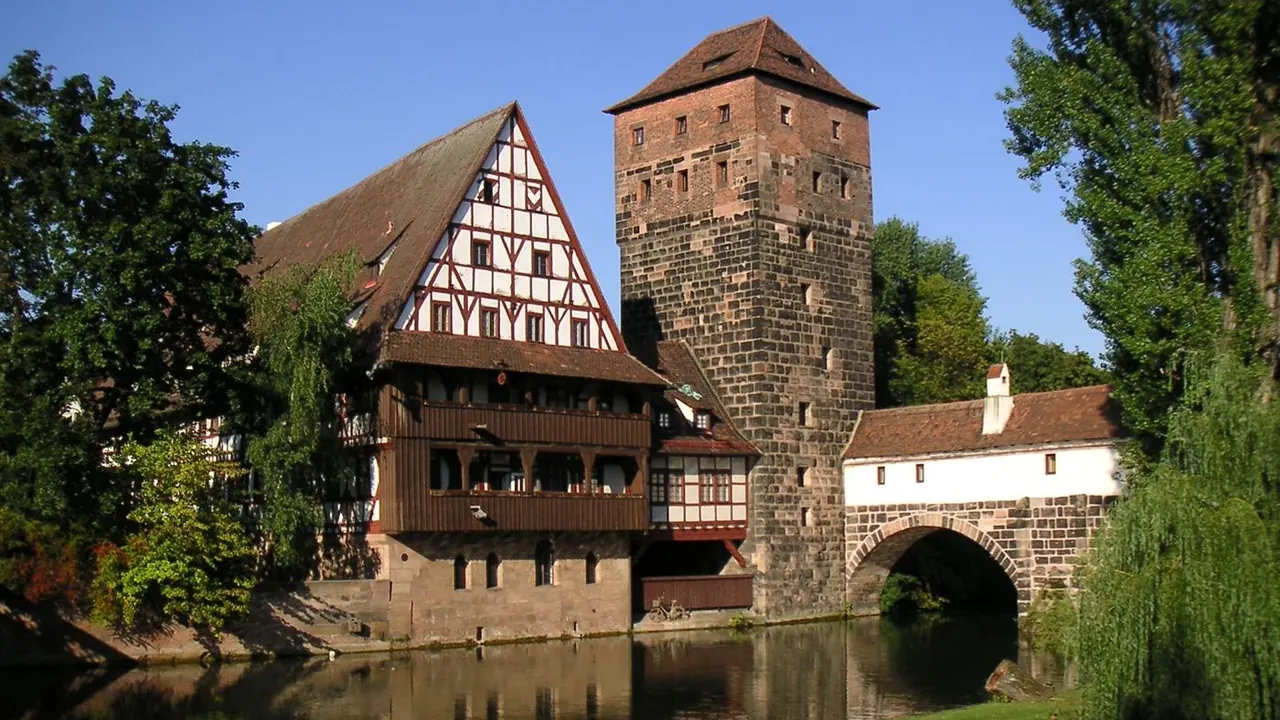
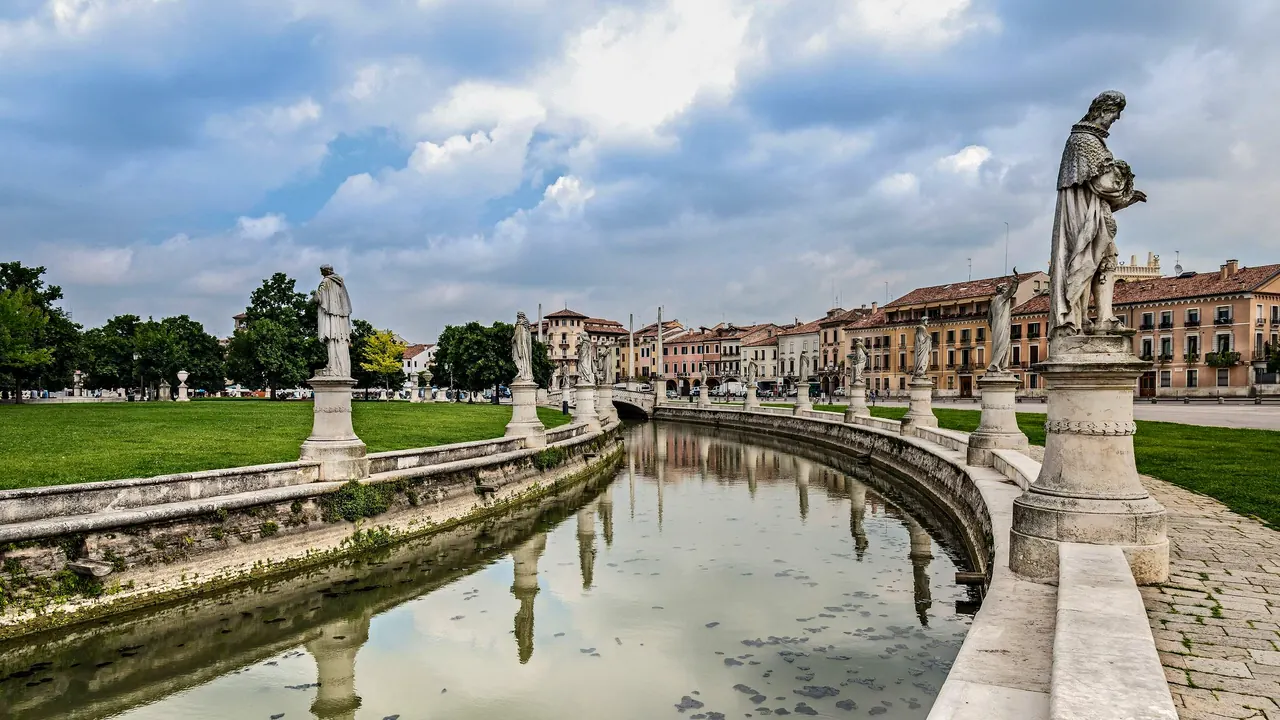
Photos: Nuremberg by Horst Gutmann, CC BY 2.0, cropped; Padua by Didier Descouens, CC BY-SA 4.0, cropped.
Nuremberg or Padua?
Our verdict in twelve categories, each scored against the same fixed benchmark cities, and the climate month by month, so you can choose for your trip.
Choose Nuremberg for
- families
- live music and the arts
- getting around
Nuremberg suits a trip built around the city itself: a walled medieval old town with the imperial castle above it, the sobering twentieth-century sites of the Rally Grounds and Courtroom 600, and a beer culture of taverns and smoky Kellerbier. It is the better choice for families, thanks to its toy and railway museums and its zoo, and for anyone who wants an evening of opera or orchestral music without leaving town.
Choose Padua for
- wellness
- beaches
- day trips
Padua works best as a base. Venice, Vicenza and Verona are all a short train ride away, and Giotto's frescoes and the Basilica of Saint Anthony fill the days you spend in the city. The thermal pools of Abano and Montegrotto are close enough for a soak after sightseeing. The food is more varied, the summers are hotter and the sea is within reach, but there is far less here made for children.
Scoreboard
Twelve categories on one fixed scale from 0 to 100. The shaded stretch is the gap between the two.
Your match
Pick a travel style or drag the sliders, and both match scores follow your weighting.
Wins on families and live music and the arts with your weighting.
Wins on wellness and beaches with your weighting.
What matters to you?
Category by category
What the scores mean for a trip.
Beaches & swimming
Neither city is for a swimming trip. From Nuremberg, the nearest water is the Franconian Lake District about an hour south, a chain of reservoirs such as the Brombachsee with grassy banks and small strips of sand. It is only worth going in the warmest weeks of summer.
Padua does better because it can reach the sea. Sottomarina and the Lido of Venice are each about an hour away, with shallow, calm Adriatic water that suits small children. The beaches are flat rows of umbrellas rather than anything scenic, but a proper day at the seaside is easy to arrange.
Food & drink
Nuremberg eats heavily and well within a narrow range: finger-sized bratwurst grilled over beechwood, Schäufele with dumplings, Lebkuchen, and above all the Franconian beer poured in taverns and beer gardens. Beyond that, the restaurants are ordinary.
Padua has more variety and more pleasure in everyday eating, with bigoli in duck sauce, baccalà, risotto with spring peas and the morning markets of Piazza delle Erbe and Piazza della Frutta. Drinking means wine and spritz rather than beer, with Euganean reds from just outside town. Neither is a fine-dining city.
Culture & sights
Both have rich, walkable historic centres, but the focus differs. Nuremberg offers a medieval townscape of walls, the Kaiserburg, Gothic churches and Dürer's house, much of it carefully rebuilt after the war. Add the Germanisches Nationalmuseum and the confronting twentieth-century sites of the Rally Grounds and Courtroom 600.
Padua is about painting and learning. Giotto's Scrovegni Chapel needs a timed visit, and it sits among a UNESCO-listed group of fresco cycles, the Basilica of Saint Anthony, the world's oldest permanent anatomical theatre and the botanical garden founded in 1545. Its centre is quicker to cover, which leaves time for Venice.
Nightlife
Neither city is for clubbing, and evenings in both are sociable rather than wild. Nuremberg's are built around beer, in old-town taverns and, more interestingly, in the small bars and alternative venues of Gostenhof, with students from Erlangen filling the weekends.
In Padua the evening is the aperitivo, spritz in hand across Piazza delle Erbe and Piazza dei Signori, followed by wine bars in the old ghetto during term. It goes quiet in high summer and the university breaks.
Nature & outdoors
The outdoors is evenly matched, and in both cities you travel a little way to reach it. Nuremberg has the Reichswald forest at its edge and, about an hour away, the limestone towers, caves and well-known rock climbing of Franconian Switzerland.
Padua is flat close in, with towpaths along the Brenta, but the volcanic Euganean Hills rise just 15km away. Around Monte Grappa and Asiago, the pre-Alps offer the real mountain walking that Nuremberg lacks.
Day trips
Nuremberg is a strong base in its own right. Bamberg, Regensburg and Würzburg are each about an hour away by train, and the walled towns of the Romantic Road are a little further.
Padua is better still, mainly because Venice is under half an hour away and you can return to a calmer bed each night. Vicenza is a quarter of an hour by train, and Verona and Bologna are around an hour. The Brenta villas and the walled towns around the Euganean Hills are even closer, so a week of first-rate days out costs very little travel.
Good for families
Nuremberg is far better set up for children. Its long toy-making history shows in the Toy Museum, the railway museum has full-size locomotives, and the zoo spreads through wooded old quarries. In Advent there is also a separate children's Christmas market with carousels.
Padua is friendly and flat, with Prato della Valle for running about and trattorias that welcome children, but its sights are mostly frescoes and churches. Families there tend to rely on Gardaland or the Adriatic for their fun days.
Getting around
Both cities are easy on foot, and neither needs a car. Nuremberg's walled old town is about 1.5km across, with a steep cobbled climb to the castle. Beyond the walls, U-Bahn, tram and S-Bahn lines on one ticket reach the Rally Grounds, the zoo and Fürth.
Padua is flat, arcaded and largely closed to traffic, and a tram and bicycles cover most of the rest. Its great strength is the station, with quick main-line trains in every direction.
Shopping & style
Shopping is a minor part of a trip to either city, so the difference lies in what you take home. In Nuremberg that means Lebkuchen in tins, wooden toys and crafts from the Handwerkerhof workshops. In Advent, the Christkindlesmarkt on the Hauptmarkt turns shopping into an event.
Padua's arcades hold Italian shoe and fashion shops and university bookshops, but the best buys are edible: cheeses, cured meats and Euganean wine from the markets. One Sunday a month, an antiques market fills Prato della Valle.
Affordability
Costs are similar, moderate by Western European standards, with Padua slightly easier on the budget. In Nuremberg, beer, tavern meals and transport are cheap, but hotel rooms become scarce and dear during the big trade fairs and the Advent market.
Padua's appeal is as an affordable base for the region, with Venice nearby, and a standing spritz or market food costs little. Its hotels also get dearer for trade fairs and graduation season, so check the dates for either city.
Live music & performing arts
Nuremberg has the fuller programme. The Staatstheater stages opera, ballet and drama in an Art Nouveau house, and two orchestras play through the season, with a large summer open-air concert in the Luitpoldhain. The Bardentreffen fills the squares with free folk and world music.
Padua's offering is smaller: drama and some opera at Teatro Verdi, and chamber concerts in frescoed halls and the basilica. For major opera, visitors go to the Fenice in Venice or the Arena in Verona.
Wellness & relaxation
Nuremberg relies on the German sauna habit. There is a large thermal spa in Fürth, leisure pools with mixed, nude saunas, and the saline pools of Bad Windsheim an hour west. Its most restful afternoons are spent in beer gardens or along the Pegnitz.
Padua has one of Europe's largest thermal districts on its doorstep. Abano Terme and Montegrotto Terme, about 12km away, have hot mineral water and a mud used for treatments since Roman times, and many spa hotels take day visitors.
When should you go?
Pick your month. The climate figures are measured averages, not a forecast.
Nuremberg in July
Padua in July
Daytime high, °C
Rainfall in the month, mm
Where the figures come from
Padua's temperatures are measured 35 km from the centre, at Treviso / Istrana.
Padua has no rain gauge within 25 km of the centre, so its rainfall comes from a gridded climate dataset read at the city rather than from a gauge further away.
Padua's sunshine is measured 36 km from the centre, at Treviso / S. Angelo.
Temperature and rainfall are climate normals, averaged over the years shown. Nuremberg: 1991-2020 normals, Nuernberg (5.5 km from centre). Padua: 1991-2020 normals, Treviso / Istrana (35.4 km from centre).
Nuremberg has a central European climate. Winters are cold, with highs of around 4°C in December and January, and the comfortable season for walking runs from May to September, peaking at about 25°C in July and August. Summer is both the sunniest and the wettest part of the year, so expect the odd shower. The Franconian lakes are only warm enough for a swim in the hottest weeks.
Padua is milder all year, with spring arriving noticeably earlier, but its summers are much hotter. Highs of 31°C in July and August make midday sightseeing hard work, though those months are very sunny. The Adriatic is warm enough to swim from June to September and reaches about 26°C in August. Rain builds through autumn to a peak of 97mm in November, so April to early June and September to October are the most pleasant months for the city.
Which traveller are you?
On a family trip with children, Nuremberg is the easier choice. The Toy Museum, a railway museum with full-size locomotives, a large zoo set in old quarries and a toy-brand play park give children days of their own. Padua's sights are mostly frescoes and churches.
For a relaxing and wellness trip, Padua is clearly ahead. The thermal district of Abano and Montegrotto lies about 12km away, with hot mineral pools that take day visitors. Nuremberg has a sauna complex in Fürth and leisure pools on the edge of the city.
On a food and nightlife trip, Padua comes out slightly ahead. Morning markets, Venetian home cooking and the evening spritz in Piazza delle Erbe make eating and drinking the centre of the day. Nuremberg answers with bratwurst, Franconian beer and the small bars of Gostenhof.
Before you go
| Measure | Nuremberg | Padua |
|---|---|---|
| Official language | German | Italian |
| Currency | Euro (EUR) | Euro (EUR) |
| Sockets | CF230 V, 50 Hz | CFL230 V, 50 Hz |
| Driving side | Right | Right |
| Time zone | UTC+1, UTC+2 in summer | UTC+1, UTC+2 in summer |
| Emergency number | 112 | 112 |
| Elevation | 209 m | 12 m |
| Main airport | Nuremberg Airport (NUE)5 km from centre56 non-stop destinations | Venice Marco Polo Airport (VCE)39 km from centre103 non-stop destinations |
| Public holidays this year | 12 days | 13 days |
By the numbers
| Measure | Nuremberg | Padua |
|---|---|---|
| City population | 531,159 | 206,496 |
| People per km² | 2,848 | 2,220 |
| Museums within 10 km | 50 | 29 |
| UNESCO World Heritage sites within 50 km | 1 | 5 |
| Swim season, months above 21 °C | - | 4 months |
Where else could you go?
Every comparison below shares a destination with this one, so you can follow Nuremberg or Padua somewhere new.