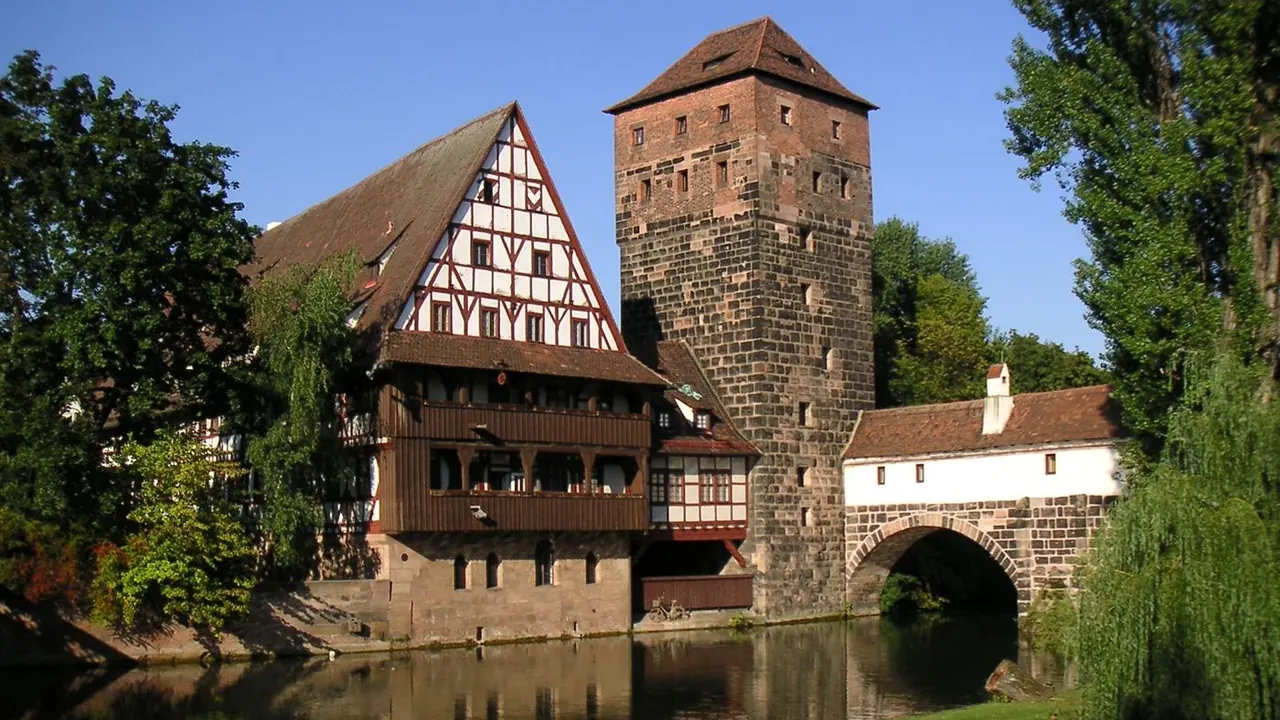
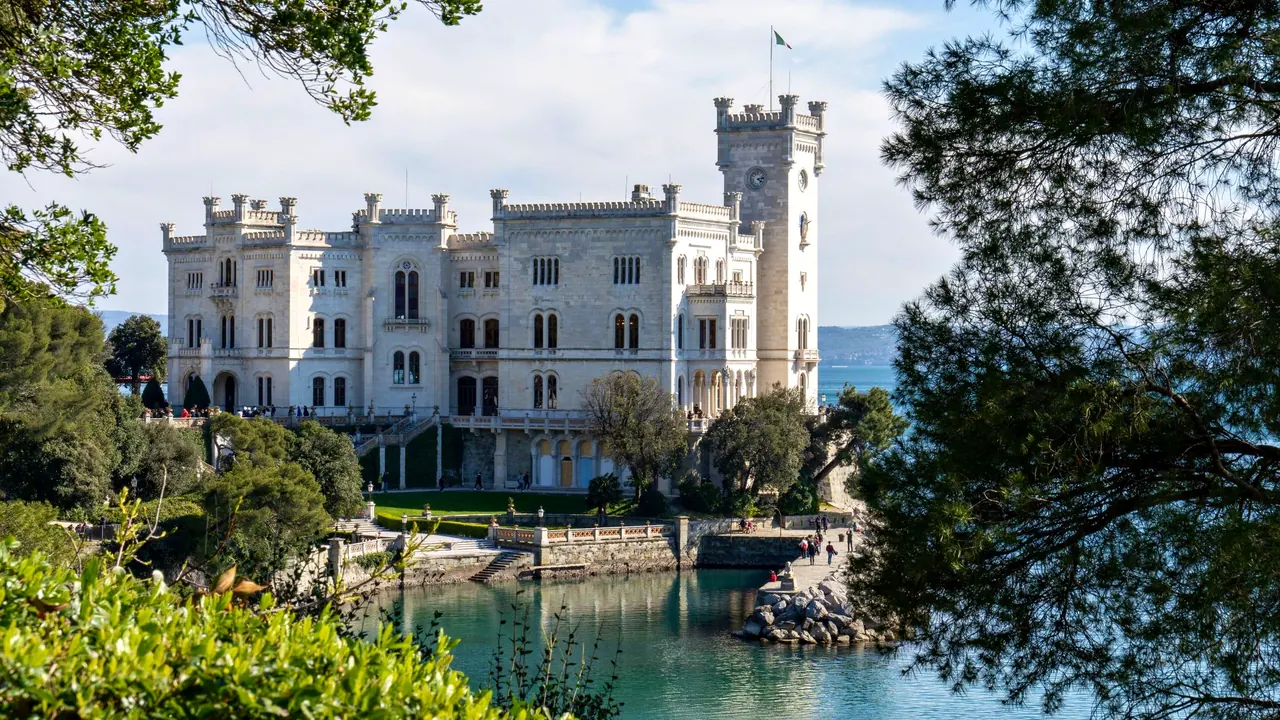
Photos: Nuremberg by Horst Gutmann, CC BY 2.0, cropped; Trieste by Tibor Szabo, Pexels License.
Nuremberg or Trieste?
Our verdict in twelve categories, each scored against the same fixed benchmark cities, and the climate month by month, so you can choose for your trip.
Choose Nuremberg for
- families
- getting around
- nightlife
Nuremberg suits travellers who want a compact walled medieval city that is easy to cover on foot and by one integrated ticket. Its toy heritage, zoo and railway museum make it the stronger choice with children, and its taverns, beer gardens and short train rides to Bamberg or Regensburg make it an easy, well-organised trip in any season.
Choose Trieste for
- beaches
- nature and the outdoors
- food and drink
Trieste is for those who put the sea and the landscape ahead of the streets. Swimming off the Barcola promenade, walking the Karst edge high above the gulf and going down into caves such as the Grotta Gigante give it an outdoor side Nuremberg cannot match. Its buffets, coffee houses and farmhouse osmize also make for more distinctive eating. It rewards slow travellers more than anyone after a lively night out.
Scoreboard
Twelve categories on one fixed scale from 0 to 100. The shaded stretch is the gap between the two.
Your match
Pick a travel style or drag the sliders, and both match scores follow your weighting.
Wins on families and getting around with your weighting.
Wins on beaches and nature and the outdoors with your weighting.
What matters to you?
Category by category
What the scores mean for a trip.
Beaches & swimming
Nuremberg has no swimming of its own beyond outdoor pools and leisure baths. Its nearest open water is the Franconian Lake District, a chain of reservoirs about an hour south with small sandy strips and a short season.
Trieste lives with the sea from June to September. There is almost no sand, so you swim from the concrete platforms and pine-shaded lawns at Barcola, from the old bathing establishments in town or from the pebble coves under the cliffs at Sistiana and Duino. If you are happy climbing down a ladder into clear Adriatic water, it is a real swimming city.
Food & drink
Both cities eat heartily and both lean on pork and sauerkraut, but Trieste's table is broader. Nuremberg's food is Franconian: finger-sized bratwurst grilled over beechwood, Schäufele on Sundays and Lebkuchen. Above all there is beer from the region's many small breweries, poured in old-town taverns and beer gardens.
Trieste has more to explore. There are boiled meats carved at the buffet counters, fried or marinated sardoni, jota and Habsburg cakes, as well as a coffee culture with its own vocabulary. Up on the Karst, farmhouse osmize pour Vitovska and Terrano. Neither city is a fine-dining destination.
Culture & sights
Here you choose between medieval walls and a Habsburg seaport. Nuremberg's old town lies inside almost complete fortifications below the Kaiserburg, with the Gothic churches of St Sebaldus and St Lorenz, Dürer's half-timbered house and the Germanisches Nationalmuseum, which can fill a whole day. The Rally Grounds and Courtroom 600 add a sobering twentieth-century layer.
Trieste was built on a grand neoclassical scale. Piazza Unità opens onto the sea, San Spiridione stands on the Canal Grande, and San Giusto has its cathedral mosaics, with a Roman theatre below and the white Miramare Castle along the coast. Nuremberg has the weightier museum, while much of Trieste's appeal lies in the cityscape and its literary past.
Nightlife
Neither city is built for a big night out, but Nuremberg has a little more going on. Gostenhof, west of the walls, has small bars and alternative venues, there are a handful of clubs, and students from Erlangen keep weekends busy.
Trieste's evening is the aperitivo: spritz or local white wine around Piazza Unità, the Canal Grande and Cavana, then the kiosks on the Barcola seafront in summer. It is lovely for a long drink by the water, but with few clubs it winds down early, especially on winter weeknights.
Nature & outdoors
Trieste has the more dramatic outdoors, and it starts on the doorstep. The Karst plateau rises straight behind the city, with the Strada Napoleonica and the Rilke Path along the cliffs, the Val Rosandra gorge and the Grotta Gigante. The gulf offers serious sailing and a marine reserve at Miramare for snorkelling, and the Julian Alps are within reach.
Nuremberg's landscape is gentler. The Reichswald pine forest starts at the city's edge and the Pegnitz valley is good for riverside cycling. The limestone valleys, caves and climbing crags of Franconian Switzerland are about an hour away. It is good country for walkers and cyclists, without mountains or coast.
Day trips
Both make excellent bases, and the difference is between easy train trips and a wider spread across borders. From Nuremberg almost every trip is to a historic German town reached by train in about an hour: Bamberg, Regensburg on the Danube, Würzburg's baroque Residence, the walled towns of the Romantic Road, or Munich.
From Trieste you can cross into three countries. There are Roman Aquileia and the Friuli towns, Piran and Ljubljana in Slovenia, the Istrian coast of Croatia, and Venice for a long day. The mix is richer in contrast, though Istria and the wine villages are easier with a car.
Good for families
Nuremberg is the more child-friendly of the two, thanks largely to its toy-making past. It has a Toy Museum, a railway museum with full-size locomotives and a large zoo with a dolphin and manatee house. Just outside town there is a toy-brand play park, and in Advent a children's market with carousels.
Trieste is safe and calm but has fewer places aimed at children. Miramare's gardens, the Grotta Gigante, a small aquarium and a science centre will fill a few days. Rock swimming and steep streets make it better for older children than for toddlers.
Getting around
Nuremberg is the simpler city to move around. Nearly everything lies within walls about 1.5km across, the station sits at the southern gate, and one ticket covers the U-Bahn, trams, buses and S-Bahn out to the Rally Grounds, Fürth and Erlangen.
Trieste's flat seafront core is just as walkable, but the city climbs steeply behind it. With no metro, you rely on buses for Barcola, Miramare and the Karst, plus boats across the bay to Muggia. A car helps for the wine villages and trips across the border, while Nuremberg's regional trains make one unnecessary.
Shopping & style
Neither city is a shopping destination, though Nuremberg gives you a little more to do. Department stores line the route from the station to the Hauptmarkt, the Handwerkerhof sells crafts, and wooden toys and tins of Lebkuchen make good souvenirs. In Advent the Christkindlesmarkt adds a famous seasonal reason to browse.
Trieste's Corso Italia has ordinary clothing and shoe shops, and the more rewarding browsing is in the antique shops of the old town. The best things to take home are edible: coffee from local roasters, Karst wine and honey, and presnitz.
Affordability
The two cost much the same, and both are easier on the budget than the bigger names in their countries. Nuremberg's food, beer and transport are inexpensive. What to watch for is hotels, which become scarce during the big trade fairs and the Advent market season.
In Trieste, rooms get tight around the autumn regatta and in high summer, and seafood restaurants charge ordinary Italian city prices. On the other hand, swimming at Barcola, the waterfront and the Karst walks are all free.
Live music & performing arts
Both cities offer a proper season of opera and ballet rather than a world-famous stage. Nuremberg's Staatstheater, in an Art Nouveau house by the walls, is joined by two orchestras and big summer events: a large open-air concert in the Luitpoldhain, a free folk and world music weekend in the old town and a rock festival by the Zeppelinfeld.
Trieste's Teatro Verdi on the waterfront has an unusual Habsburg attachment to operetta, and Slovenian-language theatre and summer concerts in the San Giusto castle courtyard add character. Nuremberg suits festival-goers better, Trieste opera lovers.
Wellness & relaxation
Nuremberg is better for a proper spa day in the German style. A large thermal spa with sauna gardens is a short U-Bahn ride away in Fürth, leisure pools have nude mixed saunas, and the saline pools of Bad Windsheim are about an hour west.
Trieste has only hotel spas and day spas, so for thermal baths you have to leave the city. Its relaxation comes from the pace instead: long sittings in old coffee houses and sunset walks along the Molo Audace pier.
When should you go?
Pick your month. The climate figures are measured averages, not a forecast.
Nuremberg in July
Trieste in July
Daytime high, °C
Rainfall in the month, mm
Temperature and rainfall are climate normals, averaged over the years shown. Nuremberg: 1991-2020 normals, Nuernberg (5.5 km from centre). Trieste: 1991-2020 normals, Trieste (1.6 km from centre).
Nuremberg has a short warm season. From May to September the old town is pleasant for walking and the beer gardens are in use, with highs around 25°C in July and August, though midsummer also brings the most rain. Winters are cold and grey, with highs near 4°C and little sun in December and January, so a trip then means wrapping up and moving between indoor sights.
Trieste is milder at both ends of the year and much sunnier in summer. In May the sea is still too cool for most swimmers. It reaches 23°C in June and stays warm through August, when daytime highs climb to about 29°C, so on the hottest days the steep climb to San Giusto is best done in the morning. June is the best month for sightseeing and swimming on the same trip. In September the sea is still warm, but rain rises to 114mm and keeps climbing through October and November. Winter stays noticeably milder than in Nuremberg.
Which traveller are you?
For a beach and sun trip, Trieste is the clear choice. Nuremberg is far from any coast, with only reservoir lakes an hour away. Trieste swims straight off the Barcola promenade and the pebble coves at Sistiana and Duino all summer, with far more sunshine.
On a family trip with young children, Nuremberg works better. Its Toy Museum, railway museum with real locomotives and its zoo in old quarries are made for children, and the walled centre is easy to manage. Trieste's rock swimming and stepped streets suit toddlers less well.
On an outdoors trip, Trieste has the edge. The Karst plateau rises right behind the city, with cliff paths, the Val Rosandra gorge and huge caves, and the gulf adds sailing, snorkelling and kayaking. Nuremberg has forests for walking and cycling, but its best country lies an hour away.
Before you go
| Measure | Nuremberg | Trieste |
|---|---|---|
| Official language | German | Italian |
| Currency | Euro (EUR) | Euro (EUR) |
| Sockets | CF230 V, 50 Hz | CFL230 V, 50 Hz |
| Driving side | Right | Right |
| Time zone | UTC+1, UTC+2 in summer | UTC+1, UTC+2 in summer |
| Emergency number | 112 | 112 |
| Elevation | 209 m | 2 m |
| Main airport | Nuremberg Airport (NUE)5 km from centre56 non-stop destinations | Trieste Airport (TRS)31 km from centre32 non-stop destinations |
| Public holidays this year | 12 days | 13 days |
By the numbers
| Measure | Nuremberg | Trieste |
|---|---|---|
| City population | 531,159 | 198,417 |
| People per km² | 2,848 | 2,332 |
| Museums within 10 km | 50 | 33 |
| UNESCO World Heritage sites within 50 km | 1 | 5 |
| Swim season, months above 21 °C | - | 4 months |
Where else could you go?
Every comparison below shares a destination with this one, so you can follow Nuremberg or Trieste somewhere new.
- Rovinjvs Trieste
- Ljubljanavs Trieste
- Bledvs Trieste
- Venicevs Trieste
- Munichvs Nuremberg
- Stuttgartvs Nuremberg