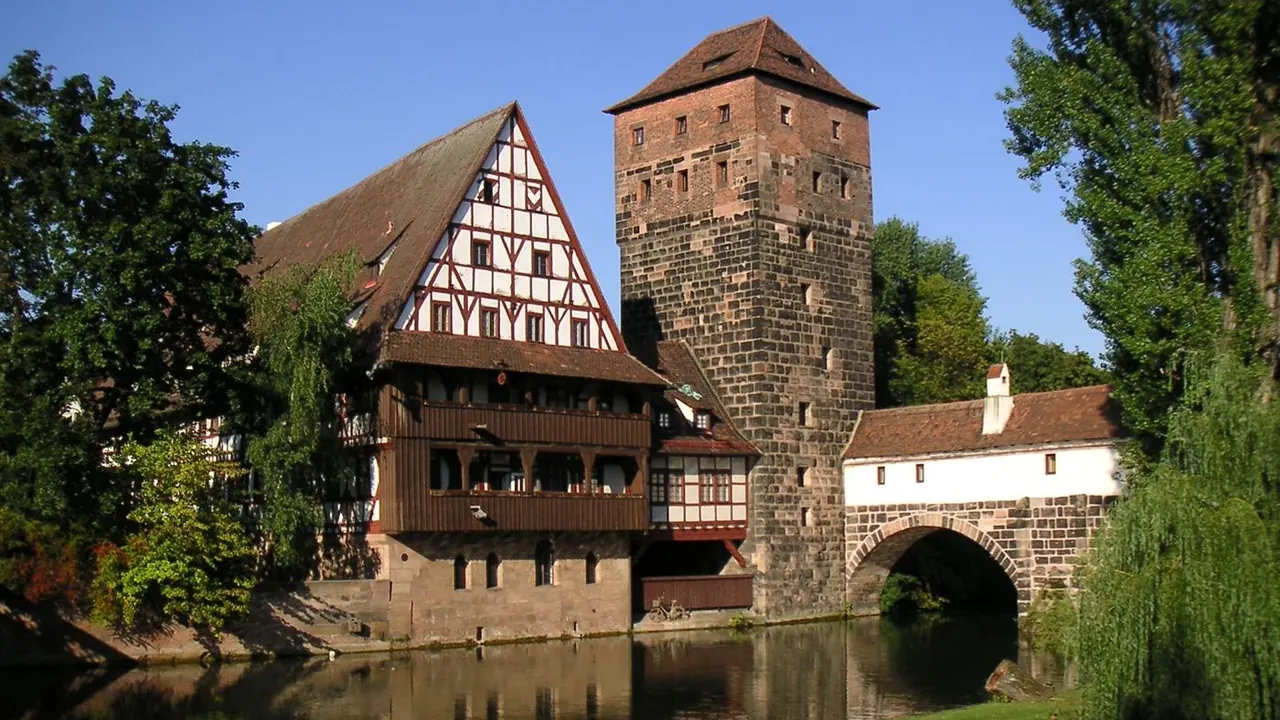
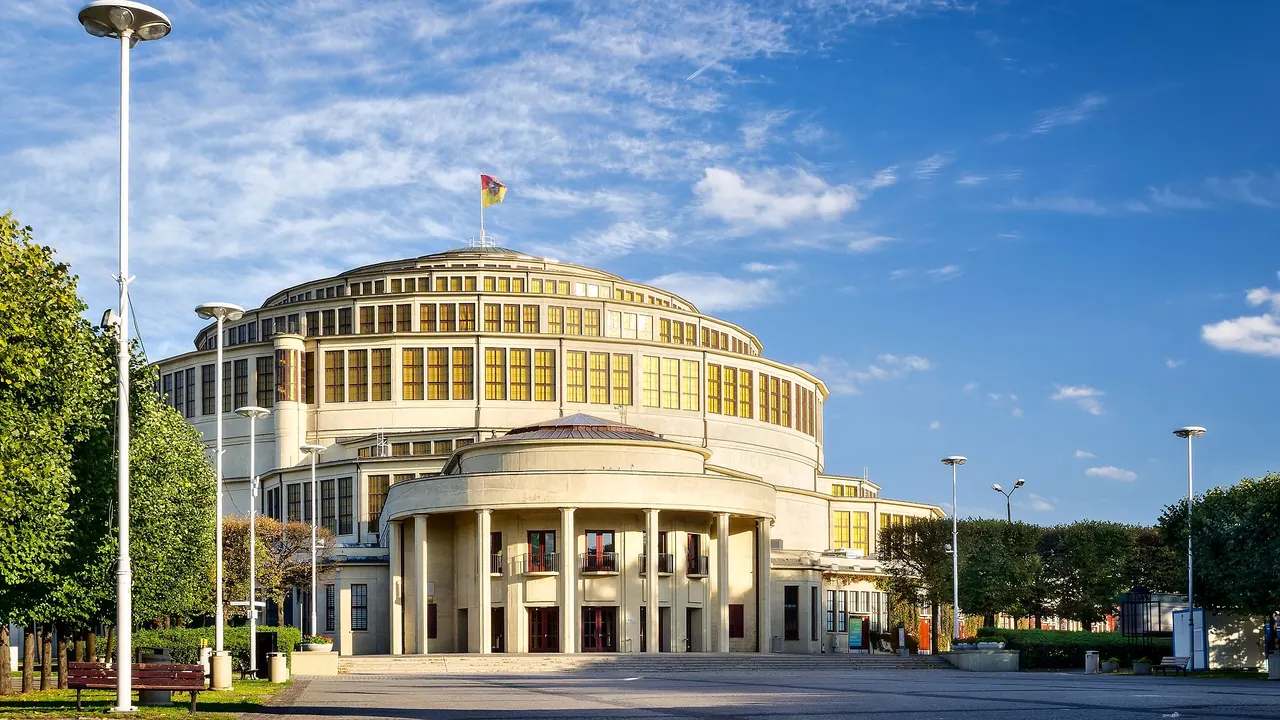
Photos: Nuremberg by Horst Gutmann, CC BY 2.0, cropped; Wroclaw by Jar.ciurus, CC BY-SA 3.0 PL, cropped.
Nuremberg or Wroclaw?
Our verdict in twelve categories, each scored against the same fixed benchmark cities, and the climate month by month, so you can choose for your trip.
Choose Nuremberg for
- day trips
- wellness
- getting around
Nuremberg suits the traveller who likes to base themselves in one compact, well-connected city and branch out. Inside its medieval walls you have the imperial castle, Gothic churches and one of Germany's great museums, and the regional trains reach Bamberg, Regensburg, Würzburg and the Romantic Road towns with no car needed. It also has the better spa options nearby, and the Christmas market season gives it a distinctive winter pull.
Choose Wroclaw for
- prices
- nightlife
- live music and the arts
Wroclaw is the better pick if your money needs to go further and you want lively evenings. Hotels, meals and beer cost noticeably less, the student crowd fills the cellar bars and courtyard passages around the Market Square late into the night, and the concert hall and music festivals give it a stronger arts calendar. Choose it for a sociable, good-value city stay rather than a programme of easy rail excursions.
Scoreboard
Twelve categories on one fixed scale from 0 to 100. The shaded stretch is the gap between the two.
Your match
Pick a travel style or drag the sliders, and both match scores follow your weighting.
Too close to call, 2 points apart
Wins on day trips and wellness with your weighting.
Wins on prices and nightlife with your weighting.
What matters to you?
Category by category
What the scores mean for a trip.
Beaches & swimming
Neither city is a swimming destination, but Nuremberg has the more useful fallback. The Franconian Lake District, about an hour south, has reservoirs such as the Brombachsee with grassy shores, small sandy strips and water warm enough for a summer afternoon.
Wroclaw's sandy spots along the Oder are for deckchairs and a drink rather than swimming, and the Baltic is most of a day away. Here you would swim in outdoor pools or drive out to countryside lakes.
Food & drink
Both cities serve hearty regional cooking built around beer, so the difference is in character. Nuremberg has the more distinctive local identity: beechwood-grilled finger bratwurst on pewter plates, Sunday Schäufele and centuries-old Lebkuchen, washed down with Franconian lagers and smoky Kellerbier in taverns and beer gardens.
Wroclaw answers with pierogi, żurek in a bread bowl and roast duck, cheap canteen lunches in old milk bars and brewpubs in historic cellars. It also has a few modern bistros lightening Polish dishes just off the Market Square, while the terraces on the square itself are best skipped.
Culture & sights
These two are closely matched, and what differs is the kind of history on show. Nuremberg is an imperial city: the Kaiserburg rises above almost unbroken medieval walls, with the churches of St Sebaldus and St Lorenz, Dürer's house and the Germanisches Nationalmuseum below. It also confronts its twentieth century directly, at the vast Nazi Rally Grounds and in the courtroom where the war crimes trials were held.
Wroclaw centres on its huge Market Square and Gothic town hall, the quiet lanes of Ostrów Tumski with their hand-lit gas lamps and the gilded Aula Leopoldina. Further out are the early concrete giant of the Centennial Hall and the vast circular Racławice Panorama. Both old towns were largely rebuilt after the Second World War, so each city carries its wartime past in its streets.
Nightlife
Wroclaw is the better night out. Its large student population fills the cellars and courtyards around the Market Square, and the bar-packed passage off Ruska Street keeps going well past 2am at weekends, with drinking moving to the riverbanks and islands in summer.
Nuremberg's evenings are calmer: taverns and wine bars in the old town, and a more alternative bar scene in Gostenhof west of the walls. Neither city has clubs worth travelling for, and Wroclaw goes noticeably quieter between university terms.
Nature & outdoors
On the outdoors the two are level, though the settings differ. Nuremberg is ringed by pine forest, with the Reichswald at the city edge and Franconian Switzerland's limestone towers, caves and climbing crags about an hour away.
Wroclaw's green space is flatter and watery, with river channels, islands, Szczytnicki Park and its Japanese Garden. It does have the higher ground within longer reach: Ślęża for a half-day hike, and the Karkonosze and Table Mountains about two hours away, with skiing in winter.
Day trips
This is where Nuremberg pulls well ahead. Bamberg, Regensburg and Würzburg are each about an hour by train, Rothenburg and Dinkelsbühl a little further, and even Munich and Bayreuth are easy rail outings, so you can see a string of major historic towns without hiring a car.
Wroclaw's surroundings are rewarding but harder work. Książ Castle, the wooden Churches of Peace and the palaces of the Jelenia Góra valley are fine sights, but they lie spread across the countryside and a car makes combining them far easier.
Good for families
Both cities work well with children, in different ways. Nuremberg plays on its toy-making past with a Toy Museum, a railway museum with full-size locomotives, a play park in nearby Zirndorf and a separate children's Christmas market, though the climb to the castle is steep and cobbled.
Wroclaw's centre is flat and largely car-free, and hunting for the bronze dwarfs keeps younger children busy. Its zoo's Afrykarium with a shark tunnel is the standout, but beyond that and the summer fountain shows the list runs out sooner.
Getting around
Nuremberg is the easier city to handle. Almost everything sits within walls about 1.5km across, the main station is right by the southern gate, and one ticket covers U-Bahn, trams, buses and S-Bahn out to the zoo, the Rally Grounds and Fürth.
Wroclaw's centre is also flat and walkable, with pedestrian streets and good riverside bike lanes. Its trams can be slow in rush hour and the network takes some learning, and many day trips need a car.
Shopping & style
Neither city is a shopping destination, so the interest is in souvenirs. Nuremberg offers Lebkuchen in decorated tins, wooden toys and the craft workshops of the Handwerkerhof, and in Advent the Christkindlesmarkt transforms the Hauptmarkt.
Wroclaw's best buys are Bolesławiec stoneware, Baltic amber and dwarf figurines, with the riverside market hall for food and a few vintage and design shops in Nadodrze. The ceramic-fronted Renoma department store is worth seeing for its architecture.
Affordability
Wroclaw is much cheaper. Central rooms cost a fraction of Western European prices, milk-bar lunches and beer are very cheap, and only the Market Square terraces and big-event weekends push costs up.
Nuremberg is reasonable for Germany, with filling tavern meals and cheap local beer. Its weak point is hotels during the big trade fairs and the Advent season, when rooms become scarce and expensive.
Live music & performing arts
Wroclaw has the edge, chiefly because of music. The National Forum of Music offers a full concert season in a hall known for its acoustics, and festivals such as Wratislavia Cantans and Jazz on the Oder add to it. Its strong theatre tradition is mostly in Polish, though.
Nuremberg's Art Nouveau Staatstheater stages opera, ballet and drama, and its summer brings the free Bardentreffen folk weekend and a big open-air concert in the Luitpoldhain. It is solid regional fare rather than a reason to visit.
Wellness & relaxation
Nuremberg is the more rewarding place to unwind. A big thermal spa with sauna gardens is a short U-Bahn ride away in Fürth, Bad Windsheim's saline floating pools are about an hour west, and German sauna culture is well served, though often nude and mixed.
Wroclaw itself has only hotel spas and an aquapark. To take the waters you would travel to the old spa towns of Lower Silesia, starting with Szczawno-Zdrój about an hour out.
When should you go?
Pick your month. The climate figures are measured averages, not a forecast.
Nuremberg in July
Wroclaw in July
Daytime high, °C
Rainfall in the month, mm
Temperature and rainfall are climate normals, averaged over the years shown. Nuremberg: 1991-2020 normals, Nuernberg (5.5 km from centre). Wroclaw: 1991-2020 (rainfall 1961-1990) normals, Wroclaw Copernicus Airport (10.5 km from centre).
The two cities share almost the same inland Central European climate. Both are cold and grey in winter, with daytime highs around 4°C in December and January, and both warm to about 25°C in July and August, pleasant for streets and beer gardens but rarely too hot. May, June and September are the most comfortable months for long days on foot in either city, and neither has a beach season worth planning around.
The differences lie in rain and light. Wroclaw is sunnier from spring through summer, but its summer is also wetter, with July bringing about 83mm, often in showers and storms. Its winters are a little drier than Nuremberg's. Nuremberg spreads its rain more evenly through the year and gets less sunshine in summer. For outdoor sightseeing, early autumn in either city is a safe bet.
Which traveller are you?
On a trip on a tight budget, Wroclaw is the clear choice. Central hotels and apartments cost far less, milk bars serve filling lunches for very little, and trams, museums and the zoo are cheap. Nuremberg is fairly priced but turns expensive during trade fairs.
For a relaxing and wellness trip, Nuremberg is the better base. The large thermal spa with sauna gardens in Fürth is a short U-Bahn ride away, and Bad Windsheim's saline pools are within an hour. Wroclaw relies on hotel spas and an aquapark, with its historic spa towns further out.
On a food and nightlife trip, Wroclaw has the livelier evenings. Its student crowd keeps the courtyard bars off Ruska Street busy past 2am. Nuremberg's Franconian beer and bratwurst are more distinctive, but its evenings out end earlier and are mostly quiet tavern nights.
Before you go
| Measure | Nuremberg | Wroclaw |
|---|---|---|
| Official language | German | Polish |
| Currency | Euro (EUR) | Zloty (PLN) |
| Sockets | CF230 V, 50 Hz | CE50 Hz |
| Driving side | Right | Right |
| Time zone | UTC+1, UTC+2 in summer | UTC+1, UTC+2 in summer |
| Emergency number | 112 | 112 |
| Elevation | 209 m | 111 m |
| Main airport | Nuremberg Airport (NUE)5 km from centre56 non-stop destinations | Copernicus Wrocław Airport (WRO)11 km from centre84 non-stop destinations |
| Public holidays this year | 12 days | 14 days |
By the numbers
| Measure | Nuremberg | Wroclaw |
|---|---|---|
| City population | 531,159 | 673,531 |
| People per km² | 2,848 | 2,299 |
| Museums within 10 km | 50 | 42 |
| UNESCO World Heritage sites within 50 km | 1 | 2 |
Where else could you go?
Every comparison below shares a destination with this one, so you can follow Nuremberg or Wroclaw somewhere new.
- Munichvs Nuremberg
- Stuttgartvs Nuremberg
- Heidelbergvs Nuremberg
- Frankfurtvs Nuremberg
- Brnovs Wroclaw
- Praguevs Wroclaw