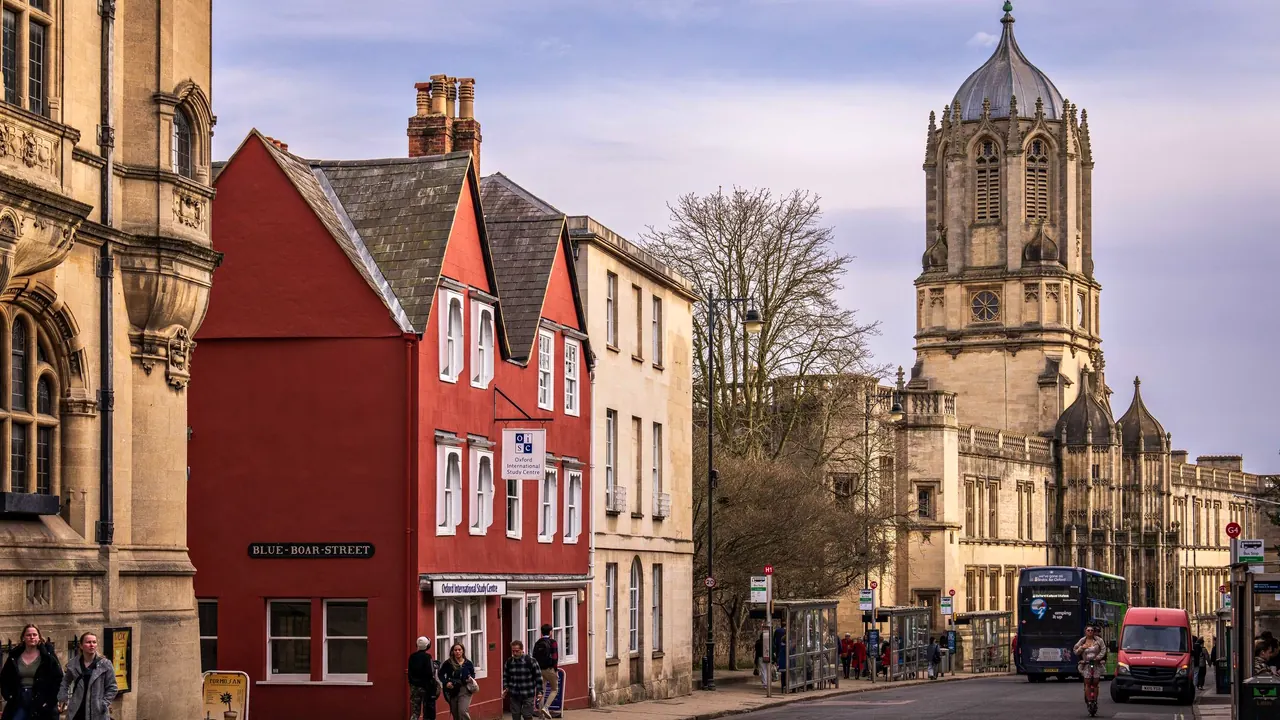
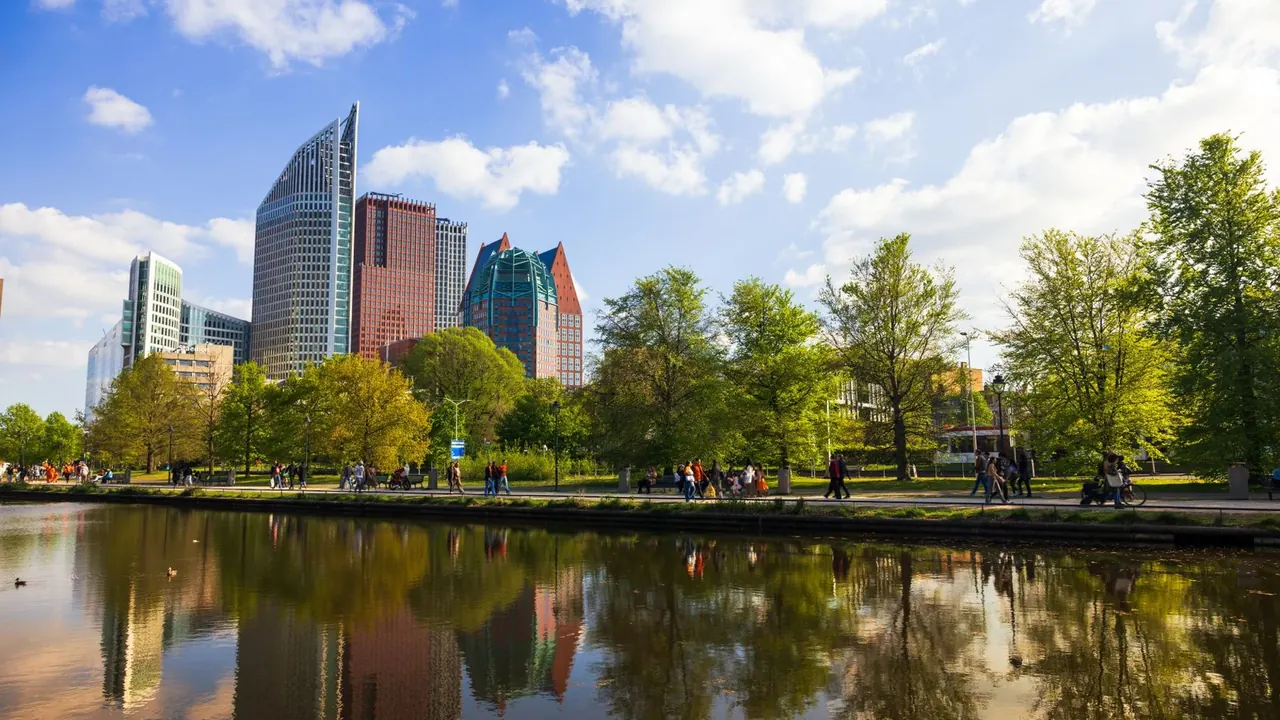
Photos: Oxford by Mark Stebnicki, Pexels License; The Hague by Bráulio jardim, Pexels License.
Oxford or The Hague?
Our verdict in twelve categories, each scored against the same fixed benchmark cities, and the climate month by month, so you can choose for your trip.
Choose Oxford for
- culture and sights
Oxford suits travellers who want the place itself to be the point of the trip. Its few streets of college quadrangles, chapels and libraries, the Ashmolean and the candlelit Evensong services make it ideal for couples, readers and anyone interested in architecture and history. Everything is close together, so it works well on foot over a long weekend, with pub evenings and walks across the meadows in between.
Choose The Hague for
- beaches
- families
- wellness
The Hague is the better choice for a broader, easier-going trip, especially with children. It has a sandy beach at the end of a tram line, Madurodam and the sea aquarium, proper Dutch sauna complexes and some of the best Indonesian cooking in Europe. It also makes a calm base for seeing Delft, Leiden, Rotterdam and Amsterdam by train.
Scoreboard
Twelve categories on one fixed scale from 0 to 100. The shaded stretch is the gap between the two.
Your match
Pick a travel style or drag the sliders, and both match scores follow your weighting.
Wins on culture and sights with your weighting.
Wins on beaches and families with your weighting.
What matters to you?
Category by category
What the scores mean for a trip.
Beaches & swimming
Neither city is a place for a swimming vacation, but only The Hague has a beach. Scheveningen's wide sand, pier and summer pavilions are a short tram ride from the centre, and Kijkduin offers a quieter stretch backed by dunes. The North Sea stays cold and choppy, though, so it suits sunbathing and a quick dip better than long swims.
Oxford is about as far inland as England gets. Summer swimming there means the Thames at Port Meadow, the Cherwell or the open-air pool at Hinksey, with grassy riverbanks instead of sand. Anyone wanting the seaside from Oxford faces a separate journey of more than an hour and a half.
Food & drink
The Hague has a better food scene mainly because of one cuisine. Its long-established Indonesian community means you can eat a full rijsttafel or a simple plate of rendang to a standard rarely found outside Indonesia. Fish from the Scheveningen harbour stalls and raw herring from street carts add a coastal side that Oxford cannot offer.
Oxford's strength is the pub: ale under low beams, a Sunday roast by the river, and lunch from the stalls of the historic Covered Market. Cowley Road and Jericho add variety, but there is nothing here you would travel especially to eat.
Culture & sights
Oxford comes out ahead because the city centre is itself the main sight. The Radcliffe Camera, the Bodleian, the Sheldonian and the Christ Church quad are all a few minutes' walk apart and still in daily use. Around them are three excellent museums, the Ashmolean, the Pitt Rivers and the Natural History Museum.
The Hague's appeal is more concentrated and more formal. The Mauritshuis is a small room-by-room treasure of Vermeer and Rembrandt, the Kunstmuseum holds the world's largest Mondrian collection, and the Binnenhof and Peace Palace explain the city's role in government. These are superb individual visits, but the streets between them are stately rather than memorable.
Nightlife
Both cities offer quiet evenings rather than big nights out. Oxford revolves around historic pubs and riverside beer gardens, with Cowley Road as its only late-night strip, and things get noticeably quieter when the students leave for the summer. The Hague is more about café terraces, from the Plein's after-work crowd to the Grote Markt at weekends. In summer, the Scheveningen beach pavilions offer something Oxford cannot: sundowners on the sand that turn into dancing.
Nature & outdoors
Oxford's outdoors is river country and The Hague's is the coast. Around Oxford, cattle and horses graze on Port Meadow, flat towpaths follow the Thames and the Cherwell into open fields, and a punt is the classic way to spend a summer afternoon. The rolling Cotswolds, the Chiltern beech woods and the Ridgeway lie within an hour for longer walks.
The Hague has no hills at all. In their place it has sand and sea wind: the dunes, woods and ponds of Meijendel, the Westduinpark along the shore, and the old Haagse Bos forest close to the centre. Beach walks work in any season, and cycling the dune path or kitesurfing when the wind is up gives it a brisker, more weather-beaten feel than Oxford's meadows.
Day trips
Both make excellent bases. The difference is how you travel and what you see. From The Hague almost everything is a short train ride: Delft and Leiden in about fifteen minutes, Rotterdam and Gouda soon after, and Amsterdam, Haarlem and Utrecht within the hour. Keukenhof and Kinderdijk add the spring bulb fields and windmills.
From Oxford, London is an easy train ride, but the classic outings are country houses and villages. Blenheim Palace is close by, and Stratford, Warwick, Windsor and Bath are all within reach. The Cotswold villages are much easier to explore with a car or a tour than by public transport.
Good for families
The Hague is clearly the better choice with children. Madurodam's miniature country, a sandy beach with a pier and sea aquarium, the hands-on Museon and the Duinrell amusement and water park nearby give several days of outings. Trams that easily take pushchairs and playgrounds in every park make the logistics simple too.
Oxford is safe and easy to walk around, and the dinosaurs at the Natural History Museum, the curiosities at the Pitt Rivers and a punting afternoon go down well. Christ Church will appeal to Harry Potter fans. After that the city is mainly for adults, and the wildlife park and studio tour both mean a trip out of town.
Getting around
In Oxford walking does nearly everything. The colleges, museums and river are packed into a centre you can cross in about twenty minutes, and buses are mainly for outlying districts such as Headington or Summertown.
The Hague's sights are more spread out. The streets around the Binnenhof are walkable, but the beach, Madurodam and the Peace Palace lie some distance away, so you will ride the trams often. Separate cycle lanes almost everywhere and paths through the dunes also make a bicycle more useful here than in Oxford.
Shopping & style
Neither is a major shopping destination, and each has its own particular strengths. Oxford's are bookish and traditional: Blackwell's vast basement, the Covered Market's small traders, antique maps and prints, and college-branded clothing. The Bicester outlet village nearby adds designer labels at reduced prices.
The Hague is more about interiors and antiques along the Denneweg and Noordeinde, a covered stroll through the nineteenth-century Passage, and the Haagse Markt, a large multicultural open-air market that has nothing comparable in Oxford.
Affordability
Both are expensive, and the main cost in each is the room. Oxford's small supply of central hotels and its busy calendar of ceremonies keep prices high, and many visitors stay out by the ring road or come for the day. Free museums and pub meals help once you are there, but college entry fees add up.
The Hague is a little easier on the budget. Central rooms are cheaper at weekends once the government and business travellers have left. Indonesian and Surinamese eateries serve filling food cheaply, and the market and trams keep other costs down.
Live music & performing arts
Each city has one outstanding live experience, and they could hardly be more different. Oxford's is choral: Evensong by the Christ Church, Magdalen and New College choirs, which you can attend for free, plus concerts at the Sheldonian and the historic Holywell Music Room. The Hague's is contemporary dance from Nederlands Dans Theater on its home stage, supported by the Residentie Orkest and the conservatory's early-music concerts.
Theatre is easier for English speakers in Oxford, with touring drama and summer productions in college gardens. Much of The Hague's stage work is in Dutch.
Wellness & relaxation
The Hague offers much more for a restorative break. Its large Dutch sauna complexes, with steam rooms, cold plunges, gardens and massage, are designed for a full day, though nudity is the norm. The calm city of embassies and quiet streets adds to the effect.
Oxford has no bathing tradition and only a few spas. Its version of unwinding is an early-morning walk through the Botanic Garden, Magdalen's deer park and Addison's Walk, or a slow afternoon on a punt.
When should you go?
Pick your month. The climate figures are measured averages, not a forecast.
Oxford in July
The Hague in July
Daytime high, °C
Rainfall in the month, mm
Where the figures come from
Oxford's temperatures are measured 37 km from the centre, at Fairford Royal Air Force Base.
Oxford has no rain gauge within 25 km of the centre, so its rainfall comes from a gridded climate dataset read at the city rather than from a gauge further away.
Oxford's sunshine is measured 57 km from the centre, at Lyneham.
The Hague has no rain gauge within 25 km of the centre, so its rainfall comes from a gridded climate dataset read at the city rather than from a gauge further away.
The Hague's sunshine is measured 60 km from the centre, at De Bilt.
Temperature and rainfall are climate normals, averaged over the years shown. Oxford: 1961-1990 (sunshine 1991-2020, rainfall 1991-2020) normals, Fairford Royal Air Force Base (37 km from centre). The Hague: 1991-2020 normals, Valkenburg (13.6 km from centre).
Oxford is at its best from late May to early September, when the days are long and July reaches around 22°C. That is warm enough for punting and riverside pubs and rarely too hot for walking between colleges. Spring there is fairly dry. Autumn is noticeably wetter, with October and November bringing about half as much rain again as March and April, though still far less than the Dutch coast gets. From November to February the days are short and dim, so a winter visit is better spent in museums, chapels and the Bodleian than out on the meadows.
The Hague follows a similar curve but is about a degree warmer in midwinter. Its rain builds steadily after midsummer, reaching about 104mm in October, so coastal walks in autumn are often wet and windy. April and May are its driest months and May its sunniest, with June and July almost as bright, which makes late spring to midsummer the best window. The North Sea warms slowly and is at its warmest in August, at about 19°C.
Which traveller are you?
For a culture and arts trip, Oxford is the stronger choice. The whole centre is a working medieval university you can walk through. The Ashmolean, the Pitt Rivers and the Bodleian are minutes apart, and Evensong by world-class choirs adds a live experience The Hague cannot match.
On a family trip with children, The Hague wins clearly. Madurodam, the Scheveningen beach and pier, the sea aquarium, Museon and the Duinrell water park nearby fill several days. In Oxford, after the dinosaurs and a punting afternoon, children mostly need outings out of town.
For a relaxing and wellness trip, The Hague offers far more. Its large Dutch sauna complexes are built for spending a whole day, and the quiet, orderly city and long dune beaches help you slow down. Oxford offers peaceful gardens and punts but little in the way of treatments.
Before you go
| Measure | Oxford | The Hague |
|---|---|---|
| Official language | English | Dutch |
| Currency | Pound Sterling (GBP) | Euro (EUR) |
| Sockets | G230 V, 50 Hz | CF230 V, 50 Hz |
| Driving side | Left | Right |
| Time zone | UTC, UTC+1 in summer | UTC+1, UTC+2 in summer |
| Emergency number | 112 or 999 | 112 |
| Elevation | 73 m | 1 m |
| Main airport | London Heathrow Airport (LHR)63 km from centre224 non-stop destinations | Rotterdam The Hague Airport (RTM)16 km from centre53 non-stop destinations |
| Public holidays this year | 8 days | 11 days |
By the numbers
| Measure | Oxford | The Hague |
|---|---|---|
| City population | 147,500 | 548,320 |
| People per km² | 3,235 | 5,589 |
| Museums within 10 km | 11 | 54 |
| UNESCO World Heritage sites within 50 km | 1 | 4 |
| Swim season, months above 21 °C | - | None |
Where else could you go?
Every comparison below shares a destination with this one, so you can follow Oxford or The Hague somewhere new.
- Rotterdamvs The Hague
- Haarlemvs The Hague
- Amsterdamvs The Hague
- Utrechtvs The Hague
- Londonvs Oxford
- Bathvs Oxford