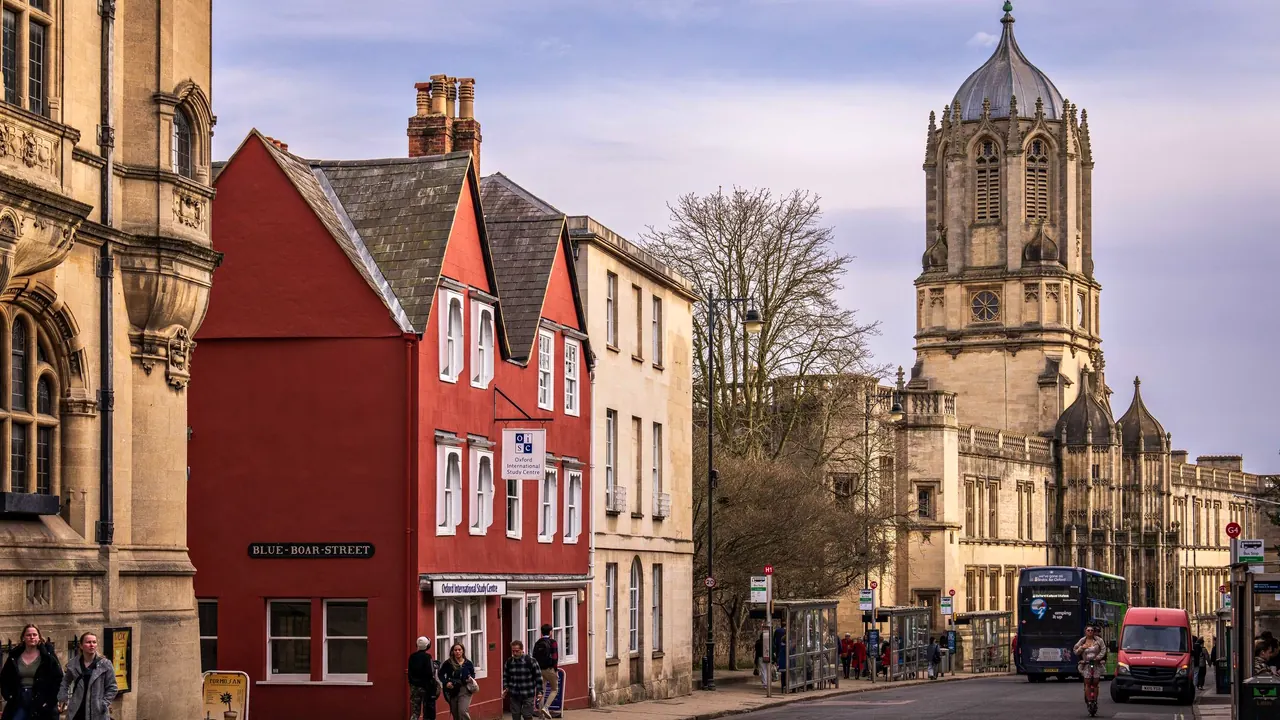
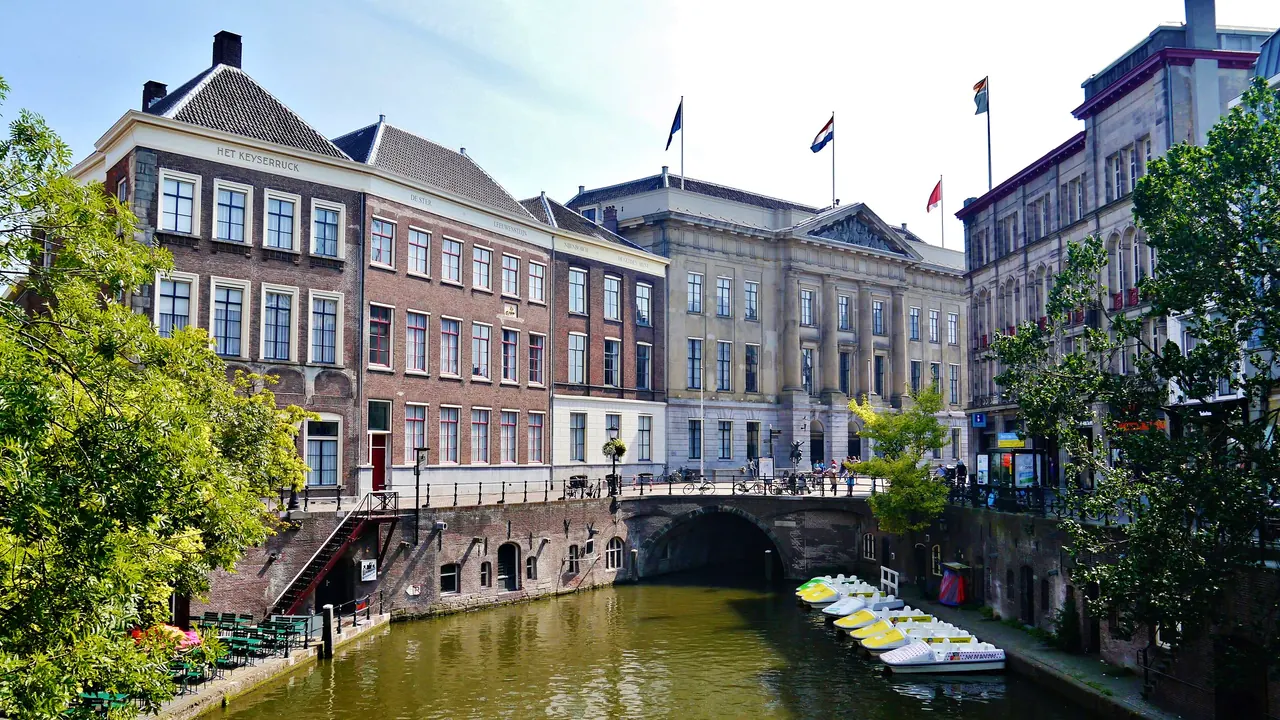
Photos: Oxford by Mark Stebnicki, Pexels License; Utrecht by Zairon, CC BY-SA 4.0, cropped.
Oxford or Utrecht?
Our verdict in twelve categories, each scored against the same fixed benchmark cities, and the climate month by month, so you can choose for your trip.
Choose Oxford for
- culture and sights
- nature and the outdoors
Oxford is the stronger pick for travellers who come for the buildings and the history. Its college quadrangles, chapels and libraries sit within a few minutes of each other, the Ashmolean and Pitt Rivers punch above the city's size, and Evensong in a college chapel gives it an evening experience Utrecht cannot match. It suits a quiet, thoughtful trip of walking, looking and pub dinners, with the Cotswolds and Blenheim close by.
Choose Utrecht for
- families
- nightlife
- getting around
Utrecht makes more sense for families and for anyone who wants an easy, livelier base. Trains from the station on the edge of the old town reach most of the Netherlands quickly. The Railway Museum and Miffy keep children happy, and the student crowd fills the canal-side terraces on weeknights as well as weekends. Getting around by bike or on foot is simpler still than in Oxford, and evenings by the water on the Oudegracht wharves have a pull of their own.
Scoreboard
Twelve categories on one fixed scale from 0 to 100. The shaded stretch is the gap between the two.
Your match
Pick a travel style or drag the sliders, and both match scores follow your weighting.
Wins on culture and sights and nature and the outdoors with your weighting.
Wins on families and nightlife with your weighting.
What matters to you?
Category by category
What the scores mean for a trip.
Beaches & swimming
Neither city is a beach destination, and both are equally poor choices for one. Oxford's swimming is river water at Port Meadow and the Cherwell, or the open-air pool at Hinksey, with the coast well over an hour and a half away.
Utrecht has more choice on a hot day, with recreation lakes such as the Maarsseveense Plassen on the city's edge and real North Sea sand at Zandvoort or Scheveningen, about an hour or more away by train. It is still a cold, short-season sea.
Food & drink
Eating is about equally good in both, and in neither will it be the highlight of the trip. Oxford's meals revolve around the pub: ale, a Sunday roast by the Thames, the old Covered Market, and cheaper international cooking on Cowley Road.
Utrecht's draw is the setting more than the plate, with terraces down at water level on the Oudegracht wharves. Its student kitchens lean towards Indonesian and Surinamese food, and the Vredenburg market supplies cheese, herring and stroopwafels.
Culture & sights
Oxford has the richer sightseeing. Its working colleges, Christ Church's hall and cathedral, the Bodleian with its Divinity School and the Sheldonian are packed into a few honey-stone streets. The Ashmolean, the Pitt Rivers and the Natural History Museum add more than Utrecht's museums do.
Utrecht's old centre is well preserved and has its own distinctive sights: the freestanding Dom Tower to climb, the two-level Oudegracht, and the Rietveld Schröder House for lovers of modern design. Its museums are good but on a smaller scale.
Nightlife
Utrecht is the livelier of the two after dark. Students keep the bars and terraces around the Neude, the Janskerkhof and the canal busy on weeknights too, and there are a few clubs, with Amsterdam a short train ride away for a bigger night.
Oxford's evenings are calmer and depend more on the university term. They centre on old taverns and riverside pubs, with Cowley Road as the one late strip. It suits a drink after dinner more than a night out.
Nature & outdoors
The countryside is about equally pleasant around both cities, gentle and green, but you explore it in different ways. Around Oxford you walk: across Port Meadow, along the Thames Path, and further out on the Cotswold footpaths, in the Chiltern beech woods and on the Ridgeway, with punting as the local pastime.
Around Utrecht you cycle, along the Vecht past estates and windmills and into the polders. The Utrechtse Heuvelrug offers heath and forest trails, and the Loosdrecht lakes are good for sailing.
Day trips
Both are excellent bases, and the difference lies in how you travel. Utrecht's position at the centre of the Dutch rail network means Amsterdam, Rotterdam, The Hague, Delft and Gouda are all simple train rides, with no car needed.
From Oxford, London is about an hour by train and Blenheim Palace is close, but the Cotswold villages, Stratford and Bath are easier with a car or a tour.
Good for families
Utrecht is the easier city with children. The national Railway Museum, set in an old station, and the Miffy museum for toddlers are made for them, and Kasteel de Haar gives a fairy-tale day out. The main thing to watch is the bike traffic.
Oxford manages well for a day or two, with free dinosaur skeletons, the Pitt Rivers' curiosities, punting and Harry Potter settings at Christ Church. After that, much of what it has to offer is aimed at adults, and the bigger outings mean leaving town.
Getting around
Utrecht is the simpler of the two. The busiest station in the country sits right at the edge of the old town, and buses, trams and trains all take the same tap-in card. Hiring a bike is as natural as walking.
Oxford is nearly as easy on foot. Its small, flat centre takes about twenty minutes to cross, and several streets are closed to traffic. Buses serve the suburbs, but drivers face scarce parking and are better off using the park-and-ride.
Shopping & style
There is little to choose between them, and both are best away from the chain stores. Oxford's character is in the Covered Market, Jericho, antique map and print dealers, Blackwell's vast book room and university clothing. Shoppers after luxury labels go to the Bicester outlet village nearby.
Utrecht's independent fashion and design shops line the canal wharves and streets such as the Twijnstraat. It adds flower, textile and general markets but has little luxury.
Affordability
Neither is cheap, and in both the cost of a bed is the main expense, because hotels in the historic centre are few. Oxford's prices rise further around graduations and conferences, and many visitors stay out by the ring road or come for the day from London. Once there, its free museums help, although college entry fees add up.
Utrecht is a shade easier on the budget once you have a room. Local transport costs almost nothing in so compact a centre, and student lunch cafés and snack bars are plentiful. Its café terraces and sit-down dinners, though, charge normal Dutch prices.
Live music & performing arts
The two are evenly matched but offer different kinds of performance. Oxford's great draw is choral: Evensong sung by the choirs of Christ Church, Magdalen and New College, plus concerts at the Sheldonian and the historic Holywell Music Room. Its theatre is mainly touring shows.
Utrecht's strength is range under one roof at TivoliVredenburg, from the Radio Philharmonic to pop and jazz. Its festival calendar, with the Festival Oude Muziek at its head, is stronger, but its theatre is mostly in Dutch.
Wellness & relaxation
Utrecht offers a little more for a restful break, mainly because of the Dutch sauna complexes in the green belt around the city, with steam rooms, outdoor pools and quiet rooms. Calm evenings on the wharves and the Pandhof cloister garden add to that.
Oxford has hardly any spas, so relaxing there means quiet places instead: the Botanic Garden, walled college gardens, Addison's Walk past Magdalen's deer park, or a slow afternoon on a punt.
When should you go?
Pick your month. The climate figures are measured averages, not a forecast.
Oxford in July
Utrecht in July
Daytime high, °C
Rainfall in the month, mm
Where the figures come from
Oxford's temperatures are measured 37 km from the centre, at Fairford Royal Air Force Base.
Oxford has no rain gauge within 25 km of the centre, so its rainfall comes from a gridded climate dataset read at the city rather than from a gauge further away.
Oxford's sunshine is measured 57 km from the centre, at Lyneham.
Temperature and rainfall are climate normals, averaged over the years shown. Oxford: 1961-1990 (sunshine 1991-2020, rainfall 1991-2020) normals, Fairford Royal Air Force Base (37 km from centre). Utrecht: 1991-2020 normals, De Bilt (4.3 km from centre).
Both cities are at their best from late May to September, and neither is ever too hot for walking. Oxford peaks at about 22°C in July, while Utrecht runs a degree or so warmer and holds its warmth through August. Both get similar long, fairly sunny days in early summer, and from November to February both are cold, grey and short on daylight, which suits museums and pubs more than strolling.
The clearest difference is the rain. Oxford stays fairly dry through the year, with its wetter months in autumn. Utrecht is wetter in midsummer, with about 85mm in July, so expect showers between the sunny spells. The North Sea within reach of Utrecht only reaches about 19°C in August, so a beach day there is bracing rather than warm.
Which traveller are you?
On a culture and arts trip, Oxford is the better choice. Its medieval colleges, the Bodleian and Radcliffe Camera, and museums such as the Ashmolean give more depth than Utrecht's Dom Tower and smaller collections, and choral Evensong adds a memorable evening.
On a family trip with children, Utrecht wins. The Railway Museum and the Miffy museum are built for young visitors, Dutch life takes children everywhere, and the flat, compact centre is easy to manage, though small children need watching around the constant stream of bikes.
For a food and nightlife trip, Utrecht has the edge. Meals are similar in quality in both, but Utrecht's student bars and brown cafés around the Neude and the Oudegracht stay busy all week, whereas Oxford is mostly a pub town that goes quiet by midnight.
Before you go
| Measure | Oxford | Utrecht |
|---|---|---|
| Official language | English | Dutch |
| Currency | Pound Sterling (GBP) | Euro (EUR) |
| Sockets | G230 V, 50 Hz | CF230 V, 50 Hz |
| Driving side | Left | Right |
| Time zone | UTC, UTC+1 in summer | UTC+1, UTC+2 in summer |
| Emergency number | 112 or 999 | 112 |
| Elevation | 73 m | 5 m |
| Main airport | London Heathrow Airport (LHR)63 km from centre224 non-stop destinations | Amsterdam Airport Schiphol (AMS)34 km from centre287 non-stop destinations |
| Public holidays this year | 8 days | 11 days |
By the numbers
| Measure | Oxford | Utrecht |
|---|---|---|
| City population | 147,500 | 359,370 |
| People per km² | 3,235 | 3,619 |
| Museums within 10 km | 11 | 28 |
| UNESCO World Heritage sites within 50 km | 1 | 5 |
| Swim season, months above 21 °C | - | None |
Where else could you go?
Every comparison below shares a destination with this one, so you can follow Oxford or Utrecht somewhere new.
- Amsterdamvs Utrecht
- Haarlemvs Utrecht
- Rotterdamvs Utrecht
- The Haguevs Utrecht
- Londonvs Oxford
- Bathvs Oxford