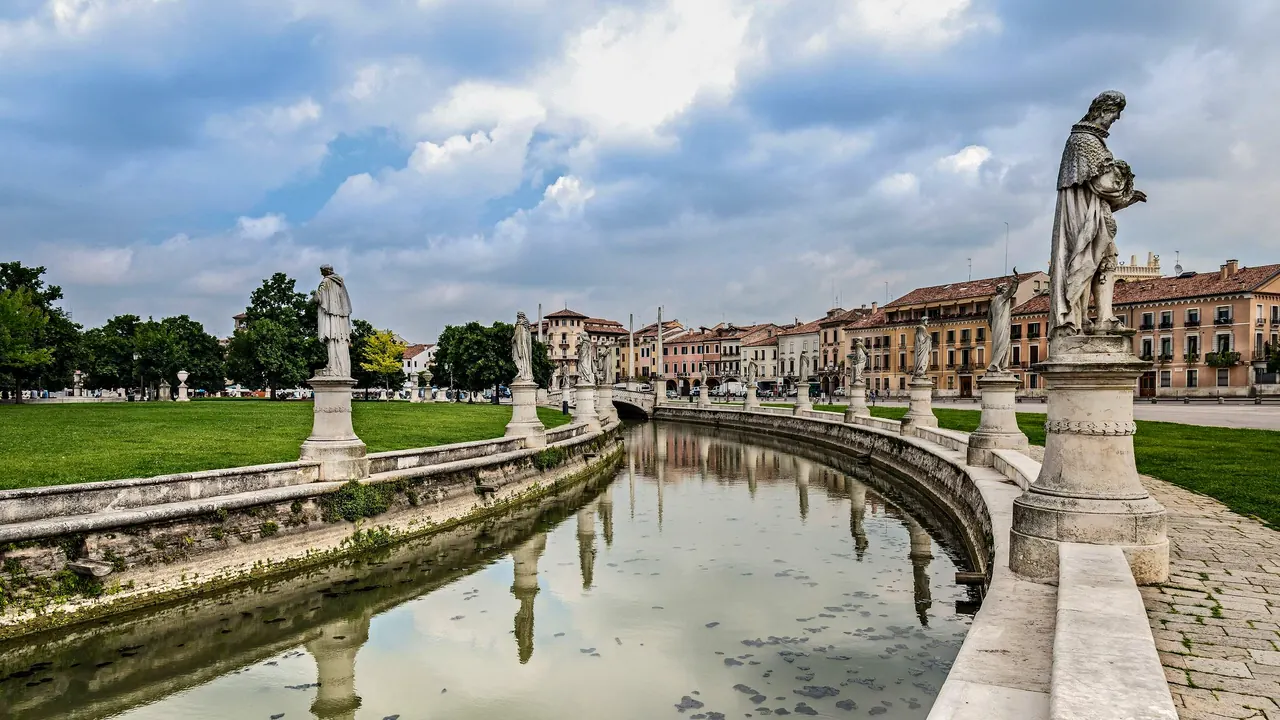
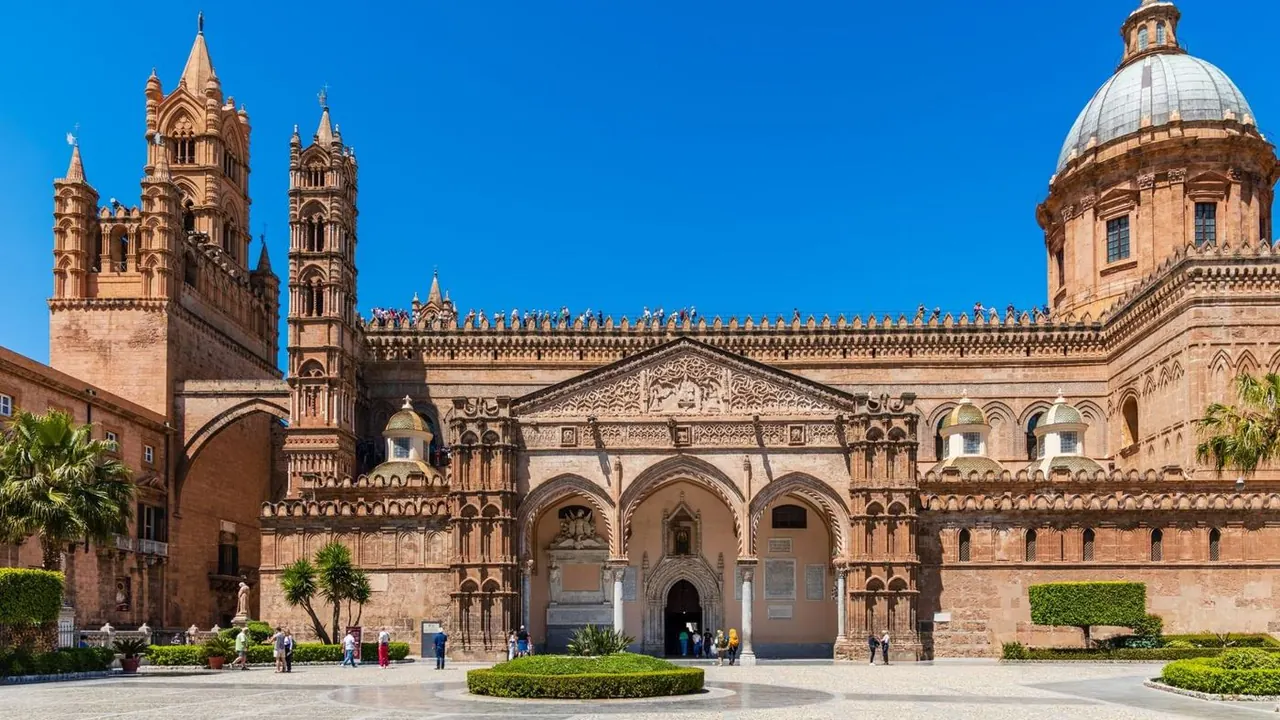
Photos: Padua by Didier Descouens, CC BY-SA 4.0, cropped; Palermo by Antonino Giangrasso, Pexels License.
Padua or Palermo?
Our verdict in twelve categories, each scored against the same fixed benchmark cities, and the climate month by month, so you can choose for your trip.
Choose Padua for
- wellness
- getting around
- day trips
Padua suits travellers who want a calm, well-run base and plan to see a lot of northern Italy without a car. Venice, Vicenza and Verona are short train rides away, Giotto's chapel is a walk from the station, and the thermal pools of Abano are close enough for an evening soak. It works best for an unhurried trip built around frescoes, excursions and spa water rather than the sea.
Choose Palermo for
- beaches
- live music and the arts
- food and drink
Palermo is the pick for heat, swimming and eating. Mondello's sand is half an hour from the centre, the markets cook all day, the Arab-Norman mosaics and the Teatro Massimo give it more depth and range, and it costs less day to day. In return you get noise, crumbling lanes and slow buses, and a hire car is often the easiest way to reach the sites further out.
Scoreboard
Twelve categories on one fixed scale from 0 to 100. The shaded stretch is the gap between the two.
Your match
Pick a travel style or drag the sliders, and both match scores follow your weighting.
Wins on wellness and getting around with your weighting.
Wins on beaches and live music and the arts with your weighting.
What matters to you?
Category by category
What the scores mean for a trip.
Beaches & swimming
This is where the two differ most. Padua is inland, and its nearest sand at Sottomarina or the Venice Lido is about an hour away. Those beaches are long, flat strips of umbrellas, fine for paddling children but not a reason to choose the city.
Palermo has Mondello's pale, turquoise bay within half an hour, rocky ladders into deep water along the coast to Sferracavallo, and Cefalù's beach an hour away by train. You still have to travel out from the centre to swim, but a morning swim before an afternoon of sightseeing is easy.
Food & drink
Both cities have markets at their heart, but they work differently. Padua's Piazza delle Erbe and Piazza della Frutta are where people buy produce, cheese and cured meat. Eating in Padua means Venetian home cooking such as bigoli and baccalà, and its best moment is the evening spritz with small bites in the square.
Palermo has more to explore and more to eat in the street. Ballarò, the Capo and the Vucciria fry panelle and arancine all day, the Arab-influenced sweet-and-sour dishes have no equivalent up north, and cannoli and brioche with granita make sweets a reason to come in their own right.
Culture & sights
Both are serious sightseeing cities, and Palermo has a little more depth. Padua's strength is concentrated: Giotto's Scrovegni frescoes, the fourteenth-century fresco cycles around them, the Basilica of Saint Anthony with Donatello's bronzes, and the anatomical theatre at Palazzo Bo. A couple of focused days covers it.
Palermo has more layers to work through. There are the golden Arab-Norman mosaics of the Palatine Chapel and La Martorana, Serpotta's baroque stucco oratories, and museums holding the Selinunte metopes and Antonello's Annunciata. Its crumbling streets are less tidy than Padua's well-kept centre.
Nightlife
Both cities spend their evenings outdoors with a drink in hand rather than in clubs, but Palermo goes on far longer. Padua's evening is the student aperitivo in the squares around the Palazzo della Ragione, and it is liveliest on weekday evenings in term. In high summer, when the university breaks, the city goes quiet.
In Palermo, summer is when things get going. The Vucciria turns into an open-air bar with grills and music, the Kalsa fills after a late dinner, and the dancing moves out to the beach venues around Mondello.
Nature & outdoors
Palermo has the more dramatic setting. Monte Pellegrino rises straight above the streets, Capo Gallo has cliff paths and snorkelling, and the Zingaro coast and the Madonie peaks are within a drive, though most of them need a car.
Padua's outdoors is gentler and flatter. The Euganean Hills, about 15km away, have vineyard trails and quiet roads for cyclists, and the Brenta towpaths make easy, level bike rides. Real mountain walking means driving to the pre-Alps.
Day trips
Both are excellent bases, but Padua is easier to use without planning. Venice, Vicenza, Verona and Bologna are all on fast rail lines, so you can visit a different city each day without a car. Closer in are the Brenta villas and the walled towns around the Euganean Hills.
Palermo's excursions are grand, from Monreale's mosaics to Segesta's lone temple and Agrigento's Valley of the Temples. The distances are longer, though, and the ancient sites are much easier to reach by car than by train.
Good for families
Neither city is built around children, and both rely on warm local welcomes and short trips out. Padua is easier day to day, with a flat, safe, largely pedestrian centre and Prato della Valle for running about. Gardaland and Lake Garda are reachable for a day.
Palermo is harder going on foot, with scooters in narrow lanes and uneven stone for pushchairs. It has Mondello's shallow sand close by, though, and puppet shows of knights and Saracens that Padua cannot match.
Getting around
Padua is the easier city to get around. Its flat centre puts every major sight within a 20-minute walk under arcades, a tram runs from the station to Prato della Valle, and bicycles are normal transport.
Palermo's main axis between the Norman Palace and the sea is walkable too, but the side lanes often have no pavements. Buses crawl through traffic, and driving is stressful. Its rail links reach Cefalù and Bagheria but not Segesta or Erice.
Shopping & style
Neither is a shopping destination, and each sends serious fashion buyers elsewhere. What you take home differs. Padua is good for food and wine from its market delicatessens, university bookshops, and the monthly antiques market that fills Prato della Valle.
Palermo is better for crafts: painted ceramics and moor's-head vases, marionettes from the puppet workshops, and coral and filigree jewellery. You can also bring back pistachio pesto and capers from the markets.
Affordability
Palermo goes further on the same budget. A meal can be several cheap stops in the markets, and trattorie and centre guesthouses cost less than in the north. July and August at the seaside, and a hire car for the ancient sites, are where the savings go.
Padua is moderately priced, and it is mainly cheap compared with Venice, which is why people sleep there and visit Venice by day. Rail travel and a walkable centre also keep transport costs low.
Live music & performing arts
Palermo has the stronger stage. The Teatro Massimo runs a full season of opera and ballet with tickets that are easy to get, the Politeama has the Sicilian symphony orchestra, and the Opera dei Pupi puppet theatre is a tradition worth seeing in its own right.
Padua's programme is smaller: prose theatre at Teatro Verdi and chamber concerts in the frescoed Sala dei Giganti. Its advantage is that the Fenice in Venice and Verona's summer Arena are both an easy train ride away.
Wellness & relaxation
Padua is far ahead for a restful stay. Abano and Montegrotto, about 12km away, are one of Europe's largest thermal districts, with hot mineral pools that many spa hotels open to day visitors. A soak after a morning of sightseeing is easy.
Palermo has no bathing culture of its own. Spa time there means hotel spas or a train out to Termini Imerese. Its quieter moments are the evening walk along the Foro Italico and its cloisters, but the city's noise means real rest usually needs a base outside it.
When should you go?
Pick your month. The climate figures are measured averages, not a forecast.
Padua in July
Palermo in July
Daytime high, °C
Rainfall in the month, mm
Where the figures come from
Padua's temperatures are measured 35 km from the centre, at Treviso / Istrana.
Padua has no rain gauge within 25 km of the centre, so its rainfall comes from a gridded climate dataset read at the city rather than from a gauge further away.
Padua's sunshine is measured 36 km from the centre, at Treviso / S. Angelo.
Palermo's sunshine is measured 67 km from the centre, at Ustica.
Temperature and rainfall are climate normals, averaged over the years shown. Padua: 1991-2020 normals, Treviso / Istrana (35.4 km from centre). Palermo: 1991-2020 normals, Palermo / Punta Raisi (24.1 km from centre).
Padua has a true northern climate. Winters are cold and often foggy on the plain, with January highs of about 8°C, and July and August reach 31°C with heavy humidity, which makes long afternoons on foot tiring. Rain is spread through the year and is heaviest in late autumn. That leaves May, June and September as the best months for walking the centre. The nearby Adriatic is only warm enough for swimming from late June to early September.
Palermo is milder and sunnier all year. Winter days stay around 15°C, though November to January are its wettest months, with December the wettest at 138mm. Summer is close to dry, with only 6mm in July, and much sunnier than Padua. The sea is warm enough for swimming from June well into October. Spring and autumn are the most comfortable seasons for sightseeing, and the long, warm autumn gives Palermo extra weeks of good weather that Padua lacks.
Which traveller are you?
On a beach and sun trip, Palermo is the clear choice. Mondello's clear, shallow bay is a short bus ride from the centre, there are rocky swimming spots towards Capo Gallo, and the sea stays warm well into autumn. From Padua the coast is a day out.
For a relaxing and wellness trip, Padua is the better fit. The thermal pools and mud treatments of Abano and Montegrotto are a short ride from the centre, and the arcades and botanical garden suit a slow pace. Palermo is too noisy and has no bathing tradition.
On a food and nightlife trip, Palermo gives more: fried snacks in Ballarò, late drinks in the Vucciria and summer dancing at Mondello's beach venues. Padua's spritz in the squares is sociable but smaller, and the city goes quiet in the summer break.
Before you go
| Measure | Padua | Palermo |
|---|---|---|
| Official language | Italian | Italian |
| Currency | Euro (EUR) | Euro (EUR) |
| Sockets | CFL230 V, 50 Hz | CFL230 V, 50 Hz |
| Driving side | Right | Right |
| Time zone | UTC+1, UTC+2 in summer | UTC+1, UTC+2 in summer |
| Emergency number | 112 | 112 |
| Elevation | 12 m | 14 m |
| Main airport | Venice Marco Polo Airport (VCE)39 km from centre103 non-stop destinations | Falcone–Borsellino Airport (PMO)25 km from centre106 non-stop destinations |
| Public holidays this year | 13 days | 13 days |
By the numbers
| Measure | Padua | Palermo |
|---|---|---|
| City population | 206,496 | 630,167 |
| People per km² | 2,220 | 3,924 |
| Museums within 10 km | 29 | 42 |
| UNESCO World Heritage sites within 50 km | 5 | 1 |
| Swim season, months above 21 °C | 4 months | 5 months |
Where else could you go?
Every comparison below shares a destination with this one, so you can follow Padua or Palermo somewhere new.