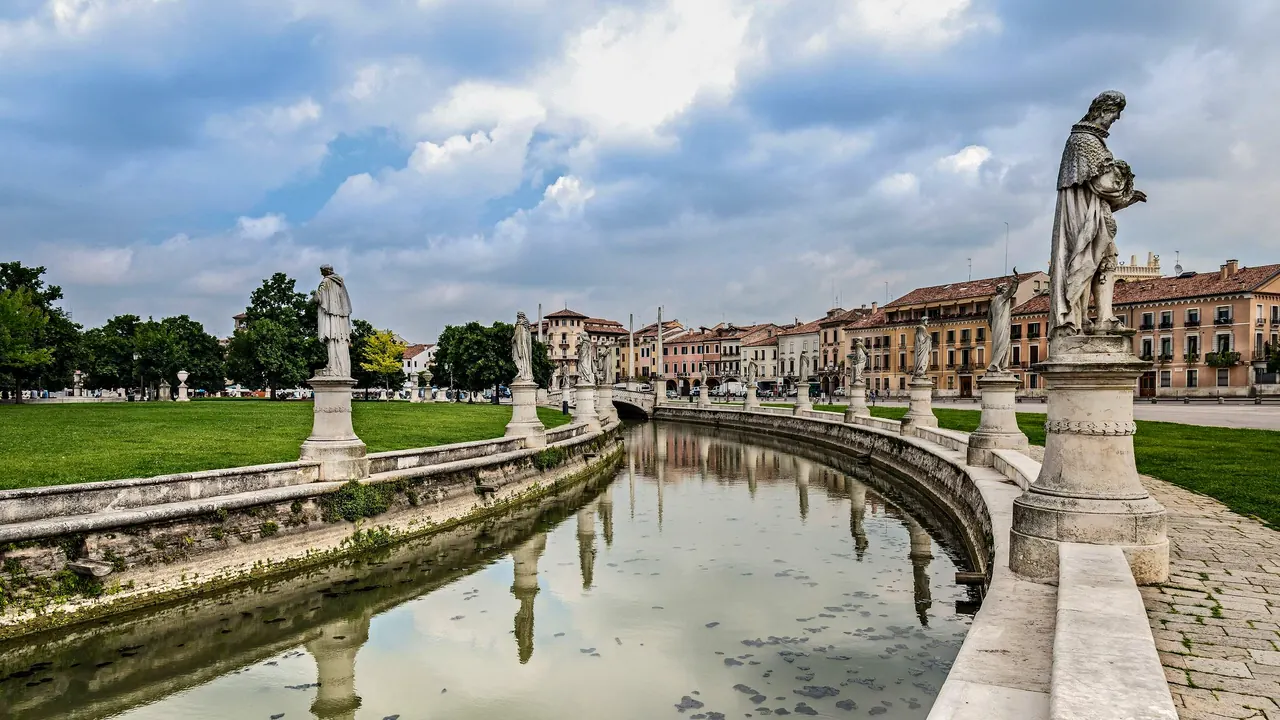
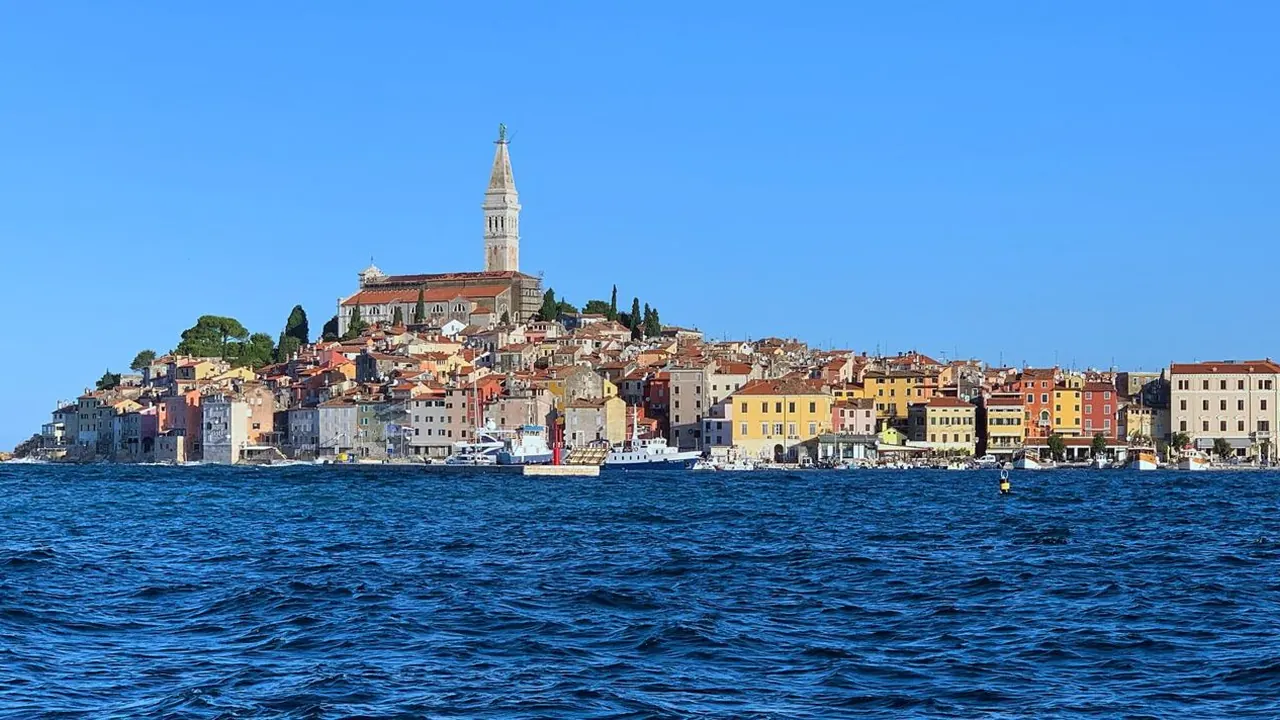
Photos: Padua by Didier Descouens, CC BY-SA 4.0, cropped; Rovinj by Vyacheslav Bukharov, CC BY-SA 4.0, cropped.
Padua or Rovinj?
Our verdict in twelve categories, each scored against the same fixed benchmark cities, and the climate month by month, so you can choose for your trip.
Choose Padua for
- culture and sights
- day trips
- wellness
Padua suits the traveller who wants art, history and a lot of ground covered. Giotto's frescoes in the Scrovegni Chapel and the Basilica of Saint Anthony fill the first days. After that the station takes over, with Venice, Vicenza, Verona and Bologna all close enough by train to see in a day and be back for dinner. The thermal pools of Abano are a short ride away, and rooms and meals cost less than on the coast.
Choose Rovinj for
- beaches
- families
- nature and the outdoors
Rovinj is the better choice for a slow week by the sea. You swim off the rocks below the old town, walk in the pines of the Golden Cape and take taxi boats out to the islands. In the evenings there is grilled fish, Istrian truffles and Malvazija. With a car, the Roman arena at Pula and the hill towns of the interior are within reach. Its resorts also suit families better.
Scoreboard
Twelve categories on one fixed scale from 0 to 100. The shaded stretch is the gap between the two.
Your match
Pick a travel style or drag the sliders, and both match scores follow your weighting.
Wins on culture and sights and day trips with your weighting.
Wins on beaches and families with your weighting.
What matters to you?
Category by category
What the scores mean for a trip.
Beaches & swimming
Rovinj is far ahead for swimming, though there is no sand. The water is very clear, and the shore south of the harbour runs for kilometres of rock ledges, pebble coves and bathing platforms into the Golden Cape park. You can swim right below the old town walls. Taxi boats run to quieter coves on the islands. Pack water shoes.
From Padua the sea is a day out. Sottomarina and the Lido of Venice are each about an hour away. Both have long, flat beaches lined with umbrellas, and the shallow, calm water suits small children better than Rovinj's rocks do.
Food & drink
Padua is the better place to eat, mainly because its food is part of everyday life. The morning markets in Piazza delle Erbe and Piazza della Frutta and the delicatessens under the Palazzo della Ragione supply Venetian home cooking such as bigoli with duck sauce and baccalà. The early-evening spritz in the squares and coffee at the historic Caffè Pedrocchi are rituals worth joining.
Rovinj is strongest on seafood and on what the Istrian hinterland produces, including scampi buzara, truffle pasta, peppery olive oil and Teran wine. The countryside konobas are worth the drive. In town, though, many menus are written for visitors, and there is little cheap everyday food.
Culture & sights
The gap is wide. Padua has some of the most important painting in Europe in Giotto's Scrovegni Chapel, and several more fourteenth-century fresco cycles around the city. It also has a major pilgrimage basilica with bronzes by Donatello, and the university gives it an anatomical theatre and a botanical garden that go back to the Renaissance.
In Rovinj the old town is the main sight. Pastel Venetian houses climb to St Euphemia, whose bell tower you can climb, and the Batana House tells the story of the local fishing boats. It is very photogenic and can be seen in an afternoon.
Nightlife
Neither place is for a big night out, but Padua has more going on. Students and locals gather over spritz in the squares around the Palazzo della Ragione, and wine bars around the old ghetto stay lively on weekday evenings during term. The city goes quiet in high summer and during the university breaks.
Rovinj works the other way round. Its evenings are busiest in July and August, with a long dinner, cocktails on the waterfront and a drink on the rocks at sunset. The old town is mostly quiet by midnight, and outside summer there is very little going on.
Nature & outdoors
There is little to choose between them, but the outdoors is different in each. Padua's is mostly on land. The volcanic Euganean Hills, about 15km away, have vineyards, chestnut woods and roads popular with road cyclists, there are level towpaths along the Brenta, and Monte Grappa and the Asiago plateau offer proper mountain walking.
In Rovinj the outdoors is on the water. The Golden Cape forest starts at the edge of town, and the islands of the archipelago are good for kayaking and diving around reefs and wrecks. Boats also go up the steep green Lim Fjord to the oyster farms.
Day trips
Padua is one of the best bases in Italy for day trips, and you can do them without a car. Venice is under half an hour away by train, so you can go back on several days. Vicenza's Palladian buildings, Verona and Bologna are all easy too, and the Brenta villas and the walled towns around the Euganean Hills are closer still.
Rovinj also has good trips nearby, including Pula's Roman amphitheatre, the mosaics of the basilica at Porec, and the truffle-country hill towns of Motovun and Groznjan. You need a car for most of them.
Good for families
Rovinj is the better choice for families, mainly because of what surrounds the town. The resorts and large campsites have pools and playgrounds, boat trips to the islands go down well with children, and the paths in the Golden Cape park are shaded and flat. Watch out for the rocky shore and the steep, polished cobbles of the old town.
Padua is easier to get around, since the centre is flat and largely pedestrianised and pushchairs are no trouble. However, there is little made for children beyond Prato della Valle and the botanical garden, so families tend to head out to Gardaland or Lake Garda.
Getting around
Padua is the easier place to get around. The centre is flat, much of it is closed to traffic, and arcades give cover from sun and rain. A tram runs from the station to Prato della Valle. The main lines out of the station reach most of the region, so you only need a car for the hills.
Within Rovinj you can walk everywhere, but the lanes are steep and slippery. There is no railway, and buses only connect the larger towns, so the wineries and hill towns realistically need a car, and parking is tight in summer.
Shopping & style
Padua has more to offer, though shopping is not a reason to go to either place. Its arcaded streets have Italian fashion and shoe shops, independent boutiques and university bookshops. The food markets are good for cheese and Euganean wine to take home, and a large antiques market fills Prato della Valle one Sunday a month.
Rovinj's shopping is mostly regional produce such as truffles, olive oil and brandy. The artists' studios and galleries along Grisia are the most distinctive part, and there is not much choice outside summer.
Affordability
Padua is the cheaper of the two. Its prices are about normal for northern Italy, and many visitors to the region choose it as a base because rooms there cost less than in Venice. A standing spritz and trattoria meals are reasonably priced. Rooms get dearer during the big trade fairs and graduation season.
Rovinj is one of the more expensive places on the Croatian coast in July and August. Old-town rooms, restaurants on the harbour and fish sold by weight soon add up. Private apartments, the campsites and a trip in late spring or September bring the cost down.
Live music & performing arts
Padua keeps a theatre and concert season going all year, modest in scale but real. Teatro Verdi, a nineteenth-century horseshoe house, stages prose theatre and some opera, and the city's chamber orchestra plays under the frescoes of the Sala dei Giganti and in the Basilica of Saint Anthony. For grand opera, the Fenice in Venice and the summer season at the Arena in Verona are an easy train ride away.
Rovinj's performances belong to summer: a few classical concerts in St Euphemia, open-air music on the squares and the harbour, and now and then the bitinada, the local unaccompanied singing tied to the batana boats. Out of season there is very little to attend, and the big summer concerts on this coast take place in Pula's Roman arena.
Wellness & relaxation
Padua is well ahead here. About 12km away, Abano Terme and Montegrotto Terme use mineral water that rises hot from the ground and mud that has been used for treatments since Roman times. Many spa hotels let day visitors use their pools, so you can easily combine a soak with a morning of frescoes.
Rovinj has no bathing tradition of its own, so you rely on the wellness areas of the resort hotels. What it does offer is a slow pace: swimming off the rocks and walking in the pines, best enjoyed outside the crowded peak summer weeks.
When should you go?
Pick your month. The climate figures are measured averages, not a forecast.
Padua in July
Rovinj in July
Daytime high, °C
Rainfall in the month, mm
Where the figures come from
Padua's temperatures are measured 35 km from the centre, at Treviso / Istrana.
Padua has no rain gauge within 25 km of the centre, so its rainfall comes from a gridded climate dataset read at the city rather than from a gauge further away.
Padua's sunshine is measured 36 km from the centre, at Treviso / S. Angelo.
Rovinj's temperatures are measured 64 km from the centre, at Trieste.
Rovinj has no rain gauge within 25 km of the centre, so its rainfall comes from a gridded climate dataset read at the city rather than from a gauge further away.
Temperature and rainfall are climate normals, averaged over the years shown. Padua: 1991-2020 normals, Treviso / Istrana (35.4 km from centre). Rovinj: 1991-2020 normals, Trieste (63.7 km from centre).
Both places sit near the top of the Adriatic and follow a similar pattern through the year, but summer feels different in each. Padua is out on the plain, and July and August are hot and humid at 31°C, which makes long days of sightseeing tiring. Rain is spread across the year there, with wet spells in late spring and a peak in November. Rovinj is a little cooler in high summer and drier. July is the sunniest month in either place, and the sea there is warm enough for long swims from June to September, reaching 26°C in August.
For walking Padua's streets, May, June, September and early October are the most comfortable months. Winters are cold and grey, with highs around 8°C. Rovinj's best months for the sea are July and August, with June and September gentler. The rain arrives from September, and by November it is the wetter of the two at 102mm.
Which traveller are you?
On a beach and sun trip, Rovinj is the clear choice. You can swim from flat limestone ledges and pine-shaded coves right beside town. From Padua, the nearest sand is a flat, umbrella-lined strip about an hour's journey away.
For a culture and arts trip, Padua wins easily. It has Giotto's Scrovegni Chapel, a UNESCO-listed group of fresco cycles, Donatello's work at the Basilica and the oldest anatomical theatre in the world, and Venice and Verona are a short train ride away.
On a relaxing and wellness trip, Padua is the better choice because of Abano and Montegrotto, one of Europe's largest thermal districts. Rovinj relies on hotel spas and on its slow pace, which works best in May, June and September.
Before you go
| Measure | Padua | Rovinj |
|---|---|---|
| Official language | Italian | Croatian |
| Currency | Euro (EUR) | Euro (EUR) |
| Sockets | CFL230 V, 50 Hz | CF230 V, 50 Hz |
| Driving side | Right | Right |
| Time zone | UTC+1, UTC+2 in summer | UTC+1, UTC+2 in summer |
| Emergency number | 112 | 112 |
| Elevation | 12 m | 0 m |
| Main airport | Venice Marco Polo Airport (VCE)39 km from centre103 non-stop destinations | Pula Airport (PUY)31 km from centre34 non-stop destinations |
| Public holidays this year | 13 days | 14 days |
By the numbers
| Measure | Padua | Rovinj |
|---|---|---|
| City population | 206,496 | 12,968 |
| People per km² | 2,220 | - |
| Museums within 10 km | 29 | 1 |
| UNESCO World Heritage sites within 50 km | 5 | 1 |
| Swim season, months above 21 °C | 4 months | 4 months |
Where else could you go?
Every comparison below shares a destination with this one, so you can follow Padua or Rovinj somewhere new.