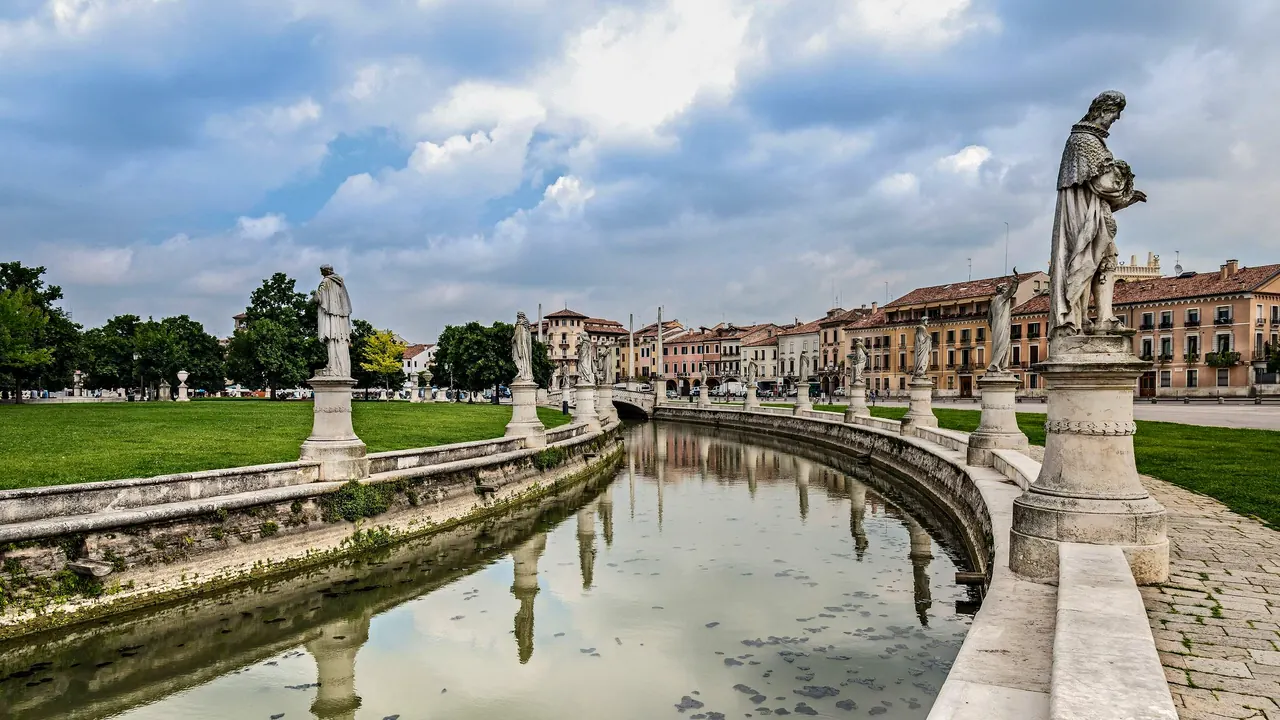
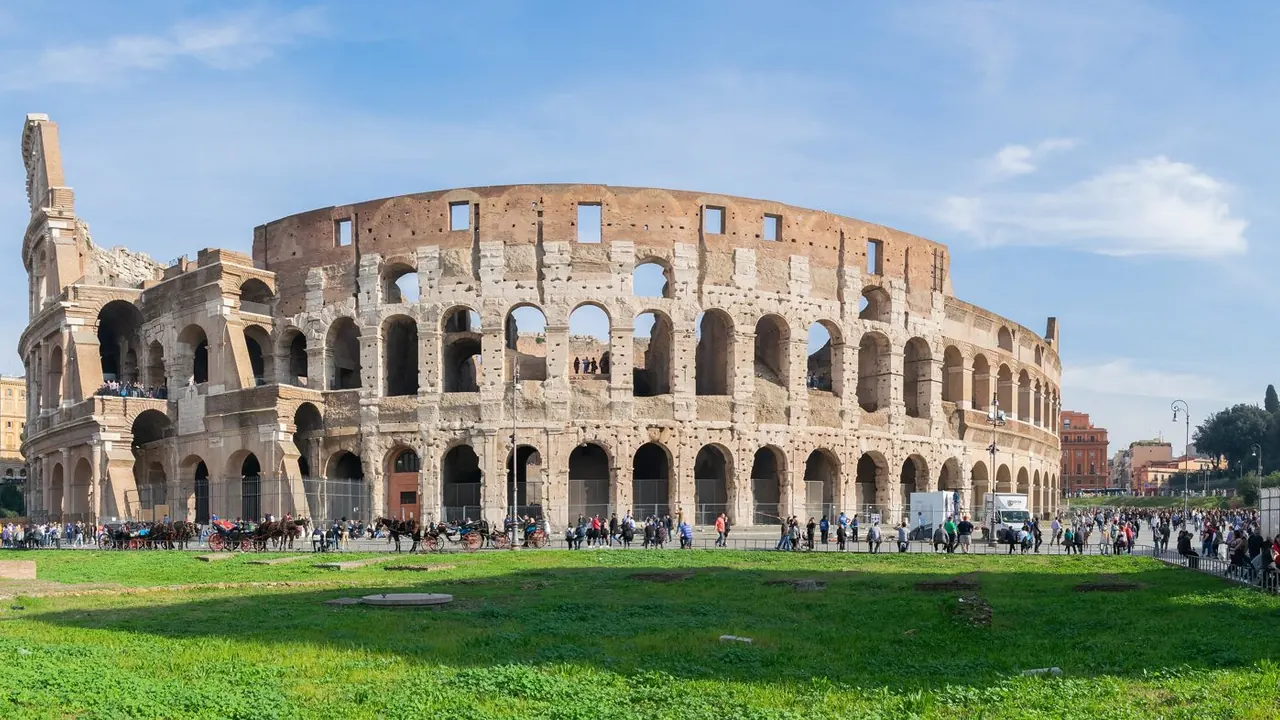
Photos: Padua by Didier Descouens, CC BY-SA 4.0, cropped; Rome by Tournasol7, CC BY-SA 4.0, cropped.
Padua or Rome?
Our verdict in twelve categories, each scored against the same fixed benchmark cities, and the climate month by month, so you can choose for your trip.
Choose Padua for
- wellness
- getting around
- prices
Padua suits travellers who want a calm, reasonably priced base and plan to spend their days moving around the Veneto. Venice, Vicenza and Verona are short train rides away, the thermal pools of Abano are just outside town, and the compact centre, with Giotto's chapel and the Basilica of Saint Anthony, takes a day or two to see before the region opens up.
Choose Rome for
- live music and the arts
- shopping
- culture and sights
Choose Rome when the city itself is the reason for the trip. The ancient ruins, the Vatican and the Baroque churches are enough for a week on their own, and the food, the opera and the luxury shopping are all on a bigger scale than Padua's. In return you get higher room costs, bigger crowds and harder work on foot.
Scoreboard
Twelve categories on one fixed scale from 0 to 100. The shaded stretch is the gap between the two.
Your match
Pick a travel style or drag the sliders, and both match scores follow your weighting.
Wins on wellness and getting around with your weighting.
Wins on live music and the arts and shopping with your weighting.
What matters to you?
Category by category
What the scores mean for a trip.
Beaches & swimming
Neither is a beach destination, but Rome makes a day at the sea easier. Ostia's dark volcanic sand is about half an hour away by suburban train, and Fregene is a little quieter, though the water is rarely clear.
From Padua, Sottomarina and the Lido of Venice take about an hour each. Their long, flat strips of umbrellas are no prettier than Ostia's lidos, but the shallow, calm water there does suit small children.
Food & drink
Rome has the more distinctive table. Its four classic pastas, Jewish-style artichokes in the Ghetto, offal dishes in Testaccio and serious street food like supplì and pizza al taglio make eating a main reason to go, as long as you avoid the menus near the big sights.
Padua cooks in the Venetian home style, with bigoli, baccalà and risotto with peas, and is built around the morning markets beneath the Palazzo della Ragione and the standing spritz in the squares. It wins on local wine, since the Euganean reds and sweet Fior d'Arancio easily beat Rome's modest Frascati.
Culture & sights
Padua has one sight of real European importance, Giotto's frescoes in the Scrovegni Chapel. Around it are a UNESCO-listed group of fresco cycles, the Basilica of Saint Anthony and the world's oldest permanent anatomical theatre, but all of this can be covered in a couple of days.
Rome works on a different scale. Ancient Rome still stands in the middle of town, early Christian mosaics and Bernini's Baroque piazzas sit on top of it, and the Vatican Museums alone could fill several days. Here a week is spent choosing what to leave out.
Nightlife
Padua's evenings start with an aperitivo in the squares by the Palazzo della Ragione and carry on in the wine bars and small pubs of the old ghetto. They are lively during university term but quiet in high summer, and the few clubs are out on the edge of town.
Rome starts the same way, with a drink in the piazza, but has many more neighbourhoods to go on to. Trastevere stays full until late, Monti has small cocktail bars, San Lorenzo is the cheap student area and Pigneto draws an arty crowd. There are also some clubs around Testaccio and Ostiense.
Nature & outdoors
The outdoors is roughly as good in both, but it is arranged differently. In Padua it starts outside the city: the volcanic Euganean Hills are about 15km away, with flat towpath rides along the Brenta and proper mountain walking in the pre-Alps around Monte Grappa.
Rome has its green spaces inside the city, in the villa parks and on the Appian Way, where a bike ride passes tombs and aqueducts. Further out are the crater lakes of the Alban Hills and the Apennines, where Terminillo offers winter skiing.
Day trips
Both are excellent bases, and the difference is in the kind of trip. From Padua, the trips are short train hops between cities of art: Venice in under half an hour, Vicenza in a quarter of an hour, and Verona, Bologna and Ferrara within about an hour. Closer in are the Brenta villas and the walled towns around the hills.
From Rome, the trips lean towards archaeology and hill towns. Ostia Antica, Hadrian's Villa, the Etruscan tombs of Tarquinia and cliff-top Orvieto are all within reach, and fast trains reach Florence and Naples in about ninety minutes.
Good for families
Rome does a little more to hold children's interest, with gladiators and catacombs, the Bioparco zoo and rowing boats in Villa Borghese, and a children's museum. The downside is long queues, cobbles that are hard on pushchairs and heavy traffic.
Padua is the easier place to manage, being flat, safe and largely pedestrianised, with Prato della Valle for running about. There is little in the city aimed at children, though, so families rely on trips to Gardaland or the Adriatic.
Getting around
Padua is easier to get around. Almost everything is within a 20-minute walk under shady arcades, a tram links the station to the centre, and bicycles are a normal way to get about. Fast trains run in every direction, so you need no car in the city or for day trips to Venice, Verona or Bologna. A car is only worth having for the Euganean Hills and the villa countryside.
Rome's centre is also best seen on foot, but the distances are longer and the cobbles, scooters and heat wear you out. The metro barely enters the historic core, and buses get stuck in traffic.
Shopping & style
Rome is the place to shop. The big Italian fashion houses line Via Condotti and the streets off the Spanish Steps, Monti has young designers and vintage shops, and the Sunday flea market at Porta Portese is huge.
In Padua, shopping is something to fit in around the sights: fashion and shoe shops under the arcades, university bookshops and a monthly antiques market in Prato della Valle. Its best buys are the cheeses and Euganean wines from the market stalls.
Affordability
Padua is the cheaper stay, mainly because rooms cost much less, which is why so many visitors sleep there and take the train to Venice for the day. Walking and trattoria meals keep daily costs moderate too.
In Rome, accommodation does most of the damage. Central rooms are small, costly and hard to find in spring and autumn, and the main museums charge high entry fees. Free drinking fountains, open churches and pizza al taglio help bring the total down.
Live music & performing arts
Padua's programme is modest. Teatro Verdi stages prose theatre and some opera, a chamber orchestra gives a regular season, and there are concerts in the frescoed Sala dei Giganti and the Basilica of Saint Anthony. For major opera you have to go to the Fenice in Venice or the summer Arena in Verona.
Rome has much more to offer. The Teatro dell'Opera stages opera and ballet through the winter and moves to the Baths of Caracalla in summer. The Santa Cecilia orchestra plays at Renzo Piano's Auditorium, and the city has a long-running jazz club scene.
Wellness & relaxation
This is Padua's clearest advantage. Abano Terme and Montegrotto Terme, about 12km away, form one of Europe's largest thermal districts, with hot mineral pools and mud treatments, and many spa hotels take day visitors, so a soak fits easily after a morning of sightseeing.
Rome's famous baths are ruins. For real thermal water you go to Bagni di Tivoli or the springs around Viterbo, and in the loud city centre the villa gardens and the Aventine are the quiet places to rest.
When should you go?
Pick your month. The climate figures are measured averages, not a forecast.
Padua in July
Rome in July
Daytime high, °C
Rainfall in the month, mm
Where the figures come from
Padua's temperatures are measured 35 km from the centre, at Treviso / Istrana.
Padua has no rain gauge within 25 km of the centre, so its rainfall comes from a gridded climate dataset read at the city rather than from a gauge further away.
Padua's sunshine is measured 36 km from the centre, at Treviso / S. Angelo.
Rome's sunshine is measured 31 km from the centre, at Vigna Di Valle.
Temperature and rainfall are climate normals, averaged over the years shown. Padua: 1991-2020 normals, Treviso / Istrana (35.4 km from centre). Rome: 1991-2020 normals, Roma / Ciampino (15.1 km from centre).
Padua has the sharper seasons. Winter on the plain is cold and often foggy, with January highs around 8°C, and rain is spread fairly evenly through the year, so there is no real dry season. Rome is milder, at about 12°C in January, and its summer is much drier and sunnier. Its rain comes in autumn and winter instead, starting in October and peaking in November at 114mm. Both reach 31°C in July and August, which makes long midday walks hard in either city.
The Adriatic near Padua and the Tyrrhenian off Rome are both warm enough to swim in from June to September, peaking around 25°C. For walking the streets, Padua is best in May and September, between the winter fog and the summer heat. Rome is at its best from April to early June and again in late September. October there is still mild, but it is the start of the wet season.
Which traveller are you?
On a relaxing and wellness trip, Padua is the clear choice. The thermal district of Abano and Montegrotto lies a short bus or train ride away, and the quiet arcades and botanical garden suit a slow pace far better than Rome's noisy, scooter-filled centre.
For a culture and arts trip, Rome has no rival here. It has the Colosseum, the Forum, the Vatican Museums and Borghese, Caravaggios in side chapels and opera among the ruins of Caracalla, so a long stay never runs short of things to see.
On a trip on a tight budget, Padua makes your money go further. Rooms cost less than in central Rome, the walkable centre and a single train station keep travel cheap, and you can still reach Venice for the day before sleeping somewhere calmer.
Before you go
| Measure | Padua | Rome |
|---|---|---|
| Official language | Italian | Italian |
| Currency | Euro (EUR) | Euro (EUR) |
| Sockets | CFL230 V, 50 Hz | CFL230 V, 50 Hz |
| Driving side | Right | Right |
| Time zone | UTC+1, UTC+2 in summer | UTC+1, UTC+2 in summer |
| Emergency number | 112 | 112 |
| Elevation | 12 m | 21 m |
| Main airport | Venice Marco Polo Airport (VCE)39 km from centre103 non-stop destinations | Rome–Fiumicino Leonardo da Vinci International Airport (FCO)23 km from centre242 non-stop destinations |
| Public holidays this year | 13 days | 13 days |
By the numbers
| Measure | Padua | Rome |
|---|---|---|
| City population | 206,496 | 2,748,109 |
| People per km² | 2,220 | 2,135 |
| Museums within 10 km | 29 | 178 |
| UNESCO World Heritage sites within 50 km | 5 | 8 |
| Swim season, months above 21 °C | 4 months | 5 months |
Where else could you go?
Every comparison below shares a destination with this one, so you can follow Padua or Rome somewhere new.