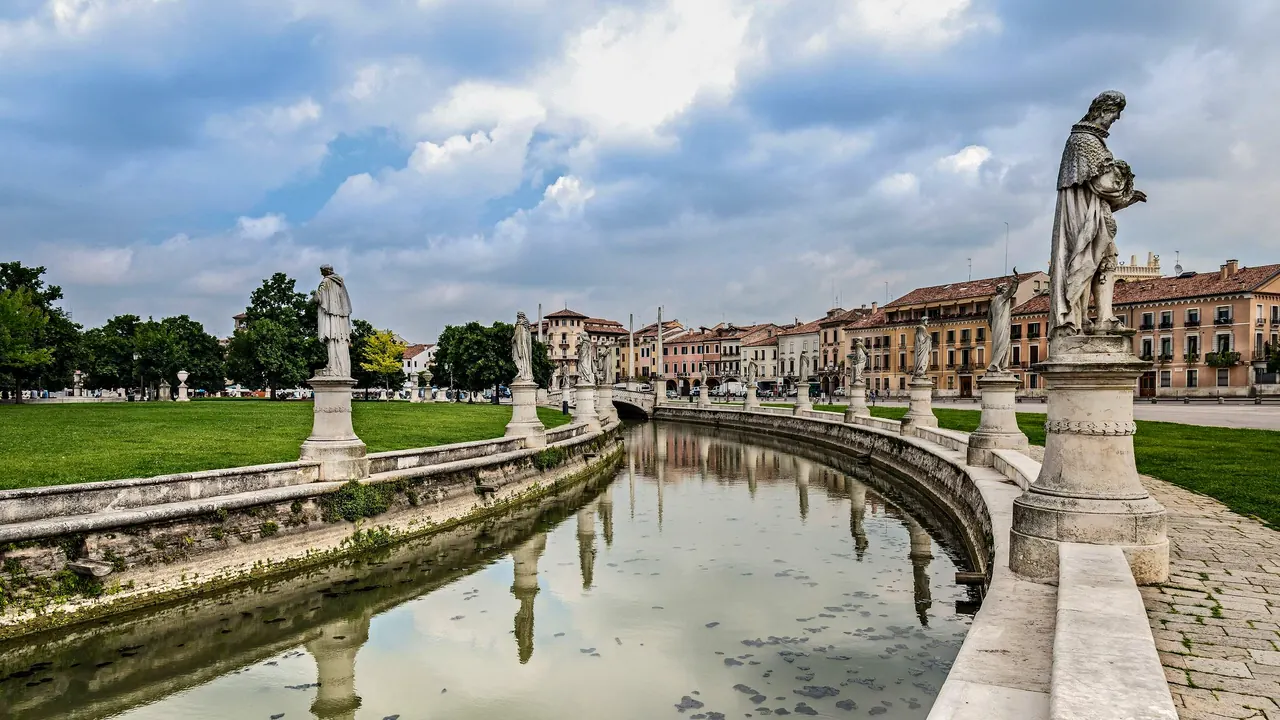
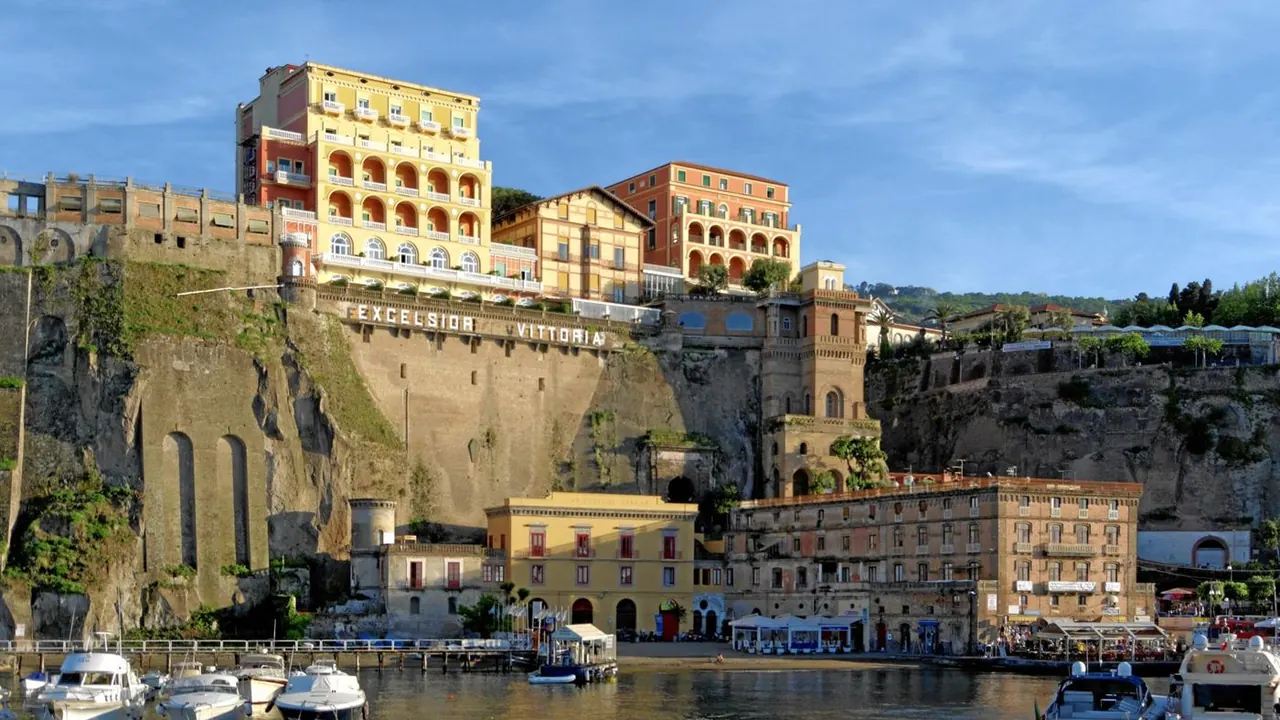
Photos: Padua by Didier Descouens, CC BY-SA 4.0, cropped; Sorrento by Berthold Werner, CC BY-SA 3.0, cropped.
Padua or Sorrento?
Our verdict in twelve categories, each scored against the same fixed benchmark cities, and the climate month by month, so you can choose for your trip.
Choose Padua for
- culture and sights
- prices
- wellness
Padua is the choice for travellers who come for art and history and like to move around by train. Giotto's chapel and the Basilica of Saint Anthony are on the doorstep, Venice, Verona and Bologna are all easy rail trips, and the thermal pools of the Euganean Hills are close enough for an afternoon soak. It is also the cheaper and more practical base, with a student crowd that keeps the squares busy in the evening.
Choose Sorrento for
- beaches
- nature and the outdoors
- day trips
Sorrento suits a slower vacation built around the sea and the landscape. You swim from piers into deep, clear water, walk the terraced paths out to Punta Campanella, and take the boat to Capri or the train to Pompeii. You pay resort prices for the cliff-top setting, the town itself is short on sights, and evenings are quiet, but for views and time on the water Padua has nothing to compare.
Scoreboard
Twelve categories on one fixed scale from 0 to 100. The shaded stretch is the gap between the two.
Your match
Pick a travel style or drag the sliders, and both match scores follow your weighting.
Wins on culture and sights and prices with your weighting.
Wins on beaches and nature and the outdoors with your weighting.
What matters to you?
Category by category
What the scores mean for a trip.
Beaches & swimming
Sorrento is the place for swimming, though not on sand. The lidos at Marina Piccola and Marina Grande are wooden piers built out over clear, deep water. The rocky inlet of the Bagni della Regina Giovanna is a short walk away, and boats reach the pebble coves of Capri and the Amalfi side.
From Padua, a swim means an hour's trip to Sottomarina or the Lido of Venice. There you get long, flat beaches lined with umbrellas, but the water is shallow and calm, which is better for small children than Sorrento's ladders and deep drops.
Food & drink
Both cities eat well, in two very different regional styles. Padua offers Venetian home cooking such as bigoli with duck sauce and baccalà, morning markets in Piazza delle Erbe and Piazza della Frutta, and the early-evening spritz with small bites, followed by Euganean wines.
Sorrento has the Campanian staples: gnocchi baked with fior di latte, fish cooked all'acqua pazza, lemons in everything, and Naples-style pizza. The tourist menus around Piazza Tasso are best avoided. The hill villages of the peninsula, though, have the kind of celebrated fine dining that Padua does not.
Culture & sights
Padua is far richer in culture. Giotto's cycle in the Scrovegni Chapel changed European painting, and the city's other fourteenth-century frescoes, in the Eremitani, the Baptistery and the Oratory of Saint George, form a UNESCO-listed group. The Basilica of Saint Anthony, the frescoed hall of the Palazzo della Ragione, the anatomical theatre at Palazzo Bo and the Orto Botanico are all a short walk apart. That makes the centre unusually dense with first-rate art and quick to get around. Visits to the chapel are short and timed, so plan the rest around them.
Sorrento's own sights fit into a day or two at a gentle pace. They include the cloister of San Francesco with its Arab-style arches, the Museo Correale's Neapolitan paintings and porcelain, and the ruined mill at the bottom of the Vallone dei Mulini. Most of the area's famous history lies outside the town.
Nightlife
Neither is a clubbing city, but Padua has more going on. Students and locals crowd Piazza delle Erbe and Piazza dei Signori over spritz until late, and wine bars fill the lanes of the old ghetto. The city is liveliest during term and goes quiet in high summer.
Sorrento runs to the opposite calendar. Its few clubs open only in summer, and the rest of the year evenings mean the passeggiata on Corso Italia, a terrace drink over the bay or a piano bar. The last trains and ferries leave early, so a night out in Naples means staying over.
Nature & outdoors
Sorrento has the more dramatic outdoors. Steep lemon and olive terraces drop to sheer coast, and footpaths run out to Punta Campanella and down to the protected bay of Ieranto. The Path of the Gods, Monte Faito and the crater rim of Vesuvius are all within reach. On the water, you can hire a small boat or kayak to explore the grottoes and coves.
Padua's countryside is gentler and better on a bike. There are level towpaths along the Brenta, and the volcanic Euganean Hills about 15km away have vineyards and chestnut woods. For real mountain walking you have to drive an hour and a half to the pre-Alps.
Day trips
Both are among the best bases in Italy, but the trips are of different kinds. From Padua, fast trains reach Venice in under half an hour and Vicenza, Verona and Bologna soon after. Smaller places such as Arquà Petrarca and the walled town of Montagnana are close by, so the list is mostly art cities and old towns.
Sorrento's list is about ruins, islands and coast. You can reach Pompeii and Herculaneum on the Circumvesuviana, cross to Capri by ferry and take a boat along the Amalfi Coast, with Naples about an hour away. Many of these trips go by sea, which is part of the pleasure.
Good for families
Children are welcome in both, and both have flat, largely pedestrian centres, but neither has much made for them. In Padua, Prato della Valle gives them room to run, and the shallow Adriatic and Gardaland are each a little over an hour away.
Sorrento has more built-in adventure, with boat rides to Capri and a train to Pompeii. On the other hand, the swimming is into deep water from piers, and many hotels sit on steep lanes without pavements, so families with small children usually look for a hotel pool.
Getting around
Padua is the easier place to get around. Everything from the Scrovegni Chapel to the Basilica is within about 20 minutes on foot under the arcades, a tram runs from the station to Prato della Valle, and bikes are normal. Trains on the main lines make day trips simple without a car.
In Sorrento, the centre is just as walkable and a lift takes you down to the marinas. Beyond the town, though, the Circumvesuviana is crowded and prone to delays, and the coast buses get stuck on the summer hairpins, so the ferries often end up the most comfortable option.
Shopping & style
Padua has a little more range. The arcaded streets carry Italian fashion and shoe shops, independent boutiques and university bookshops. The markets and delicatessens under the Palazzo della Ragione are good for cheese and Euganean wine to take home, and a large antiques market fills Prato della Valle one Sunday a month.
Sorrento's lanes are mostly lemon souvenirs, but its crafts are its own: intarsia boxes and trays, sandals made to measure while you wait, and cameo jewellery. Serious fashion shoppers go from one to Venice or Milan and from the other to Naples or Capri.
Affordability
Padua is noticeably cheaper. It is priced like an ordinary northern Italian city, and many visitors stay there for Venice because rooms and trattoria meals cost less. Walking and short train rides keep transport costs low.
Sorrento charges resort prices in summer for sea-view rooms, terrace dinners, lido sunbeds and private boats. It is still the more reasonable base on its own coast, and visiting in spring or late autumn brings hotel rates down considerably.
Live music & performing arts
Padua has a real year-round season. The horseshoe-shaped Teatro Verdi stages plays and some opera, and the city's chamber orchestra plays in the Sala dei Giganti and the Basilica. The Fenice in Venice and the summer opera at the Verona Arena are easy trips.
Sorrento mostly offers shows of Neapolitan song and tarantella put on for visitors, plus summer concerts in the cloister of San Francesco. For proper opera you have to make the hour's trip to the Teatro di San Carlo in Naples.
Wellness & relaxation
Padua has a major spa tradition on its doorstep. Abano Terme and Montegrotto Terme, about 12km away, are one of Europe's largest thermal districts. They offer hot mineral pools and mud treatments dating back to Roman times, and many spa hotels take day visitors.
Sorrento relaxes you through its setting: cliff-top hotel spas, pools over the bay and quiet lemon groves. It has no hot springs of its own, so a thermal soak means an hour's ferry to Ischia. Both are calmer in spring and autumn, when the summer heat or crowds have passed.
When should you go?
Pick your month. The climate figures are measured averages, not a forecast.
Padua in July
Sorrento in July
Daytime high, °C
Rainfall in the month, mm
Where the figures come from
Padua's temperatures are measured 35 km from the centre, at Treviso / Istrana.
Padua has no rain gauge within 25 km of the centre, so its rainfall comes from a gridded climate dataset read at the city rather than from a gauge further away.
Padua's sunshine is measured 36 km from the centre, at Treviso / S. Angelo.
Sorrento has no rain gauge within 25 km of the centre, so its rainfall comes from a gridded climate dataset read at the city rather than from a gauge further away.
Sorrento's sunshine is measured 54 km from the centre, at Grazzanise.
Temperature and rainfall are climate normals, averaged over the years shown. Padua: 1991-2020 normals, Treviso / Istrana (35.4 km from centre). Sorrento: 2005-2025 (sunshine 1991-2020, rainfall 1991-2020) normals, Capri (17 km from centre).
Padua has a continental feel for Italy. Winters are cold and often foggy, with highs around 8°C in January, while July and August reach 31°C and feel humid, which makes long days of sightseeing hard work. Rain is spread fairly evenly through the year and is heaviest in autumn. The best months for walking the arcades are May, June and September. The Adriatic beaches an hour away are warm enough for swimming from June to September.
Sorrento is milder in winter, around 13°C in January, but much wetter, and November brings about 151mm of rain. Summer is the opposite: almost dry, sunnier than Padua in every month, and the sea reaches about 26°C in August. It stays good for swimming into October. For hiking the peninsula, spring and early autumn are better than the hot midsummer trails. Choose Padua for spring and early autumn city breaks, and Sorrento for anything from late spring to early October that involves the sea.
Which traveller are you?
For a culture and arts trip, Padua is the clear choice. Giotto's frescoes in the Scrovegni Chapel, Donatello's work at the Basilica of Saint Anthony and the old anatomical theatre are all in a walkable centre, and Venice and Vicenza are short train rides away.
On a beach and sun trip, choose Sorrento. You can swim straight from the piers at Marina Piccola into deep water and sunbathe on the rocks at Regina Giovanna, and boats run to the coves of Capri. From Padua the sea is an hour's trip to flat, crowded strips of umbrellas.
On a tight budget, Padua makes your money last longer. Rooms and trattorias are moderately priced, a standing spritz with snacks costs little, and cheap fast trains let you see Venice without paying to sleep there. Sorrento's sea-view rooms and lidos are expensive in summer.
Before you go
| Measure | Padua | Sorrento |
|---|---|---|
| Official language | Italian | Italian |
| Currency | Euro (EUR) | Euro (EUR) |
| Sockets | CFL230 V, 50 Hz | CFL230 V, 50 Hz |
| Driving side | Right | Right |
| Time zone | UTC+1, UTC+2 in summer | UTC+1, UTC+2 in summer |
| Emergency number | 112 | 112 |
| Elevation | 12 m | 50 m |
| Main airport | Venice Marco Polo Airport (VCE)39 km from centre103 non-stop destinations | Naples International Airport (NAP)30 km from centre131 non-stop destinations |
| Public holidays this year | 13 days | 13 days |
By the numbers
| Measure | Padua | Sorrento |
|---|---|---|
| City population | 206,496 | 15,407 |
| People per km² | 2,220 | 1,541 |
| Museums within 10 km | 29 | 6 |
| UNESCO World Heritage sites within 50 km | 5 | 5 |
| Swim season, months above 21 °C | 4 months | 5 months |
Where else could you go?
Every comparison below shares a destination with this one, so you can follow Padua or Sorrento somewhere new.