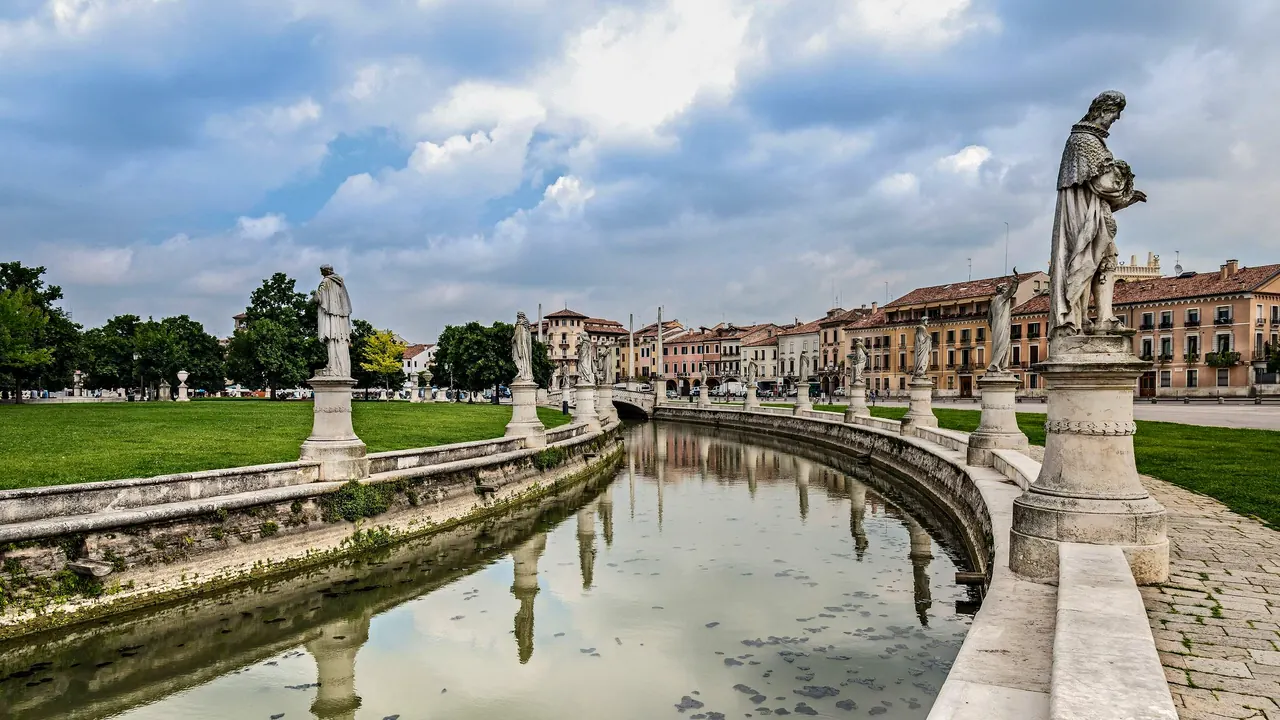
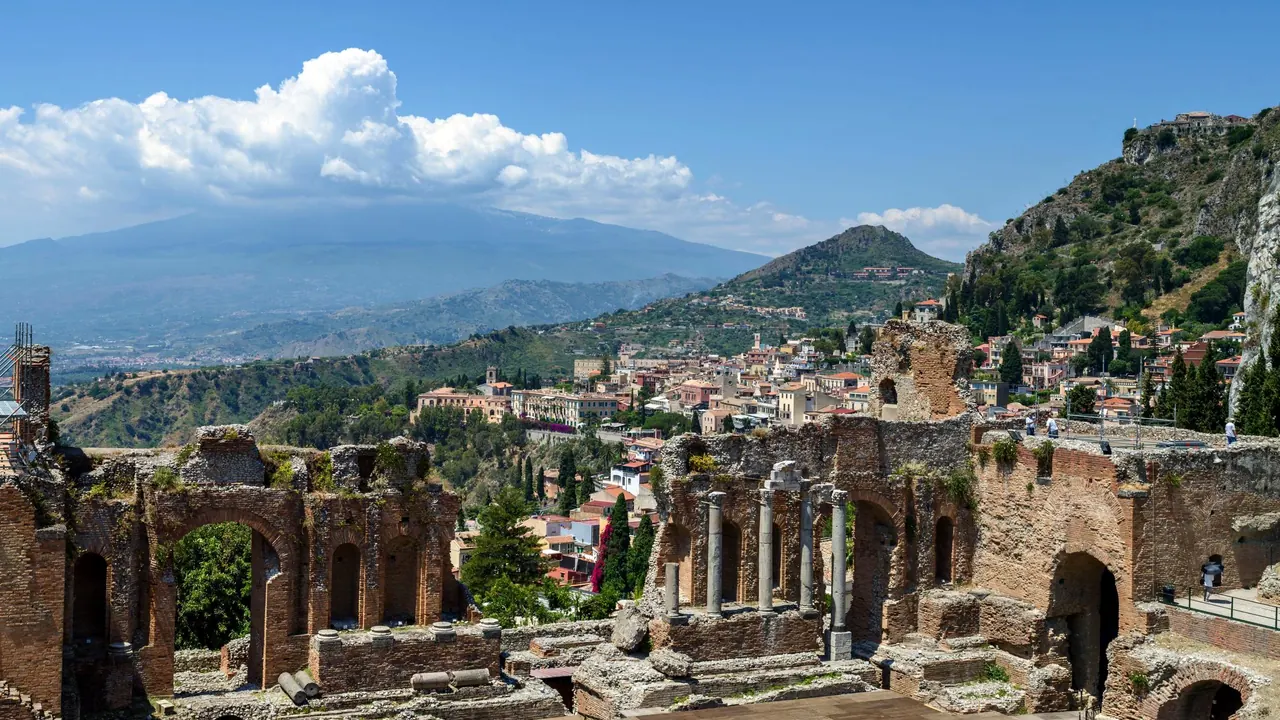
Photos: Padua by Didier Descouens, CC BY-SA 4.0, cropped; Taormina by Reinhard Bruckner, Pexels License.
Padua or Taormina?
Our verdict in twelve categories, each scored against the same fixed benchmark cities, and the climate month by month, so you can choose for your trip.
Choose Padua for
- culture and sights
- prices
- wellness
Padua suits travellers who come for art and want a practical base for the whole region. Giotto's Scrovegni Chapel, the Basilica of Saint Anthony and the university's anatomical theatre fill the first days. After that, trains run to Venice, Vicenza, Verona and Bologna, and you come back each night to a cheaper room and an evening spritz in the squares. The thermal pools of Abano are just outside town. It is flat, inland and easy to get around, and the sea is a day out rather than part of the stay.
Choose Taormina for
- beaches
- nature and the outdoors
Taormina is for scenery and the sea. It is a small, steep resort town above clear Ionian coves. Etna fills the horizon, the Greek theatre frames the view, and lava fields and snorkelling grounds are within easy reach. It costs more and its list of sights is short, so it suits a slow stay of swimming, walking and long dinners on a terrace better than a busy sightseeing schedule.
Scoreboard
Twelve categories on one fixed scale from 0 to 100. The shaded stretch is the gap between the two.
Your match
Pick a travel style or drag the sliders, and both match scores follow your weighting.
Wins on culture and sights and prices with your weighting.
Wins on beaches and nature and the outdoors with your weighting.
What matters to you?
Category by category
What the scores mean for a trip.
Beaches & swimming
Padua is inland, so the beach means an hour's trip to Sottomarina or the Lido of Venice. The sand there is long and flat, lined with rows of umbrellas, and the water is shallow and calm, which is good for small children but not much to look at.
Taormina has the sea right below the town. The cable car runs down to Mazzarò and the cove at Isola Bella, where the water is clear enough for snorkelling, although the beaches are narrow pebble strips that fill up early in summer. For longer stretches of sand and shingle, Giardini Naxos and Letojanni are a short bus ride away.
Food & drink
The two eat equally well but in different ways. Padua is a city of markets and trattorias: morning stalls in Piazza delle Erbe and Piazza della Frutta, bigoli with duck sauce, baccalà, Euganean wines and coffee at the historic Caffè Pedrocchi, but little fine dining.
Taormina's cooking is Sicilian and leans towards the sea: swordfish, raw red prawns, pasta alla Norma, granita with brioche for breakfast and Etna wines. It does a memorable dinner with a sea view better, but the menus on Corso Umberto are aimed at tourists, so good everyday meals mean looking in the side streets.
Culture & sights
Padua has far more to see. Giotto's frescoes in the Scrovegni Chapel changed European painting, and around them are further fresco cycles, the Basilica of Saint Anthony with Donatello's bronzes, the great frescoed hall of the Palazzo della Ragione, the world's oldest permanent anatomical theatre and the oldest university botanical garden still in its original place.
Taormina's highlight is the Greek theatre, whose broken stage frames Etna and the coast. Add a stroll along Corso Umberto past the Duomo and Palazzo Corvaja, and a curious visitor has seen most of it in a day. For deeper sightseeing you have to go to Syracuse or Catania.
Nightlife
Neither is a clubbing city, but Padua has more life after dark because of its students. During term the aperitivo crowds fill Piazza delle Erbe and Piazza dei Signori even on weekday evenings, with wine bars and small pubs around the old ghetto and the Bo.
Taormina's evenings are slower and older: an aperitivo in Piazza IX Aprile, a passeggiata along the Corso and piano bars on terraces over the sea. The seasons work in opposite directions. Taormina is at its liveliest in August, when Padua's students have left and the city goes quiet.
Nature & outdoors
Taormina has the more dramatic landscape by a wide margin. Etna is about an hour away for walks over lava flows and the Silvestri craters, guided trips towards the summit and skiing in winter. The basalt gorges of the Alcantara are closer still, and there is snorkelling and diving in the marine reserve below town.
Padua's outdoors starts a little way out of the city and is gentler. The volcanic Euganean Hills, about 15km away, have vineyards, chestnut woods and quiet roads for cycling. There are level towpaths along the Brenta, and for real mountain walking the pre-Alps are about an hour and a half's drive.
Day trips
Padua is the stronger base, mainly because of its trains. Venice is under half an hour away, so you can go back on several days, and Vicenza with Palladio's Teatro Olimpico is a quarter of an hour. Verona, Treviso, Bologna and Ferrara are all easy days out without a car. Nearer still are the Brenta villas, Petrarch's village of Arquà Petrarca and the walled towns of Este and Montagnana.
Taormina has fine outings too, but they are further apart. Catania is about an hour away, and Syracuse with Ortigia is about two, which makes for a long day. Castelmola is the easiest trip of all: it sits on the crag above town, a short bus ride or a steep walk up. The wine villages on Etna's northern slopes, such as Linguaglossa and Randazzo, are best reached by tour or hired car.
Good for families
Both welcome children, but neither has much built for them, and they suit different ages. Padua's flat, pedestrianised centre is easy with a pushchair, and Prato della Valle has room to run. Families usually fill the gaps with a trip to Gardaland or the Adriatic.
Taormina is harder with toddlers because of its steps and crowded pebble beaches, which is why many families stay down in Giardini Naxos. For school-age children, though, snorkelling at Isola Bella and a trip to Etna's craters are a real adventure.
Getting around
Padua is much easier to get around. The flat centre puts nearly every sight within a 20-minute walk under shady arcades, and a tram, buses and bicycles cover the rest. The station's main-line connections make a car unnecessary except for the hills.
Taormina's centre is also walkable, but every outing involves stairways and steep lanes. The cable car and the station are down by the sea. Etna and the inland villages realistically mean a tour or a hired car, and driving in the town itself is awkward.
Shopping & style
Neither is a shopping destination, and they sell different things. Padua's arcades carry everyday Italian fashion, shoes and university bookshops. Its best buys are edible: cheese and Euganean wine from the markets. There is also an antiques market in Prato della Valle one Sunday a month.
Taormina is a single street of things for visitors to take home: coral and cameos, linen and lace, Caltagirone majolica, moor's-head vases and Bronte pistachio cream.
Affordability
Padua is the cheaper stay. Its prices are moderate for northern Italy, and many people sleep there while they explore Venice and the Veneto. Standing spritzes, market food and a walkable centre keep daily costs down, although rooms get dearer during trade fairs and graduation season.
Taormina is the most expensive place in eastern Sicily. Sea-view hotels set the tone and the main street charges resort prices. Granita, bakery snacks and local buses are still cheap, and staying in Giardini Naxos or coming in spring or autumn cuts the bill noticeably.
Live music & performing arts
Both have modest programmes, but they differ in timing and setting. Padua's is steady and runs all year: theatre and some opera at the horseshoe-shaped Teatro Verdi, and chamber concerts in the Sala dei Giganti and the Basilica. The Fenice in Venice and the summer Arena in Verona are easy to reach for bigger opera.
Taormina puts almost everything into summer, when the Greek theatre stages opera, ballet and big-name concerts with Etna behind the stage. Out of season there is little beyond piano bars.
Wellness & relaxation
Padua has a real spa culture on its doorstep. Abano Terme and Montegrotto Terme, about 12km away, make up one of Europe's largest thermal districts, where hot mineral water and mud have been used since Roman times, and many pools accept day visitors after a morning of sightseeing.
Taormina has no public bathing tradition, so relaxing there means a hotel spa with a terrace pool above the sea, the shade of the Villa Comunale gardens and evenings watching Etna. That calm is easiest to find in May, June and late September, before or after the August crowds.
When should you go?
Pick your month. The climate figures are measured averages, not a forecast.
Padua in July
Taormina in July
Daytime high, °C
Rainfall in the month, mm
Where the figures come from
Padua's temperatures are measured 35 km from the centre, at Treviso / Istrana.
Padua has no rain gauge within 25 km of the centre, so its rainfall comes from a gridded climate dataset read at the city rather than from a gauge further away.
Padua's sunshine is measured 36 km from the centre, at Treviso / S. Angelo.
Taormina's temperatures are measured 45 km from the centre, at Messina.
Taormina has no rain gauge within 25 km of the centre, so its rainfall comes from a gridded climate dataset read at the city rather than from a gauge further away.
Temperature and rainfall are climate normals, averaged over the years shown. Padua: 1991-2020 normals, Treviso / Istrana (35.4 km from centre). Taormina: 1991-2020 normals, Messina (45.1 km from centre).
Padua has a true northern Italian year. Winters are grey and chilly, with January highs around 8°C and fog over the plain. July and August reach 31°C with a sticky humidity that makes long days of sightseeing tiring. Rain falls in every month and is heaviest in autumn. April, May, September and early October are the comfortable months for walking the centre and cycling in the hills, and the Adriatic beaches an hour away are only warm enough for swimming from late June into September.
Taormina is milder in winter and much drier in summer. Even in January days reach about 15°C. From May to August almost no rain falls, and it gets far more sunshine than the Venetian plain. The sea stays swimmable from June to October and is warmest in August at around 26°C, so the beach season is noticeably longer here. The drawback is midsummer heat on the steep lanes. The rain arrives in October, with around 100mm a month into winter, so spring and late September are the best times for walking and for Etna.
Which traveller are you?
On a beach and sun trip, Taormina is the clear choice. A cable car drops to the clear coves at Mazzarò and Isola Bella, sandier beaches at Giardini Naxos are a short bus ride away, and summers are almost rainless. From Padua, the sea is a day out.
For a culture and arts trip, Padua offers far more. Giotto's Scrovegni frescoes, Donatello at the Basilica of Saint Anthony and a UNESCO-listed group of fresco cycles fill several days, and Venice and Vicenza are short train rides away.
On an outdoors trip, Taormina has the more dramatic landscape. Guided walks over Etna's lava flows and craters, the basalt gorges of the Alcantara and diving in the Isola Bella reserve are all close by. Padua's Euganean Hills offer gentler trails and level bike rides.
Before you go
| Measure | Padua | Taormina |
|---|---|---|
| Official language | Italian | Italian |
| Currency | Euro (EUR) | Euro (EUR) |
| Sockets | CFL230 V, 50 Hz | CFL230 V, 50 Hz |
| Driving side | Right | Right |
| Time zone | UTC+1, UTC+2 in summer | UTC+1, UTC+2 in summer |
| Emergency number | 112 | 112 |
| Elevation | 12 m | 204 m |
| Main airport | Venice Marco Polo Airport (VCE)39 km from centre103 non-stop destinations | Catania-Fontanarossa Airport (CTA)47 km from centre96 non-stop destinations |
| Public holidays this year | 13 days | 13 days |
By the numbers
| Measure | Padua | Taormina |
|---|---|---|
| City population | 206,496 | 10,471 |
| People per km² | 2,220 | 799 |
| Museums within 10 km | 29 | 5 |
| UNESCO World Heritage sites within 50 km | 5 | 2 |
| Swim season, months above 21 °C | 4 months | 5 months |
Where else could you go?
Every comparison below shares a destination with this one, so you can follow Padua or Taormina somewhere new.
- Venicevs Padua
- Cataniavs Taormina
- Veronavs Padua
- Syracuse, Sicilyvs Taormina
- Bolognavs Padua
- Cortina d'Ampezzovs Padua