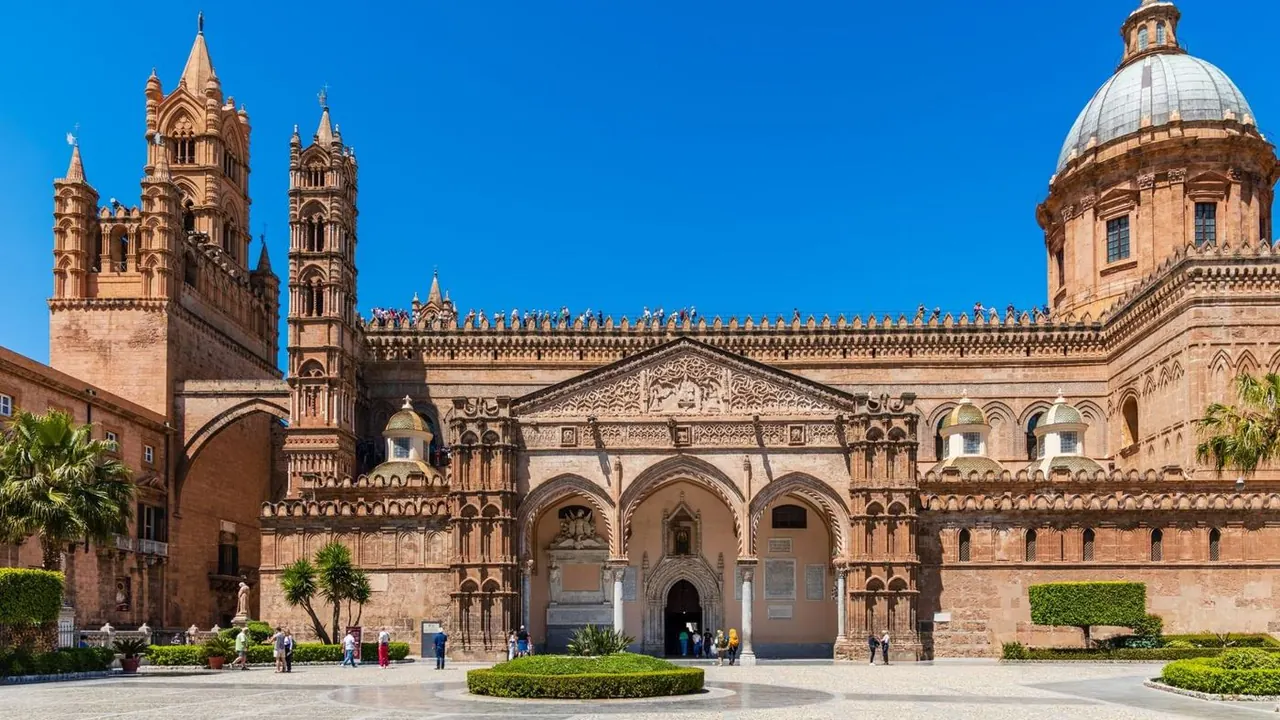
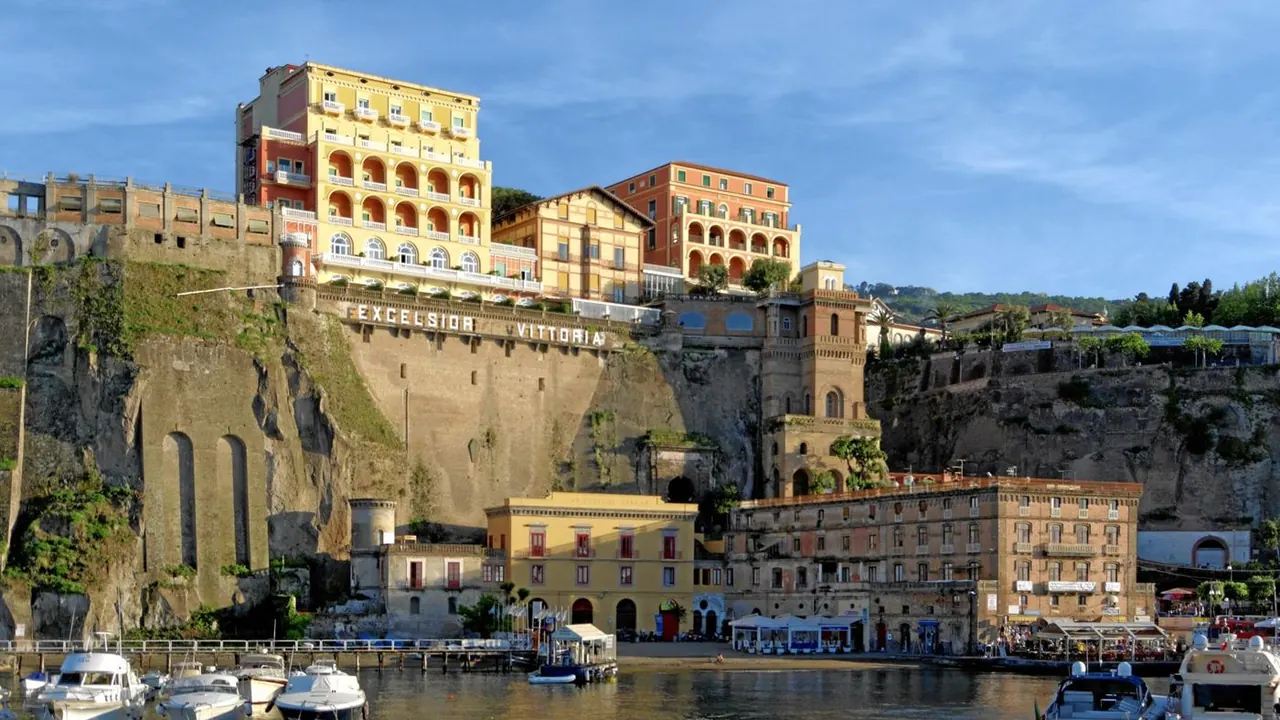
Photos: Palermo by Antonino Giangrasso, Pexels License; Sorrento by Berthold Werner, CC BY-SA 3.0, cropped.
Palermo or Sorrento?
Our verdict in twelve categories, each scored against the same fixed benchmark cities, and the climate month by month, so you can choose for your trip.
Choose Palermo for
- culture and sights
- live music and the arts
- prices
Palermo is the trip for travellers who want a real city with plenty going on. Its Arab-Norman mosaics, serious museums, street-food markets and late, sociable nights give you far more to do inside the town itself, and it costs noticeably less. Mondello's sandy bay is close enough for swimming. You need a tolerance for noise, crumbling lanes and some traffic chaos.
Choose Sorrento for
- wellness
- day trips
- nature and the outdoors
Sorrento works better as a calm, pretty base than as a destination in its own right. The town is small and easy, and from it trains and boats reach Pompeii, Capri, the Amalfi Coast and Naples with very little effort. It suits walkers, people who like slow evenings on a terrace and couples who want a restful stay, as long as they accept resort prices and quiet nights.
Scoreboard
Twelve categories on one fixed scale from 0 to 100. The shaded stretch is the gap between the two.
Your match
Pick a travel style or drag the sliders, and both match scores follow your weighting.
Wins on culture and sights and live music and the arts with your weighting.
Wins on wellness and day trips with your weighting.
What matters to you?
Category by category
What the scores mean for a trip.
Beaches & swimming
Neither city lets you step out of the hotel onto sand, but Palermo has the better swimming within reach. Mondello is a real sandy bay with shallow, turquoise water about half an hour away by bus. The rocks of Capo Gallo offer deeper, quieter swimming, and Cefalù's long beach is an easy train ride.
Sorrento is closer to the water but has less to swim from. A lift takes you down to wooden piers at Marina Piccola and Marina Grande, where paid lidos give access to deep, clear sea, and there are flat rocks at the Bagni della Regina Giovanna. For a proper beach you need a bus or a boat.
Food & drink
Palermo is the stronger food city, mainly for what happens on the street. The Ballarò, Capo and Vucciria markets fry panelle and arancine all day, and the cooking has a sweet-and-sour Arab streak and a serious pastry culture behind it. Sorrento's Campanian cooking is excellent at its best, with gnocchi alla sorrentina, fish all'acqua pazza and local mozzarella, but the centre is full of tourist menus, and the good meals take some finding in back lanes, at Marina Grande or in the hills.
There is one area where Sorrento pulls ahead. The peninsula's hill villages hold some of southern Italy's most celebrated fine dining, while Palermo's top tier is small.
Culture & sights
There is a wide gap here. Palermo's twelfth-century legacy, from the Palatine Chapel to San Giovanni degli Eremiti and La Martorana, is one of the great artistic ensembles of the Mediterranean. Add Serpotta's stucco oratories and the Selinunte metopes at the Salinas museum, and you can fill several days without leaving town.
Sorrento's own sights take a day or two at a slow pace: the cathedral, the cloister of San Francesco, the Museo Correale and the strange ravine of the Vallone dei Mulini. Visitors come for the famous ruins and towns around it rather than for the town itself.
Nightlife
Palermo has the livelier evenings, though it is still more about bars than clubs. The Vucciria turns into an open-air drinking spot after dark, and the Kalsa and the streets off Via Maqueda fill with people after a late dinner, often until well past midnight.
Sorrento winds down early. A typical evening is the passeggiata on Corso Italia, a drink on a terrace over the bay, and perhaps a piano bar with Neapolitan songs. The last trains and ferries leave in the evening, so a late night in Naples or on Capri means staying over.
Nature & outdoors
Sorrento has the better outdoors. From the town, footpaths run through terraced lemon and olive groves to Punta Campanella and the protected bay of Ieranto. The Path of the Gods, Monte Faito and the crater of Vesuvius are all within reach, and boats and kayaks explore the grottoes and coves.
Palermo's setting is dramatic too. Monte Pellegrino rises right above the city, and there are cliff paths at Capo Gallo, the coastal trail of the Zingaro and high beech woods in the Madonie. Most of it is spread further out, though, and much easier with a car.
Day trips
Both are excellent bases, but Sorrento makes day trips effortless. The train reaches Pompeii in about half an hour, Capri is a short ferry ride, and boats run along the Amalfi Coast. Naples and its archaeological museum make an easy day out.
Palermo's day trips are just as rewarding but take more effort. Monreale and Cefalù are close, but Segesta, Erice and the Valley of the Temples at Agrigento are spread across western Sicily, and a hire car makes a big difference.
Good for families
Neither city does much specifically for children, and both make up for it with Italian warmth towards families. Where they differ is in the setting. Palermo has the gentler swimming, with Mondello's shallow sand, plus puppet shows of knights and Saracens, but its old town is hot and its uneven lanes are hard going with a pushchair.
Sorrento is the reverse: the flat, largely pedestrian centre is easy to push a buggy around, and the boat trips to Capri and the ruins of Pompeii go down well with children. The swimming, though, is off piers into deep water.
Getting around
Both have compact centres you can explore on foot, but Sorrento is a little easier overall. You can manage there without a car, using the Circumvesuviana train, buses and ferries, even if the trains are crowded and the coast road is slow in summer.
In Palermo the walking stops being simple once you leave the main streets, because scooters and parked cars crowd the side lanes. The buses get stuck in traffic, and the inland sites practically require a hire car in a city where driving is stressful.
Shopping & style
Neither is a shopping destination, though Palermo has a little more range. Via Libertà has Italian fashion shops, the markets are good for pistachio pesto and capers to take home, and there are ceramics, handmade marionettes and an antiques flea market near the cathedral.
Sorrento's shops lean heavily on lemons, from limoncello to soap. Its genuine crafts are wood inlay and leather sandals made to measure. Serious shoppers go to Naples or Capri.
Affordability
Palermo is clearly the cheaper stay. Market food can replace sit-down meals, and trattorie, local wine and guesthouses in the old centre are fairly priced most of the year. Only Mondello in high summer and the fish restaurants approach mainland prices.
Sorrento charges resort rates for sea-view rooms, terrace dinners, lido sunbeds and private boats. Local trains and buses are cheap, though, and visiting in spring or late autumn brings hotel rates down considerably.
Live music & performing arts
Palermo has a proper stage life. The Teatro Massimo runs a full season of opera and ballet, the Politeama is home to the Sicilian symphony orchestra, and the family puppet theatres keep the Opera dei Pupi alive with hour-long battle shows.
Sorrento's offering is mostly tarantella and Neapolitan song evenings put on for visitors, plus summer chamber concerts in the San Francesco cloister. For real opera you need to go to the San Carlo in Naples.
Wellness & relaxation
Sorrento is the more restful choice. The big cliff-top hotels have spas, pools and terraces over the bay, the villa gardens and lemon groves slow everything down, and Ischia's sea-side thermal gardens are an hour away by ferry.
Palermo is loud with scooters and market shouts, and its quiet corners are the Orto Botanico, the cloisters and the evening seafront walk at the Foro Italico. Anyone wanting real rest there tends to stay outside the city.
When should you go?
Pick your month. The climate figures are measured averages, not a forecast.
Palermo in July
Sorrento in July
Daytime high, °C
Rainfall in the month, mm
Where the figures come from
Palermo has no rain gauge within 25 km of the centre, so its rainfall comes from a gridded climate dataset read at the city rather than from a gauge further away.
Palermo's sunshine is measured 67 km from the centre, at Ustica.
Sorrento has no rain gauge within 25 km of the centre, so its rainfall comes from a gridded climate dataset read at the city rather than from a gauge further away.
Sorrento's sunshine is measured 54 km from the centre, at Grazzanise.
Temperature and rainfall are climate normals, averaged over the years shown. Palermo: 1991-2020 (sunshine 1961-1990) normals, Palermo / Punta Raisi (24.1 km from centre). Sorrento: 2005-2025 (sunshine 1991-2020, rainfall 1991-2020) normals, Capri (17 km from centre).
Both have the southern Italian pattern of hot, dry summers and wet winters, but Palermo is the milder of the two in summer. It peaks at about 30°C. Sorrento warms up faster in spring and reaches around 29°C in July and August, which makes climbing its lanes and trails at midday hard work. On both coasts the sea is warm enough to swim from June into October, and at its warmest it is slightly warmer off Palermo. Palermo also has a little more sunshine in most months.
Rain is the bigger difference. Palermo stays fairly dry into September. The rain arrives in October, which is still mild but already nearly as wet as the winter months, when the monthly peak is around 76mm. The best months for walking Palermo's streets are therefore April to early June and the second half of September. Sorrento gets wet sooner and harder. September is already showery, October is wetter, and November brings about 151mm. Its best walking weather is in May and early June. From late autumn through winter, both cities are wet, but Palermo gets less rain than Sorrento.
Which traveller are you?
On a culture and arts trip, choose Palermo. The gold mosaics of the Palatine Chapel, the Arab-Norman churches, the Salinas and Abatellis museums and a full opera season at the Teatro Massimo add up to far more than Sorrento's small museums and tourist song evenings.
For a relaxing, wellness-focused trip, Sorrento is the gentler choice. Cliff-top hotels with spas and terraces over the bay, quiet lemon groves and the thermal gardens of Ischia nearby give you calm that noisy, scooter-filled Palermo rarely offers.
On a tight budget, Palermo goes much further. A meal can be several cheap stops in the markets, and trattorie and guesthouses are fairly priced. Sorrento charges resort rates for rooms, sunbeds and boat trips, especially in summer.
Before you go
| Measure | Palermo | Sorrento |
|---|---|---|
| Official language | Italian | Italian |
| Currency | Euro (EUR) | Euro (EUR) |
| Sockets | CFL230 V, 50 Hz | CFL230 V, 50 Hz |
| Driving side | Right | Right |
| Time zone | UTC+1, UTC+2 in summer | UTC+1, UTC+2 in summer |
| Emergency number | 112 | 112 |
| Elevation | 14 m | 50 m |
| Main airport | Falcone–Borsellino Airport (PMO)25 km from centre106 non-stop destinations | Naples International Airport (NAP)30 km from centre131 non-stop destinations |
| Public holidays this year | 13 days | 13 days |
By the numbers
| Measure | Palermo | Sorrento |
|---|---|---|
| City population | 630,167 | 15,407 |
| People per km² | 3,924 | 1,541 |
| Museums within 10 km | 42 | 6 |
| UNESCO World Heritage sites within 50 km | 1 | 5 |
| Swim season, months above 21 °C | 5 months | 5 months |
Where else could you go?
Every comparison below shares a destination with this one, so you can follow Palermo or Sorrento somewhere new.