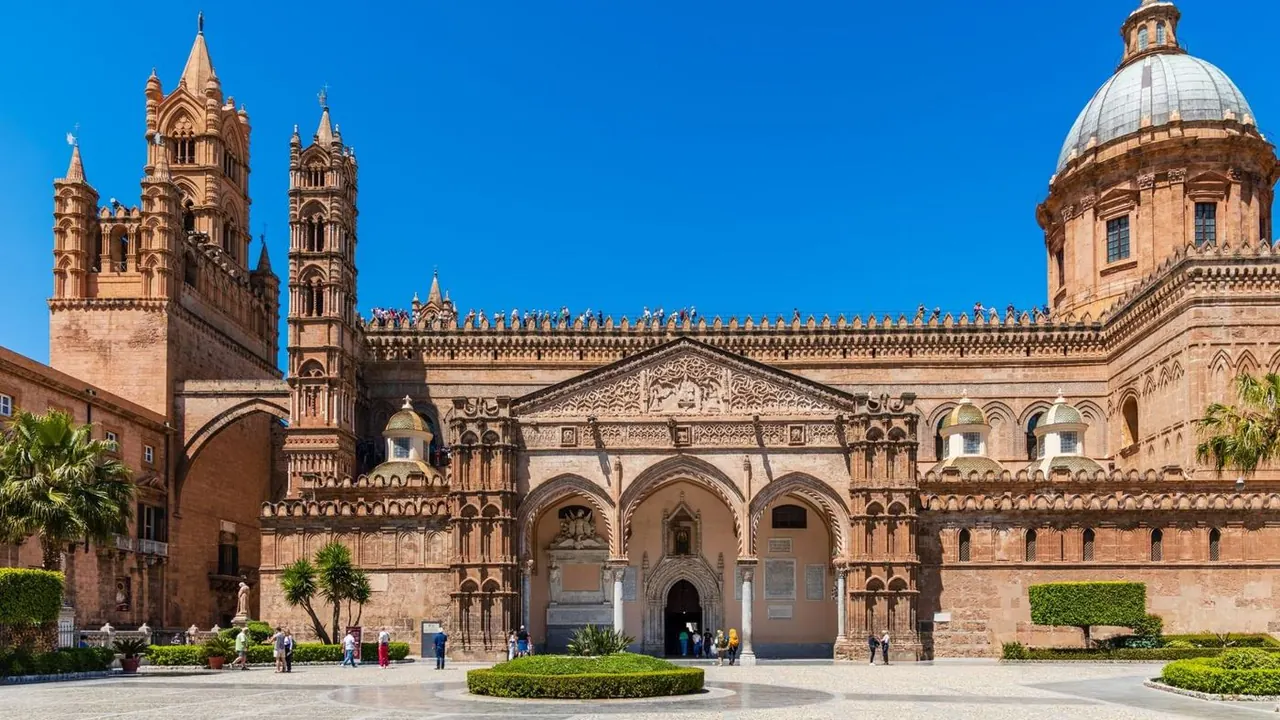
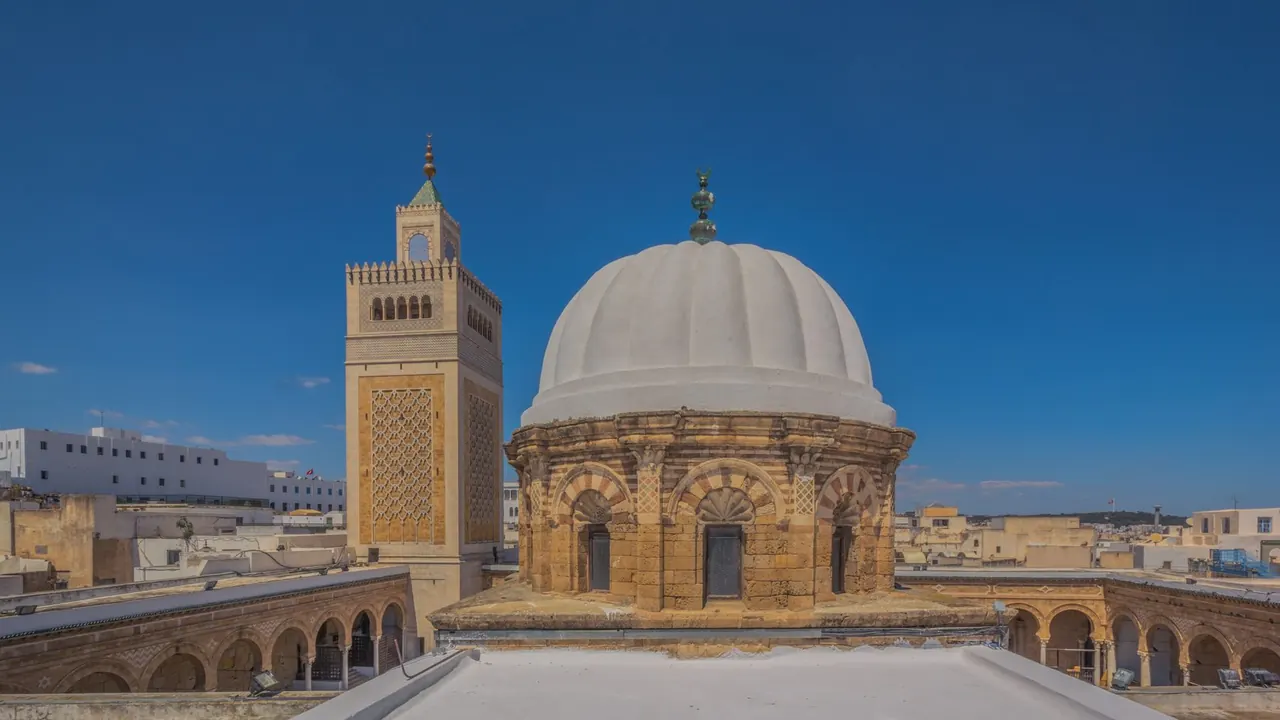
Photos: Palermo by Antonino Giangrasso, Pexels License; Tunis by IssamBarhoumi, CC BY-SA 4.0, cropped.
Palermo or Tunis?
Our verdict in twelve categories, each scored against the same fixed benchmark cities, and the climate month by month, so you can choose for your trip.
Choose Palermo for
- nature and the outdoors
- nightlife
- live music and the arts
Palermo is the better choice for a trip built around eating, swimming and getting into the landscape. Its markets and pastry shops are among the most rewarding in the Mediterranean, Mondello's sandy bay is close by, and the mountains of the Conca d'Oro and the Madonie are within reach. Evenings spill into the streets around the Vucciria and the Kalsa, and the Teatro Massimo gives you a proper night at the opera.
Choose Tunis for
- wellness
- prices
- shopping
Tunis makes more sense for travellers watching their budget or wanting a slower pace. Money goes much further here, the seawater spas of Gammarth and the medina hammams offer real rest, and the souks are better for buying something handmade. Add the Bardo mosaics, Carthage and the Roman town of Dougga, and it suits a curious, unhurried visitor more than someone looking for late nights out.
Scoreboard
Twelve categories on one fixed scale from 0 to 100. The shaded stretch is the gap between the two.
Your match
Pick a travel style or drag the sliders, and both match scores follow your weighting.
Wins on nature and the outdoors and nightlife with your weighting.
Wins on wellness and prices with your weighting.
What matters to you?
Category by category
What the scores mean for a trip.
Beaches & swimming
Palermo has better swimming. Mondello's pale sand and shallow turquoise water are about half an hour from the centre by bus, and the rocks towards Sferracavallo and Capo Gallo offer deep, clear water for anyone who prefers snorkelling to sunbathing.
Tunis has its own sandy strands at La Marsa and Gammarth, reached easily by the suburban train, but the water near the port and lagoon is less clean, and the really good beaches are an hour away at Hammamet. Here the sea is more of a pleasant extra than a reason to go.
Food & drink
Palermo is one of the great eating cities of the Mediterranean, and it comfortably beats Tunis here. Its markets are full of fryers, sfincione vans and spleen sandwiches, and the cooking brings Arab sweet-and-sour flavours into Italian pasta. Its convent pastries, granita and local wines turn every day into a long tasting.
Tunis is good for spicy, cheap and quick food: brik, lablabi for breakfast, fricassé sandwiches and Friday couscous, with fish at La Goulette. It's simpler fare, though, and alcohol sits at the edges of the culture rather than on every table.
Culture & sights
The two cities are broadly level for sights, and the Arab past shapes both, though in different ways. In Palermo it shows in the Arab-Norman churches, where Byzantine gold mosaics sit under Islamic carved ceilings in the Palatine Chapel, with Serpotta's baroque stucco and strong museums alongside.
Tunis offers a living medina of souks and madrasas around the Zitouna Mosque, the Bardo's Roman mosaics and the scattered ruins of Carthage. Palermo is about dazzling single buildings, while Tunis is about walking through a whole old city and a deep layer of antiquity.
Nightlife
Palermo has much more going on after dark. The Vucciria becomes an open-air bar with grills and music, and the wine and cocktail bars of the Kalsa and the streets off Via Maqueda stay busy past midnight, though clubs are few.
In Tunis, evenings centre on cafés, mint tea and shisha, and a mixed bar scene exists mainly in the lounges and summer beach clubs of La Marsa and Gammarth. Outside summer weekends, there is little to go out for.
Nature & outdoors
Palermo's setting is far more dramatic. Monte Pellegrino rises straight above the streets, Capo Gallo and the Zingaro reserve have cliff paths and coves, and the Madonie offers real mountain walking among beech woods close to 2,000m.
Tunis is gentler: flamingos on the lagoon, short hikes on Bou Kornine and clifftop walks at Sidi Bou Said. The standout is birdwatching at Ichkeul, a wetland of world importance, but trails and outfitters are thin on the ground.
Day trips
Both make excellent bases, and Palermo has a slight edge because so much is close. Monreale's mosaics are half an hour away, Cefalù is an hour by train, and Segesta, Erice and Agrigento's temples fill longer days, with Ustica reachable by sea.
From Tunis the journeys are longer but the rewards are big: Roman Dougga on its hillside, the holy city of Kairouan, Andalusian Testour and Punic Kerkouane. Most are easiest with a hired driver or a louage.
Good for families
Neither city is built for children, but Palermo is a little easier. Mondello's shallow sandy bay is ideal for small swimmers, and the short puppet shows of knights and Saracens go down well with older children.
Tunis has Belvedere Park with its small zoo, the La Marsa beaches and Carthage's open ruins to clamber over. Heavy traffic and broken pavements make the centre hard work, and the bigger attractions are an hour away around Hammamet.
Getting around
There is little between them, but they work differently. Palermo is mainly a walking city: its sights line up along Via Maqueda and Corso Vittorio Emanuele, while buses beyond the centre are slow and day trips often need a car.
Tunis has the TGM railway, a simple line out across the lagoon to Carthage, Sidi Bou Said and La Marsa, plus plenty of cheap metered taxis, which makes the main sights outside the centre easier to reach without driving.
Shopping & style
Tunis is slightly better for bringing something home, because its medina souks still work by trade. Chechia makers, perfumers, kilims, brass and leather reward anyone willing to bargain.
Palermo's best buys are edible, such as capers, pistachio pesto and almond paste from the markets, along with painted ceramics, marionettes and coral jewellery. Via Libertà adds Italian fashion that Tunis lacks.
Affordability
Tunis is clearly cheaper. Street food, taxis, train rides and even comfortable medina guesthouses cost far less than elsewhere on the Mediterranean, and only the smart end of Gammarth and La Marsa approaches European rates.
Palermo is good value for Italy, with market grazing and family trattorie easy on the wallet, but summer at Mondello, fish restaurants and a hire car for day trips quickly add up.
Live music & performing arts
Palermo has more to see on an ordinary night. The Teatro Massimo runs a full season of opera, ballet and concerts, the Politeama hosts the Sicilian symphony orchestra, and the Opera dei Pupi puppet theatres keep a tradition alive that is unique to the island.
Tunis comes alive mainly at festival time, with summer concerts in Carthage's Roman theatre and malouf recitals at Ennejma Ezzahra in Sidi Bou Said. Otherwise the programme is thin, and most of it is in Arabic or French.
Wellness & relaxation
Tunis is much better for rest and pampering. Gammarth's thalassotherapy hotels offer full seawater spas, the medina hammams are steamy and still used by locals, and the Korbous springs on Cap Bon have run into the sea since Roman times.
Palermo has no bathing culture of its own and is loud from morning to night. Its quiet moments come from the Orto Botanico, the cloisters and the evening walk along the Foro Italico, but proper treatment means a trip out to Termini Imerese or Sciacca.
When should you go?
Pick your month. The climate figures are measured averages, not a forecast.
Palermo in July
Tunis in July
Daytime high, °C
Rainfall in the month, mm
Where the figures come from
Palermo has no rain gauge within 25 km of the centre, so its rainfall comes from a gridded climate dataset read at the city rather than from a gauge further away.
Palermo's sunshine is measured 67 km from the centre, at Ustica.
Temperature and rainfall are climate normals, averaged over the years shown. Palermo: 1991-2020 (sunshine 1961-1990) normals, Palermo / Punta Raisi (24.1 km from centre). Tunis: 1991-2020 normals, Tunis-Carthage (6 km from centre).
Both cities share the same rhythm: dry, sunny summers, warm sea from June into October, and rain coming back from September, heaviest in Palermo in October and in Tunis in December. The big difference is summer heat. Palermo peaks around 30°C in August, hot but bearable for sightseeing in the morning and evening, while Tunis climbs to about 35°C, which makes the medina and Carthage hard going at midday from June to August.
For a beach trip, July to September suits either city, with the sea near 27°C off Palermo at its warmest. For walking and day trips, Tunis is at its best in April, May and October, and Palermo from April to June and again in October. Winters are mild in both, and Tunis gets noticeably more winter sunshine, so it is the slightly better pick for a cool-season break.
Which traveller are you?
For a food and nightlife trip, Palermo is the clear choice. You can graze through Ballarò and the Capo on panelle, arancine and cannoli, drink Sicilian wine, then join the crowds drinking outdoors at the Vucciria late into the night, which Tunis's café evenings can't match.
On a trip with a tight budget, Tunis stretches your money much further. Street food like brik and lablabi, taxis, the TGM train out to Carthage and restored medina guesthouses all cost little, and the Bardo and the ruins charge modest entry, so long stays stay affordable.
For a relaxing and wellness trip, Tunis has the deeper tradition. The thalassotherapy resorts of Gammarth, the plain neighbourhood hammams of the medina and the old hot springs at Korbous give real rest, while noisy Palermo has little beyond hotel spas.
Before you go
| Measure | Palermo | Tunis |
|---|---|---|
| Official language | Italian | Arabic |
| Currency | Euro (EUR) | Tunisian Dinar (TND) |
| Sockets | CFL230 V, 50 Hz | CE230 V, 50 Hz |
| Driving side | Right | Right |
| Time zone | UTC+1, UTC+2 in summer | UTC+1 |
| Emergency number | 112 | Police 197, ambulance 190, fire 198 |
| Elevation | 14 m | 4 m |
| Main airport | Falcone–Borsellino Airport (PMO)25 km from centre106 non-stop destinations | Tunis Carthage International Airport (TUN)7 km from centre56 non-stop destinations |
| Public holidays this year | 13 days | 8 days |
By the numbers
| Measure | Palermo | Tunis |
|---|---|---|
| City population | 630,167 | 602,560 |
| People per km² | 3,924 | 2,834 |
| Museums within 10 km | 42 | 16 |
| UNESCO World Heritage sites within 50 km | 1 | 3 |
| Swim season, months above 21 °C | 5 months | 5 months |
Where else could you go?
Every comparison below shares a destination with this one, so you can follow Palermo or Tunis somewhere new.