Panama
Panama City
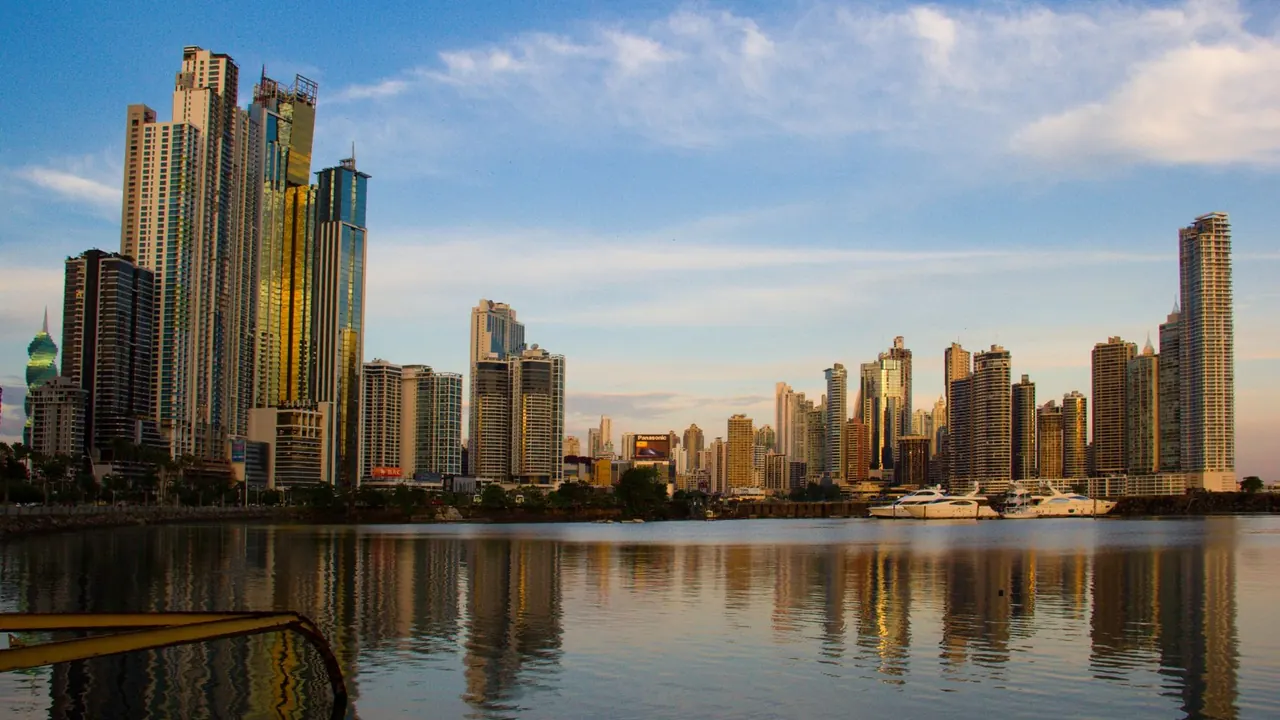
The towers of Panama City reflected in the bay in golden light
- Nature & outdoors74
- Culture & sights62
- Nightlife62
Photo: Ayaita, CC BY-SA 3.0, cropped
Match
50
Every category weighted equally
- Beach & sun49
- Culture & arts50
- Food & nightlife50
- Family trip50
- Outdoors52
- Relax & unwind47
- Shopping & style49
- On a budget50
Panama City in twelve categories
Our verdict on each, scored 0 to 100 against the same fixed benchmark cities, so a score means the same thing on every page.
Beaches & swimming. Scores 44 out of 100.
Food & drink. Scores 57 out of 100.
Culture & sights. Scores 62 out of 100.
Nightlife. Scores 62 out of 100.
Nature & outdoors. Scores 74 out of 100.
Day trips. Scores 50 out of 100.
Good for families. Scores 45 out of 100.
Getting around. Scores 40 out of 100.
Shopping & style. Scores 52 out of 100.
Affordability. Scores 55 out of 100.
Live music & performing arts. Scores 34 out of 100.
Wellness & relaxation. Scores 22 out of 100.
Panama City category by category
Beaches & swimming
44Panama City faces the sea, but it is not a beach city. The water along the Cinta Costera and the bay is murky and not for swimming, so the seafront is for walking and looking at the view. The nearest real option is Isla Taboga, a short ferry ride out, with a small, calm beach below a village. The Pacific water is warm all year, around 27°C.
The better beaches take longer. The Pacific strip around Coronado is about an hour or more by road, with wide grey and tan sand and surf that varies. The Caribbean coast near Portobelo and Isla Grande has clearer water and is close to two hours away. Visitors who want beach time usually leave the city for a night or two.
Food & drink
57Most visitors eat seafood. At the Mercado de Mariscos near Casco Viejo, stalls serve cups of ceviche made with corvina, octopus or shrimp, and the restaurants upstairs fry whole fish with patacones. Panamanian home cooking is plain and filling: sancocho chicken soup, rice with pigeon peas, carimañolas and hojaldras at breakfast. Fondas in the working neighbourhoods are where it tastes most like itself.
For a more polished meal, the restored streets of Casco Viejo have chefs cooking with local fish, tropical fruit and Caribbean flavours. Obarrio and El Cangrejo add a wide international range, a sign of the city's role as a hub for business and migration. The highland coffee is excellent, especially the prized Geisha variety, and speciality cafés serve it all over the city. The local beer is light and meant to be drunk cold.
Culture & sights
62The city's history sits in two places. Casco Viejo is the colonial town rebuilt after 1673, on a small peninsula of balconied houses, churches with a famous golden altar, plazas and a seawall promenade. Panamá Viejo is the earlier settlement, sacked by Henry Morgan, and today a field of stone ruins around a cathedral tower. Both are UNESCO-listed.
The Canal is the landmark people come for. At the Miraflores Locks you can watch huge ships being raised and lowered a few metres away, and the Canal museum in Casco Viejo tells the story of building it. The Biomuseo on the Amador Causeway, designed by Frank Gehry, explains how the isthmus formed. Beyond these, the skyline is modern towers and the museums are small, so two or three days covers the main sights.
Nightlife
62Panama City stays out late, especially from Thursday to Saturday. Casco Viejo is the most atmospheric place to start, with rooftop bars looking across the bay at the lit-up towers, cocktail bars in restored colonial houses and plazas that fill up after dark. Later in the night, Calle Uruguay and the streets around Obarrio and Marbella have clubs playing reggaeton, salsa and electronic music until the early hours.
The crowd is a mix of locals, expats and people in town on business, and dressing up a little is normal. Going out here works better by taxi than on foot, because the districts are spread apart and some of the streets between them are better avoided at night.
Nature & outdoors
74Few capitals sit this close to rainforest. Parque Natural Metropolitano is inside the city, and from its trails you can see sloths, toucans and the skyline from the same viewpoint. About forty minutes away, Soberanía National Park and the Pipeline Road are famous among birdwatchers for their very long species lists. Gamboa is the base for boat trips on the Chagres River and Gatún Lake, where capuchin and howler monkeys live along the banks beside passing ships.
In the city, the Amador Causeway is a flat route for cycling and running with views of the ships waiting for the Canal. Further out, the cooler crater valley of El Valle de Antón has waterfalls and easy hikes. The green season, roughly May to December, brings heavy afternoon rain and the lushest forest. The dry months are hotter and easier for walking.
Day trips
50The best day out is on the Caribbean coast. Portobelo, about one and a half to two hours away, has crumbling Spanish forts, a customs house and a church that draws pilgrims, and the San Lorenzo fortress above the mouth of the Chagres is part of the same UNESCO listing. Closer to the city, the ferry to Taboga reaches a small island village of flower-filled lanes, and a partial Canal transit by boat is a full day of its own.
Emberá communities on the upper Chagres take visitors by dugout canoe, and El Valle de Antón has a Sunday market at the edge of the range. The Pearl Islands and the San Blas islands of the Guna people are more rewarding, but both work much better as an overnight trip.
Good for families
45Children tend to love the Canal. At Miraflores they can watch ships squeeze through the locks, and the Biomuseo has hands-on displays about animals and geography. The Amador Causeway is good for hiring bikes or quadricycles, and the Cinta Costera has playgrounds and space to run in the evening breeze. Summit Nature Park near Gamboa has rescued animals, and boat trips to see monkeys are usually a hit.
The difficult parts are the heat, the humidity, the afternoon downpours in the wet season and a city built for cars, with broken pavements and busy roads. Panamanians are warm towards children and the malls are an air-conditioned fallback, but expect to take taxis most of the time.
Getting around
40Only Casco Viejo is really walkable, and it is compact enough to explore in a morning. Outside it, the city is a long strip of towers and highways. Pavements break off, heat makes walking tiring, and traffic jams are heavy at rush hour. The metro is clean and useful for getting along the city's main axis and out to the Albrook bus terminal, but it misses most of the places visitors want to go.
In practice, most visitors use taxis and ride-hailing apps, which are cheap and easy to find. The Cinta Costera waterfront path links Casco Viejo with the banking district on foot or by bike, if the heat allows. For the Canal, Gamboa and the coast, a hired car or a driver makes life much easier.
Shopping & style
52Shopping here means malls, and they are huge. Air-conditioned centres near Albrook and in the Punta Pacífica and San Francisco districts have international brands, electronics and department stores, and shoppers come from across Central America. Duty-free trade is part of the country's identity, though most of it is based in Colón rather than the capital.
The craft worth taking home is the mola, a layered appliqué textile sewn by Guna women, sold at artisan markets and by vendors in Casco Viejo. Woven baskets from the Emberá and Wounaan, tagua-nut carvings and bags of highland coffee are other good buys. Casco Viejo has some design and craft shops, but the city has no shopping streets made for strolling.
Affordability
55The capital costs more than the rest of Central America, but everyday costs are low. Fondas serve plates of rice, beans and stewed meat cheaply, a cup of ceviche at the fish market costs little, and the metro, buses and taxis are all inexpensive.
The bigger costs are rooms and anything aimed at visitors. Hotels in Casco Viejo and the banking district are priced like a mid-range Western city, and so are the restaurants, rooftop bars and imported drinks there. Guided trips to the rainforest and the islands add up as well. If you eat where Panamanians eat and stay outside the restored old town, you spend noticeably less.
Live music & performing arts
34The jewel is the Teatro Nacional in Casco Viejo, a small, ornate early-twentieth-century theatre with painted ceilings. The national symphony orchestra and visiting companies perform there, but the season is limited. The highlight of the calendar is the Panama Jazz Festival each January, founded by pianist Danilo Pérez, which brings well-known musicians and free outdoor concerts.
The rest of the year, live music is mostly salsa, típico accordion music and Latin bands in bars and at weekend events, and it is hard to plan for in advance. Folk dance in pollera dresses tends to be seen at festivals and staged shows rather than in a regular programme.
Wellness & relaxation
22Panama City has no bathing or spa culture of its own. Wellness here means the spas and pool decks of the larger hotels in Punta Pacífica and the banking district, plus ordinary massage studios. The city itself is loud, humid and full of traffic, and it is not a restful place.
The calmest places are the quiet early-morning streets of Casco Viejo and the forest trails at the city's edge. To really slow down, visitors leave for a few days in the cooler air of the highland valleys or a lodge on the islands.
When should you go?
Pick a month to see what it is like. The climate figures are measured averages, not a forecast.
Panama City in July
Daytime high, °C
Rainfall in the month, mm
The whole year
Shaded against this city’s own year: the deepest cell is its best month for that figure and the palest its weakest.
Where the figures come from
Panama City has no rain gauge within 25 km of the centre, so its rainfall comes from a gridded climate dataset read at the city rather than from a gauge further away.
Temperature and rainfall are climate normals, averaged over the years shown. Panama City: 1991-2020 normals, Tocumen (20.4 km from centre).
Before you go
| Measure | Panama City |
|---|---|
| Official language | Spanish |
| Currency | Balboa (PAB) |
| Sockets | AB110 V, 60 Hz |
| Driving side | Right |
| Time zone | UTC-5 |
| Emergency number | 911 |
| Elevation | 20 m |
| Main airport | Tocumen International Airport (PTY)20 km from centre92 non-stop destinations |
| Public holidays this year | 14 days |
By the numbers
| Measure | Panama City |
|---|---|
| City population | 1,540,000 |
| People per km² | 5,600 |
| Museums within 10 km | 10 |
| UNESCO World Heritage sites within 50 km | 2 |
| Swim season, months above 21 °C | 12 months |
Compare Panama City with
Every comparison with a written verdict behind it.