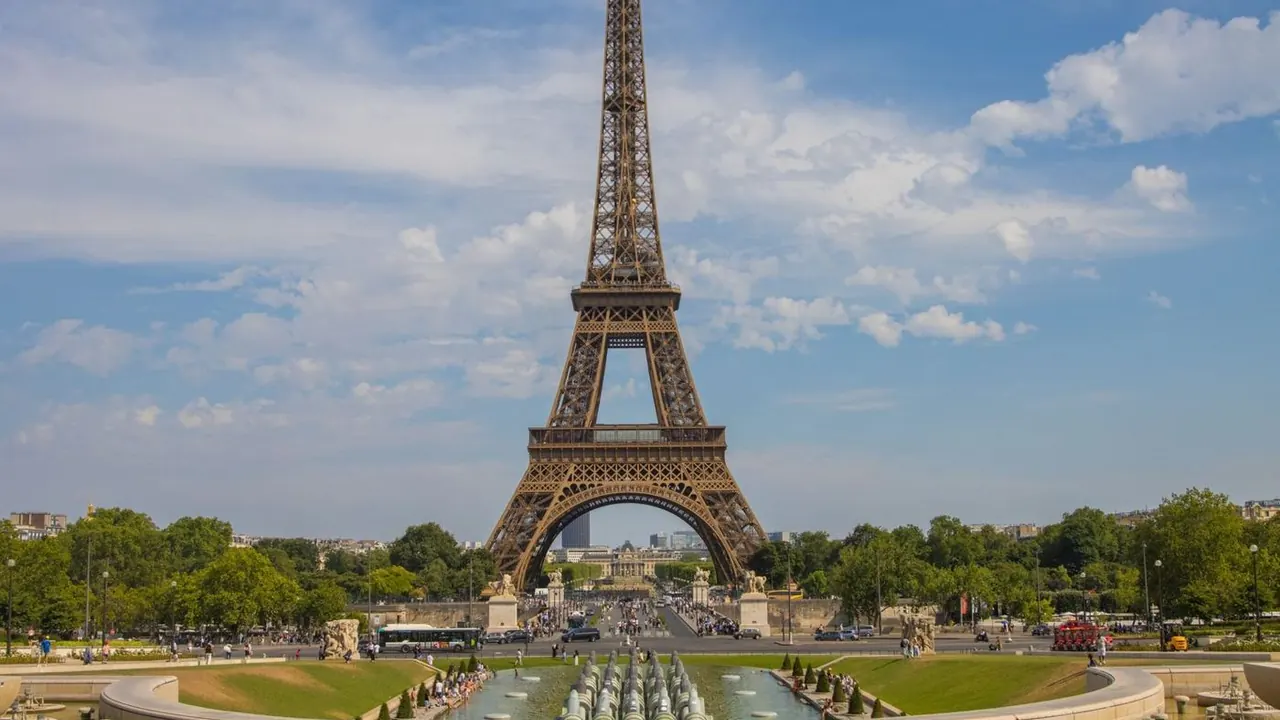
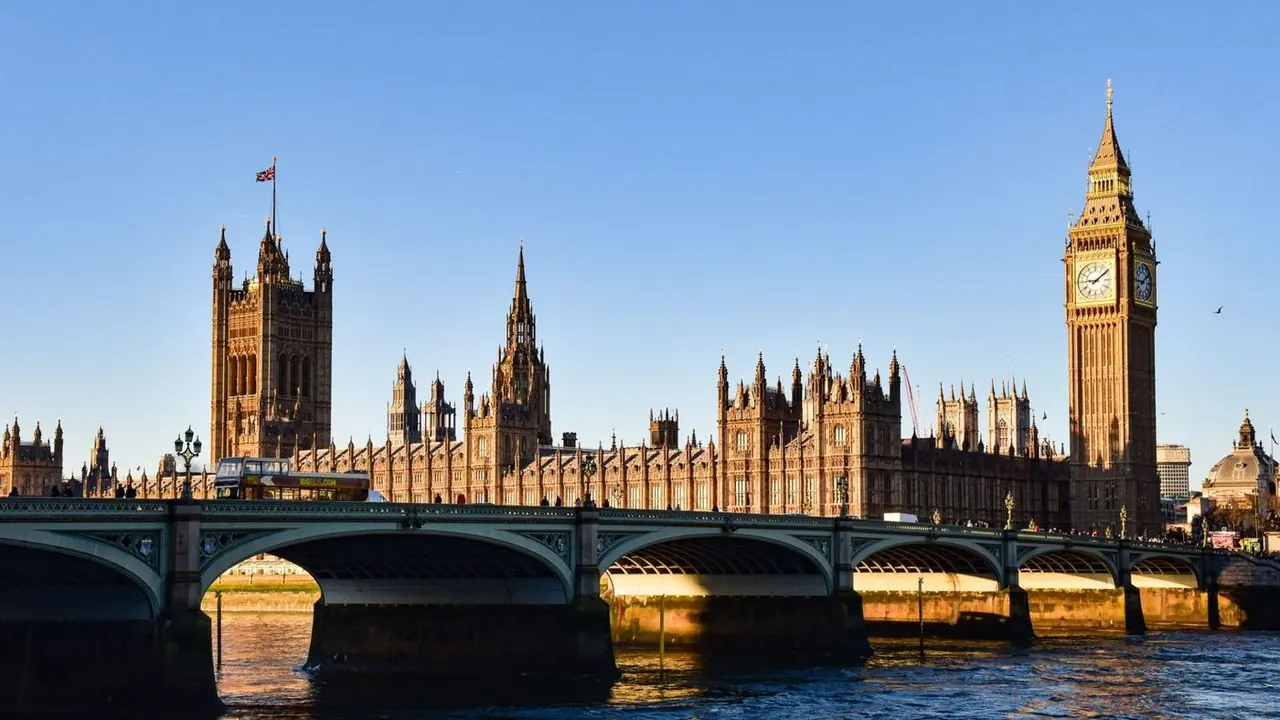
Photos: Paris by Efrem Efre, Pexels License; London by AXP Photography, Pexels License.
Paris or London?
Our verdict in twelve categories, each scored against the same fixed benchmark cities, and the climate month by month, so you can choose for your trip.
Choose Paris for
- food and drink
- prices
- culture and sights
Paris is the better choice if your trip is built around eating and walking. Food runs deeper into daily life there, from the neighbourhood boulangerie to the morning market and the zinc-counter bistro. The compact centre of Haussmann boulevards, the Marais and the Seine makes the walk between sights a pleasure in itself. Paris is also somewhat easier on the wallet, although neither city is cheap.
Choose London for
- beaches
- live music and the arts
- nightlife
London suits the traveller who wants the evenings to count as much as the days. Its theatre, opera and orchestras are mostly in English, Soho and the east give it a longer and louder weekend, and the free national museums let you go back to a gallery for an hour without thinking twice. A day by the sea is also nearer, with Brighton about an hour away by train.
Scoreboard
Twelve categories on one fixed scale from 0 to 100. The shaded stretch is the gap between the two.
Your match
Pick a travel style or drag the sliders, and both match scores follow your weighting.
Too close to call, 1 point apart
Wins on food and drink and prices with your weighting.
Wins on beaches and live music and the arts with your weighting.
What matters to you?
Category by category
What the scores mean for a trip.
Beaches & swimming
Neither city is a beach destination, but London gets you closer to the water. Brighton's pebble beach and pier are about an hour away by train, and Margate and Whitstable have sandier shores. In the city itself, the lidos at Brockwell Park and Parliament Hill and the Hampstead Heath ponds offer real outdoor swimming.
Paris has sand laid along the riverbanks in summer, swimming spots on the Bassin de la Villette and in the Seine, and some handsome Art Deco pools. Its nearest real coast, in Normandy, is about twice as far away as Brighton is from London. The Channel is cool on both sides, so treat a swim as a refreshing outing rather than the reason for the trip.
Food & drink
Both are superb places to eat, but Paris comes out ahead because good food is part of daily life there. Every quarter has its boulangerie, cheese shop and butcher, and there are morning markets such as Aligre, bistros serving steak frites, natural-wine bars and the haute cuisine tradition. Pastry alone is a reason to go.
London's strength is range rather than a cuisine of its own: Bangladeshi cooking on Brick Lane, Punjabi food in Southall, Turkish grills on Green Lanes and the stalls of Borough Market, plus the pub, the Sunday roast and afternoon tea. It suits someone who wants Cantonese one night and Caribbean the next. Paris rewards someone happy to eat French food very well, a few streets away from the big sights.
Culture & sights
These are two of Europe's richest cities for sights, so the difference is in character. London's national collections, from the British Museum to the two Tates, mostly cost nothing to enter, so you can drop in for an hour at a time. Its landmarks, from the Tower to Wren's St Paul's, stand in a mixed cityscape where glass towers rise beside medieval lanes.
Paris has the Louvre, the Impressionists at the Orsay and Gothic masterpieces such as the Sainte-Chapelle. They sit in a remarkably unified centre, where a walk along the UNESCO-listed Seine embankments is a sight in itself. The price is admission charges and queues, so booking ahead matters more there.
Nightlife
London offers the bigger night out. Soho stays packed until late, Shoreditch, Hackney and Dalston have a club and warehouse-party culture, and Brixton and Peckham add large venues. Thousands of pubs sit underneath all of it. The catch is that many pubs empty around eleven, so the really long nights belong to Friday and Saturday.
Paris is more about the evening than the small hours. A night starts on a terrace or in a wine bar, then moves to the crowded bars of Oberkampf, Belleville and the Canal Saint-Martin. Bars close around 2am, and after that the techno clubs and summer barges take over. The Paris scene is chic and can be selective at the door, where London's east is looser.
Nature & outdoors
Both are green cities set in gentle countryside, with no wild landscape. Inside the city, London's open spaces feel larger and rougher. Hampstead Heath has views over the skyline and Richmond Park has deer among ancient oaks, while the Luxembourg and Tuileries in Paris are formal gardens and its big woods of Boulogne and Vincennes lie at the edges.
Further out, Paris has the more distinctive escape. The forest of Fontainebleau is about forty minutes away, and its sandstone boulders draw climbers. London answers with the chalk ridges of the Downs and the Seven Sisters cliffs, an hour or more by train, which suit longer walks.
Day trips
Both cities sit at the centre of rail networks that can fill a week with outings, so the choice comes down to theme. From London the draw is university towns and English history: the colleges of Oxford and Cambridge, Windsor Castle, the Roman baths at Bath, Stonehenge and Canterbury, with Brighton for the seaside.
From Paris it is palaces and wine. Versailles, Fontainebleau and Chantilly are close, as are Monet's garden at Giverny and the Champagne houses of Reims, and Tours is the gateway to the Loire châteaux. Paris also makes it easy to visit another country, with Brussels a short train ride north.
Good for families
Both cities work well for families, and both share the same practical snag: many Tube and metro stations have only stairs, which is hard with a pushchair. London's advantage is that its main children's museums, the Natural History Museum, the Science Museum and the Young V&A, are free, so short visits that suit young children cost nothing. Buses with step-free boarding also make the city easier to cross.
The main draw in Paris is Disneyland, about forty minutes away by RER. The city also has simple pleasures for small children, such as puppet shows, carousels and toy boats on the Luxembourg pond. Small hotel rooms and long museum queues mean a stay there takes a little more planning.
Getting around
You need a car in neither city, and both rail networks have the same weak points: stairs, long corridors and packed rush hours. The difference is size. London is spread out, so you rely on the Tube, the Elizabeth line and the buses, whose top deck doubles as a sightseeing tour. One contactless card pays for all of it.
Paris is compact enough that walking is the main way to see it, from the Marais to Saint-Germain or along the river, and a metro station is never far away for the rest. Changing between the metro and the RER takes some getting used to, and pickpockets work the busiest lines.
Shopping & style
London's shopping is about tailoring and street markets, while Paris leans towards couture and old curiosities. In London, Savile Row and Jermyn Street keep up a tradition of bespoke suits and shirts, the flagships line Oxford Street, and the weekends belong to the antiques of Portobello Road, Camden's alternative stalls and the flowers of Columbia Road.
Paris is where luxury fashion began, and the great houses still have their flagships on Avenue Montaigne. Independent designers fill the Marais, and there are the nineteenth-century covered passages, the vast Saint-Ouen flea market and the bouquinistes' green boxes along the Seine. Its chocolate, cheese and mustard shops make edible souvenirs a bigger part of a shopping day than they are in London.
Affordability
Neither city is cheap, but Paris is the gentler of the two. Public transport is reasonable and much of the centre can be walked. Bakeries, markets, lunchtime set menus and a picnic by the river keep food costs down, even though the major museums charge admission.
London's central hotels are among the most expensive in Europe, and fares are high per journey. Its one great saving is free entry to the national museums and galleries, which can make a day built around culture cheaper there than in Paris. Over a whole stay, though, that rarely closes the gap.
Live music & performing arts
Both are serious cities for music and theatre, but London has the edge, and for English speakers the gap is wider. The West End, the National Theatre, the Globe and the small stages above pubs put on drama in English every night. Alongside them are the Royal Opera House, five major orchestras, the Wigmore Hall and the summer Proms at the Royal Albert Hall.
Paris matches London in places, with ballet at the Palais Garnier, the Opéra Bastille, the Philharmonie and candlelit-style church concerts in the Sainte-Chapelle. Its theatre, from the Comédie-Française down, is mostly in French, though, so many visitors turn to the jazz cellars and the cabaret of Pigalle instead.
Wellness & relaxation
Neither city is a place for a proper restful break, and both offer bathing in small doses. London has a few surviving Victorian and Edwardian Turkish baths with tiled steam rooms and plunge pools, and cold dips at the Hampstead ponds. The thermal waters of Bath are about an hour and a half away by train.
In Paris the equivalent is the hammam, best known at the Grande Mosquée with its mint tea. Otherwise, rest in Paris comes from a slow hour on a café terrace or a chair in the Luxembourg gardens.
When should you go?
Pick your month. The climate figures are measured averages, not a forecast.
Paris in July
London in July
Daytime high, °C
Rainfall in the month, mm
Temperature and rainfall are climate normals, averaged over the years shown. Paris: 1991-2020 normals, Paris-Montsouris (4.6 km from centre). London: 1992-2020 (sunshine 1991-2020, rainfall 1991-2020) normals, London Weather Centre (1.3 km from centre).
The two cities have much the same mild, changeable climate. Winters are grey and cool in both, with daytime highs around 9°C from December to February. That is fine for museums and walking with a coat, but the days are short, and London gets only about 55 hours of sunshine in December. Spring and September are the most comfortable months for long days on foot in either city. In summer Paris runs warmer, reaching 26°C in July and August against London's 23°C. That suits terraces and the river swimming spots, though on the hottest days Paris can feel close for walking the streets.
Rain is spread through the year in both cities rather than coming in a wet season. Paris has its wettest month in May, at 75mm, while London's wettest spell comes in October and November. For London's lidos and ponds, June to August is best, as these are also its sunniest months.
Which traveller are you?
For a culture and arts trip, London has the edge. Its great museums stand up to those of Paris and most are free to enter. The evenings belong to the West End, the National Theatre, the Proms and five orchestras, almost all of it in English.
On a trip with a tight budget, Paris is the easier city to manage. Public transport is reasonable and the centre is walkable, while bakeries, markets, set lunches and riverside picnics keep meals affordable. London's free museums help, but its hotels and fares cost more.
For a short city break, Paris gives you more in a few days. Its compact centre lets you walk from the Louvre to the Marais and Saint-Germain, eating well along the way. London's sights are spread across a much larger city and take longer to link up.
Before you go
| Measure | Paris | London |
|---|---|---|
| Official language | French | English |
| Currency | Euro (EUR) | Pound Sterling (GBP) |
| Sockets | CE230 V, 50 Hz | G230 V, 50 Hz |
| Driving side | Right | Left |
| Time zone | UTC+1, UTC+2 in summer | UTC, UTC+1 in summer |
| Emergency number | 112 | 112 or 999 |
| Elevation | 27 m | 4 m |
| Main airport | Charles de Gaulle International Airport (CDG)22 km from centre277 non-stop destinations | London Heathrow Airport (LHR)23 km from centre224 non-stop destinations |
| Public holidays this year | 11 days | 8 days |
By the numbers
| Measure | Paris | London |
|---|---|---|
| City population | 2,103,778 | 8,799,728 |
| People per km² | 19,960 | 5,598 |
| Museums within 10 km | 251 | 216 |
| UNESCO World Heritage sites within 50 km | 4 | 4 |
Where else could you go?
Every comparison below shares a destination with this one, so you can follow Paris or London somewhere new.