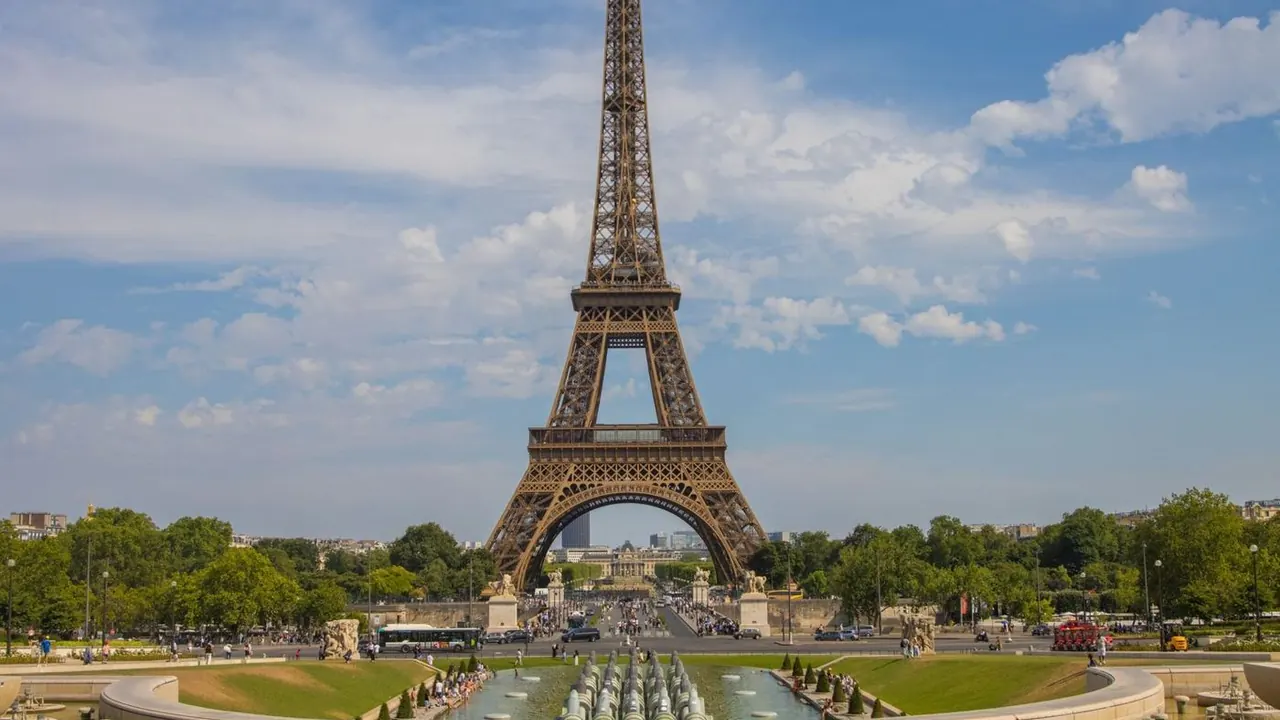
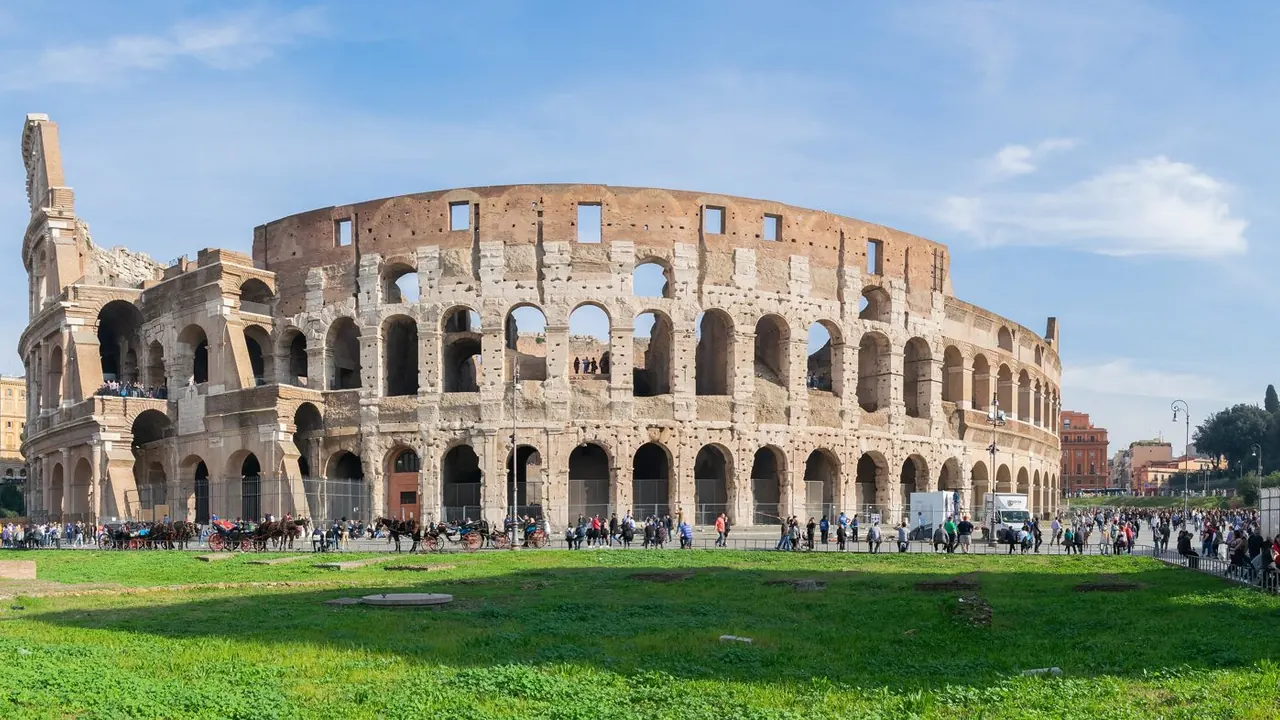
Photos: Paris by Efrem Efre, Pexels License; Rome by Tournasol7, CC BY-SA 4.0, cropped.
Paris or Rome?
Our verdict in twelve categories, each scored against the same fixed benchmark cities, and the climate month by month, so you can choose for your trip.
Choose Paris for
- families
- getting around
- shopping
Paris suits the traveller who wants a city that does everything well. It has the stronger shopping, a longer night out in the bars and clubs of the east, a fuller opera and concert calendar, and food that runs from market stalls to haute cuisine. It is also the easier city with children, and its metro takes you close to almost anything you want to see.
Choose Rome for
- beaches
- prices
- nature and the outdoors
Choose Rome if the past is the point of the trip and you are happy to see it on foot. The ancient city, the Vatican and the Baroque piazzas match anything Paris has, everyday costs are kinder, and in summer the sea at Ostia offers a swim that Paris cannot. Evenings are slower, built around long dinners and a glass outdoors rather than clubs.
Scoreboard
Twelve categories on one fixed scale from 0 to 100. The shaded stretch is the gap between the two.
Your match
Pick a travel style or drag the sliders, and both match scores follow your weighting.
Wins on families and getting around with your weighting.
Wins on beaches and prices with your weighting.
What matters to you?
Category by category
What the scores mean for a trip.
Beaches & swimming
Neither is a beach city, but only Rome has the sea within easy reach. Paris offers sand on its riverbanks in summer, swimming spots at the Bassin de la Villette and handsome Art Deco pools. The nearest real coast is Normandy, on the cool Channel, about two hours away.
From Rome, a suburban train reaches the dark sand at Ostia in about half an hour, and Fregene to the north is calmer. The water is warm in high summer, though rarely clear, and the lidos get crowded. For prettier coves you still have to go south to Sperlonga or Sabaudia.
Food & drink
Paris has the wider range. Every neighbourhood has its bakery, cheese shop and morning market, wine bars pour small-producer bottles, and young cooks run inventive neo-bistros in the east of the city. Couscous in Belleville and pho in the 13th widen the choice further, and Parisian pastry is in a class of its own.
Rome's cooking is narrower but entirely its own: the four classic pastas, artichokes fried Jewish-style in the Ghetto, offal in Testaccio, pizza al taglio and supplì. It is at its best in plain trattorias. In both cities, walk past the menus beside the big sights.
Culture & sights
Both are among the great sightseeing cities, and the difference is one of era rather than depth. Paris is strongest in art from the Middle Ages to the modern day, from the Louvre and the Impressionists of the Musée d'Orsay to the Pompidou. It is all set among Haussmann's uniform stone boulevards.
In Rome, ancient history stands in the street: the Colosseum, the Forum and the Pantheon. On top come gold mosaics, Bernini's piazzas and Caravaggios in parish churches, plus the Vatican Museums and the Borghese Gallery. In Rome the sights meet you on any walk, while in Paris more of them sit behind museum doors.
Nightlife
Paris offers the longer night. The bars of Oberkampf, the Canal Saint-Martin and Belleville fill up on warm evenings, Pigalle has the cocktail bars and the Marais a gay scene. After the bars close, the clubs play house and techno until dawn.
Rome's evenings happen mostly outdoors and end earlier. They start with aperitivo and move on to wine bars in Trastevere, Monti or arty Pigneto, and the small club scene is in Testaccio and Ostiense. Rome suits a long dinner and a late stroll more than dancing.
Nature & outdoors
Neither city has wild landscape on its doorstep, but Rome has the edge in variety. The Appian Way, an old Roman road running out past tombs and aqueducts, makes a remarkable bike ride. The crater lakes of the Alban Hills are close, and the Apennines bring hiking and even winter skiing within about ninety minutes.
Around Paris the land is flat and the outdoors gentle: formal gardens, the Bois de Boulogne and the Bois de Vincennes, canal towpaths, and the forest of Fontainebleau with its climbing boulders. The cooler summers make outdoor days easier than in Rome, where the midday heat rules out a lot from June to August.
Day trips
Both are excellent bases with long lists of easy trips, but the trips differ in kind. From Paris they lean towards palaces, cathedrals and painters: Versailles, Chartres, Monet's garden at Giverny, the Champagne houses of Reims and the Loire châteaux by fast train.
Rome's day trips go further back in time. You can visit the excavated Roman port of Ostia Antica, Hadrian's Villa at Tivoli, the Etruscan tombs at Tarquinia and hill towns such as Orvieto, and Florence and Naples are within ninety minutes.
Good for families
Paris is better set up for children. Disneyland and Parc Astérix are a short train ride away, and the Cité des Sciences, the Jardin d'Acclimatation and the natural history galleries give children sights of their own. The Luxembourg gardens have toy sailboats and puppet shows. Metro stairs and small hotel rooms are the main drawbacks.
Rome welcomes children warmly in its trattorias, but its sights are made for adults. Gladiators, catacombs, the Bioparco zoo in Villa Borghese and daily gelato help, but heat, cobbles and queues make it harder going.
Getting around
Both centres are best seen on foot, but Paris adds a metro so dense that a station is never far away, plus RER lines to the airports and Versailles. Its faults are stairs and rush-hour crowds.
In Rome the metro has only a few lines and barely enters the historic core, so buses and trams that get stuck in traffic fill the gaps. You end up walking almost everywhere, over cobbles and in summer heat, which is pleasant in short stretches but tiring over a full day.
Shopping & style
Paris is the stronger shopping city by a wide margin. Beyond the fashion houses of Avenue Montaigne it has the great department stores, Galeries Lafayette and Le Bon Marché. There are also the designers of the Marais, the covered passages, the Saint-Ouen flea market and the bouquinistes along the Seine.
Rome is good at the luxury end around Via Condotti, near the Spanish Steps, and for leather, handmade shoes and paper. Monti has independent shops, and the Porta Portese flea market runs on Sundays. Rome has little in the way of department stores, though, and the main tourist routes are full of souvenir shops.
Affordability
Both are costly places to stay the night, but Rome is easier on the wallet from day to day. Espresso drunk standing at the bar, pizza al taglio, trattoria lunches, free water from the street fountains and churches full of art that anyone can walk into keep spending down.
Paris costs more at almost every turn, from small hotel rooms to drinks on a terrace and full museum admission. Bakeries, markets, the free permanent collections in the city's own museums and a picnic by the river all help.
Live music & performing arts
Paris has much more on stage. Two opera houses, the Philharmonie, the Radio France orchestras, chamber concerts in the Sainte-Chapelle, jazz cellars and cabaret in Pigalle mean there is something worth booking on most nights.
Rome's classical scene is solid but smaller, centred on the Teatro dell'Opera and the Santa Cecilia orchestra at the Auditorium Parco della Musica. What sets it apart is summer opera in the ruins of the Baths of Caracalla. In both cities most theatre is in the local language.
Wellness & relaxation
Neither city is a place for a proper wellness break, and both rely on hotel and day spas. The one thing Paris has that Rome lacks is the hammam of the Grande Mosquée, with its tiled steam rooms and mint tea.
Rome has real thermal water within reach: the sulphur springs at Bagni di Tivoli, and free open-air hot pools near Viterbo, about ninety minutes away. Inside either city, calm means a quiet garden, the Luxembourg in Paris or the Aventine in Rome.
When should you go?
Pick your month. The climate figures are measured averages, not a forecast.
Paris in July
Rome in July
Daytime high, °C
Rainfall in the month, mm
Where the figures come from
Rome's sunshine is measured 31 km from the centre, at Vigna Di Valle.
Temperature and rainfall are climate normals, averaged over the years shown. Paris: 1991-2020 normals, Paris-Montsouris (4.6 km from centre). Rome: 1991-2020 normals, Roma / Ciampino (15.1 km from centre).
Paris has warm rather than hot summers. Highs peak around 26°C, which suits long days on foot, and June and September are the most pleasant months. Winters are grey and chilly, with highs near 8°C from December to February. Rain falls fairly evenly through the year, so no month is reliably dry.
Rome is hotter and sunnier. July and August reach about 31°C, with long, dry, sunny days and a sea at 25°C that makes a swim worthwhile, but the midday heat is hard on sightseeing. April, May and late September are the best months for walking the streets. October turns wet, and November is the wettest month at 114mm, although Rome's winter stays milder than the one in Paris.
Which traveller are you?
On a beach and sun trip, Rome is the only real choice of the two. Its summers are hot, dry and reliably sunny, and the sea is close enough to split a day between ruins and a swim. From Paris the coast is a separate journey.
On a family trip with young children, Paris makes the days easier. It has far more that is made for children, both in the city and just beyond it, and its summers stay cooler. Rome mostly asks children to enjoy adult sights in the heat.
For a shopping trip, Paris can fill a whole stay, from couture and design to antiques, books and fine food to carry home. Rome rewards a few well-chosen Italian-made buys, but the range thins out quickly beyond its luxury streets.
Before you go
| Measure | Paris | Rome |
|---|---|---|
| Official language | French | Italian |
| Currency | Euro (EUR) | Euro (EUR) |
| Sockets | CE230 V, 50 Hz | CFL230 V, 50 Hz |
| Driving side | Right | Right |
| Time zone | UTC+1, UTC+2 in summer | UTC+1, UTC+2 in summer |
| Emergency number | 112 | 112 |
| Elevation | 27 m | 21 m |
| Main airport | Charles de Gaulle International Airport (CDG)22 km from centre277 non-stop destinations | Rome–Fiumicino Leonardo da Vinci International Airport (FCO)23 km from centre242 non-stop destinations |
| Public holidays this year | 11 days | 13 days |
By the numbers
| Measure | Paris | Rome |
|---|---|---|
| City population | 2,103,778 | 2,748,109 |
| People per km² | 19,960 | 2,135 |
| Museums within 10 km | 251 | 178 |
| UNESCO World Heritage sites within 50 km | 4 | 7 |
| Swim season, months above 21 °C | - | 5 months |
Where else could you go?
Every comparison below shares a destination with this one, so you can follow Paris or Rome somewhere new.