Peru
Lima
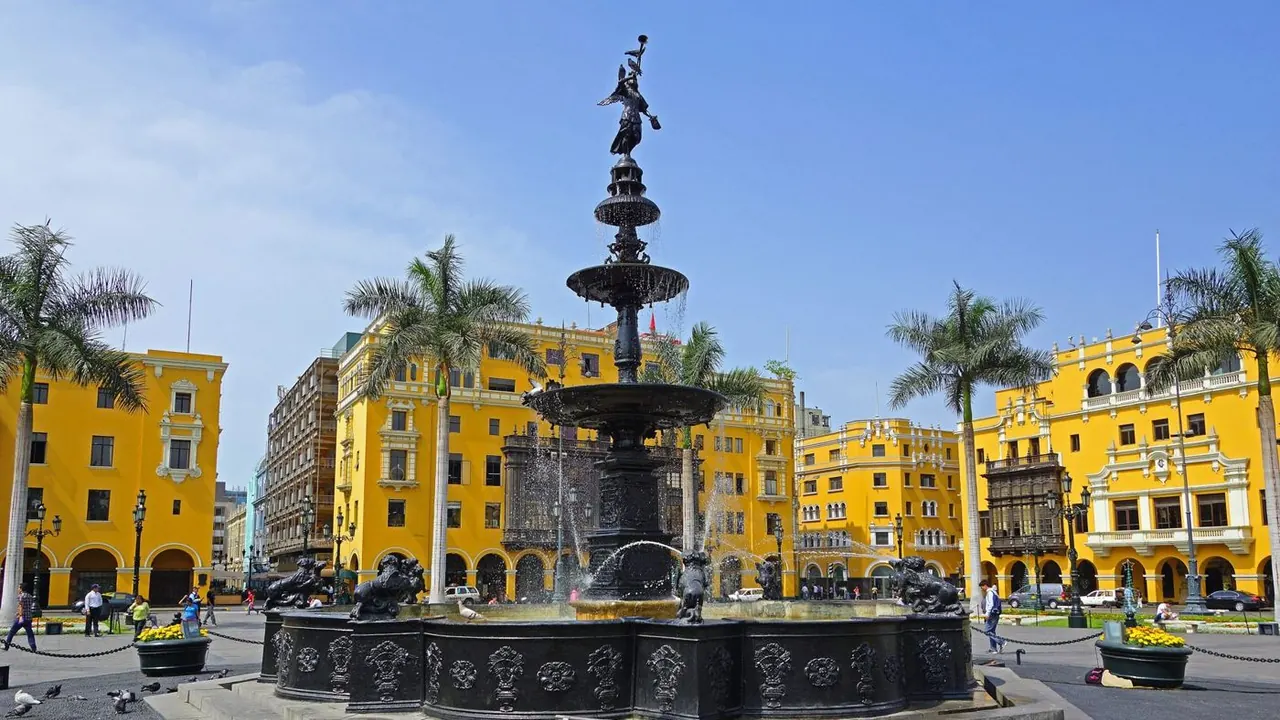
The fountain on Plaza Mayor
- Food & drink88
- Affordable cities70
- Culture & sights66
Photo: James C., CC BY-SA 2.0, cropped
Match
51
Every category weighted equally
- Beach & sun50
- Culture & arts54
- Food & nightlife57
- Family trip49
- Outdoors48
- Relax & unwind48
- Shopping & style54
- On a budget53
Lima in twelve categories
Our verdict on each, scored 0 to 100 against the same fixed benchmark cities, so a score means the same thing on every page.
Beaches & swimming. Scores 42 out of 100.
Food & drink. Scores 88 out of 100.
Culture & sights. Scores 66 out of 100.
Nightlife. Scores 62 out of 100.
Nature & outdoors. Scores 45 out of 100.
Day trips. Scores 34 out of 100.
Good for families. Scores 42 out of 100.
Getting around. Scores 35 out of 100.
Shopping & style. Scores 52 out of 100.
Affordability. Scores 70 out of 100.
Live music & performing arts. Scores 53 out of 100.
Wellness & relaxation. Scores 25 out of 100.
Lima category by category
Beaches & swimming
42Lima sits on the Pacific, but the shore below the Miraflores and Barranco cliffs is the Costa Verde: grey pebble beaches with steady surf that suit surfers more than swimmers. The cold Humboldt Current keeps the sea cool all year. It reaches about 19-21°C in the summer months from December to March and drops well below that in the grey, misty winter.
The real beach life is to the south. Punta Hermosa, Punta Negra, San Bartolo and the sandy coves beyond are about an hour away by car. In summer, Lima families fill them at weekends. For the rest of the year they are quiet and overcast. For a visitor they make a pleasant summer day out, not the reason for the stay.
Food & drink
88Eating is the main reason many travellers come to Lima. The city's cooking mixes coastal, Andean and Amazonian ingredients with Spanish, African, Chinese and Japanese influences. That gives it ceviche and tiradito at lunchtime cevicherías, Nikkei raw fish, chifa Chinese-Peruvian kitchens across the city, and old criollo dishes such as lomo saltado, ají de gallina and causa. In the evenings, street carts grill anticuchos of beef heart, and picarones are fried to order.
The markets show where all this comes from: Surquillo next to Miraflores, and the bigger produce halls, piled with dozens of potatoes, chillies and Amazonian fruits. At the top end, Lima has some of the most celebrated tasting-menu restaurants in the Americas, built on Peru's altitudes and ecosystems. Pisco sours and chilcanos are the local drinks, and Peruvian coffee and chocolate are good.
Culture & sights
66The historic centre was the seat of Spain's South American viceroyalty and is listed by UNESCO. The Plaza de Armas is framed by the cathedral, the Government Palace and the archbishop's palace, whose carved wooden balconies are a Lima trademark. A short walk away is the Monastery of San Francisco, with its painted cloisters, old library and catacombs full of bones. Santo Domingo and the Casa de Aliaga are close by.
The best museums are elsewhere. The Larco Museum in Pueblo Libre holds a superb collection of pre-Columbian ceramics and gold. MALI, in a palace in the Parque de la Exposición, traces Peruvian art over three millennia. Inside the modern districts stand adobe pyramids such as Huaca Pucllana in Miraflores, much older than the city around them. Barranco adds colourful republican-era mansions and contemporary art galleries.
Nightlife
62Going out in Lima starts late and is centred on Barranco. This old seaside district's mansions house bars, pisco and cocktail bars and clubs that fill from around midnight and keep going until dawn at weekends. Miraflores is the second hub, with bars around Parque Kennedy and a more polished crowd, plus larger clubs along the coast roads.
The mood is social and dressy rather than hedonistic, and dancing to salsa, cumbia and reggaetón matters more than electronic music. Weeknights are much quieter. Taxis or ride-hailing are the usual way home, because walking long distances late at night is not wise.
Nature & outdoors
45Lima is a desert city on cliffs above the Pacific, and its outdoor life faces the sea. The clifftop malecón through Miraflores and Barranco is a long path for walking and cycling. Paragliders launch from its parks, and surfers ride the breaks below all year. Boats from Callao go out to the Palomino Islands, where hundreds of sea lions haul out and visitors can swim among them in wetsuits.
Inland, the hills are bare and brown for most of the year. In the misty winter, from June to October, the lomas fog oases such as Lachay turn briefly green. The high Andes are more than a day trip away, and a grey ceiling covers the sky for much of the year.
Day trips
34Lima's day trips are few. The best is Pachacamac, a vast adobe sanctuary of temples and pyramids used for more than a thousand years before the Inca. It is about an hour south, at the city's edge. Callao, the old port, is closer still, with the Real Felipe fortress and the faded seaside promenade of La Punta. North along the coast, Chancay and the Huaral valley make a quieter outing.
Peru's most rewarding sites near the capital are further away. The ancient city of Caral, the Paracas peninsula and the pisco vineyards around Ica are all three or more hours away. They are better as an overnight trip than a day out.
Good for families
42Peruvians are warm towards children, and families will feel welcome in restaurants and parks. Parque de las Leyendas combines a zoo of Peruvian animals from the coast, mountains and jungle with an archaeological site. The Circuito Mágico del Agua in the Parque de la Reserva lights up its large fountains in the evenings. The parks and playgrounds along the Miraflores cliffs are good for an afternoon, and in summer the southern beaches suit older children.
The hard part is the city itself. Traffic is heavy and chaotic, distances are long, and young children soon tire of the museums and colonial churches. Families do best staying in Miraflores or Barranco and keeping each day to one area.
Getting around
35Most visitors stay in Miraflores or Barranco. Both are pleasant to walk, and the clifftop path joins them. Beyond them Lima spreads widely, and its traffic is some of the slowest in South America. The Metropolitano bus rapid transit runs in its own lanes from the southern districts to the historic centre and is the quickest way there. The metro lines serve areas that visitors rarely need.
For anything else, people use ride-hailing apps and taxis. They are easy and cheap, but journeys of a few kilometres can take an hour at rush hour. The informal buses and combis cover the whole city, but they are confusing for a first-time visitor. A car is not needed, and driving yourself is not advised.
Shopping & style
52Shopping in Lima is about Peruvian materials and crafts. Fine alpaca and baby alpaca knitwear is the main purchase, sold in specialist shops in Miraflores and San Isidro. The craft markets along Avenida Petit Thouars gather textiles, ceramics, silver and retablos from every region, which is handy for travellers who will not reach the highlands. Barranco has small design and concept shops selling work by Peruvian designers and artisans.
For everything else there are large modern malls, including one built into the cliffs above the sea. They carry international brands, but there is little luxury depth. Visitors who are not interested in textiles and crafts will find little to seek out.
Affordability
70Lima is good value for most visitors. The set lunch menus in neighbourhood restaurants cost little, and so do street snacks, ride-hailing across the city and most museum entries. Mid-range hotels in Miraflores and Barranco cost less than in most Western capitals.
The costs rise at the top end. The famous tasting-menu restaurants charge international prices, upscale cevicherías and cocktail bars in Miraflores add up, and imported goods are not cheap. A traveller who eats where locals eat will spend little, while a trip planned around the city's best restaurants can be expensive.
Live music & performing arts
53The live tradition worth seeking out in Lima is the peña. In Barranco especially, these evenings of música criolla and Afro-Peruvian rhythms played on guitar and cajón go on late, and the audience joins in the dancing. Folklore shows with dances from across Peru are staged for visitors, and Barranco has a few small jazz and live-music rooms.
The formal scene is smaller. The Gran Teatro Nacional hosts the national symphony orchestra, ballet and folklore companies, and the restored Teatro Municipal in the centre stages opera and concerts. Spanish-language theatre is active, but most visitors will get more out of a peña night than out of the concert halls.
Wellness & relaxation
25Lima is not a place to unwind. It has no bathing tradition or thermal springs. Wellness means the spas of the larger hotels and some day spas and massage studios in Miraflores and San Isidro. The city's traffic, horns and grey winter skies make for an energetic stay, and most visitors spend their time eating and sightseeing.
The calmest moments are an early walk or yoga session in the clifftop parks above the Pacific. Travellers who want a restful break usually save it for elsewhere in Peru.
When should you go?
Pick a month to see what it is like. The climate figures are measured averages, not a forecast.
Lima in July
Daytime high, °C
Rainfall in the month, mm
The whole year
Shaded against this city’s own year: the deepest cell is its best month for that figure and the palest its weakest.
Temperature and rainfall are climate normals, averaged over the years shown. Lima: 1991-2020 normals, Lima-Callao / Aerop. Internacional Jorgechavez (10.9 km from centre).
Before you go
| Measure | Lima |
|---|---|
| Official language | Spanish, Aymara, Quechua |
| Currency | Sol (PEN) |
| Sockets | ABC220 V, 60 Hz |
| Driving side | Right |
| Time zone | UTC-5 |
| Emergency number | 111 or 911 |
| Elevation | 154 m |
| Main airport | Jorge Chávez International Airport (LIM)9 km from centre61 non-stop destinations |
| Public holidays this year | 16 days |
By the numbers
| Measure | Lima |
|---|---|
| City population | 9,943,800 |
| People per km² | 3,721 |
| Museums within 10 km | 47 |
| UNESCO World Heritage sites within 50 km | 2 |
| Swim season, months above 21 °C | 2 months |
Compare Lima with
Every comparison with a written verdict behind it.