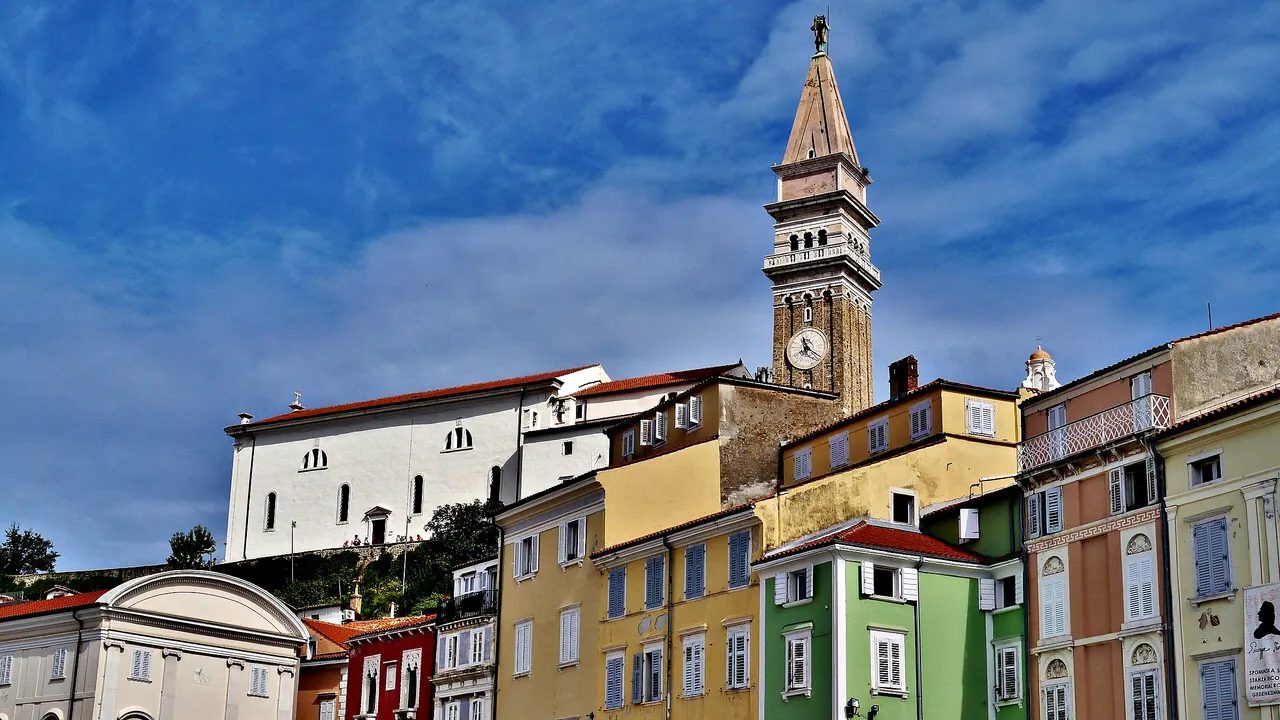
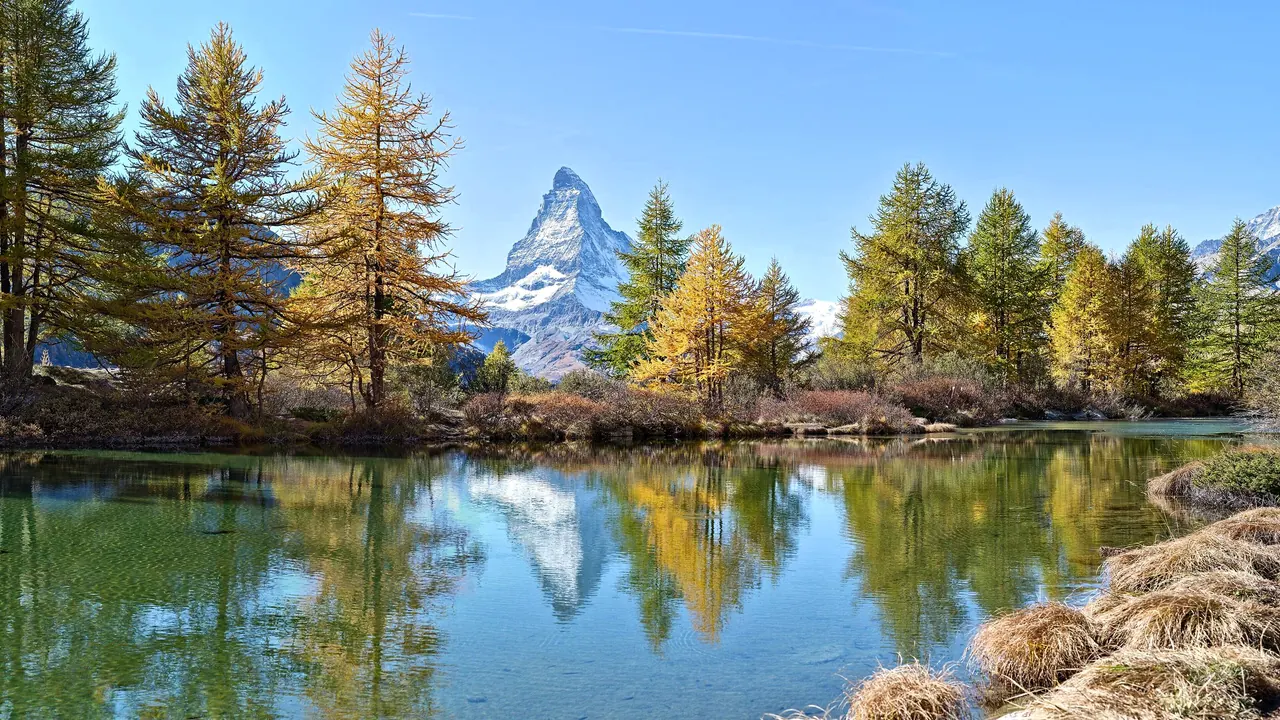
Photos: Piran by Zairon, CC BY-SA 4.0, cropped; Zermatt by Roy Egloff, CC BY-SA 4.0, cropped.
Piran or Zermatt?
Our verdict in twelve categories, each scored against the same fixed benchmark cities, and the climate month by month, so you can choose for your trip.
Choose Piran for
- beaches
- day trips
- prices
Piran suits a slow summer trip by the sea. Mornings go on swimming off the rocks below the old walls and afternoons on wandering the Venetian lanes, with Trieste, the Istrian hill towns and even Venice close enough for days out. It is also by far the gentler of the two on the wallet, and its salt-pan spas make it a good choice for unwinding.
Choose Zermatt for
- nature and the outdoors
- getting around
- nightlife
Zermatt is for people who travel to be in the mountains. The Matterhorn stands over the village, and lifts and cog railways take you straight up into glaciers, ski runs and high trails that the Slovenian coast cannot match. In exchange you get one of the most expensive places in the Alps, no swimming and very little to see between outings, so it pays off only if you spend your days outdoors.
Scoreboard
Twelve categories on one fixed scale from 0 to 100. The shaded stretch is the gap between the two.
Your match
Pick a travel style or drag the sliders, and both match scores follow your weighting.
Wins on beaches and day trips with your weighting.
Wins on nature and the outdoors and getting around with your weighting.
What matters to you?
Category by category
What the scores mean for a trip.
Beaches & swimming
Piran is a swimming town rather than a sandy one. You get into clear water from concrete platforms and ladders around the Punta, Fiesa offers a small pebble cove, and for sand you go along the shore to Portoroz or to the cliff-backed bay at Strunjan.
Zermatt has nothing to offer here. It is a high valley village with no sea or bathing lake, its mountain tarns stay icy even in August, and swimming means a hotel pool.
Food & drink
The two eat equally well, but in very different ways. Piran is grilled fish, squid and scampi buzara in simple konobas off Tartini Square, washed down with Malvazija or Refosk, and the menus along the harbour soon start to repeat themselves.
Zermatt's best meals are long lunches at chalet terraces above Findeln, Furi and Zum See, with raclette, fondue and Valais wines in view of the Matterhorn. The village also has a few ambitious kitchens that Piran lacks, though cheap meals are hard to find.
Culture & sights
Piran's old town is the sight in itself: Venetian Gothic houses packed onto a peninsula, the oval Tartini Square, St George's campanile and the medieval walls on the ridge. Add a maritime museum and the Minorite cloister and you have a full, pleasant day.
Zermatt's heritage is narrower and all about the mountain. There is the Matterhorn Museum and the story of 1865, the mountaineers' cemetery, and the old larch barns of the Hinterdorf. It fills a morning before you head back up the lifts.
Nightlife
Neither is a party place, but Zermatt has more going on, at least in winter. Après-ski fills the slope-side bars from late afternoon, and a few bars and small clubs on the main street stay open past midnight on busy weekends. In summer, hikers with early starts are in bed after dinner.
Piran's evening is a glass of wine on Tartini Square or a sunset on the Punta, and then quiet. For a casino or a summer club, you go over to Portoroz.
Nature & outdoors
Piran's outdoors is coastal and small in scale: a walk along the Strunjan cliffs, birds in the Secovlje lagoons, a paddle under the flysch, an easy ride inland on the Parenzana. It suits someone who wants an active morning before a swim, and it is best in spring and autumn, when the heat has gone.
Zermatt is on a completely different scale, because there the high Alps are the reason for the trip, not a side outing. Lifts from the village climb past 3,800m, so skiers, serious hikers and climbers going up with a guide could fill a whole season without running out of ground. The two places also peak at opposite times of year: Zermatt's outdoor season is winter snow and then high-summer walking, which is exactly when Piran is too hot for anything more than a dip.
Day trips
Piran makes far the better base for days out, because three countries meet on its doorstep. Trieste is under an hour away, Rovinj, Porec and the hilltop towns of Motovun and Groznjan lie across the Croatian border, Ljubljana and Predjama Castle are within reach, and summer boats cross to Venice. A hire car opens most of it up.
From Zermatt, every outing starts with a long train ride down the valley. Sion's castle hills and Brig's Stockalper Palace are worth it, but most visitors would rather spend a spare day on the mountain.
Good for families
Both work about equally well with children, and for the same reason: their car-free streets are calm and safe. The difference is in what children do there. In Piran it is a warm, gentle sea, the small aquarium and the shallow sand at Portoroz, though swimming from town means ladders and the lanes are steep.
Zermatt suits families who ski or hike together. It has ski schools and nursery slopes at Sunnegga, marmots to spot and the fun of riding cog railways, but rainy days are hard to fill and the highest viewpoints are too cold and thin-aired for small children.
Getting around
Both are car-free and easy on foot, but Zermatt connects better. Its lifts, funicular and cog railway leave from within walking distance of the centre, electric taxis cover the edges, and the train runs smoothly into the Swiss rail network.
Piran takes a quarter of an hour to cross, and a shuttle runs to the car park and to Portoroz. With no railway and slow regional buses, though, the Istrian towns and the Karst usually mean hiring a car.
Shopping & style
Zermatt has the slightly better shopping street. Its one main street has Swiss watch boutiques and outdoor outfitters that are truly worth it if you need kit, along with plenty of cowbells and chocolate. Piran is all small craft shops and harbour stalls, and the best things to take home are the local salt flower, olive oil and coastal wine.
Affordability
This is where the two are furthest apart. Piran costs about what Western Europe usually does, with a summer premium on old-town rooms that you can avoid by staying in Portoroz or coming out of season, and swimming and walking are free.
Zermatt is expensive at every step: plain hotel rooms, terrace lunches, and the lifts and railways that are the whole point of being there. Self-catering, supermarket picnics and sleeping down the valley in Täsch help, but it remains a splurge.
Live music & performing arts
Both are thin on live performance, and each depends on a few seasonal events. Piran honours Tartini with summer concerts in churches, the monastery cloister and on the main square, and its small theatre puts on occasional recitals. Zermatt has no theatre, but Zermatt Unplugged brings acoustic sets in spring and a chamber music festival fills the church in late summer.
Wellness & relaxation
Piran is the more restful choice, and its treatments are distinctive. You can lie in brine and salt mud outdoors among the Secovlje lagoons, use the seawater pools in Portoroz or the health resort at Strunjan, and spend slow evenings watching the light over the bay.
Zermatt's version is a hotel spa with mountain views after a day on the slopes. It has saunas and pools of high quality and clean, quiet air, but no thermal springs, and in peak weeks the mood is active rather than slow.
When should you go?
Pick your month. The climate figures are measured averages, not a forecast.
Piran in July
Zermatt in July
Daytime high, °C
Rainfall in the month, mm
Where the figures come from
Zermatt has no weather station within reach, so its figures come from a gridded climate model rather than a measured record, and read a broad area rather than the city itself.
Temperature and rainfall are climate normals, averaged over the years shown. Piran: 2005-2020 (sunshine 1991-2020, rainfall 1991-2020) normals, Portoroz (1.2 km from centre). Zermatt: 1991-2020 normals, TerraClimate 4 km grid at the town, no weather station within 90 km.
The two places peak in different seasons. Piran is at its best from June to September, when daytime highs reach about 30°C in July and the sea warms to 25°C, which is ideal for swimming off the rocks. May and late September are mild and quieter for walking the old town. Rain builds through the autumn and November is wet, so winter is grey and cool rather than harsh.
Zermatt has two seasons. In winter the village stays below freezing and snow covers the slopes, so December to March is for skiing. Summer is short and fresh, with highs of about 14°C in July and August, which suits long hikes but never beach weather. Spring and late autumn are in-between months, and November is the wettest of the year.
Which traveller are you?
On a beach and sun trip, Piran is the only choice. You can swim in warm, clear Adriatic water straight from the town, and Portoroz and Strunjan are nearby. Zermatt has no sea, no bathing lake and tarns far too cold for a dip.
For an outdoors trip, Zermatt is in another league. Lifts and cog railways go straight from the village onto glaciers, four-thousand-metre peaks and hundreds of kilometres of marked trails, with ski runs into Italy in winter. Piran's cliffs and salt pans are gentle by comparison.
On a trip on a tight budget, Piran is the sensible pick. Swimming and walking cost nothing, and simple konobas and local wine keep meals fair. In Zermatt even plain rooms, terrace meals and the lifts you need every day are steep.
Before you go
| Measure | Piran | Zermatt |
|---|---|---|
| Official language | Slovene | French, German, Italian, Romansh |
| Currency | Euro (EUR) | Swiss Franc (CHF) |
| Sockets | CF230 V, 50 Hz | CJ230 V, 50 Hz |
| Driving side | Right | Right |
| Time zone | UTC+1, UTC+2 in summer | UTC+1, UTC+2 in summer |
| Emergency number | 112 | 112 |
| Elevation | 7 m | 1,624 m |
| Main airport | Trieste Airport (TRS)34 km from centre32 non-stop destinations | Geneva International Airport (GVA)128 km from centre150 non-stop destinations |
| Public holidays this year | 21 days | 9 days |
By the numbers
| Measure | Piran | Zermatt |
|---|---|---|
| City population | 3,787 | 6,023 |
| People per km² | 85 | 25 |
| Museums within 10 km | 5 | 2 |
| UNESCO World Heritage sites within 50 km | 4 | 2 |
| Swim season, months above 21 °C | 4 months | - |
Where else could you go?
Every comparison below shares a destination with this one, so you can follow Piran or Zermatt somewhere new.