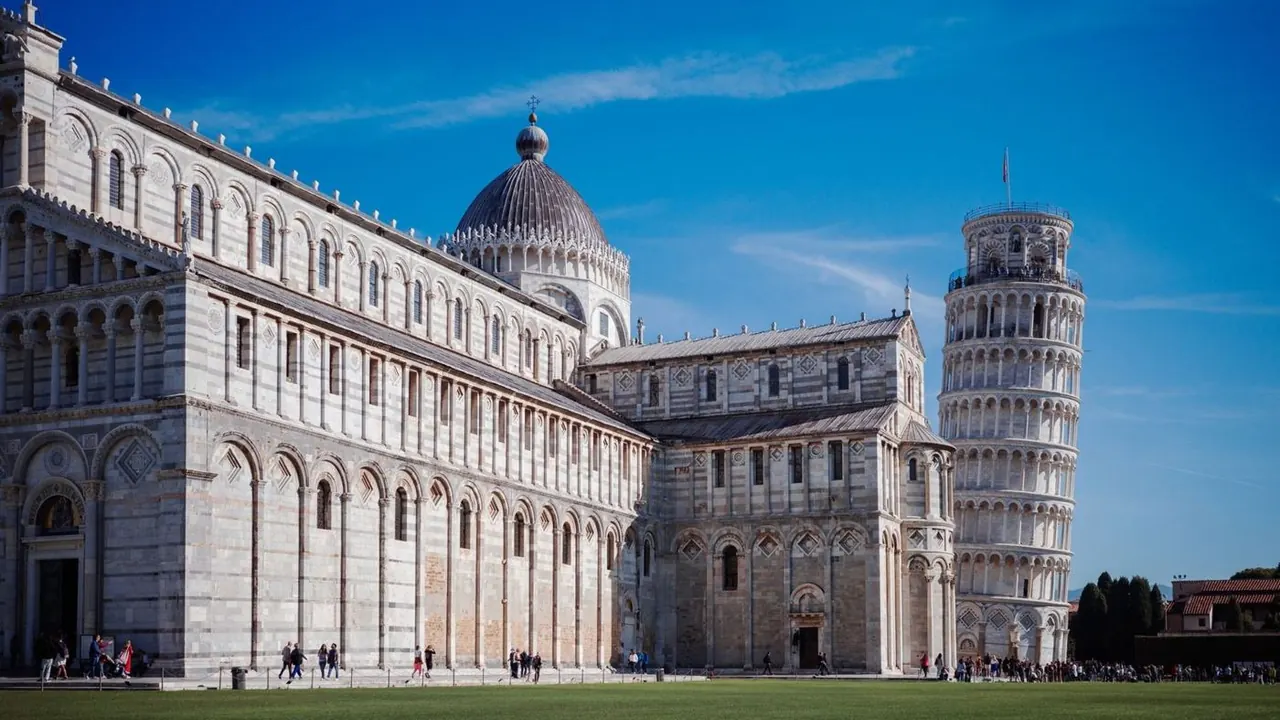
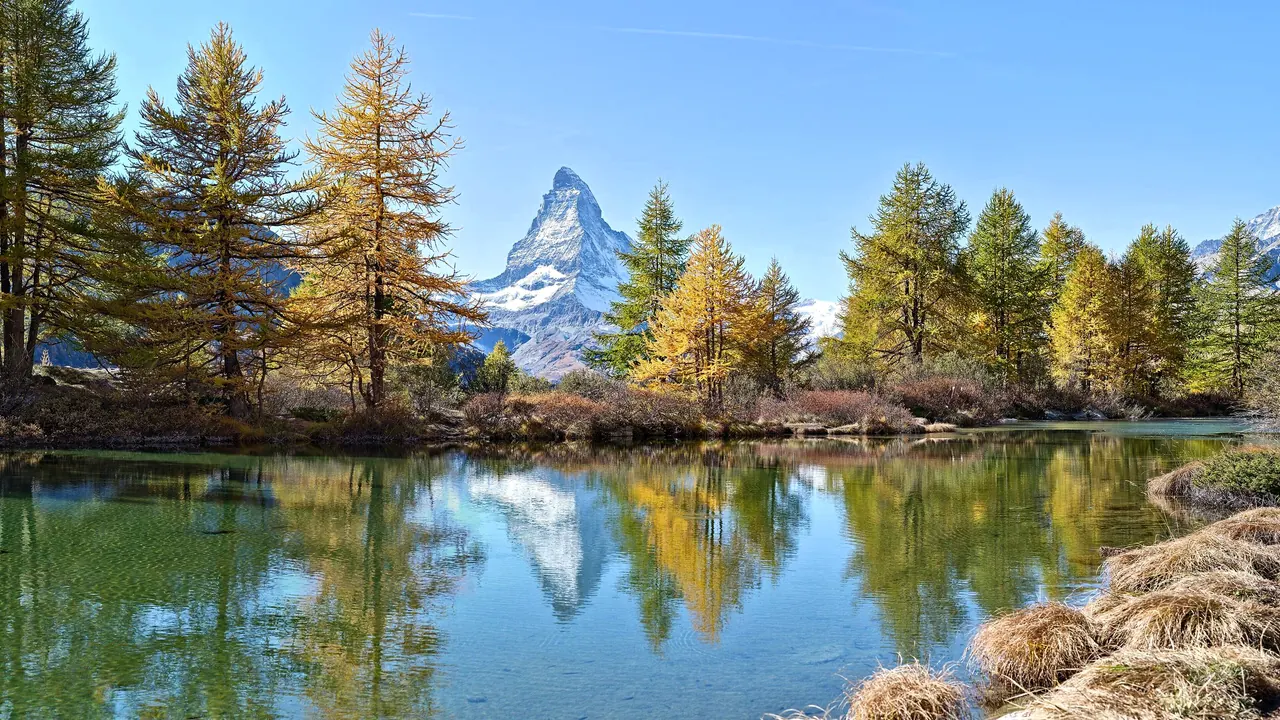
Photos: Pisa by Bruno Kraler, Pexels License; Zermatt by Roy Egloff, CC BY-SA 4.0, cropped.
Pisa or Zermatt?
Our verdict in twelve categories, each scored against the same fixed benchmark cities, and the climate month by month, so you can choose for your trip.
Choose Pisa for
- day trips
- beaches
- prices
Pisa suits a traveller who wants a base in Tuscany rather than a single destination. The cathedral square and the quieter old city fill two days, Florence, Lucca and the Cinque Terre are all within easy reach by train, and the coast and its sandy beaches are close by for summer afternoons. It is also by far the gentler choice on the wallet, with student trattorias and a walkable centre keeping daily costs down.
Choose Zermatt for
- nature and the outdoors
- wellness
- getting around
Zermatt is for people who travel for mountains and accept the bill that comes with them. The Matterhorn stands over a car-free village, and lifts and cog railways lead to glaciers, high trails and skiing that runs into summer. Towns, museums and nightlife are thin, and day trips mean a long train ride down the valley, so it rewards a trip spent outdoors, on skis in winter or on foot in summer.
Scoreboard
Twelve categories on one fixed scale from 0 to 100. The shaded stretch is the gap between the two.
Your match
Pick a travel style or drag the sliders, and both match scores follow your weighting.
Wins on day trips and beaches with your weighting.
Wins on nature and the outdoors and wellness with your weighting.
What matters to you?
Category by category
What the scores mean for a trip.
Beaches & swimming
Pisa has a real coast about 12km away, with long sandy beaches backed by pines at Tirrenia and Calambrone and shallow water that warms up nicely in midsummer. It is an afternoon off from sightseeing rather than a beach resort, but it is there.
Zermatt has no sea and no bathing lake, and its mountain tarns are far too cold to swim in. Swimming there means a hotel pool.
Food & drink
Pisa eats better and more cheaply, in plain Tuscan style: cecina from wood ovens, ribollita and game in the trattorias around the market square, with seafood towards the coast. Skip the menus by the tower and it is easy to eat well.
Zermatt's best meals are long lunches at mountain chalets above Findeln and Furi, with raclette, air-dried beef and Valais wines on a sunny terrace. Village dining leans towards hotel restaurants and a few expensive kitchens, and many places close between seasons.
Culture & sights
Pisa is the place for sightseeing. The cathedral, baptistery, tower and Camposanto make one of Italy's great ensembles, and beyond them lie Piazza dei Cavalieri, Santa Maria della Spina and the San Matteo museum.
Zermatt's heritage is a single story, mountaineering, told in the Matterhorn Museum and the climbers' cemetery, with the old larch barns of the Hinterdorf as a reminder of the farming village. It is a morning's interest in a place people visit for the peaks.
Nightlife
Neither is a party town, but Pisa has more of an evening life, built on students drinking outside small bars around the old market and aperitivo along Borgo Stretto during term. In Zermatt the fun is seasonal: loud après-ski in slope-side bars in winter and a few late bars on the main street, while summer evenings end after dinner because the hikers have early starts.
Nature & outdoors
Zermatt is one of the great Alpine settings, with the Matterhorn above the village, the Gorner Glacier and dozens of four-thousand-metre peaks around it. Lifts open up skiing that crosses into Italy and, in summer, trails such as the Five Lakes walk and the Europaweg.
Pisa's outdoors is gentler and flatter: the San Rossore park of pine forest and dunes for cycling and riding, the olive terraces of Monte Pisano, and the Apuan Alps further out for real hiking.
Day trips
Pisa is an outstanding base. Florence is an hour by train, Lucca under half an hour, the Cinque Terre a little over an hour, and Volterra, San Gimignano and Siena are all within a day by car.
From Zermatt every outing begins with the long train down the valley, and the best of them, Sion with its castle hills and vineyards, is about an hour and a half away. Most visitors spend spare days in the mountains instead.
Good for families
Both work about equally well with children, in different ways. Pisa offers a flat little centre, the tower lawn and the famous photo, plus shallow sandy beaches and bike rides in the park, with summer heat and crowds to plan around.
Zermatt's car-free streets make it calm and safe, with ski schools, nursery slopes and marmot-spotting walks, but rainy days are hard to fill and the highest viewpoints can be too cold and thin-aired for small children.
Getting around
Both are easy on foot. Pisa is a small, flat city with the airport a shuttle train away and a station that serves as a hub for western Tuscany. Zermatt is car-free from the start, so you arrive by train and then walk or use electric taxis, while cog railways and gondolas carry you up into the mountains and leaving the valley takes over an hour.
Shopping & style
Pisa has more to browse, if nothing exceptional: high-street fashion on Corso Italia, smarter shoes and pastry shops under the Borgo Stretto arcades, a produce market and a monthly antiques fair by the river.
Zermatt's one main street is all luxury watches, jewellery and souvenirs. The ski and mountaineering outfitters are the real reason to shop there.
Affordability
The gap here is enormous. Pisa is moderately priced, with student-fed trattorias, mid-range rooms and a walkable centre, and the main costs are the tower climb and seaside loungers in summer.
Zermatt is expensive in every respect: rooms, terrace lunches and the lifts everyone uses. Self-catering or sleeping down the valley in Täsch helps a little.
Live music & performing arts
Pisa has a proper opera house in the Teatro Verdi, with opera, concerts and ballet from autumn to spring, plus university chamber music and church recitals.
Zermatt has no theatre or concert hall. Outside its spring acoustic festival and late-summer chamber music weeks, live music means an après-ski band.
Wellness & relaxation
The two are roughly level, but for different reasons. Pisa has real thermal water, at San Giuliano Terme's 18th-century bath palace just outside the city and the larger public pool at Casciana Terme, and its pace slows once you are away from the tower. Zermatt has no springs but a dense cluster of fine hotel spas with mountain views, and its quiet comes from clean air and streets without cars.
When should you go?
Pick your month. The climate figures are measured averages, not a forecast.
Pisa in July
Zermatt in July
Daytime high, °C
Rainfall in the month, mm
Where the figures come from
Zermatt has no weather station within reach, so its figures come from a gridded climate model rather than a measured record, and read a broad area rather than the city itself.
Temperature and rainfall are climate normals, averaged over the years shown. Pisa: 1991-2020 normals, Pisa / S. Giusto (3.9 km from centre). Zermatt: 1991-2020 normals, TerraClimate 4 km grid at the town, no weather station within 90 km.
Pisa is warm from May to September, and July and August bring 30°C on the plain, which makes midday sightseeing heavy going but suits the beach, where the sea reaches about 25°C in August. Those are also the sunniest months. The rain arrives in September and builds to around 132mm in November, so late spring and early autumn are the most comfortable times for walking the old streets and making day trips. Winters are mild but grey.
Zermatt runs on a different calendar altogether. Daytime highs sit around -2°C from December to February, which is ski season, and even July and August only reach about 14°C in the village, ideal for hiking and cooler still on the high trails. Rain and snow are spread fairly evenly through the year, with November the wettest month. Put simply, Pisa is at its best in spring and early autumn, Zermatt in deep winter and high summer.
Which traveller are you?
For an outdoors trip, Pisa has pine forest, wetland and gentle hill paths, but Zermatt is the clear pick. Lifts climb above 3,800m, marked trails start from the village, and guides take climbers up four-thousanders.
On a culture and arts trip, Pisa wins easily. The Piazza dei Miracoli, San Matteo's medieval painting and the palazzi along the Arno sit beside an opera house, and Florence is an hour away. Zermatt's mountaineering heritage fills a morning.
On a trip on a tight budget, go to Pisa: lunch on hot cecina, lie on the free sand between the beach clubs, and admire the tower from the lawn without climbing it. Saving in Zermatt means sleeping in Täsch, picnicking and walking uphill instead of riding.
Before you go
| Measure | Pisa | Zermatt |
|---|---|---|
| Official language | Italian | French, German, Italian, Romansh |
| Currency | Euro (EUR) | Swiss Franc (CHF) |
| Sockets | CFL230 V, 50 Hz | CJ230 V, 50 Hz |
| Driving side | Right | Right |
| Time zone | UTC+1, UTC+2 in summer | UTC+1, UTC+2 in summer |
| Emergency number | 112 | 112 |
| Elevation | 4 m | 1,624 m |
| Main airport | Pisa International Airport (PSA)4 km from centre82 non-stop destinations | Geneva International Airport (GVA)128 km from centre150 non-stop destinations |
| Public holidays this year | 13 days | 9 days |
By the numbers
| Measure | Pisa | Zermatt |
|---|---|---|
| City population | 88,737 | 6,023 |
| People per km² | 479 | 25 |
| Museums within 10 km | 27 | 2 |
| UNESCO World Heritage sites within 50 km | 4 | 2 |
| Swim season, months above 21 °C | 4 months | - |
Where else could you go?
Every comparison below shares a destination with this one, so you can follow Pisa or Zermatt somewhere new.