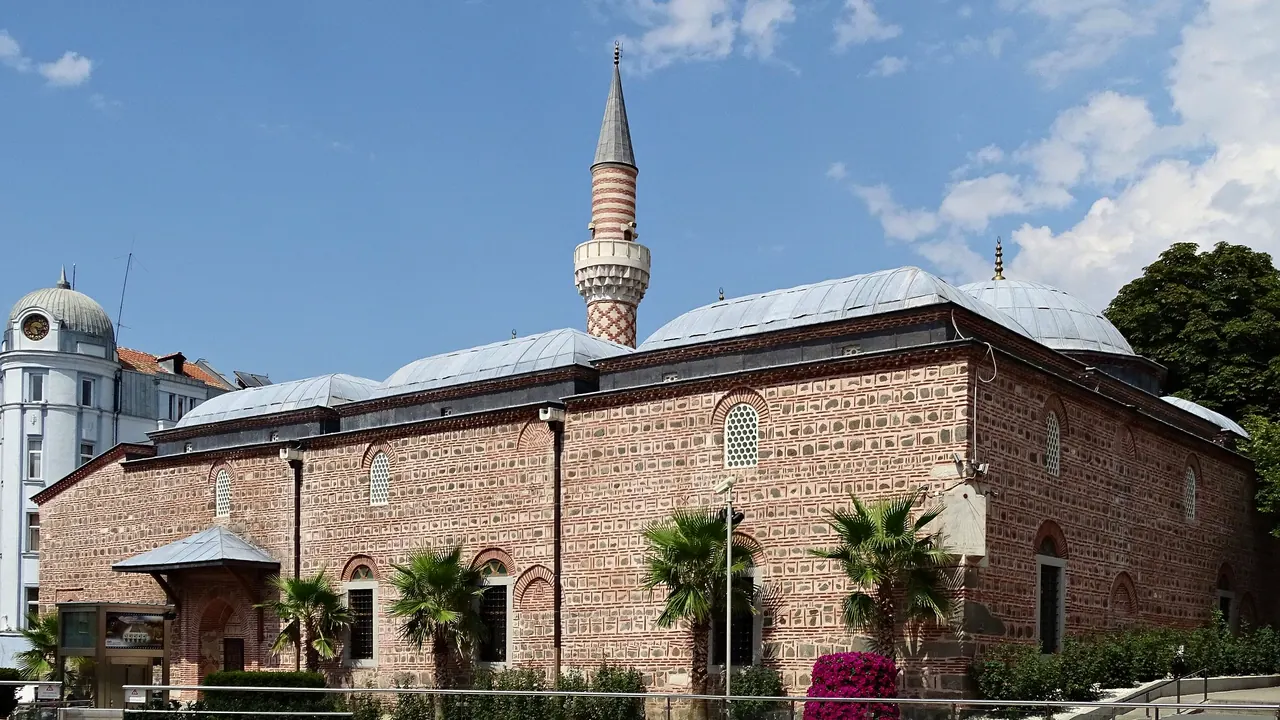
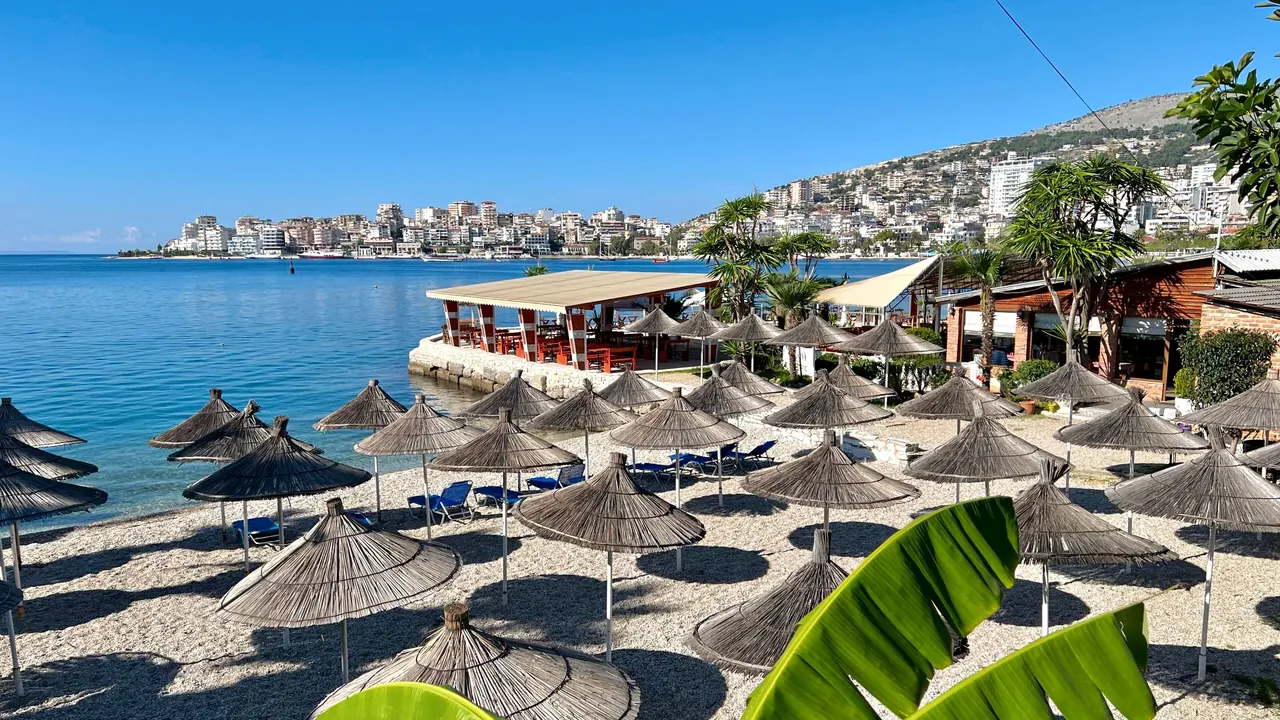
Photos: Plovdiv by Ad Meskens, CC BY-SA 4.0, cropped; Saranda by Sharon Hahn Darlin, CC BY 2.0, cropped.
Plovdiv or Saranda?
Our verdict in twelve categories, each scored against the same fixed benchmark cities, and the climate month by month, so you can choose for your trip.
Choose Plovdiv for
- culture and sights
- live music and the arts
- getting around
Plovdiv is the choice for a traveller who wants history they can walk through. Roman theatre and stadium, painted Revival houses on the Old Town hills, Thracian wine in the evenings and a summer opera under the stars all sit in a compact, car-free centre. It is also the cheaper of the two, and it makes a good base for monasteries, Thracian tombs and the Rhodope Mountains. Just don't come for the sea.
Choose Saranda for
- beaches
- day trips
Saranda is about the water. Pick it for a summer of swimming in clear Ionian coves at Ksamil and along the Riviera, with Butrint, Gjirokaster and even Corfu within a day's reach. The town itself has little to see and almost no stage life, so it suits people who want beaches, seafood and boat trips more than museums.
Scoreboard
Twelve categories on one fixed scale from 0 to 100. The shaded stretch is the gap between the two.
Your match
Pick a travel style or drag the sliders, and both match scores follow your weighting.
Wins on culture and sights and live music and the arts with your weighting.
Wins on beaches and day trips with your weighting.
What matters to you?
Category by category
What the scores mean for a trip.
Beaches & swimming
For swimming, the two cities are not really in competition. From Plovdiv the Black Sea is several hours away by road, too far for a day out. In practice a summer swim means a town pool, the rowing canal or a drive up to a Rhodope reservoir. Anyone who wants the sea should plan a separate stay on the coast rather than an outing from the city.
In Saranda the sea is right at the end of the street. The town's own beaches are small and crowded, though, and the best swimming is a short ride away. The catch is high summer, when the Ksamil coves are lined with sunbeds and there is little room to spare. An early start, a boat out to the islets or a drive north to the pebble bays at Lukova and Borsh gets you some space back, and June or September brings the same clear water with room to spread a towel.
Food & drink
Plovdiv has the more rewarding table. Bulgarian home cooking in the Old Town mehanas sits alongside the bistros and coffee places of Kapana, and the Thracian Valley's Mavrud and Rubin reds give meals real character, with wineries close enough to visit.
Saranda is simpler and centred on the sea. Butrint lagoon mussels, grilled octopus and morning byrek are good, best in the back-street taverns, but coffee and wine culture is thin. Neither city offers much beyond its own regional cooking.
Culture & sights
The two are far apart. In Plovdiv you can spend two or three days on foot among the Roman theatre, the stadium under the main street, early Christian mosaics, the Ottoman Dzhumaya Mosque and the painted merchant houses of the Old Town.
Saranda is a modern resort with a few scattered remains: the synagogue mosaics, fragments of wall, Lekuresi Castle for the view. Its serious history sits outside town, which is why its day trips matter so much more.
Nightlife
Both are low-key, but the difference is in style. Plovdiv's evenings gather in the small streets of Kapana, over craft beer and local wine, with students keeping things going in term time and a quieter scene through the year.
Saranda's is a seasonal seafront affair. Loud cocktail bars on the promenade and DJ beach clubs at Ksamil run past midnight in July and August, then thin out to a waterfront drink for the rest of the year.
Nature & outdoors
Plovdiv has the slight edge for walking country. The rocky tepeta give views straight from the centre, the forested gorges of the Rhodopes start about 20km away, and the higher Central Balkan range is an hour north, with skiing at Pamporovo in winter.
Saranda's outdoors are coastal and more scenic than strenuous. You get the lagoon and reed beds of Butrint National Park, the Blue Eye spring, sea kayaking to Riviera caves and largely unmarked mountain trails. In both places summer heat pushes serious walking into spring and autumn.
Day trips
Both make excellent bases, with outings of different kinds. From Plovdiv the trips run through the Bulgarian interior: Bachkovo Monastery, the Roman walls at Hisarya, Thracian tombs at Kazanlak and Starosel, the Valley of Roses and the painted village of Koprivshtitsa, ideally by hire car.
Saranda's list is shorter but very strong. Butrint's layered ancient city is half an hour away, the stone tower houses of Gjirokaster are inland, and the ferry puts Corfu's Venetian old town within an easy day.
Good for families
Neither city has anything built for children, and both welcome them warmly. The difference is the setting. Plovdiv is a city of parks and strolling, with the singing fountains in the Tsar Simeon Garden, Lauta park and the canal playgrounds, though the Old Town cobbles are steep.
Saranda is about the sea. Sheltered Ksamil coves suit young swimmers, but August crowds and chaotic traffic mean June or September with a pool hotel works best.
Getting around
Plovdiv is much easier on foot. One long car-free street links the station side, the Roman ruins, Kapana and the base of the Old Town, and plentiful taxis cover the rest.
Saranda's promenade is walkable, but hotels climb steep slopes, buses run without printed timetables, and the coast road jams in summer. Its best beaches and sights need a car, a taxi or an organised trip, so you will rely on transport far more than in Plovdiv.
Shopping & style
Plovdiv offers more to browse. There are design studios and galleries in Kapana, antique stalls on the climb to the Old Town, and rose oil, embroidery and pottery to take home, plus ordinary chains on the main street.
Saranda has beachwear and souvenirs along the promenade. The real finds are edible: olive oil, mountain honey and raki from market stalls, with crafts better sought in Gjirokaster's bazaar.
Affordability
Both are cheap by European standards, and Plovdiv is a little cheaper and more consistent through the year. Old Town guesthouses, mehana meals with wine and taxis all cost little, and the ruins and Kapana evenings are free.
Saranda is good value too, but July and August push up the price of seafront rooms and Ksamil sunbeds. Late spring and September give the same sea for much less.
Live music & performing arts
Plovdiv has a real stage life. Above all there are summer evenings of opera and concerts in the Roman theatre, plus a resident opera company, a philharmonic orchestra, a drama theatre and an established jazz festival.
Saranda has almost nothing regular, just the odd seafront concert, an occasional summer performance at Butrint's theatre and live Albanian music in restaurants.
Wellness & relaxation
Plovdiv is the calmer place to unwind. Its proud habit of aylyak, taking things slowly over coffee under the plane trees, sets the pace, and real mineral bathing is close at hand in Hisarya and in the Rhodope resort of Velingrad.
Saranda has no bathing tradition, and in high summer it is noisy into the night. Rest there means a hotel spa and the slower weeks of May, June and late September.
When should you go?
Pick your month. The climate figures are measured averages, not a forecast.
Plovdiv in July
Saranda in July
Daytime high, °C
Rainfall in the month, mm
Where the figures come from
Plovdiv has no rain gauge within 25 km of the centre, so its rainfall comes from a gridded climate dataset read at the destination rather than from a gauge further away.
Plovdiv's sunshine is measured 75 km from the centre, at Kurdjali.
Saranda's temperatures are measured 30 km from the centre, at Kerkyra Airport.
Saranda has no rain gauge within 25 km of the centre, so its rainfall comes from a gridded climate dataset read at the destination rather than from a gauge further away.
Temperature and rainfall are climate normals, averaged over the years shown. Plovdiv: 1997-2020 (sunshine 1991-2020, rainfall 1991-2020) normals, Plovdiv (1.2 km from centre). Saranda: 1991-2020 normals, Kerkyra Airport (29.8 km from centre).
Plovdiv has a continental climate. Winters are cold, with daytime highs around 5°C in January. July and August reach about 31°C on the open plain, which makes midday sightseeing tiring. Rain is modest all year, so the best months for walking the Old Town and the hills are May, June, September and early October, when it is warm and sunny but not too hot.
Saranda is milder in winter but far wetter, with over 230mm of rain in December, so it is really a place for late spring to early autumn. The sea is comfortable for swimming from June to September and is warmest in August, at around 25°C. July is the sunniest month, and July and August are the hottest. May and June are warm, fairly dry and gentler. September is still warm, but the autumn rains have already begun. In October the water is still fine for a swim, but wet days are common again.
Which traveller are you?
On a beach and sun trip, Saranda wins easily. The clear coves and islets of Ksamil, the long Riviera bays and a warm Ionian sea from June to October give it everything that inland Plovdiv, a long drive from the Black Sea, cannot.
For a culture and arts trip, Plovdiv is far the better choice. It has the Roman theatre, stadium and basilica mosaics, the National Revival houses of the Old Town and a real performing arts calendar, while Saranda's history lies mostly outside town at Butrint.
For a short city break, Plovdiv fits better. Its sights, Kapana's bars and the Old Town all line up along one walkable pedestrian street, so two or three days are enough. Saranda needs buses or a car to reach its best beaches and ruins.
Before you go
| Measure | Plovdiv | Saranda |
|---|---|---|
| Official language | Bulgarian | Albanian |
| Currency | Euro (EUR) | Lek (ALL) |
| Sockets | CF230 V, 50 Hz | CF220 V, 50 Hz |
| Driving side | Right | Right |
| Time zone | UTC+2, UTC+3 in summer | UTC+1, UTC+2 in summer |
| Emergency number | 112 | 112 |
| Elevation | 172 m | 0 m |
| Main airport | Plovdiv International Airport (PDV)12 km from centre7 non-stop destinations | Corfu Ioannis Kapodistrias International Airport (CFU)32 km from centre88 non-stop destinations |
| Public holidays this year | 15 days | 14 days |
By the numbers
| Measure | Plovdiv | Saranda |
|---|---|---|
| Population | 333,994 | 22,613 |
| People per km² | 3,274 | 383 |
| Museums within 10 km | 18 | 0 |
| UNESCO World Heritage sites within 50 km | 0 | 3 |
| Swim season, months above 21 °C | - | 5 months |
Where else could you go?
Every comparison below shares a destination with this one, so you can follow Plovdiv or Saranda somewhere new.