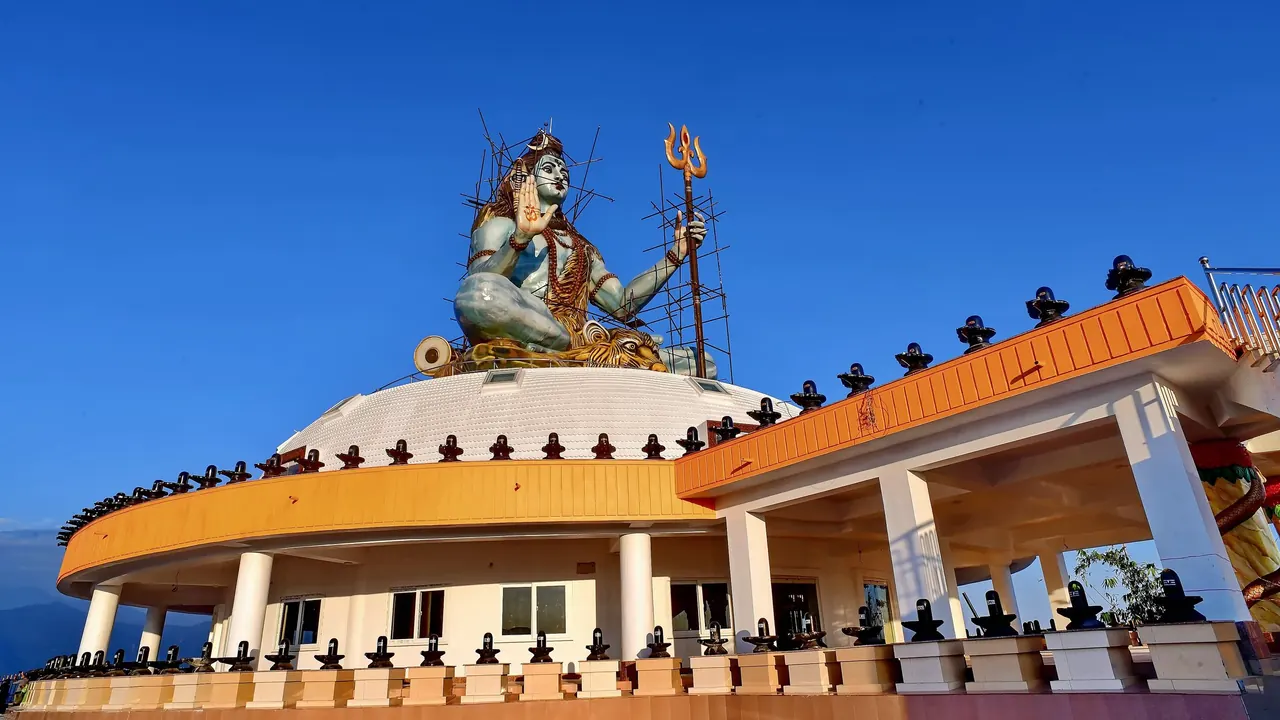
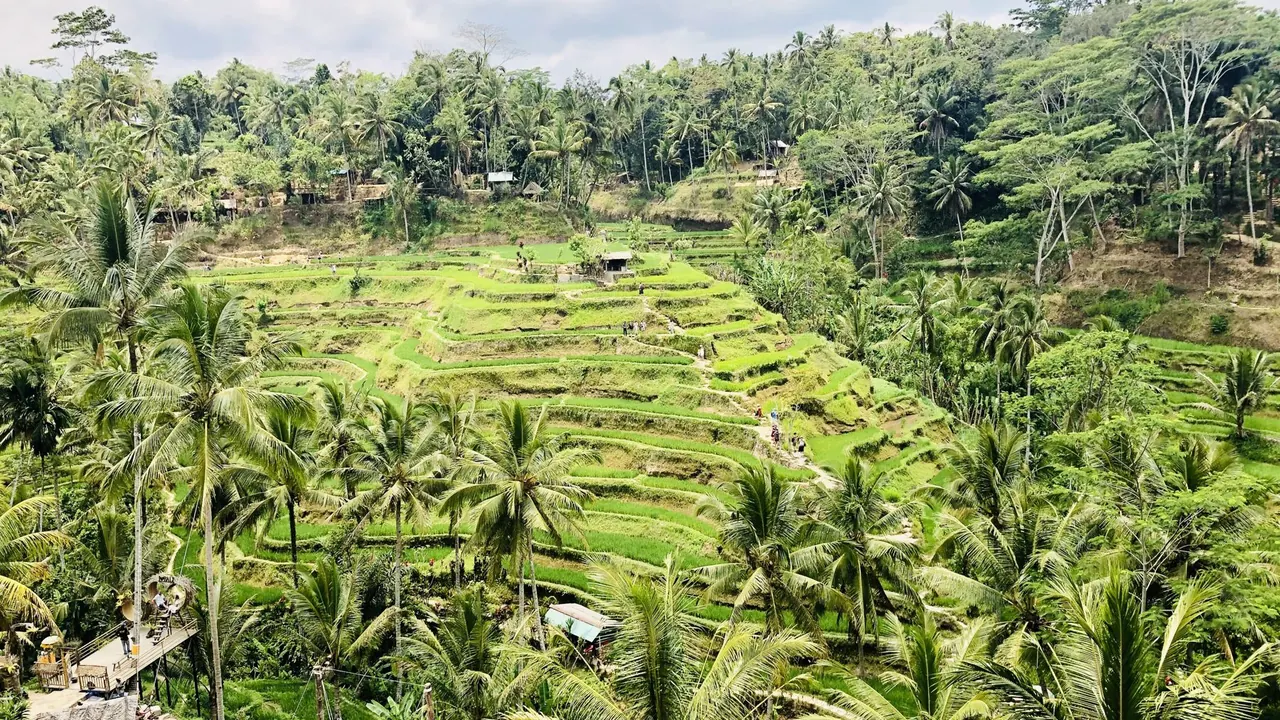
Photos: Pokhara by Rajesh Dhungana, CC BY-SA 4.0, cropped; Ubud by Pinterpandai, CC BY-SA 3.0, cropped.
Pokhara or Ubud?
Our verdict in twelve categories, each scored against the same fixed benchmark cities, and the climate month by month, so you can choose for your trip.
Choose Pokhara for
- getting around
- nightlife
- nature and the outdoors
Pokhara is for travellers who come for the mountains themselves. The Annapurna range stands over Phewa Lake, trailheads for Poon Hill and Annapurna Base Camp are a short drive away, and the paragliding off Sarangkot draws pilots from around the world. It is also the cheaper of the two, Lakeside is easy to walk, and the evenings bring a friendly crowd of trekkers. The sights and food are modest, so it suits an active trip more than a cultural one.
Choose Ubud for
- day trips
- wellness
- live music and the arts
Choose Ubud for a slower, fuller stay with more to do off the trail. Yoga, massage and retreats are what the town is known for, temple ritual and gamelan dance are part of every evening, and the cooking goes well beyond what a hill town usually offers. Bali's great temples, rice terraces and coast are all within a day's drive. The catch is that you depend on a driver, and nights end early.
Scoreboard
Twelve categories on one fixed scale from 0 to 100. The shaded stretch is the gap between the two.
Your match
Pick a travel style or drag the sliders, and both match scores follow your weighting.
Wins on getting around and nightlife with your weighting.
Wins on day trips and wellness with your weighting.
What matters to you?
Category by category
What the scores mean for a trip.
Beaches & swimming
Neither town has a beach, but Ubud can at least reach one. Pokhara is hundreds of kilometres from any sea, the water off Lakeside is not good for swimming, and a dip at Begnas Lake is about as far as it goes.
From Ubud, the calm reef-sheltered water at Sanur is roughly an hour's drive away, so a swimming day trip is realistic. Otherwise, swimming in both places means a hotel or villa pool.
Food & drink
Ubud is the better place to eat. Balinese cooking gives the town real dishes to look for: babi guling at lunchtime counters, slow-cooked bebek betutu and nasi campur in family warungs. A morning market sits by the palace, and there are tasting-menu kitchens and plant-based cafés.
In Pokhara the good meals are simpler. Thakali dal bhat with refills, momos and charcoal-grilled buffalo sekuwa are worth looking for away from the lake. Most of Lakeside serves broad menus for hungry trekkers, and there is no fine dining.
Culture & sights
Ubud has far more culture to take in. Daily offerings, family shrines and temple processions are part of ordinary life. Puri Saren and the Saraswati lotus pond stand in the centre, three museums trace a century of Balinese painting, and the rock-cut Goa Gajah is on the edge of town.
Pokhara's sights are pleasant extras on a mountain trip. These are the island shrine of Tal Barahi, the Peace Pagoda on the ridge, and the International Mountain Museum and Gurkha Museum. Most of the town is modern concrete.
Nightlife
Both towns are quiet at night, but Pokhara has more going on. Rooftop and lakefront bars along Lakeside fill with trekkers celebrating a finished trek, cover bands play, and a couple of small dance bars stay open until around midnight.
Ubud keeps early hours, because many visitors are up at dawn for yoga or a volcano trek. An evening there means a long dinner and a garden bar, and anyone who wants clubs has to make the long drive to Seminyak or Canggu.
Nature & outdoors
For nature, Pokhara is the stronger choice. Machhapuchhre and the Annapurna range rise above 7,000m straight over Phewa Lake, and real Himalayan trekking starts an hour or two away, from short walks to Australian Camp up to Annapurna Base Camp. The Sarangkot ridge gives sunrise views and some of the best paragliding thermals anywhere. The only drawback is that monsoon cloud can hide all of it.
Ubud's outdoors is gentler and on a smaller scale. Its rice terraces, the Campuhan Ridge path and the jungle waterfalls make easy half days rather than expeditions. The Ayung rafting and the pre-dawn climb of Mount Batur are its biggest adventures, and both are done by lunchtime. It is lovely green country to explore slowly, but nothing there matches standing beneath the Annapurnas.
Day trips
Ubud is much the better base for day trips. Tirta Empul's holy spring and the cliff tombs of Gunung Kawi are close, and a hired driver can also reach Besakih, Klungkung, the Jatiluwih terraces, Tanah Lot or the coast.
Slow mountain roads limit what you can do from Pokhara. The old Newar town of Bandipur, about two hours away, is the one easy outing. Gorkha and Tansen work better as overnight stops on the way somewhere else.
Good for families
Ubud has more to offer children, though neither town is easy with toddlers. It has villas with private pools, a safari park and a zoo nearby, dance shows and gentle rafting. The downsides are scooter-filled streets with no pavements and Monkey Forest macaques that grab at bags.
Pokhara's lakeshore is calmer underfoot, with little traffic and rowing boats for hire. But there is little built for children, and the roads out of town are rough. Both suit outdoorsy teenagers best.
Getting around
Pokhara is the easier of the two to get around. Lakeside is small and flat, so guesthouses, restaurants and the boat jetties are a short walk or bike ride apart. Taxis and hired drivers are only needed for Sarangkot and the trailheads.
In Ubud you will depend on drivers. There is no usable public transport, pavements are broken, scooters fill the main streets and the roads climb steeply through the river valleys. Most days are planned around a driver or a ride-hailing app.
Shopping & style
Pokhara's shops are there to kit you out for a trek, while Ubud's sell what Bali makes by hand, and Ubud is the richer place to shop. Lakeside is full of boots, poles and down jackets to buy or rent, along with pashmina, singing bowls and thangkas. The most personal souvenirs are the carpets and jewellery from the Tibetan settlements on the edge of town, where the workshops are open to visitors.
Ubud's crafts make a day out in themselves. The Art Market faces the palace, and each village on the road south has its own trade: woodcarving at Mas, silver at Celuk and painting at Batuan. Back in town, small boutiques on Jalan Hanoman sell linen clothing and handmade jewellery.
Affordability
Both are cheap, but Pokhara costs less. Lakeside guesthouses with mountain views, dal bhat lunches and boat hire cost very little. The real expenses are paragliding, guided treks and Annapurna permits.
Ubud is also good value, with homestays, warungs, massages and day-long drivers all inexpensive. But it has an expensive side too, with luxury resorts above the gorges and cafés charging close to European prices. Imported drinks are heavily taxed.
Live music & performing arts
Ubud has a real performance tradition. Every night a village troupe performs Legong, Barong or the chanted Kecak to gamelan, in the palace courtyard or by the Saraswati lotus pond. The same dances appear at temple festivals.
Pokhara has cover bands in the bars and dinner shows of Gurung and Magar dances put on for visitors, and little beyond that.
Wellness & relaxation
Ubud is one of the world's best-known wellness towns, and Pokhara cannot match it. There are open-air yoga pavilions, retreats lasting from a weekend to several weeks, spas in the Ayung and Petanu gorges, flower baths, healers and sound sessions, and the whole town keeps early hours to suit.
Pokhara's appeal here is mostly its unhurried pace after Kathmandu. Quiet hillside yoga retreats, Ayurvedic massage for trekkers' legs and slow mornings watching the cloud lift off the peaks are the main draws. The spas are basic, and the nearest hot springs are far up the trails.
When should you go?
Pick your month. The climate figures are measured averages, not a forecast.
Pokhara in July
Ubud in July
Daytime high, °C
Rainfall in the month, mm
Where the figures come from
Pokhara has no weather station within reach, so its figures come from a gridded climate model rather than a measured record, and read a broad area rather than the city itself.
Ubud's temperatures are measured 29 km from the centre, at Denpasar / Ngurah-Rai.
Ubud's station stands 209 m below the city centre, so the centre is likely a little cooler than the figures say.
Ubud has no rain gauge within 25 km of the centre, so its rainfall comes from a gridded climate dataset read at the city rather than from a gauge further away.
Temperature and rainfall are climate normals, averaged over the years shown. Pokhara: 1991-2020 normals, TerraClimate 4 km grid at the town, no weather station within 90 km. Ubud: 1991-2020 normals, Denpasar / Ngurah-Rai (29 km from centre).
Pokhara has a dry season and a wet one. October and November are the best months, dry and clear, with warm days and the sharpest views of the peaks. December to February stay dry but cooler, around 19°C at midday, which is good weather for walking. March and April get hotter and hazier, and the rains then build quickly. May is already wet, and from June to September the monsoon is in full force, peaking at 674mm in July, with cloud that can hide the mountains for days.
Ubud is hot all year, with little change in daytime heat, so the rain decides when it is best. The wettest stretch runs from December to February. The middle of the year is drier, and August is the driest and sunniest month with only 36mm. The sea at Sanur is warm enough to swim in every month, dropping only to 26°C in August. If you want to visit both on one trip, October works best. Pokhara is at its clearest, and Ubud is drier than it will be in November, though its rains are starting to return.
Which traveller are you?
For an outdoors trip, Pokhara is the stronger choice. Real Himalayan trekking starts an hour or two from Lakeside, Sarangkot offers sunrise views and paragliding, and kayaking and biking fill the rest days. Ubud's rice terraces and the Batur climb are gentler.
On a relaxing and wellness trip, Ubud is the better base by a wide margin. It has yoga pavilions from dawn onwards, riverside spas, flower baths, traditional healers and the purification ritual at Tirta Empul. Pokhara offers a calm lake and simple massages, but much less depth.
For a culture and arts trip, choose Ubud. It has the royal palace, the painting collections at Puri Lukisan, Neka and ARMA, gamelan dance every night and temples within a day's drive. Pokhara's museums and pagoda take about two days.
Before you go
| Measure | Pokhara | Ubud |
|---|---|---|
| Official language | Nepali | Indonesian |
| Currency | Nepalese Rupee (NPR) | Rupiah (IDR) |
| Sockets | CM230 V, 50 Hz | CF50 Hz |
| Driving side | Left | Left |
| Time zone | UTC+5:45 | UTC+8 |
| Emergency number | Police 100, ambulance 102, fire 101 | 112 |
| Elevation | 900 m | 210 m |
| Main airport | Pokhara International Airport (PHH)4 km from centre9 non-stop destinations | Denpasar I Gusti Ngurah Rai International Airport (DPS)29 km from centre63 non-stop destinations |
By the numbers
| Measure | Pokhara | Ubud |
|---|---|---|
| City population | 353,841 | - |
| People per km² | 762 | - |
| Museums within 10 km | 2 | 14 |
| UNESCO World Heritage sites within 50 km | 0 | 1 |
| Swim season, months above 21 °C | - | 12 months |
Where else could you go?
Every comparison below shares a destination with this one, so you can follow Pokhara or Ubud somewhere new.
- Kathmanduvs Pokhara
- Varanasivs Pokhara
- Yogyakartavs Ubud
- Jakartavs Ubud
- Singaporevs Ubud
- Luang Prabangvs Pokhara