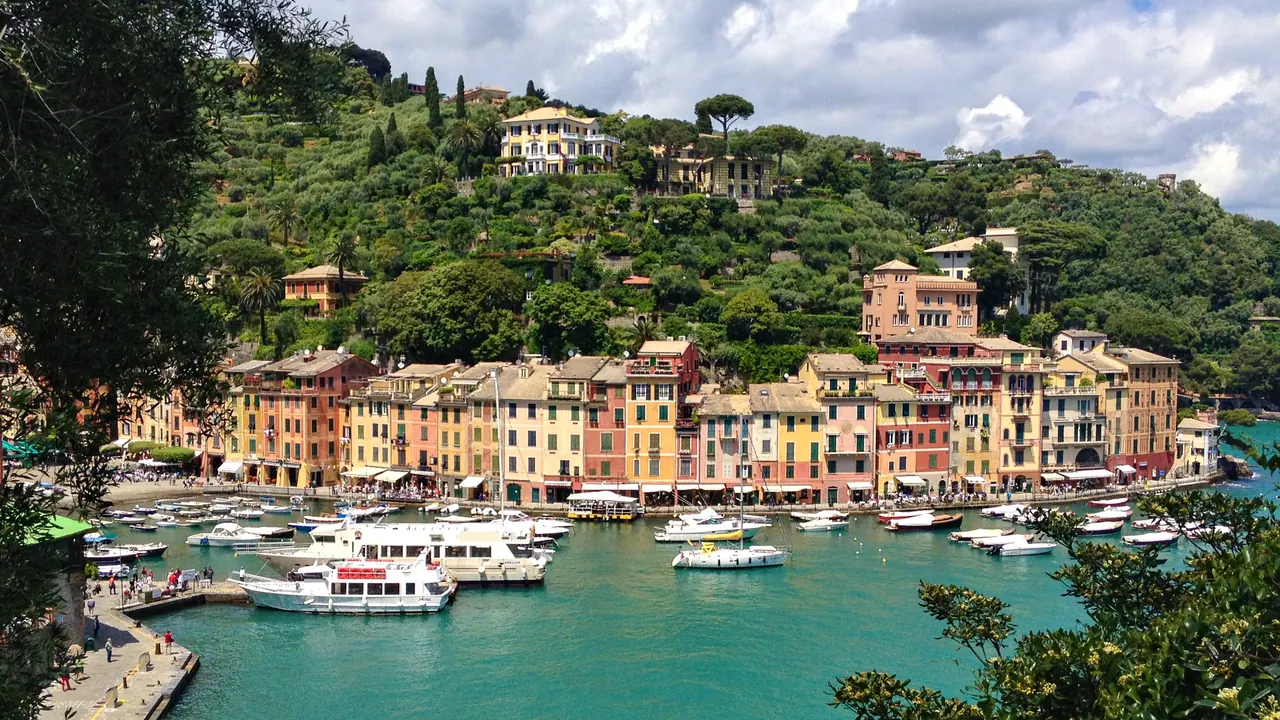
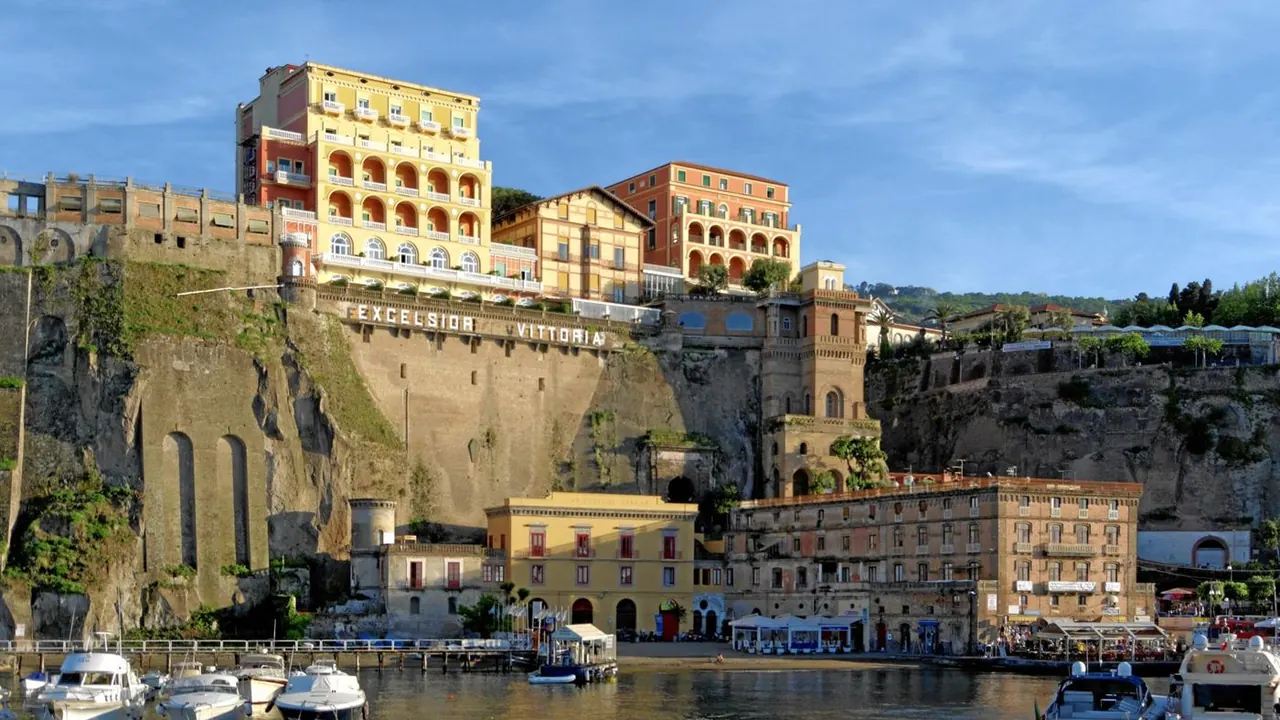
Photos: Portofino by Michal Osmenda, CC BY 2.0, cropped; Sorrento by Berthold Werner, CC BY-SA 3.0, cropped.
Portofino or Sorrento?
Our verdict in twelve categories, each scored against the same fixed benchmark cities, and the climate month by month, so you can choose for your trip.
Choose Portofino for
Portofino does not lead in any category we score.
Portofino is for the traveller who wants one small, beautiful place and is happy to pay for it. The pleasure is the painted harbour, the headland park with its trails and the clear water of the marine reserve, plus quiet early mornings once the tour boats have gone. It suits a short, unhurried stay of walking, swimming off the rocks and long lunches. It does not suit anyone after varied food, evenings out or a busy list of sights.
Choose Sorrento for
- food and drink
- prices
- day trips
Sorrento gives more back on almost every other count. It makes a better base for exploring, with Pompeii, Capri, the Amalfi Coast and Naples all close by train or boat. Its Campanian cooking is better and easier to find at a fair price, and its evenings have more going on. If you want a week of varied days out rather than one perfect view, and a budget that can stretch that far, choose Sorrento.
Scoreboard
Twelve categories on one fixed scale from 0 to 100. The shaded stretch is the gap between the two.
Your match
Pick a travel style or drag the sliders, and both match scores follow your weighting.
Has no clear advantage with the weighting you have chosen.
Wins on food and drink and prices with your weighting.
What matters to you?
Category by category
What the scores mean for a trip.
Beaches & swimming
Neither has a proper sandy beach in town, and swimming is equally good in both, but the way you get into the water differs. In Portofino you climb down ladders from the rock platforms on the path to the lighthouse, or walk to the little sandy bay at Paraggi, which is mostly paid beach clubs.
In Sorrento you take the lift down to Marina Piccola or Marina Grande and swim from lidos built on wooden piers, or sunbathe on the rocks by the Roman ruins at the Bagni della Regina Giovanna. For pebbles, Portofino has the cove below the abbey at San Fruttuoso, and Sorrento sends you to Marina del Cantone.
Food & drink
Sorrento is the better place to eat. Its cooking comes straight from the land around it: gnocchi alla sorrentina, fish all'acqua pazza, dairy cheeses from the hills, lemons in everything and Neapolitan pizza. Away from the tourist menus around Piazza Tasso, family trattorias and the fish places at Marina Grande are reliable, and the hill villages add serious fine dining.
Portofino serves good Ligurian dishes, such as trofie with pesto and Recco's cheese focaccia, but only in a small cluster of harbour restaurants where you mostly pay for the yachts. Keen eaters go to Camogli or Santa Margherita instead.
Culture & sights
Neither is a sightseeing town, but Sorrento has more to see within its own streets. Its old centre follows the Roman grid, with the cathedral, the cloister of San Francesco, the Museo Correale's Neapolitan collections in a seaside villa and the strange sunken ravine of the Vallone dei Mulini.
Portofino's sight is really the village itself, the coloured houses around the harbour, plus the church of San Giorgio, Castello Brown and the walk to the abbey of San Fruttuoso. It all fits into a day and there are no real museums, so it is about atmosphere rather than things to tick off.
Nightlife
Both are early-to-bed places, but Sorrento has more going on after dark. The evening passeggiata along Corso Italia leads on to wine bars, cocktail terraces over the bay, piano bars playing Neapolitan songs and, in summer, a club or two open after midnight.
Portofino's evening is a smart, dress-up aperitivo by the moored yachts followed by dinner, and then little else. There are no clubs, and outside July and August the village goes quiet very early.
Nature & outdoors
Both are superb for the outdoors, and the difference is scale. Portofino packs a protected park and marine reserve onto one headland: holm oak and pine trails over Monte di Portofino, exposed chained sections above the cliffs down to San Fruttuoso, and some of the best diving on the Italian coast.
Sorrento opens on to a bigger landscape. There are lemon-terraced ridges, the trail to Punta Campanella facing Capri, the Path of the Gods, the beech woods of Monte Faito and the crater rim of Vesuvius. Its sea is better for boat trips into the Capri grottoes than for diving.
Day trips
Portofino has good day trips, but Sorrento has some of the best in Europe. From Sorrento a short train ride reaches Pompeii and Herculaneum, Capri is less than an hour by ferry, summer boats run to Positano and Amalfi, and Naples, with its archaeological museum, is about an hour away.
Portofino's range is gentler. You can reach the Riviera towns of Camogli, Rapallo and Sestri Levante, Genoa's palaces and medieval lanes, and the Cinque Terre by summer ferry or by train from Santa Margherita. Outside the ferry season, getting out takes more planning.
Good for families
Portofino is calm and safe, and children enjoy the boats, the climb to the castle and jumping off the rocks into the sea. But the village is made of steep steps that defeat a pushchair, and it has no playgrounds. Its only sand is mostly taken by paid clubs. Families usually stay in Rapallo or Santa Margherita and make a day of Genoa's large aquarium.
Sorrento is the easier of the two. Its flat, largely pedestrian centre works with a pushchair, and children get boat trips to Capri, a train ride to Pompeii and plenty of gelato. It still has little built for children. Swimming means deep water off piers, so a hotel with a pool makes life simpler.
Getting around
Sorrento is a little easier to get in and out of. Its flat centre is easy on foot, and the Circumvesuviana, crowded and unreliable as it is, gives a direct rail link to Pompeii and Naples, with ferries for the coast.
Portofino is tiny and walkable but steep, and it hangs off a single narrow road, about 5km of hairpins from Santa Margherita and its train station. In summer the bus is packed, the road jams, and the ferries become the pleasant way to arrive.
Shopping & style
Sorrento has the more interesting shopping, thanks to real local crafts. You can buy intarsia boxes and trays from the inlay workshops and have leather sandals made to measure while you wait, alongside the lemon soaps and ceramics on Via San Cesareo.
Portofino's few lanes hold big-name fashion and jewellery boutiques and resort wear aimed at people off the yachts. It is striking for the size of the village, but you can see it all in under an hour.
Affordability
Portofino is among the most expensive places to stay in Italy. Its few hotels are luxury properties, and the harbour terraces, the Paraggi loungers, boat hire and parking all cost a great deal. Walking and the local bus are almost the only cheap things, so many visitors sleep in Camogli or Rapallo and come over for the day.
Sorrento is far easier on the wallet, though it is still a resort that charges for sea views in summer. Its trains and buses cost little, and pizza and back-street trattorias are fairly priced. In spring and late autumn, hotel rates come down a long way.
Live music & performing arts
Sorrento has at least a little to go out for: evening shows of Neapolitan song and tarantella, chamber concerts in the cloister of San Francesco in summer, and hotel-bar singers who never let 'Torna a Surriento' rest. Portofino offers only the odd summer concert in the piazzetta or at the castle. For real opera, each sends you to a big city, Genoa's Teatro Carlo Felice or Naples' Teatro di San Carlo.
Wellness & relaxation
Both are about slowing down rather than taking the waters, with spas found only in the hillside and clifftop hotels. Sorrento has a small edge in its villa gardens and lemon groves, and the thermal gardens of Ischia are a ferry ride away. Portofino's calm comes from its silent coastal paths and empty harbour at dawn and dusk, when the day-trippers have gone.
When should you go?
Pick your month. The climate figures are measured averages, not a forecast.
Portofino in July
Sorrento in July
Daytime high, °C
Rainfall in the month, mm
Where the figures come from
Portofino's temperatures are measured 31 km from the centre, at Genova / Sestri.
Portofino has no rain gauge within 25 km of the centre, so its rainfall comes from a gridded climate dataset read at the city rather than from a gauge further away.
Sorrento has no rain gauge within 25 km of the centre, so its rainfall comes from a gridded climate dataset read at the city rather than from a gauge further away.
Sorrento's sunshine is measured 54 km from the centre, at Grazzanise.
Temperature and rainfall are climate normals, averaged over the years shown. Portofino: 1991-2020 normals, Genova / Sestri (31 km from centre). Sorrento: 2005-2025 (sunshine 1991-2020, rainfall 1991-2020) normals, Capri (17 km from centre).
Portofino is warm enough for the beach from June to early September. The sea reaches about 25°C in August and stays pleasant for swimming into early October. Summer days peak around 28°C, which is warm on the exposed headland trails at midday but leaves the harbour lanes comfortable in the evening. The rain comes early. September is already showery, and October, at about 225mm, is the wettest month, with November close behind. April to June is the best time for walking.
Sorrento runs hotter and drier through summer. June to August bring very little rain, and August reaches about 30°C, too hot for the lanes or the trails in the middle of the day. Its sea is a degree or so warmer, and October stays good for swimming and is far less wet than on the Ligurian coast. Here the rain peaks later, in November. Both towns are cool and damp in winter, around 13°C by day.
Which traveller are you?
On a trip on a tight budget, Sorrento is the one you can actually stay in. You can take a modest room in town, spend a day at the ruins by local train and eat pizza in the evening. In Portofino on a budget you usually sleep in another town and come over for a walk and a swim.
For a culture and arts trip, Sorrento is the better base. Its own museum and cloister are just a start, because Pompeii, Herculaneum and Naples, with its churches and its opera house, make a week of history and music. Portofino has a castle and an abbey, and Genoa's palaces are a day out.
On an outdoors trip, both deliver, so choose by style. Portofino suits walkers who like to set off from their door. The park trails start right above the harbour, and a hike can end with a swim off the rocks. Sorrento suits walkers happy to travel to a different trail each day.
Before you go
| Measure | Portofino | Sorrento |
|---|---|---|
| Official language | Italian | Italian |
| Currency | Euro (EUR) | Euro (EUR) |
| Sockets | CFL230 V, 50 Hz | CFL230 V, 50 Hz |
| Driving side | Right | Right |
| Time zone | UTC+1, UTC+2 in summer | UTC+1, UTC+2 in summer |
| Emergency number | 112 | 112 |
| Elevation | 20 m | 50 m |
| Main airport | Genoa Cristoforo Colombo Airport (GOA)32 km from centre25 non-stop destinations | Naples International Airport (NAP)30 km from centre131 non-stop destinations |
| Public holidays this year | 13 days | 13 days |
By the numbers
| Measure | Portofino | Sorrento |
|---|---|---|
| City population | 355 | 15,407 |
| People per km² | 142 | 1,541 |
| Museums within 10 km | 14 | 6 |
| UNESCO World Heritage sites within 50 km | 2 | 5 |
| Swim season, months above 21 °C | 4 months | 5 months |
Where else could you go?
Every comparison below shares a destination with this one, so you can follow Portofino or Sorrento somewhere new.